
Safety
General information, not medical advice
Your prescriber and the leaflet in your pack know your situation. This page does not.
- Follow your prescriber and the leaflet
- Don't start, stop, or change a dose on your own
- Doses and warnings differ by country and product
Doripenem Injection: Uses, Dosage, Side Effects, Precautions and Alternates

| Generic name | Doripenem |
|---|---|
| Drug class | Carbapenem antibacterial agent |
| Forms | Sterile powder for solution for infusion (500 mg per vial), Sterile powder for solution for infusion (250 mg per vial) |
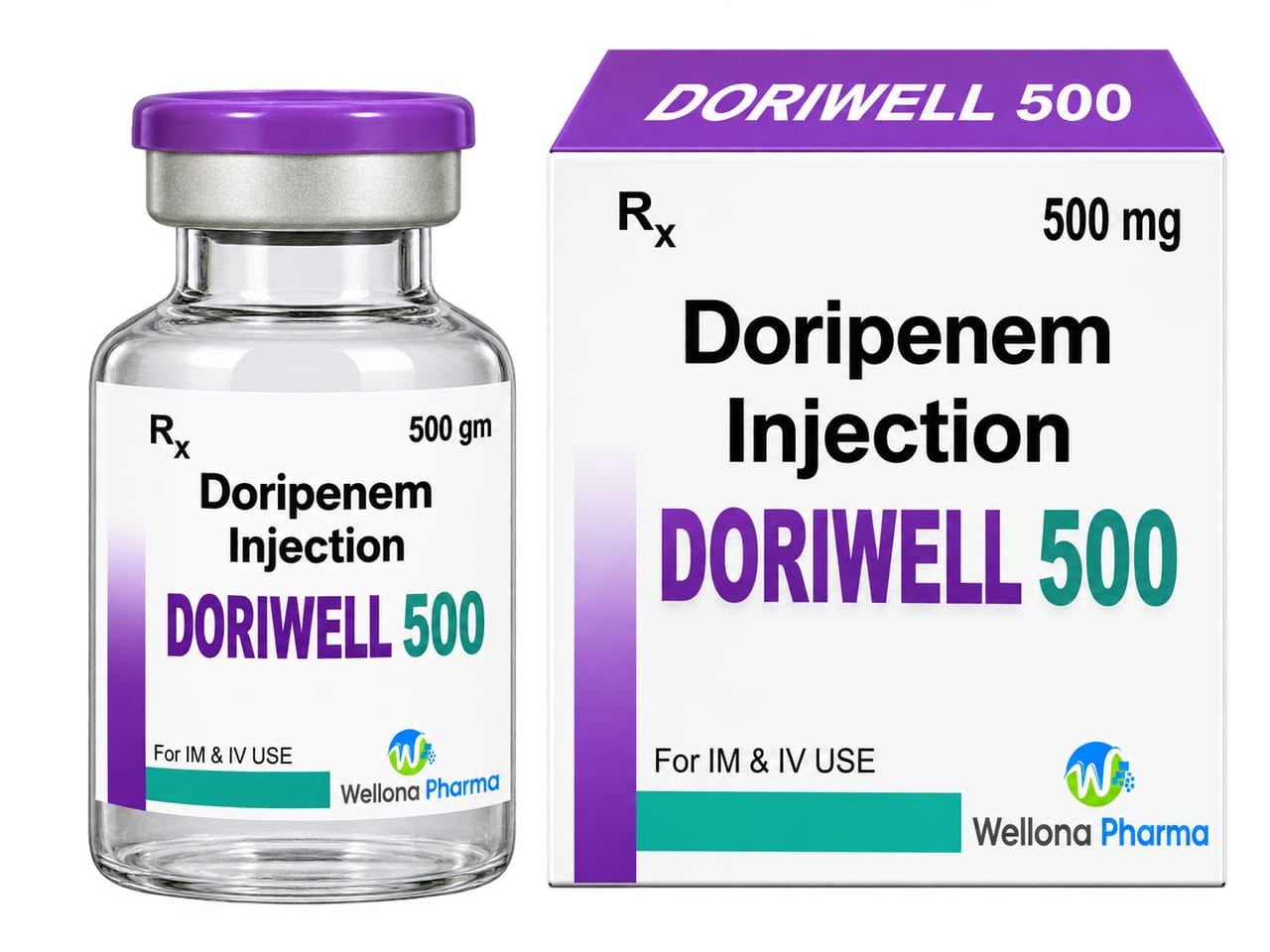
Quick overview
Doripenem Injection (generic name: Doripenem) is a carbapenem antibacterial agent given by intravenous infusion to treat serious bacterial infections, including hospital-acquired pneumonia, complicated intra-abdominal infections, and complicated urinary tract infections. It works by stopping bacteria from building their cell walls, which causes the bacteria to die. It is administered only by a doctor or nurse, with dosing adjusted for kidney function.
What is Doripenem Injection
Doribax is an antibiotic given by IV infusion that kills many types of bacteria causing serious infections. It belongs to a group of antibiotics called carbapenems.
Doripenem Injection uses
- Pneumonia caught in a hospital or similar setting, including pneumonia in people on a breathing machine (nosocomial pneumonia, including ventilator-associated pneumonia)
- Complicated infections of the area around the stomach (complicated intra-abdominal infections)
- Complicated urinary tract infections, including kidney infections (pyelonephritis) and cases that have spread to the bloodstream
Benefits of Doripenem Injection
- Effective against a broad range of bacteria, including some resistant strains
- Has been shown to be as effective as other commonly used antibiotics such as meropenem, imipenem, piperacillin/tazobactam, and levofloxacin for these infections
- May reduce hospital length of stay and time spent on a breathing machine in some patients
How Doripenem Injection works
Doripenem works by stopping bacteria from building their cell walls properly. This causes the bacteria to die.
Doripenem Injection dosage
This medicine is given only by a doctor or nurse as an intravenous infusion (a drip) into a vein. Each dose is infused over one hour, or sometimes over four hours depending on the infection and pathogen. Treatment is usually continued for several days; it is important to complete the full course as prescribed. After initial IV treatment and clinical improvement, some patients may be switched to an appropriate oral antibiotic to finish the course. No dose adjustment is needed for elderly patients with normal kidney function, but people with reduced kidney function need a lower dose.
| Age group | Dose |
|---|---|
| Under 12 years | No established routine pediatric dose |
| 18–39 years | 500 mg IV every 8 hours |
| 40–64 years | 500 mg IV every 8 hours |
Available forms and strengths
- Sterile powder for solution for infusion (500 mg per vial)
- Sterile powder for solution for infusion (250 mg per vial)
Side effects of Doripenem Injection
Common
- Headache
- Nausea
- Vomiting
- Diarrhea
- Rash
- Itching or hives
- Fungal infections (thrush) in mouth or vagina
- Increase in some liver enzyme levels
- Pain, redness, or swelling at the injection site
- Anemia
- Vein inflammation where the IV line enters (phlebitis)
Serious
- Severe allergic reaction (anaphylaxis) with swelling of lips, face, throat or tongue, rash, or trouble breathing
- Serious skin reactions such as toxic epidermal necrolysis or Stevens-Johnson syndrome, with widespread rash, peeling skin, and blisters in the mouth, eyes, and genitals
- Severe diarrhea or bloody diarrhea that may signal bowel inflammation (Clostridium difficile colitis)
- Seizures (convulsions)
- Decrease in white blood cells, which can increase risk of infection
- Decrease in platelet count, which can increase risk of bruising or bleeding
- Kidney problems (very little or no urination, or much more urination than usual)
- Irregular or fast heartbeat
- Low blood pressure
Warnings and precautions
- Serious and sometimes fatal allergic reactions have occurred with this type of antibiotic. Tell your doctor if you have ever had an allergic reaction to penicillins, cephalosporins, or other carbapenems.
- Seizures have happened during treatment with this medicine and similar antibiotics, especially in people with existing brain or nervous system conditions, kidney problems, or at higher doses.
- This medicine should not be inhaled, as it can cause lung inflammation.
- If you take valproic acid or sodium valproate for seizures, this medicine can lower its levels in your blood, increasing the risk of breakthrough seizures. Your doctor may need to monitor you or consider a different medicine.
- Using this medicine together with probenecid is not recommended because it can increase the levels of doripenem in your blood.
- This medicine should not be used to treat infections caused by methicillin-resistant staphylococci, since it is not effective against them.
- There is limited information on using this medicine during pregnancy. It should only be used if your doctor decides the benefits outweigh the risks.
- It is not known if this medicine passes into human breast milk. It passes into milk in rats. Your doctor will decide if you should use it while breastfeeding.
- People with reduced kidney function need a lower dose, and kidney function should be checked during treatment.
- There isn't enough information on how this medicine affects people with liver problems, though it is not expected to need a dose change since it is not broken down much by the liver.
- No major direct interaction with alcohol is established.
- This medicine is not expected to affect your ability to drive or use machines, although seizures have occurred in some patients, which should be considered before driving or operating machinery.
Storage
- Vials should be stored at 15°C to 30°C
- This medicinal product does not require any special storage conditions once reconstituted according to the specified timeframes
- After mixing with water or saline, the suspension in the vial may be held for up to 1 hour below 30°C before being transferred and diluted into the infusion bag
- Once diluted in the infusion bag, the solution must be used within set times depending on whether it is kept at room temperature or refrigerated, and depending on which diluent is used
- Do not freeze the constituted suspension or infusion
- Do not throw away any medicines via wastewater or household waste; ask your pharmacist how to dispose of medicines you no longer use
When to see a doctor
- Get medical help right away if you have sudden swelling of your lips, face, throat, or tongue, a rash, or difficulty swallowing or breathing — these can be signs of a severe allergic reaction.
- Seek medical attention if you develop a widespread rash with peeling skin or blisters in the mouth, eyes, or genitals.
- Tell your doctor right away if you get watery or bloody diarrhea before, during, or after treatment, as this could be a sign of bowel inflammation.
- Contact your doctor immediately if you think you have been given too much of this medicine.
Alternatives
- Meropenem
- Ertapenem
- Cefepime
Watch the video
FAQs
What is Doripenem Injection used for?
It treats serious bacterial infections including hospital-acquired pneumonia (including ventilator-associated pneumonia), complicated intra-abdominal infections, and complicated urinary tract infections such as kidney infections.
How is Doripenem Injection given?
It is given only by a doctor or nurse as an intravenous infusion into a vein, usually over one hour or sometimes four hours, with treatment continuing for several days as prescribed.
What are the common side effects of Doripenem Injection?
Common side effects include headache, nausea, vomiting, diarrhea, rash, itching or hives, oral or vaginal thrush, increased liver enzymes, injection site reactions, anemia, and vein inflammation.
Who should avoid Doripenem Injection?
People allergic to penicillins, cephalosporins, or other carbapenems should inform their doctor, and it should not be used to treat infections caused by methicillin-resistant staphylococci since it is not effective against them.
Can Doripenem Injection interact with other medicines?
Yes, it can lower blood levels of valproic acid or sodium valproate, increasing seizure risk, and using it with probenecid is not recommended as it can raise doripenem levels in the blood.
General information, not medical advice
Your prescriber and the leaflet in your pack know your situation. This page does not.
- Follow your prescriber and the leaflet
- Don't start, stop, or change a dose on your own
- Doses and warnings differ by country and product
Sources
Video
Related medicines
Doribax Injection: Uses, Dosage, Side Effects, Precautions and Alternates
Carbapenem (antibacterial agent)
Doribax Injection (doripenem) is a carbapenem antibiotic for hospital pneumonia, abdominal, and urinary infections. Learn uses, dosage, and side effects.

Injectafer Injection: Uses, Dosage, Side Effects, Precautions and Alternates
Iron products
Injectafer (ferric carboxymaltose) treats iron deficiency anemia and heart failure-related iron deficiency via IV. Learn uses, dosage, side effects, and