
Safety
General information, not medical advice
Your prescriber and the leaflet in your pack know your situation. This page does not.
- Follow your prescriber and the leaflet
- Don't start, stop, or change a dose on your own
- Doses and warnings differ by country and product
Doxofylline Tablet: Uses, Dosage, Side Effects, Precautions and Alternates
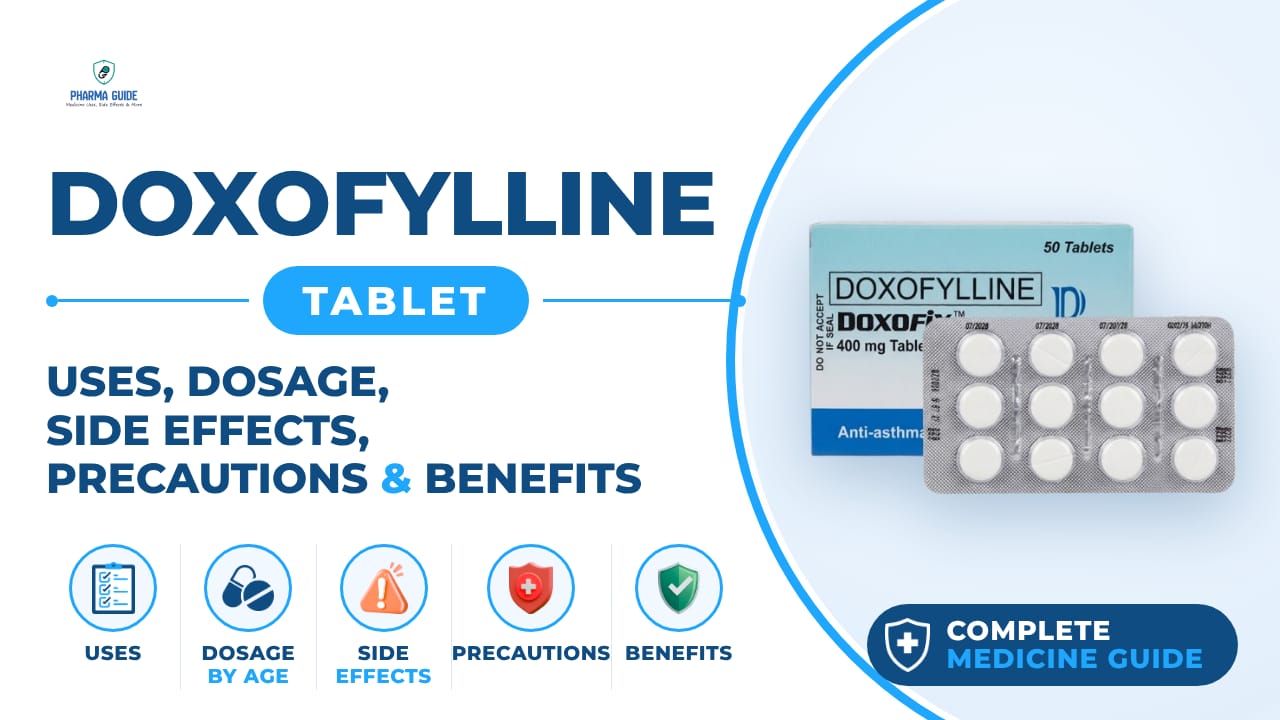
| Generic name | Doxofylline |
|---|---|
| Drug class | Methylxanthine derivative (bronchodilator) |
| Forms | Tablet, Suspension, Syrup, Injection |
Quick overview
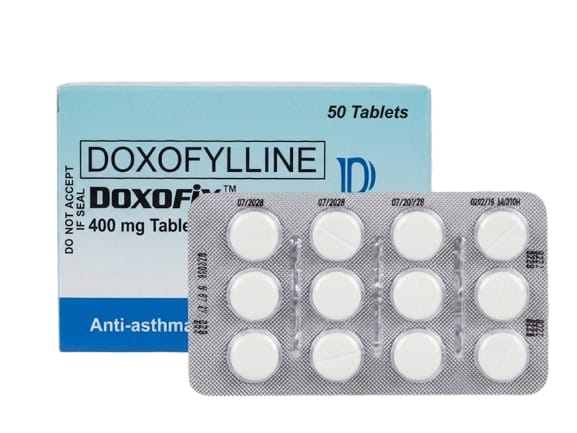
Doxofylline Tablet (generic name: Doxofylline) is a methylxanthine derivative that works as a bronchodilator. It is used to treat asthma, COPD, bronchitis, and other lung conditions involving narrowed or spastic airways. It helps relax the muscles around the airways to make breathing easier and is available in tablet, suspension, syrup, and injection forms.
What is Doxofylline Tablet
Doxofylline is a bronchodilator medicine that belongs to the methylxanthine family. It is used to treat asthma and other lung conditions that cause narrowed airways.
Doxofylline Tablet uses
- Asthma
- Chronic obstructive pulmonary disease (COPD)
- Bronchitis
- Bronchospasm and pulmonary disease with a spastic bronchial component
Benefits of Doxofylline Tablet
- Provides rapid relief from breathlessness and chest tightness
- Gives long-lasting relaxation of airway muscles, reducing frequency and severity of asthma or COPD attacks
- Has a lower risk of cardiac side effects compared to older similar medicines
- Allows a convenient dosing schedule
- Can often be combined with other respiratory medicines
How Doxofylline Tablet works
Doxofylline relaxes the smooth muscles of the airways in the lungs, which widens the air passages and makes breathing easier. It is thought to work partly by blocking an enzyme called phosphodiesterase, which raises levels of a substance called cAMP and helps relax the muscles.
Doxofylline Tablet dosage
Take this medicine with food. Take it around the same time every day to help you remember. Do not stop taking this medicine unless your doctor tells you to, as stopping suddenly may worsen your condition. Swallow the tablet whole with water; do not chew or break it.
| Age group | Dose |
|---|---|
| Under 6 Years | Use only if prescribed by a doctor |
| 6–12 Years | Dose is adjusted according to body weight and medical condition |
| 12+ Years (Adults & Teens) | Usually 1 tablet once or twice daily (depending on tablet strength and doctor's advice) |
| 65+ Years (Older Adults) | Dose may require careful adjustment based on health condition and response |
Available forms and strengths
- Tablet
- Suspension
- Syrup
- Injection
Side effects of Doxofylline Tablet
Common
- Nausea or vomiting
- Stomach pain
- Sleeplessness
- Headache
- Dizziness
- Increased heartbeat
- Upset stomach
Serious
- Low blood pressure
- Low blood potassium
- Fast or irregular heartbeat
Warnings and precautions
- This medicine can interact with other medicines. Tell your doctor about any other health conditions, such as liver, kidney, or heart problems, or any other treatments you are undergoing before starting this medicine.
- Do not take this medicine together with erythromycin, troleandomycin, lincomycin, clindamycin, allopurinol, cimetidine, ranitidine, or propranolol, as these can raise the level of this medicine in your blood.
- Do not take this medicine with other similar medicines from the same drug family, as this can slow down how the body clears the drug.
- This medicine is not recommended during pregnancy. Talk to your doctor before taking it if you are pregnant.
- This medicine is not recommended while breastfeeding. Talk to your doctor before taking it.
- Tell your doctor about any kidney problems before taking this medicine.
- Tell your doctor about any liver problems before taking this medicine.
- It is not clear how this medicine interacts with alcohol, so check with your doctor before drinking alcohol while taking it.
- It is also recommended to avoid caffeine-containing drinks and foods like coffee, tea, and dark chocolate, as they may increase the risk of side effects.
When to see a doctor
- Get medical help right away if you notice yellowing of the skin or eyes, dark urine, unusual tiredness, or pain in the upper stomach area, as these could be signs of liver problems.
- Seek medical advice if you notice a fast or irregular heartbeat, palpitations, muscle weakness, or cramps.
- Report any skin rash or itching to your doctor right away, since rare but serious skin reactions have been reported.
Alternatives
- Theophylline
- Salbutamol
- Budesonide
Watch the video
FAQs
What is Doxofylline Tablet used for?
It is used to treat asthma, chronic obstructive pulmonary disease (COPD), bronchitis, and bronchospasm or pulmonary disease with a spastic bronchial component.
How does Doxofylline Tablet work?
It relaxes the smooth muscles of the airways by blocking an enzyme called phosphodiesterase, which raises cAMP levels and widens the air passages, making breathing easier.
How should I take Doxofylline Tablet?
Take it with food around the same time every day, and swallow the tablet whole with water without chewing or breaking it. Do not stop taking it suddenly without your doctor's advice.
What are the common side effects of Doxofylline Tablet?
Common side effects include nausea or vomiting, stomach pain, sleeplessness, headache, dizziness, increased heartbeat, and upset stomach.
Can I drink alcohol or caffeine while taking Doxofylline Tablet?
It is unclear how this medicine interacts with alcohol, so check with your doctor first. It's also recommended to avoid caffeine-containing drinks and foods like coffee, tea, and dark chocolate as they may increase side effect risk.
General information, not medical advice
Your prescriber and the leaflet in your pack know your situation. This page does not.
- Follow your prescriber and the leaflet
- Don't start, stop, or change a dose on your own
- Doses and warnings differ by country and product
Sources
Video
Related medicines

Injectafer Injection: Uses, Dosage, Side Effects, Precautions and Alternates
Iron products
Injectafer (ferric carboxymaltose) treats iron deficiency anemia and heart failure-related iron deficiency via IV. Learn uses, dosage, side effects, and

Gliclazide Tablet: Uses, Dosage, Side Effects, Precautions and Alternates
Sulfonylurea (hypoglycemic/antidiabetic agent)
Gliclazide Tablet is a sulfonylurea for type 2 diabetes that boosts insulin release. Learn about dosage, side effects, warnings, and precautions.