
Safety
General information, not medical advice
Your prescriber and the leaflet in your pack know your situation. This page does not.
- Follow your prescriber and the leaflet
- Don't start, stop, or change a dose on your own
- Doses and warnings differ by country and product
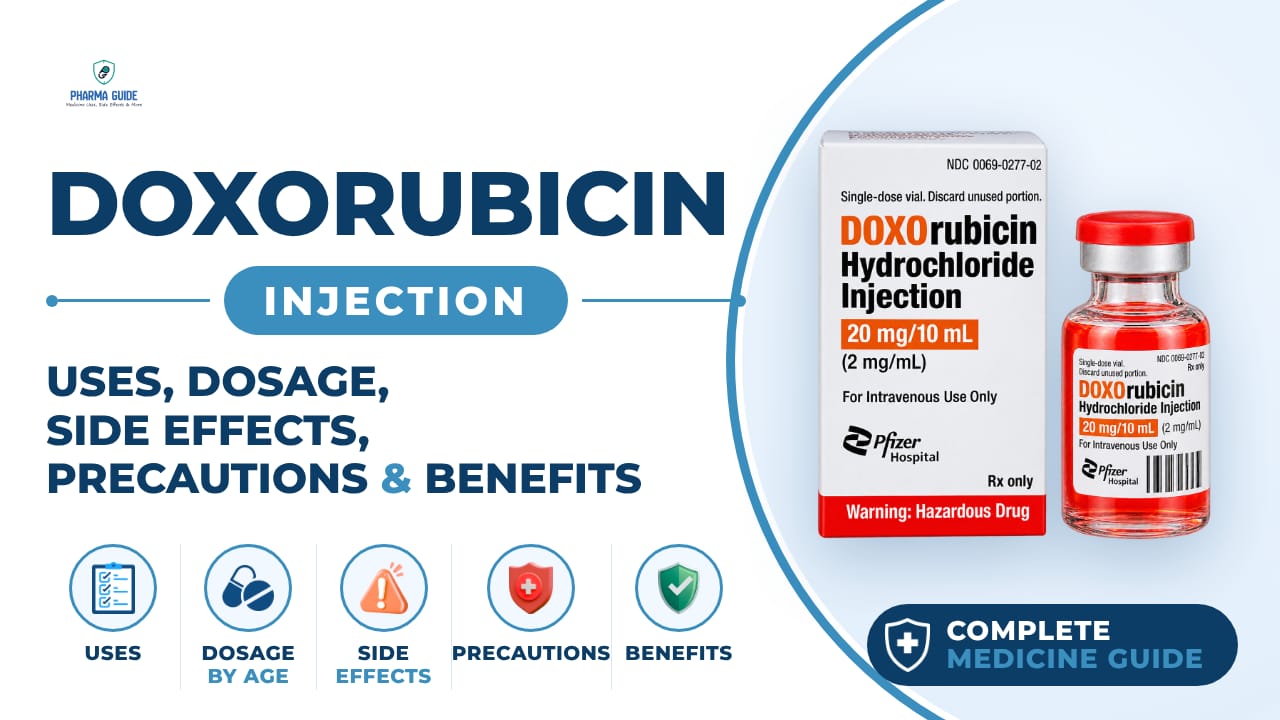
Doxorubicin Injection: Uses, Dosage, Side Effects, Precautions and Alternates
| Generic name | Doxorubicin Hydrochloride |
|---|---|
| Drug class | Anthracycline antibiotic (topoisomerase II inhibitor) |
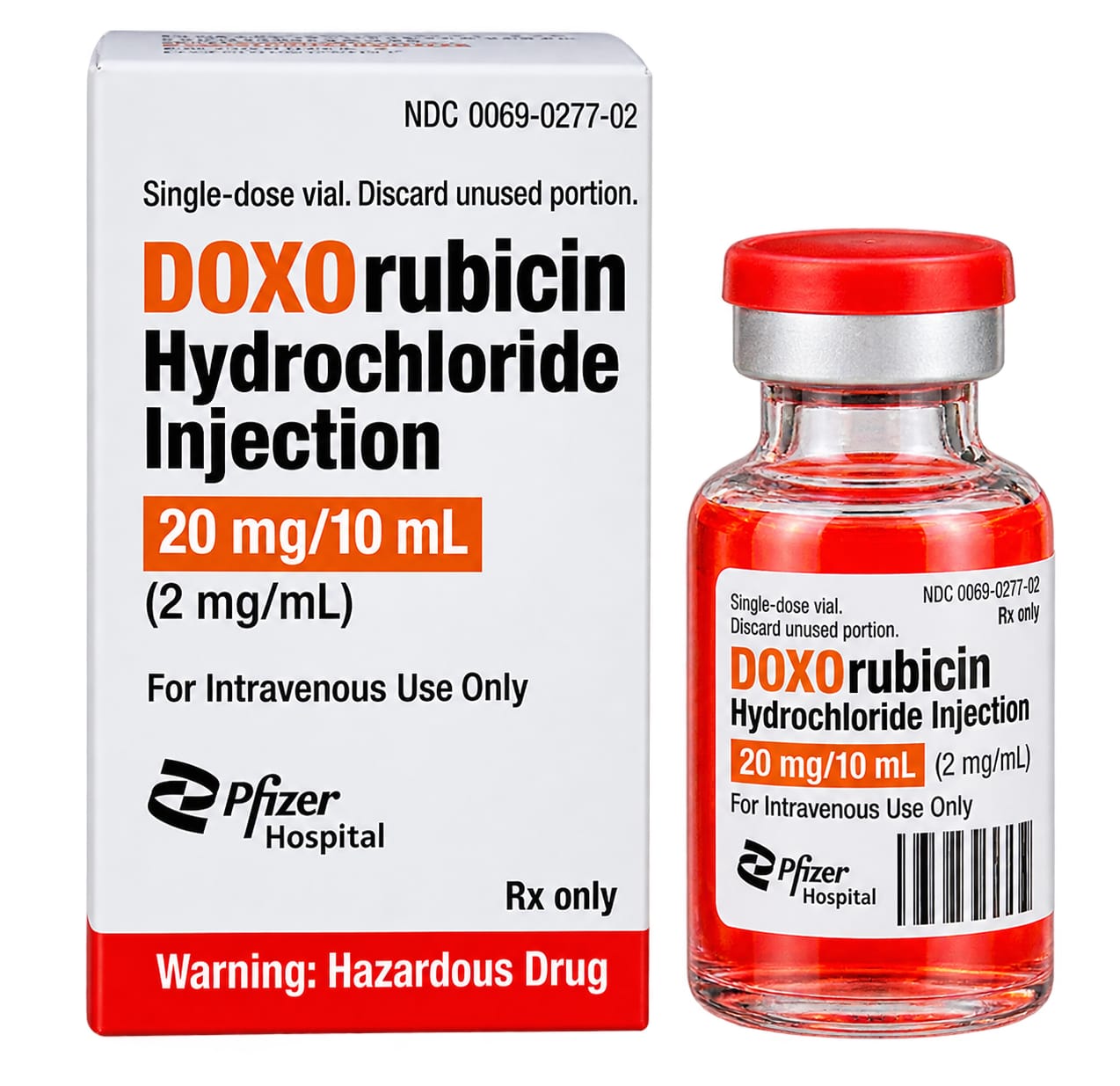
| Forms | Injection |
Quick overview
Doxorubicin Injection (Doxorubicin Hydrochloride) is an anthracycline antibiotic chemotherapy medicine given by injection into a vein to treat a range of cancers. It works by blocking an enzyme cancer cells need to divide, causing the cancer cells to die. It is given only in a hospital or clinic setting by a trained healthcare professional, usually once every 21 to 28 days, and requires regular monitoring of blood counts and heart function.
What is Doxorubicin Injection
Doxorubicin is a powerful chemotherapy medicine given by injection into a vein. It is made from a type of bacteria and belongs to a group of cancer medicines called anthracyclines. It is sometimes called the "red devil" because of its bright red color.
Doxorubicin Injection uses
- Breast cancer
- Ovarian cancer
- Bladder cancer
- Thyroid cancer
- Stomach (gastric) cancer
- Soft tissue and bone sarcomas
- Hodgkin lymphoma and non-Hodgkin lymphoma
- Acute lymphoblastic leukemia (ALL)
- Acute myeloblastic leukemia (AML)
- Small-cell lung cancer (bronchogenic carcinoma)
- Neuroblastoma
- Wilms' tumor (a kidney cancer in children)
Benefits of Doxorubicin Injection
- Can shrink tumors and reduce spread of cancer in many solid tumors and blood cancers
- Used as part of combination chemotherapy to improve outcomes after breast cancer surgery
How Doxorubicin Injection works
Doxorubicin works by attaching to the DNA inside cancer cells and blocking an enzyme called topoisomerase II. This stops the cancer cells from copying their genetic material and dividing, which causes the cells to die.
Doxorubicin Injection dosage
Doxorubicin Injection is given only as an injection into a vein (intravenous) by a trained healthcare professional in a hospital or clinic setting; it is not taken by mouth. It is usually given once every 21 to 28 days as part of a treatment cycle. The injection is given slowly, and the infusion rate may be slowed if burning, stinging, or flushing of the face occurs.
This medicine should not be mixed with other medicines in the same IV line, particularly heparin or fluorouracil, due to the risk of a precipitate forming. Tell your healthcare provider right away if you feel burning or stinging at the injection site, as this may mean the drug is leaking outside the vein.
Your urine may appear red or pink for 1 to 2 days after treatment; this is expected and not a cause for alarm unless it continues or you see blood clots. Blood tests and heart function tests will be done before and during treatment to monitor for side effects. Older patients and those who have had a lot of prior treatment may receive a lower dose or longer time between cycles.
| Age group | Dose |
|---|---|
| Under 18 years | Not fixed |
| 18–60 years | 60–75 mg, once every 21 days |
| 60+ years | 40–60 mg, once every 21 days |
Available forms and strengths
- Injection
Side effects of Doxorubicin Injection
Common
- Hair loss (alopecia)
- Nausea and vomiting
- Mouth sores and inflammation (mucositis/stomatitis)
- Low blood cell counts (leukopenia, anemia, low platelets)
- Fatigue/weakness
- Fever and chills
- Loss of appetite
- Red-colored urine for 1-2 days after treatment
- Skin and nail darkening (hyperpigmentation)
- Diarrhea
- Hand-foot syndrome (redness, pain, or peeling on palms and soles)
Serious
- Heart muscle damage that can lead to heart failure, which can occur during treatment or months to years later
- Serious or life-threatening irregular heartbeats (arrhythmias)
- Severe tissue damage or necrosis if the drug leaks out of the vein (extravasation)
- Severe lowering of blood cell counts leading to serious infection, bleeding, or need for transfusion
- Secondary blood cancers such as acute myeloid leukemia or myelodysplastic syndrome
- Severe allergic reaction (anaphylaxis)
- Tumor lysis syndrome in patients with fast-growing tumors
- Severe mucositis or gastrointestinal bleeding
Warnings and precautions
- This medicine can cause heart muscle damage that may lead to heart failure, which can happen during treatment or even years after stopping. The risk increases with higher total lifetime doses.
- This medicine increases the risk of developing a secondary blood cancer such as acute myeloid leukemia or myelodysplastic syndrome, usually within 1 to 3 years of treatment.
- If this medicine leaks out of the vein during the injection, it can cause severe tissue damage and destruction that may need surgery and skin grafting.
- This medicine can severely lower blood cell counts, which can lead to serious infection, septic shock, need for blood transfusion, hospital stay, or death.
- This medicine must never be given as a muscle or under-the-skin injection because it can cause severe tissue destruction; it is only given into a vein.
- Patients should not receive live or live-attenuated vaccines while on this medicine because it can cause serious or fatal infections due to a weakened immune system.
- This medicine should not be combined with trastuzumab because together they significantly increase the risk of heart damage.
- Doxorubicin can harm an unborn baby and should not be used during pregnancy, especially in the first three months.
- Women who can become pregnant should use effective birth control during and for 6 months after treatment.
- Breastfeeding is not recommended during treatment and for at least 10 days after the last dose because the drug passes into breast milk and could seriously harm the baby.
- The effect of kidney problems on how the body handles this drug has not been well studied, and kidney function is not expected to change how the drug works in the body.
- This medicine must not be used in people with severe liver problems. In people with mild to moderate liver problems, the dose must be lowered because the liver is the main way the body removes this drug.
- It is not known whether this medicine affects the ability to drive or operate machinery, as this has not been studied.
Storage
- Store at 2°C to 8°C (refrigerated)
- Protect from light
- Do not freeze
- Keep out of reach of children
- If the solution forms a gel after refrigeration, letting it sit at room temperature for 2 to 4 hours will return it to a usable liquid form
- Discard any unused portion from single-dose vials
When to see a doctor
- Get medical help right away if you have signs of heart failure such as extreme tiredness, shortness of breath, fast heartbeat, or swelling of the feet and ankles.
- Seek medical help immediately if you feel your heart beating fast, irregular, or slow, or if you feel lightheaded, dizzy, short of breath, have chest discomfort, or faint.
- Call your healthcare provider right away if you have a fever of 100.4°F (38°C) or higher, or chills with shivering, as this could signal a serious infection.
- Tell your healthcare provider immediately if you feel burning or stinging during your infusion, as this could mean the medicine is leaking out of the vein and damaging the skin.
- Contact your healthcare provider if you have severe nausea, vomiting, diarrhea, or mouth pain or sores that prevent you from eating or drinking.
Alternatives
- Daunorubicin Injection
- Idarubicin Injection
- Mitoxantrone Injection
Watch the video
FAQs
Why is urine red or pink after Doxorubicin Injection?
Red or pink urine for 1 to 2 days after treatment is expected and not a cause for alarm unless it continues or you see blood clots.
How often is Doxorubicin Injection given?
It is usually given once every 21 to 28 days as part of a treatment cycle, given slowly into a vein by a trained healthcare professional.
What are the serious side effects of Doxorubicin Injection?
Serious side effects include heart muscle damage that can lead to heart failure, life-threatening irregular heartbeats, severe tissue damage if the drug leaks from the vein, severe lowering of blood cell counts, secondary blood cancers, severe allergic reaction, tumor lysis syndrome, and severe mucositis or gastrointestinal bleeding.
Can Doxorubicin Injection be used during pregnancy?
No, it can harm an unborn baby and should not be used during pregnancy, especially in the first three months. Women who can become pregnant should use effective birth control during and for 6 months after treatment.
Why is Doxorubicin Injection given only into a vein?
It must never be given as a muscle or under-the-skin injection because it can cause severe tissue destruction; it is only given into a vein by a trained healthcare professional.
General information, not medical advice
Your prescriber and the leaflet in your pack know your situation. This page does not.
- Follow your prescriber and the leaflet
- Don't start, stop, or change a dose on your own
- Doses and warnings differ by country and product
Sources
Video
Related medicines

Injectafer Injection: Uses, Dosage, Side Effects, Precautions and Alternates
Iron products
Injectafer (ferric carboxymaltose) treats iron deficiency anemia and heart failure-related iron deficiency via IV. Learn uses, dosage, side effects, and

Gliclazide Tablet: Uses, Dosage, Side Effects, Precautions and Alternates
Sulfonylurea (hypoglycemic/antidiabetic agent)
Gliclazide Tablet is a sulfonylurea for type 2 diabetes that boosts insulin release. Learn about dosage, side effects, warnings, and precautions.