
Safety
General information, not medical advice
Your prescriber and the leaflet in your pack know your situation. This page does not.
- Follow your prescriber and the leaflet
- Don't start, stop, or change a dose on your own
- Doses and warnings differ by country and product
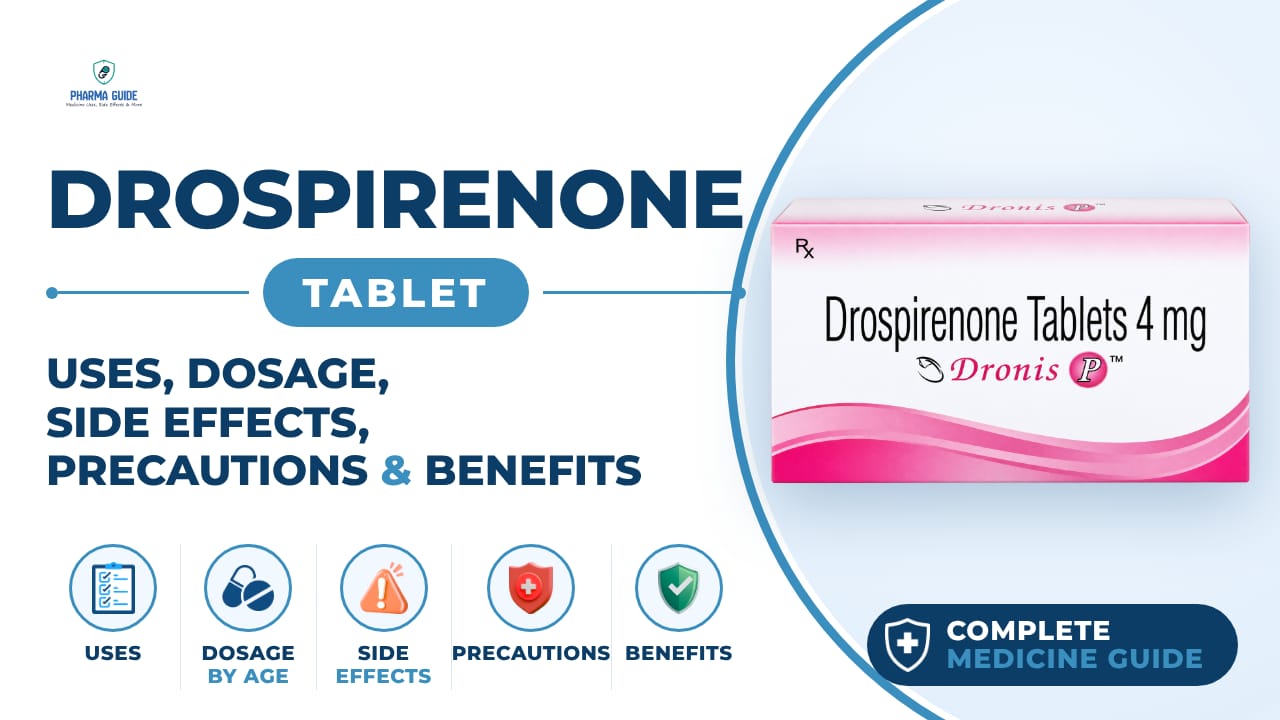
Drospirenone Tablet: Uses, Dosage, Side Effects, Precautions and Alternates
| Generic name | drospirenone |
|---|---|
| Drug class | progestin-only contraceptive, oral contraceptive |
| Forms | tablet |
Quick overview
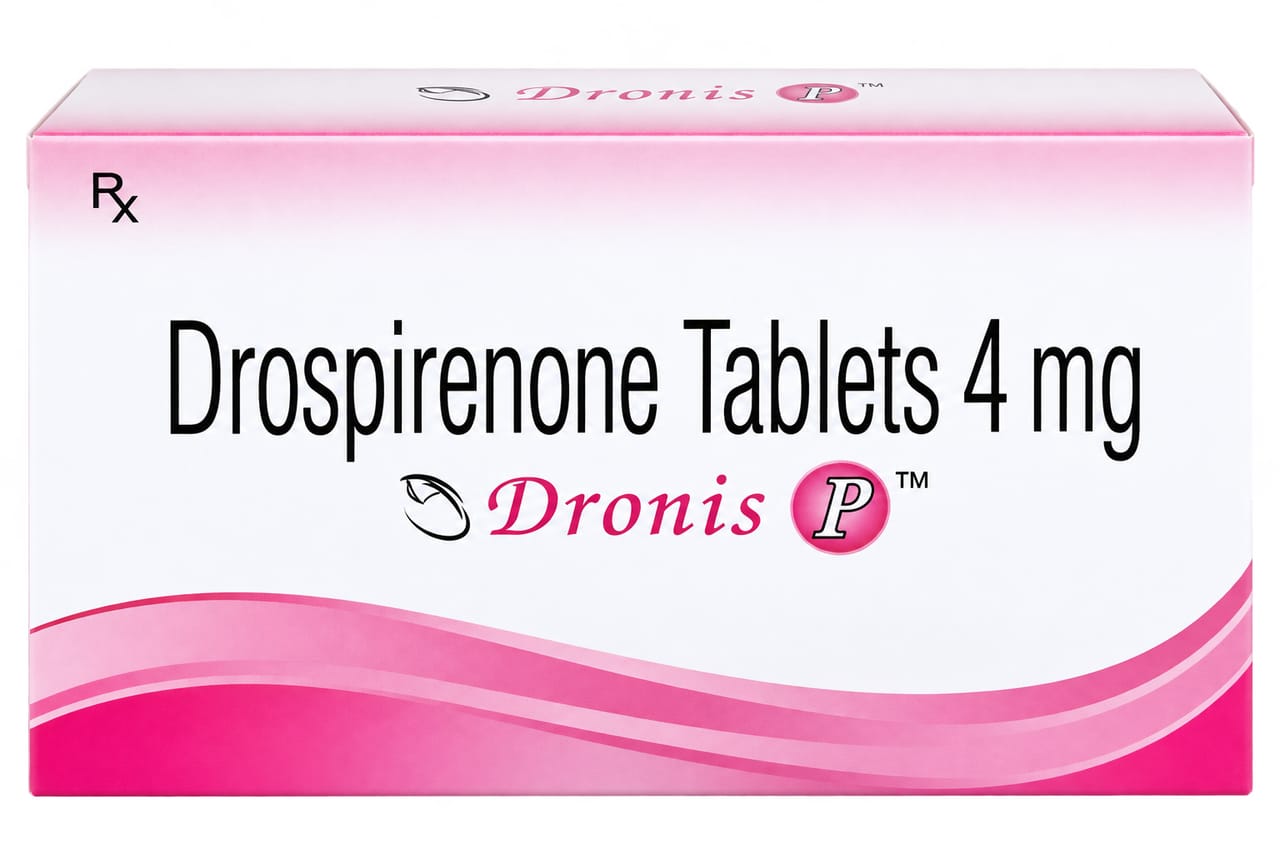
Drospirenone Tablet is a progestin-only birth control pill used to help prevent pregnancy. It contains no estrogen, making it suitable for some people who cannot use estrogen-containing contraception. The tablets are taken once daily on a 28-day schedule, exactly as prescribed by a health care provider.
What is Drospirenone Tablet
Drospirenone is a birth control pill that contains a hormone called a progestin. It is used by women to help prevent pregnancy.
Drospirenone Tablet uses
- Preventing pregnancy (contraception)
- Used as a second-line progestogen-only pill when other pills are not suitable
- May be used for other conditions as determined by your health care provider
Benefits of Drospirenone Tablet
- Provides pregnancy prevention
- Contains no estrogen
- Suitable for some people who cannot use estrogen-containing contraception
- Suppresses ovulation
- May produce lighter or absent menstrual bleeding in some users
How Drospirenone Tablet works
This medicine works mainly by stopping the ovary from releasing an egg. It also changes the mucus at the entrance of the womb and the womb lining to help prevent pregnancy.
Drospirenone Tablet dosage
Take tablets in order at the same time every day until the pack is finished, and swallow them whole. After finishing one pack, start the first tablet of a new pack the next day. If you vomit or have diarrhea within three to four hours of taking an active (white) tablet, follow the instructions for a missed dose, and take the replacement dose within 12 to 24 hours if possible.
You may have skipped periods or irregular spotting when you start this medicine; tell your health care provider if this continues or happens after your periods become regular. This pill is usually started on the first day of your natural menstrual cycle. Do not share this medicine with others, even if they have a similar condition.
| Age group | Dose |
|---|---|
| Post-pubertal adolescents | 4 mg once daily on the prescribed 28-day contraceptive schedule |
| 18–49 years | 4 mg once daily on the prescribed 28-day contraceptive schedule |
Available forms and strengths
- Tablet
Side effects of Drospirenone Tablet
Common
- Acne
- Painful or irregular periods
- Headache
- Breast pain or tenderness
- Weight gain
- Nausea
- Low sex drive
- Mood changes
Serious
- Severe allergic reactions (breathing problems, swelling of face/lips/tongue, hives, dizziness, fainting)
- High potassium levels (muscle weakness, slow or abnormal heartbeat, trouble breathing)
- Blood clots, stroke, heart attack, or pulmonary embolism (chest pain, trouble breathing, sudden weakness on one side, severe headache, vision loss)
- Cancer sensitivity concerns (breast cancer, cervical cancer)
- Liver damage (yellowing skin or eyes, dark urine, light-colored stool, stomach pain)
- Ectopic pregnancy (stomach pain or pregnancy while taking this medicine)
Warnings and precautions
- Do not take this medicine if you are allergic to drospirenone or any of its ingredients.
- Do not take this medicine if you have adrenal insufficiency, a condition where the adrenal glands do not make enough cortisol.
- Do not take this medicine if you have or had cervical cancer or a cancer that is sensitive to female hormones, such as breast cancer.
- Do not take this medicine if you have unusual vaginal bleeding that is not part of your normal cycle, until it has been checked by your health care provider.
- This medicine does not protect against HIV, AIDS, or other sexually transmitted infections.
- This medicine should not be used by people with severe kidney problems, high potassium levels, or untreated Addison's disease, or by people taking certain water pills or potassium supplements.
- People who smoke should avoid this medicine because of increased risks to the heart and blood vessels.
- Do not take this medicine if you are pregnant or think you may be pregnant. If you become pregnant while taking it, stop and contact your health care provider right away.
- This medicine passes into breast milk. Tell your health care provider if you are breastfeeding or plan to, so they can advise you.
- This medicine should not be used if your kidneys are not working well. Your health care provider may test your kidney function before prescribing it.
- This medicine should not be used if your liver is not working well or if you have liver tumors. Your health care provider may test your liver function first.
- There are no known interactions between this medicine and alcohol.
- This medicine is generally not expected to affect driving; avoid driving if dizziness occurs.
Storage
- Store at room temperature, between 68 F and 77 F (20 C and 25 C)
- Can be exposed to temperatures between 59 F and 86 F (15 C and 30 C) for shorter periods, such as when traveling
- Store in a cool, dry place
- Only remove a tablet from the blister pack when you are ready to take it
When to see a doctor
- Stop taking this medicine and get help right away if you have signs of a serious allergic reaction, such as breathing problems, swelling of the face or throat, hives, or dizziness.
- Call your health care provider right away if you have signs of high potassium levels, such as muscle weakness, slow or skipped heartbeats, or trouble breathing.
- Stop using this medicine and get emergency help right away if you have signs of a blood clot, such as chest pain, trouble breathing, sudden weakness on one side of the body, or sudden severe headache.
- Call your health care provider right away if you have signs of liver damage, such as yellowing skin or eyes, dark urine, or stomach pain.
- Stop taking this medicine and call your health care provider right away if you have stomach pain or think you may be pregnant, as this could be a sign of a pregnancy outside the womb.
- If you take too much of this medicine, get medical help right away or contact a poison control center.
Alternatives
- Desogestrel
- Norethindrone
- Levonorgestrel-containing contraceptives
Watch the video
FAQs
What is Drospirenone Tablet used for?
It is used for preventing pregnancy (contraception) and may be used as a second-line progestogen-only pill when other pills are not suitable.
How does Drospirenone Tablet work?
It works mainly by stopping the ovary from releasing an egg. It also changes the mucus at the entrance of the womb and the womb lining to help prevent pregnancy.
What is the dosage of Drospirenone Tablet?
The dose is 4 mg once daily on the prescribed 28-day contraceptive schedule for post-pubertal adolescents and adults aged 18 to 49 years. Tablets should be taken in order at the same time every day until the pack is finished.
What are the common side effects of Drospirenone Tablet?
Common side effects include acne, painful or irregular periods, headache, breast pain or tenderness, weight gain, nausea, low sex drive, and mood changes.
Who should not take Drospirenone Tablet?
It should not be taken by people allergic to drospirenone, those with adrenal insufficiency, cervical cancer or hormone-sensitive cancers like breast cancer, unusual vaginal bleeding that hasn't been checked, severe kidney problems, high potassium levels, or untreated Addison's disease.
General information, not medical advice
Your prescriber and the leaflet in your pack know your situation. This page does not.
- Follow your prescriber and the leaflet
- Don't start, stop, or change a dose on your own
- Doses and warnings differ by country and product
Sources
Video
Related medicines

Injectafer Injection: Uses, Dosage, Side Effects, Precautions and Alternates
Iron products
Injectafer (ferric carboxymaltose) treats iron deficiency anemia and heart failure-related iron deficiency via IV. Learn uses, dosage, side effects, and

Gliclazide Tablet: Uses, Dosage, Side Effects, Precautions and Alternates
Sulfonylurea (hypoglycemic/antidiabetic agent)
Gliclazide Tablet is a sulfonylurea for type 2 diabetes that boosts insulin release. Learn about dosage, side effects, warnings, and precautions.