
Safety
General information, not medical advice
Your prescriber and the leaflet in your pack know your situation. This page does not.
- Follow your prescriber and the leaflet
- Don't start, stop, or change a dose on your own
- Doses and warnings differ by country and product
Duetact Tablet: Uses, Dosage, Side Effects, Precautions and Alternates
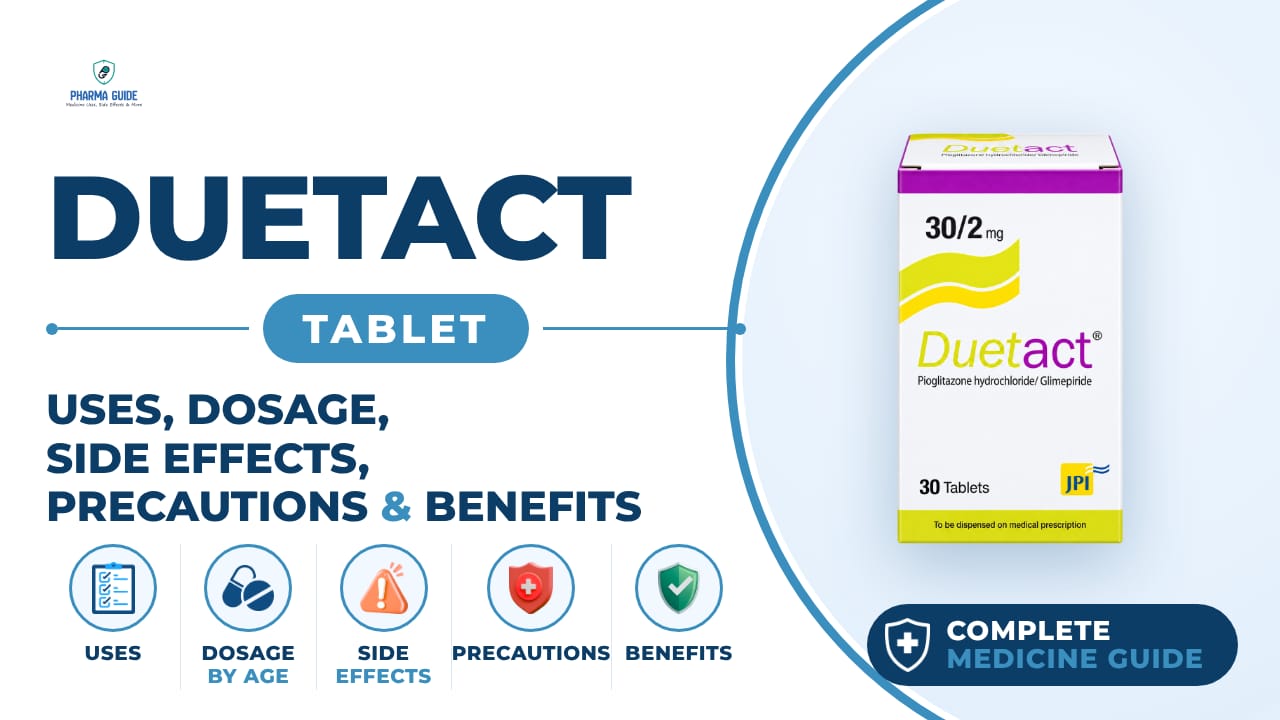
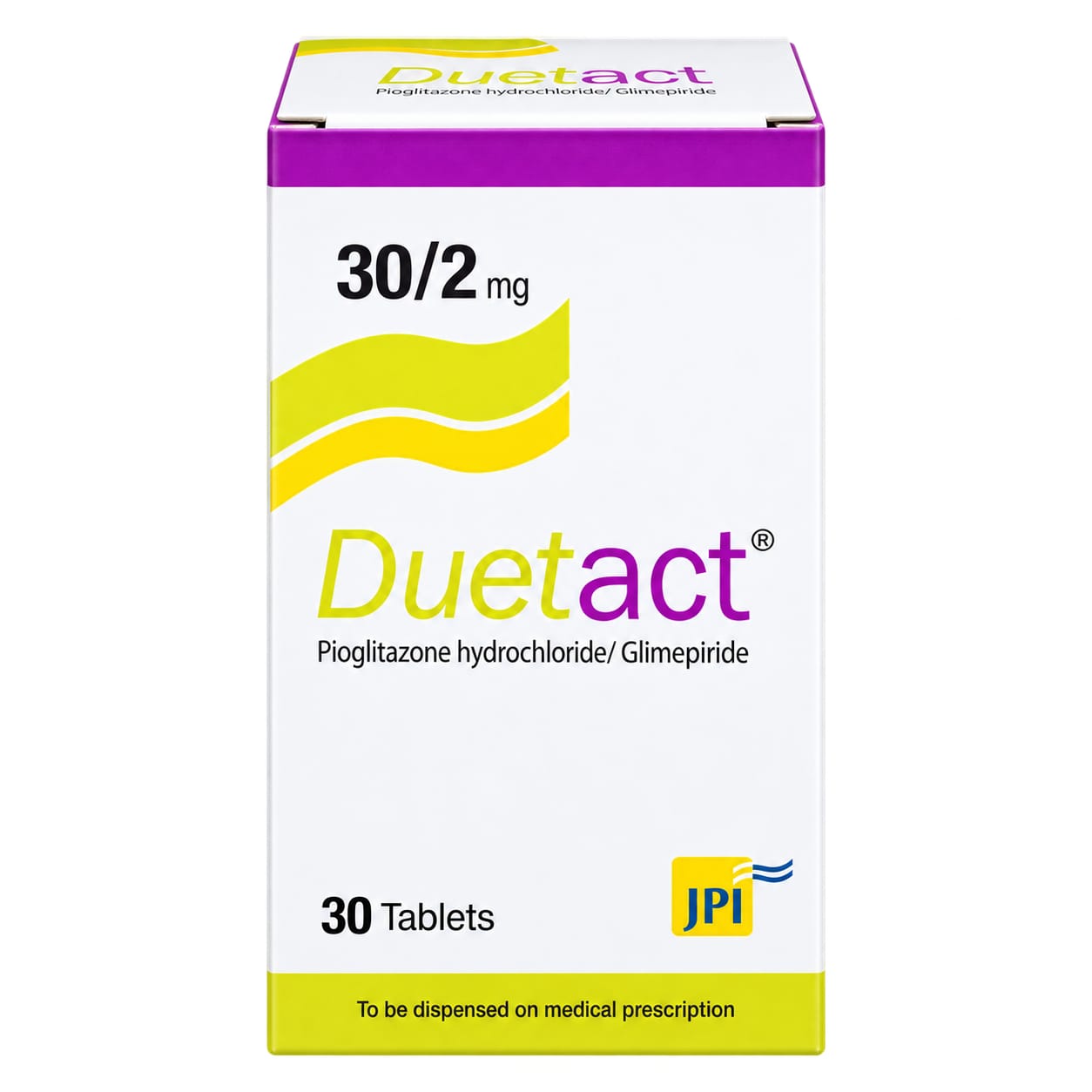
| Generic name | pioglitazone hydrochloride and glimepiride |
|---|---|
| Drug class | Antidiabetic combination (thiazolidinedione plus sulfonylurea) |
| Forms | Tablet (30 mg pioglitazone/2 mg glimepiride), Tablet (30 mg pioglitazone/4 mg glimepiride) |
Quick overview
Duetact Tablet contains pioglitazone hydrochloride and glimepiride, an antidiabetic combination of a thiazolidinedione and a sulfonylurea. It is a prescription medicine used together with diet and exercise to help control blood sugar in adults with type 2 diabetes. Duetact works by making the body more sensitive to insulin and by helping the pancreas release more insulin. It is taken once daily and requires regular monitoring by a doctor.
What is Duetact Tablet
Duetact is a prescription medicine that combines two oral diabetes medicines, pioglitazone (a thiazolidinedione) and glimepiride (a sulfonylurea), used together with diet and exercise to help control blood sugar in adults with type 2 diabetes.
Duetact Tablet uses
- Improves blood sugar control in adults with type 2 diabetes who are already taking pioglitazone and a sulfonylurea together
- Used in patients whose diabetes is not adequately controlled with a sulfonylurea alone
- Used in patients who have responded to pioglitazone alone but need additional blood sugar control
Benefits of Duetact Tablet
- Combines two different mechanisms to lower blood sugar more than either medicine alone
- Taken once daily for convenience
- Can improve long-term blood sugar control as measured by A1C
How Duetact Tablet works
Duetact works in two ways: pioglitazone makes the body's cells more sensitive to insulin so they use blood sugar better, while glimepiride causes the pancreas to release more insulin.
Duetact Tablet dosage
Take Duetact once a day with your first main meal. Do not change your dose unless your doctor tells you to. Stay on your diet and exercise program and test your blood sugar regularly while taking this medicine. If you take colesevelam (a cholesterol medicine), take Duetact at least 4 hours before taking colesevelam. If you miss a dose, take it as soon as you remember unless it is almost time for your next dose; do not take a double dose to make up for a missed one. Your doctor should check blood tests for your liver, kidneys, and blood cells before you start and periodically during treatment, and should check your eyes regularly while you take this medicine.
| Age group | Dose |
|---|---|
| Under 18 years | Safety and effectiveness are not established; no standard pediatric dose |
| 18–64 years | Common starting dose is pioglitazone 30 mg + glimepiride 2 mg once daily or 30 mg + 4 mg once daily, depending on previous therapy |
| 65–74 years | Usually started cautiously, often with the lower available strength, because hypoglycemia risk may be greater |
| 75 years and older | Individualized carefully with close monitoring of blood glucose, kidney function, fluid retention, and hypoglycemia |
Available forms and strengths
- Tablet (30 mg pioglitazone/2 mg glimepiride)
- Tablet (30 mg pioglitazone/4 mg glimepiride)
Side effects of Duetact Tablet
Common
- Cold-like symptoms (upper respiratory tract infection)
- Headache
- Urinary tract infection
- Diarrhea
- Nausea
- Arm or leg pain (muscle pain)
- Decreased red blood cell count
- Sinus infection
- Sore throat
Serious
- Heart failure (swelling, shortness of breath, rapid weight gain, unusual tiredness)
- Low blood sugar (hypoglycemia) causing lightheadedness, dizziness, shakiness, hunger, or in severe cases unconsciousness or seizures
- Liver problems (nausea, vomiting, stomach pain, unusual tiredness, loss of appetite, dark urine, yellowing of skin or eyes)
- Bladder cancer (blood in urine, increased urge to urinate, pain while urinating)
- Broken bones, usually in the hand, upper arm, or foot in women
- Diabetic eye disease with swelling in the back of the eye (macular edema)
- Ovulation in premenopausal women leading to unexpected pregnancy
- Severe allergic reaction (hives, difficulty breathing, swelling of face or throat)
- Severe skin reaction (fever, sore throat, burning eyes, skin pain, blistering or peeling rash)
Warnings and precautions
- Duetact can cause or worsen heart failure due to fluid retention; patients should watch for swelling, shortness of breath, or rapid weight gain and should not take this medicine if they have severe heart failure.
- Oral diabetes medicines like glimepiride have been linked in studies to an increased risk of death from heart and blood vessel problems compared to diet alone or diet plus insulin.
- This medicine should not be used in people with diabetic ketoacidosis, which needs to be treated with insulin instead.
- There may be an increased risk of bladder cancer with this medicine, and it should not be used by people currently being treated for bladder cancer.
- Women taking this medicine may have a higher chance of broken bones, usually in the hand, upper arm, or foot.
- This medicine may cause ovulation in premenopausal women who do not have regular periods, increasing the chance of pregnancy, so birth control should be discussed with a doctor.
- Duetact is not recommended during pregnancy because it is not known if it can harm an unborn baby. Most experts recommend insulin to control blood sugar during pregnancy.
- Duetact should not be used while breastfeeding because it is not known if it passes into breast milk or if it could harm the baby.
- People with kidney problems may need a lower starting dose and careful monitoring because of increased sensitivity to the blood-sugar-lowering effects.
- Duetact should not be started in people with active liver disease or significantly elevated liver enzymes, and liver function should be checked before and during treatment.
- Alcohol should be avoided because it can lower blood sugar further and interfere with diabetes treatment.
Storage
- Store at room temperature, 68° to 77°F, in its original container
- Keep the bottle tightly closed and protect from moisture and light
- Keep out of the reach of children
When to see a doctor
- Call your doctor right away if you have swelling in your ankles or legs, shortness of breath or trouble breathing (especially lying down), unusual tiredness, or a sudden increase in weight.
- Seek immediate medical help for signs of liver problems such as nausea, vomiting, stomach pain, unusual tiredness, loss of appetite, dark urine, or yellowing of your skin or eyes.
- Get emergency help for signs of a severe allergic reaction, such as hives, difficulty breathing, or swelling of the face or throat.
- Tell your doctor right away if you notice blood or a red color in your urine, a new or worsening urge to urinate, or pain when urinating, which could be signs of bladder cancer.
- If you take too much Duetact, contact your doctor or go to the nearest emergency room right away, since overdose can cause dangerously low blood sugar.
Alternatives
- Pioglitazone
- Glimepiride
- Metformin
Watch the video
FAQs
What is Duetact Tablet used for?
Duetact is used along with diet and exercise to improve blood sugar control in adults with type 2 diabetes who are already taking pioglitazone and a sulfonylurea together, or whose diabetes is not adequately controlled with a sulfonylurea or pioglitazone alone.
How does Duetact Tablet work?
Duetact contains pioglitazone, which makes the body's cells more sensitive to insulin so they use blood sugar better, and glimepiride, which causes the pancreas to release more insulin.
How should Duetact Tablet be taken?
Duetact should be taken once a day with your first main meal, without changing the dose unless your doctor advises, while continuing diet and exercise and testing blood sugar regularly. If you take colesevelam, take Duetact at least 4 hours before it.
What are the serious side effects of Duetact Tablet?
Serious side effects include heart failure, low blood sugar, liver problems, bladder cancer, broken bones (usually in the hand, upper arm, or foot in women), diabetic eye disease (macular edema), unexpected pregnancy due to ovulation in premenopausal women, and severe allergic or skin reactions.
Can Duetact Tablet be used during pregnancy or breastfeeding?
Duetact is not recommended during pregnancy, as most experts recommend insulin instead, and it should not be used while breastfeeding because it is not known if it passes into breast milk or could harm the baby.
General information, not medical advice
Your prescriber and the leaflet in your pack know your situation. This page does not.
- Follow your prescriber and the leaflet
- Don't start, stop, or change a dose on your own
- Doses and warnings differ by country and product
Sources
Video
Related medicines

Injectafer Injection: Uses, Dosage, Side Effects, Precautions and Alternates
Iron products
Injectafer (ferric carboxymaltose) treats iron deficiency anemia and heart failure-related iron deficiency via IV. Learn uses, dosage, side effects, and

Gliclazide Tablet: Uses, Dosage, Side Effects, Precautions and Alternates
Sulfonylurea (hypoglycemic/antidiabetic agent)
Gliclazide Tablet is a sulfonylurea for type 2 diabetes that boosts insulin release. Learn about dosage, side effects, warnings, and precautions.