
Safety
General information, not medical advice
Your prescriber and the leaflet in your pack know your situation. This page does not.
- Follow your prescriber and the leaflet
- Don't start, stop, or change a dose on your own
- Doses and warnings differ by country and product
Duexis Tablet: Uses, Dosage, Side Effects, Precautions and Alternates
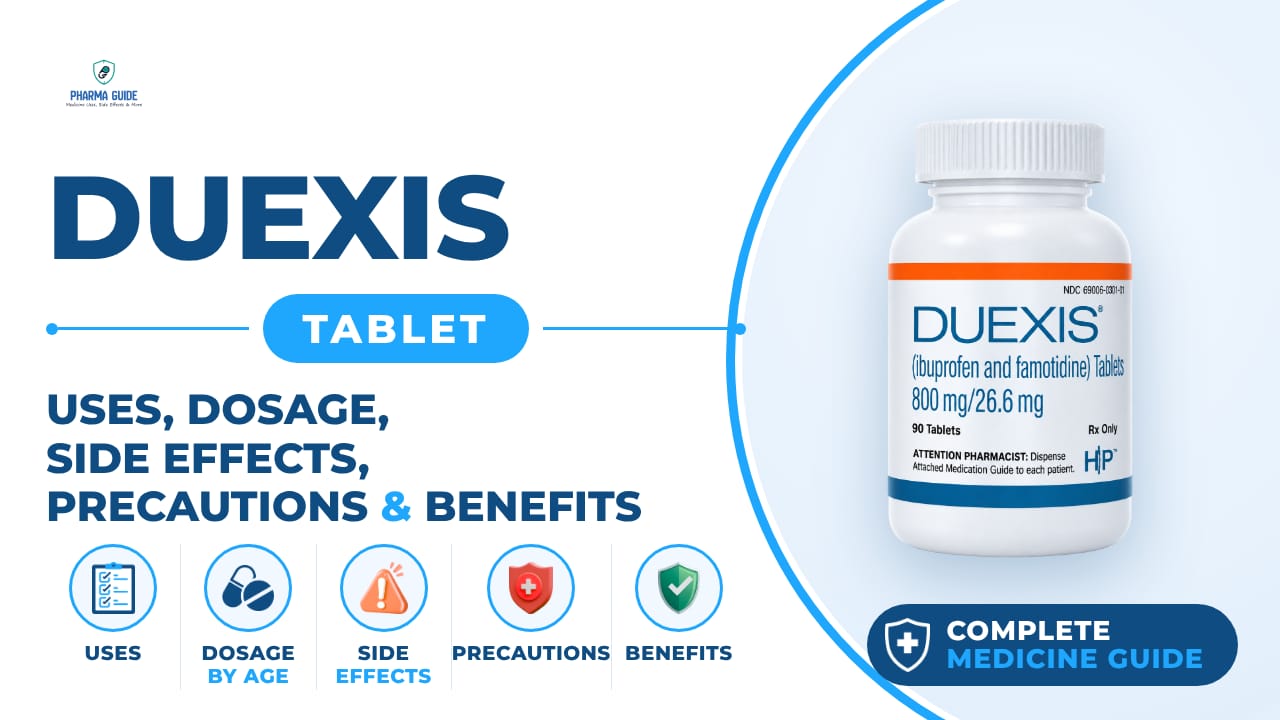
| Generic name | famotidine and ibuprofen |
|---|---|
| Drug class | Nonsteroidal anti-inflammatories (NSAIDs) |
| Forms | Tablet |
Quick overview
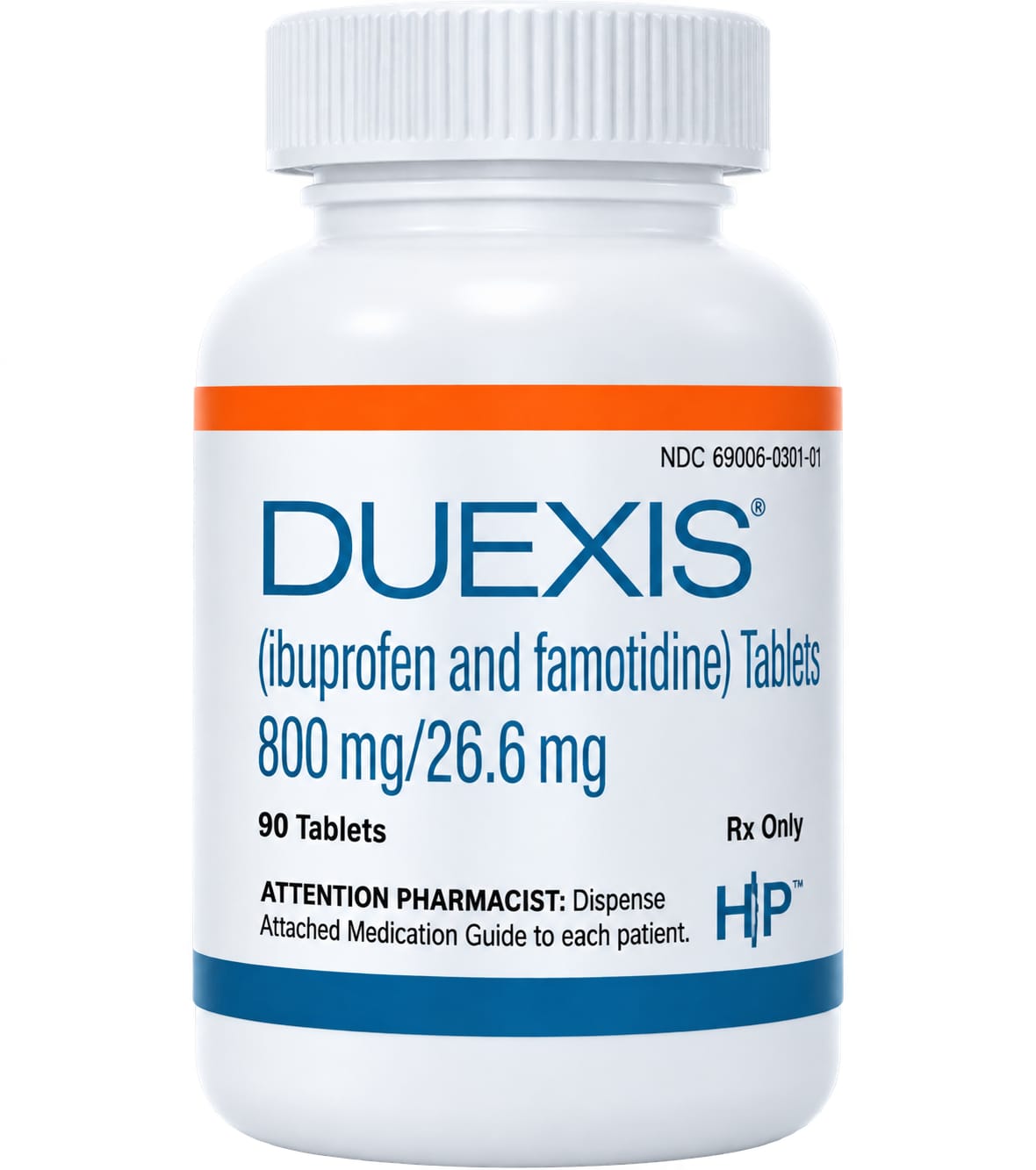
Duexis Tablet is a combination medicine containing famotidine and ibuprofen, used to relieve the signs and symptoms of rheumatoid arthritis and osteoarthritis while reducing the risk of upper gastrointestinal ulcers that can occur with long-term ibuprofen use. Famotidine lowers stomach acid production, while ibuprofen is a nonsteroidal anti-inflammatory drug (NSAID) that eases pain and inflammation. Note: the Duexis brand name has been discontinued in the U.S., though generic versions may be available.
What is Duexis Tablet
Duexis contains a combination of famotidine and ibuprofen. Famotidine is a histamine blocker that decreases the amount of acid the stomach produces. Ibuprofen is a nonsteroidal anti-inflammatory drug (NSAID) that treats arthritis symptoms, while famotidine helps reduce the risk of stomach or intestinal ulcers that can be caused by long-term ibuprofen use.
Duexis Tablet uses
- Relief of the signs and symptoms of rheumatoid arthritis
- Relief of the signs and symptoms of osteoarthritis
- Decreasing the risk of developing upper gastrointestinal ulcers (gastric and/or duodenal) in patients taking ibuprofen for these conditions
Benefits of Duexis Tablet
- Combines pain and inflammation relief with reduced risk of stomach ulcers compared to ibuprofen alone
- May improve adherence to gastroprotective therapy by using a single tablet instead of two separate medicines
How Duexis Tablet works
Ibuprofen blocks the body's production of substances that cause inflammation and pain, which reduces swelling and pain. Famotidine reduces the amount of acid the stomach produces, which helps prevent ulcers.
Duexis Tablet dosage
Take this medication by mouth as directed by your doctor, usually three times a day. Take it with a full glass of water. Do not lie down for at least 10 minutes after taking this drug. If you have stomach upset while taking this medication, take it with food, milk, or an antacid. Swallow the tablet whole; do not chew, crush, or split it, since splitting may not provide enough famotidine to protect against ulcers. Use the lowest effective dose for the shortest possible time. It may take up to two weeks of taking this drug regularly until you get the full benefit. Take this medication regularly and at the same times each day to get the most benefit. Tell your doctor if your condition lasts or gets worse.
| Age group | Dose |
|---|---|
| Under 18 years | Not recommended |
| 18–64 years | 1 tablet 3 times daily |
| 65 years & older | 1 tablet 3 times daily only if prescribed; use cautiously |
Available forms and strengths
- Tablet
Side effects of Duexis Tablet
Common
- Nausea
- Stomach pain/upset stomach or indigestion
- Diarrhea
- Constipation
- Headache
- Dizziness
- Drowsiness
- Upper respiratory tract infection
Serious
- Signs of an allergic reaction (sneezing, runny or stuffy nose; wheezing or trouble breathing; swelling in face or throat)
- Severe skin reaction (fever, sore throat, burning eyes, skin pain, red or purple skin rash with blistering and peeling)
- Signs of a heart attack or stroke (chest pain spreading to jaw or shoulder, sudden numbness or weakness on one side of the body, slurred speech, leg swelling, feeling short of breath)
- Changes in vision
- Any skin rash, no matter how mild
- Fever, headache, neck stiffness, increased sensitivity to light, nausea, vomiting, confusion, drowsiness (signs of aseptic meningitis)
- Severe headache, blurred vision, pounding in neck or ears
- Little or no urination
- Swelling, rapid weight gain
- Liver problems: loss of appetite, stomach pain (upper right side), tiredness, itching, dark urine, clay-colored stools, jaundice
- Low red blood cells (anemia): pale skin, unusual tiredness, feeling light-headed or short of breath, cold hands and feet
- Signs of stomach bleeding: bloody or tarry stools, coughing up blood or vomit that looks like coffee grounds
- Easy bruising or bleeding
- Hearing changes such as ringing in the ears
- Mental or mood changes
- Unexplained stiff neck
- Signs of kidney problems such as change in the amount of urine
- Symptoms of heart failure such as swelling of ankles/feet, unusual tiredness, unusual or sudden weight gain
- Fast, slow, or irregular heartbeat
- Severe dizziness, fainting, seizure
Warnings and precautions
- If you are pregnant, you should not take Duexis unless your doctor tells you to.
- Taking an NSAID during the last 20 weeks of pregnancy can cause serious heart or kidney problems in the unborn baby and possible complications with your pregnancy.
- It is not recommended for use in pregnancy from 20 weeks until delivery, and should not be used after 30 weeks of pregnancy.
- It may not be safe to breastfeed while using this medicine. This medication passes into breast milk, but is unlikely to harm a nursing infant. Ask your doctor about any risk before breastfeeding.
- Kidney problems can sometimes occur with the use of NSAID medications like ibuprofen, especially if you are dehydrated, have heart failure or kidney disease, are an older adult, or take certain other medications. Tell your doctor right away if you have a change in the amount of urine.
- This drug may rarely cause serious, possibly fatal, liver disease. Tell your doctor if you have a history of liver disease before taking this medicine.
- Avoid drinking alcohol, since it may increase your risk of stomach bleeding. Daily use of alcohol and tobacco, especially combined with this medicine, may increase your risk for stomach bleeding.
- This drug may make you dizzy or drowsy or blur your vision. Do not drive, use machinery, or do anything that needs alertness or clear vision until you can do it safely.
- Ibuprofen can increase your risk of fatal heart attack or stroke, especially with long-term use, high doses, or existing heart disease. Do not use Duexis just before or after heart bypass surgery (CABG).
- Ibuprofen may cause stomach or intestinal bleeding, which can be fatal, and this can happen without warning, especially in older adults.
- Do not use Duexis if you are allergic to famotidine or ibuprofen, or if you have ever had an asthma attack or severe allergic reaction after taking aspirin or an NSAID.
- Duexis is not approved for use by anyone younger than 18 years old.
- This medication may raise your blood pressure. Check your blood pressure regularly and tell your doctor if the results are high.
- Older adults may be at greater risk for stomach or intestinal bleeding, kidney problems, heart attack, stroke, mental or mood changes, seizure, or unusual tiredness while using this drug.
Storage
- Store at room temperature away from light and moisture
- Do not store in the bathroom
- Keep all medications away from children and pets
- Do not flush medications down the toilet or pour them into a drain unless instructed to do so
- Properly discard this product when it is expired or no longer needed; consult your pharmacist or local waste disposal company
When to see a doctor
Get emergency medical help if you have signs of an allergic reaction (sneezing, runny or stuffy nose, wheezing or trouble breathing, swelling in your face or throat) or a severe skin reaction (fever, sore throat, burning eyes, skin pain, red or purple skin rash with blistering and peeling).
Get emergency medical help if you have signs of a heart attack or stroke: chest pain spreading to your jaw or shoulder, sudden numbness or weakness on one side of the body, slurred speech, leg swelling, or feeling short of breath.
Stop using ibuprofen and call your doctor right away if you notice changes in vision, any skin rash, fever with headache and neck stiffness, severe headache, little or no urination, swelling or rapid weight gain, signs of liver problems, signs of anemia, or signs of stomach bleeding.
Stop taking this product and get medical help right away if you notice stomach or abdominal pain that doesn't go away, black or tarry stools, vomit that looks like coffee grounds, chest/jaw/left arm pain, shortness of breath, unusual sweating, confusion, weakness on one side of the body, trouble speaking, or sudden vision changes.
If someone has overdosed and has serious symptoms such as passing out or trouble breathing, seek emergency medical help immediately. Otherwise, contact your local poison control center right away.
Alternatives
- Ibuprofen
- Celecoxib
- Meloxicam
Watch the video
FAQs
What is Duexis Tablet used for?
Duexis is used to relieve the signs and symptoms of rheumatoid arthritis and osteoarthritis, while also decreasing the risk of developing upper gastrointestinal ulcers in patients taking ibuprofen for these conditions.
How does Duexis Tablet work?
Ibuprofen blocks the body's production of substances that cause inflammation and pain, reducing swelling and pain, while famotidine reduces the amount of acid the stomach produces, helping prevent ulcers.
How should I take Duexis Tablet?
Take it by mouth as directed, usually three times a day, with a full glass of water. Swallow the tablet whole without chewing, crushing, or splitting it, and avoid lying down for at least 10 minutes after taking it.
Is Duexis still available as a brand-name medicine?
The Duexis brand name has been discontinued in the U.S., though generic versions may still be available.
What are the serious side effects of Duexis Tablet?
Serious side effects include signs of stomach bleeding, liver problems, kidney problems, allergic reactions, severe skin reactions, heart attack or stroke symptoms, and aseptic meningitis symptoms like fever, headache, and neck stiffness.
General information, not medical advice
Your prescriber and the leaflet in your pack know your situation. This page does not.
- Follow your prescriber and the leaflet
- Don't start, stop, or change a dose on your own
- Doses and warnings differ by country and product
Sources
Video
Related medicines
Arthrotec Tablet: Uses, Dosage, Side Effects, Precautions and Alternates
Nonsteroidal anti-inflammatories (NSAIDs)
Arthrotec Tablet combines diclofenac and misoprostol to relieve arthritis pain while protecting the stomach. Learn uses, dosage, side effects, and key warnings.
Etodolac Tablet: Uses, Dosage, Side Effects, Precautions and Alternates
Nonsteroidal anti-inflammatories (NSAIDs)
Etodolac Tablet is an NSAID for mild to moderate pain and arthritis symptoms like swelling and stiffness. Learn dosage, side effects, and warnings.