
Safety
General information, not medical advice
Your prescriber and the leaflet in your pack know your situation. This page does not.
- Follow your prescriber and the leaflet
- Don't start, stop, or change a dose on your own
- Doses and warnings differ by country and product
Etodolac Tablet: Uses, Dosage, Side Effects, Precautions and Alternates
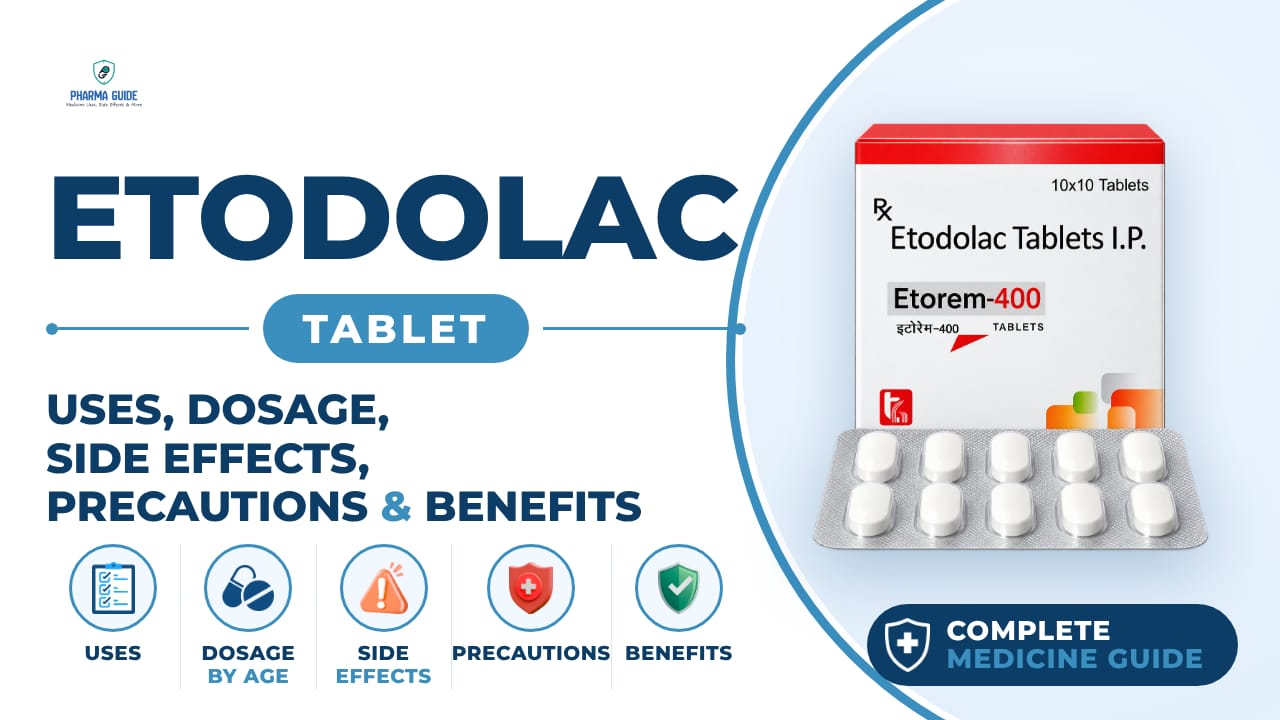
| Generic name | etodolac |
|---|---|
| Drug class | Nonsteroidal anti-inflammatories (NSAIDs) |
| Forms | Tablet, Extended-release tablet, Capsule |
Quick overview
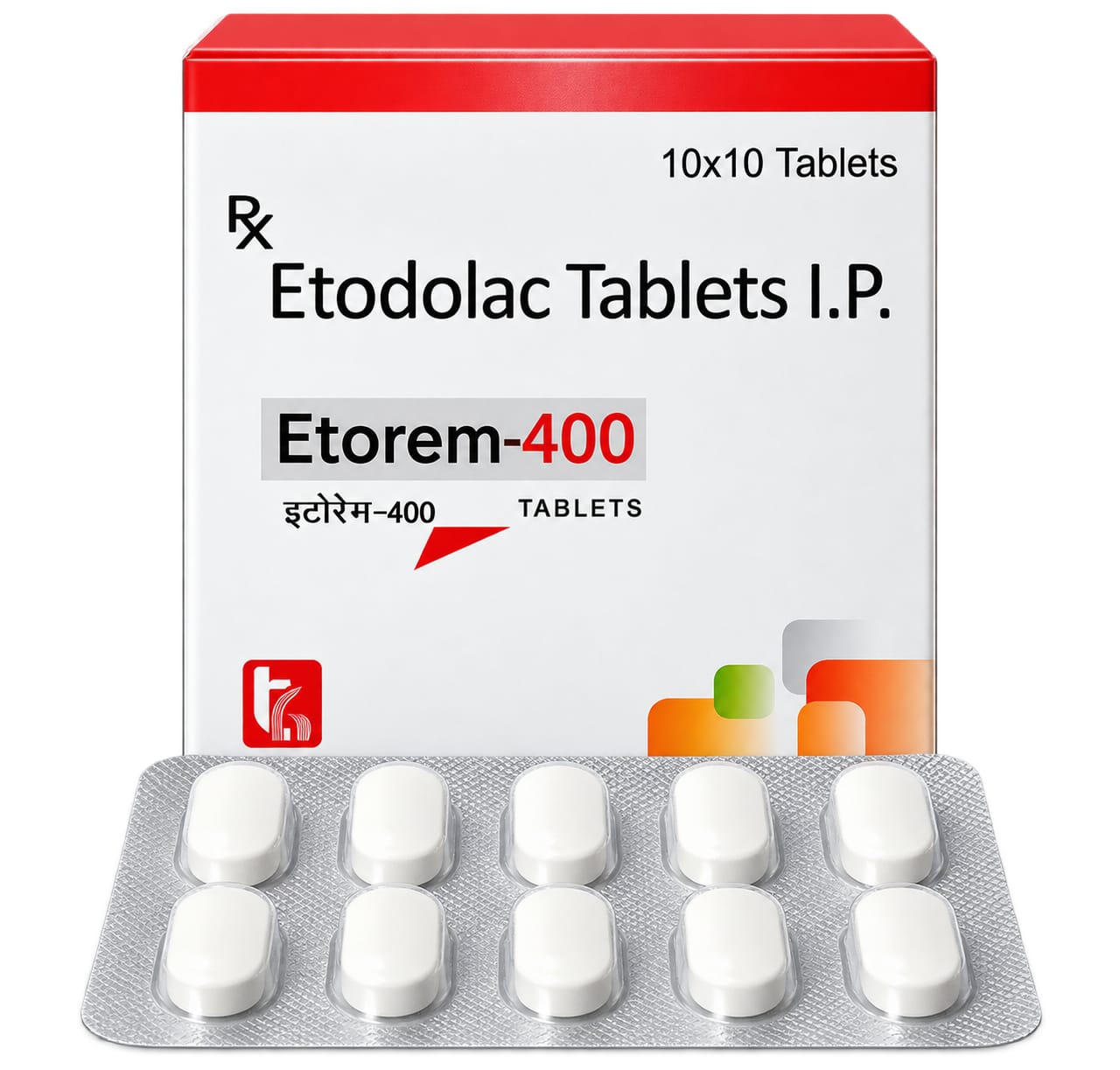
Etodolac is a nonsteroidal anti-inflammatory drug (NSAID) used to treat mild to moderate pain and to relieve symptoms of arthritis, such as inflammation, swelling, stiffness, and joint pain. It does not cure arthritis and only helps while you keep taking it. It is available as a tablet, extended-release tablet, and capsule, and dosing varies by age and condition.
What is Etodolac Tablet
Etodolac is a nonsteroidal anti-inflammatory drug (NSAID) used to treat mild to moderate pain and to relieve symptoms of arthritis, such as inflammation, swelling, stiffness, and joint pain. It does not cure arthritis and only helps while you keep taking it.
Etodolac Tablet uses
- Osteoarthritis and rheumatoid arthritis (long-term joint pain, tenderness, and inflammation)
- Juvenile rheumatoid arthritis in children ages 6 to 16
- Acute (sudden or short-term) pain, such as after injury or surgery
Benefits of Etodolac Tablet
- Provides anti-inflammatory and pain-relieving effects.
- Helps reduce arthritis-related joint swelling.
- May improve movement and flexibility.
- Relieves stiffness associated with inflammatory arthritis.
How Etodolac Tablet works
Etodolac works by blocking enzymes in the body that make prostaglandins, which are chemicals that cause pain, fever, and inflammation.
Etodolac Tablet dosage
Take this medicine by mouth with water, as directed on the prescription label, at the same time every day. You can take it with or without food; if it upsets your stomach, take it with food. Swallow extended-release tablets whole. Do not crush, break, or chew them.
It may take up to two weeks before you notice improvement in your symptoms; keep using it as directed and tell your doctor if symptoms don't improve. Elderly patients may have a stronger reaction to this medicine and may need a smaller dose. Dosing and use in children must be determined by a doctor.
If you miss a dose, take it as soon as you can, but skip it if it's almost time for your next dose. Do not take double doses.
| Age group | Dose |
|---|---|
| Under 6 years | No approved pediatric tablet dosage |
| 6–12 years | Immediate-release tablets: No established pediatric dosage. Extended-release tablets have specialist-directed weight-based dosing for juvenile rheumatoid arthritis |
| 13–17 years | Immediate-release tablets: No established pediatric dosage. Extended-release tablets have weight-based dosing for eligible patients aged 6–16 years |
| 18–74 years | Acute pain: 200–400 mg every 6–8 hours; arthritis: 400–500 mg twice daily |
Available forms and strengths
- Tablet
- Extended-release tablet
- Capsule
Side effects of Etodolac Tablet
Common
- Upset stomach, heartburn, or indigestion
- Nausea or vomiting
- Diarrhea or constipation
- Dizziness or headache
- Increased sensitivity of skin to sunlight
- Gas
- Tired feeling
- Rash
- Ringing in the ears
- Headache
- Loss of appetite
Serious
- Signs of stomach or intestinal bleeding: black, bloody, or tarry stools, or coughing up blood or vomit that looks like coffee grounds
- Signs of a heart attack or stroke: chest pain spreading to jaw or shoulder, sudden numbness or weakness on one side of the body, slurred speech, swelling in the legs, feeling short of breath
- Signs of an allergic reaction: hives, runny or stuffy nose, wheezing, difficult breathing, swelling of the face or throat
- Signs of a severe skin reaction: fever, sore throat, burning eyes, skin pain, red or purple skin rash with blistering and peeling
- Liver problems: nausea, upper stomach pain, itching, tired feeling, flu-like symptoms, loss of appetite, dark urine, clay-colored stools, yellowing of skin or eyes
- Kidney problems: little or no urination, swelling in feet or ankles, feeling tired
- Low red blood cells (anemia): pale skin, unusual tiredness, feeling light-headed, cold hands and feet
- Vision changes
- Any skin rash, no matter how mild
- Shortness of breath, even with mild exertion
- Swelling or rapid weight gain
Warnings and precautions
- This medicine can increase the risk of a serious, potentially fatal heart attack or stroke. This risk may happen early in treatment and can increase with longer use or higher doses. Never use it right before or after heart bypass surgery (CABG).
- This medicine can cause serious, sometimes fatal, bleeding, ulcers, or tears in the stomach or intestines. These can happen at any time, even without warning signs, and are more common with long-term use.
- This medicine may cause serious skin reactions, including Stevens-Johnson syndrome and toxic epidermal necrolysis, which can appear weeks to months after starting treatment and can be life-threatening.
- Taking this medicine after 20 weeks of pregnancy may cause serious birth defects, and it is not recommended after 30 weeks of pregnancy.
- This medicine may cause a serious, life-threatening allergic reaction (anaphylaxis), especially in people allergic to aspirin or other NSAIDs.
- This medicine may cause temporary infertility; talk to your doctor if you are concerned about fertility.
- Avoid using this medicine during the later part of pregnancy (20 weeks or later) because it can harm the unborn baby's kidney function; using it at 30 weeks or later is not recommended because it can cause heart problems in the baby. Tell your doctor right away if you think you have become pregnant while using this medicine.
- There is not enough research in women to know the risk to a nursing infant. Weigh the potential benefits against the potential risks before taking this medicine while breastfeeding.
- Use with caution if you have kidney disease, since this medicine may make kidney problems worse, and it should not be used in patients with severe kidney disease.
- Tell your doctor if you have liver disease. Watch for signs of a serious liver problem, such as pain or tenderness in the upper stomach, pale stools, dark urine, loss of appetite, nausea, vomiting, or yellow eyes or skin, and contact your doctor right away if these occur.
- Do not drink alcohol while taking this medicine, as it can increase the risk of stomach bleeding.
- Etodolac may cause dizziness, drowsiness, or blurred vision. Avoid driving if alertness is affected.
Storage
- Store the medicine in a closed container at room temperature, away from heat, moisture, and direct light.
- Keep from freezing.
- Store at room temperature between 20 and 25 degrees C (68 and 77 degrees F). Protect from moisture. Keep the container tightly closed.
- Avoid exposure to extreme heat.
- Get rid of any unused medication after the expiration date.
- Ask your healthcare professional how you should dispose of any medicine you do not use.
- Keep out of the reach of children and pets.
- Do not keep outdated medicine or medicine no longer needed.
When to see a doctor
- Get emergency help right away if you have shortness of breath or trouble breathing, chest pain, weakness on one side of your body, slurred speech, or swelling of the face or throat.
- Check with your doctor right away if you have black, tarry stools, vomiting blood or material that looks like coffee grounds, or severe stomach pain.
- Check with your doctor right away if you have bloody urine, decreased urination, swelling of the face or legs, unusual tiredness, nausea, vomiting, or weight gain, as these could be signs of a kidney problem.
- Stop using this medicine and call your doctor right away if you notice any skin rash, changes in vision, shortness of breath, swelling or rapid weight gain, or signs of liver problems such as yellowing skin or eyes, dark urine, or loss of appetite.
- Call your doctor right away if you have a rash, itching, trouble breathing or swallowing, or swelling of your hands, face, or mouth.
- If you think you have taken too much of this medicine, seek emergency medical attention or contact a poison control center right away.
Alternatives
- Meloxicam
- Naproxen
- Ibuprofen
Watch the video
FAQs
What is Etodolac Tablet used for?
Etodolac is used to treat mild to moderate pain and relieve arthritis symptoms such as inflammation, swelling, stiffness, and joint pain, including osteoarthritis, rheumatoid arthritis, juvenile rheumatoid arthritis in children 6 to 16, and acute pain from injury or surgery.
How does Etodolac work?
Etodolac works by blocking enzymes in the body that make prostaglandins, which are chemicals that cause pain, fever, and inflammation.
How long does it take for Etodolac to work?
It may take up to two weeks before you notice improvement in your symptoms. Keep using it as directed and tell your doctor if symptoms don't improve.
What is the dosage of Etodolac for adults?
For adults aged 18–74, the typical dose for acute pain is 200–400 mg every 6–8 hours, while for arthritis it is 400–500 mg twice daily. Elderly patients may need a smaller dose.
What are the serious side effects of Etodolac?
Serious side effects include signs of stomach or intestinal bleeding, heart attack or stroke, allergic reactions, severe skin reactions, liver problems, kidney problems, and low red blood cells (anemia).
General information, not medical advice
Your prescriber and the leaflet in your pack know your situation. This page does not.
- Follow your prescriber and the leaflet
- Don't start, stop, or change a dose on your own
- Doses and warnings differ by country and product
Sources
Video
Related medicines
Arthrotec Tablet: Uses, Dosage, Side Effects, Precautions and Alternates
Nonsteroidal anti-inflammatories (NSAIDs)
Arthrotec Tablet combines diclofenac and misoprostol to relieve arthritis pain while protecting the stomach. Learn uses, dosage, side effects, and key warnings.
Duexis Tablet: Uses, Dosage, Side Effects, Precautions and Alternates
Nonsteroidal anti-inflammatories (NSAIDs)
Duexis Tablet combines famotidine and ibuprofen to relieve rheumatoid arthritis and osteoarthritis symptoms while lowering the risk of stomach ulcers from