
Safety
General information, not medical advice
Your prescriber and the leaflet in your pack know your situation. This page does not.
- Follow your prescriber and the leaflet
- Don't start, stop, or change a dose on your own
- Doses and warnings differ by country and product
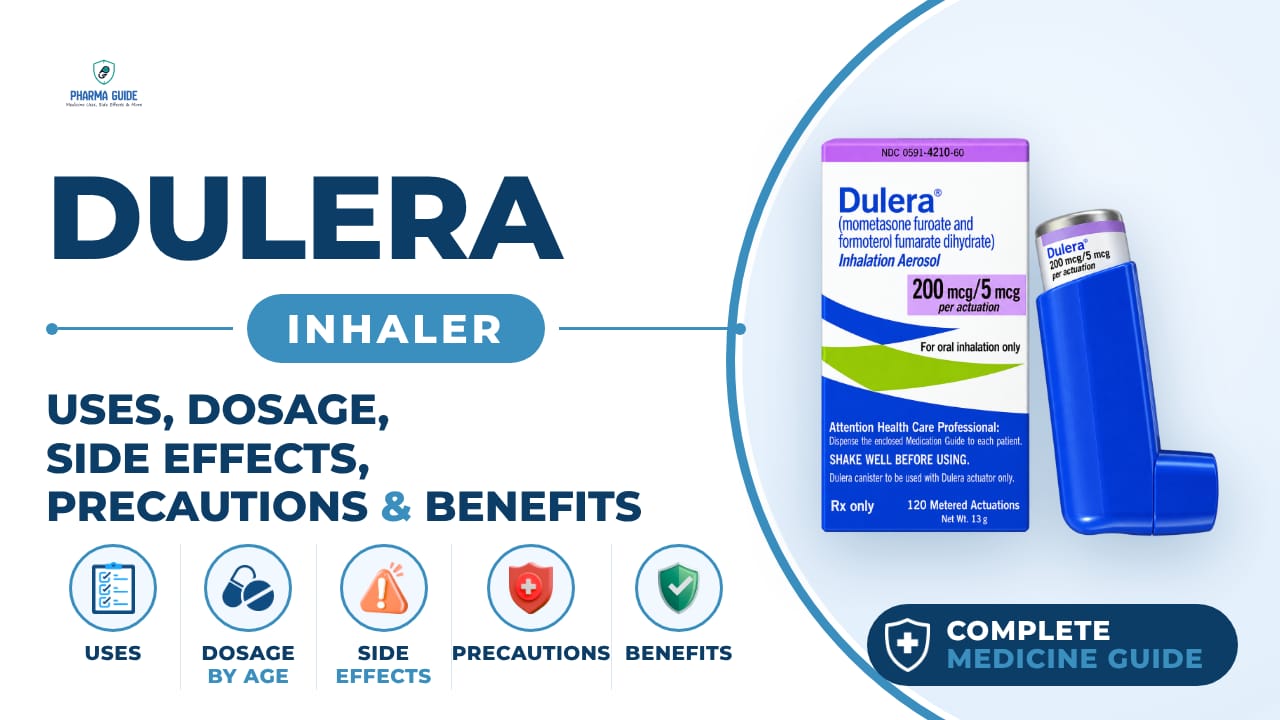
Dulera Inhaler: Uses, Dosage, Side Effects, Precautions and Alternates
| Generic name | mometasone / formoterol |
|---|---|
| Drug class | ICS / LABA (inhaled corticosteroid / long-acting beta agonist) combination; bronchodilator combination |
| Forms | Inhalation aerosol (inhaler) |
Quick overview
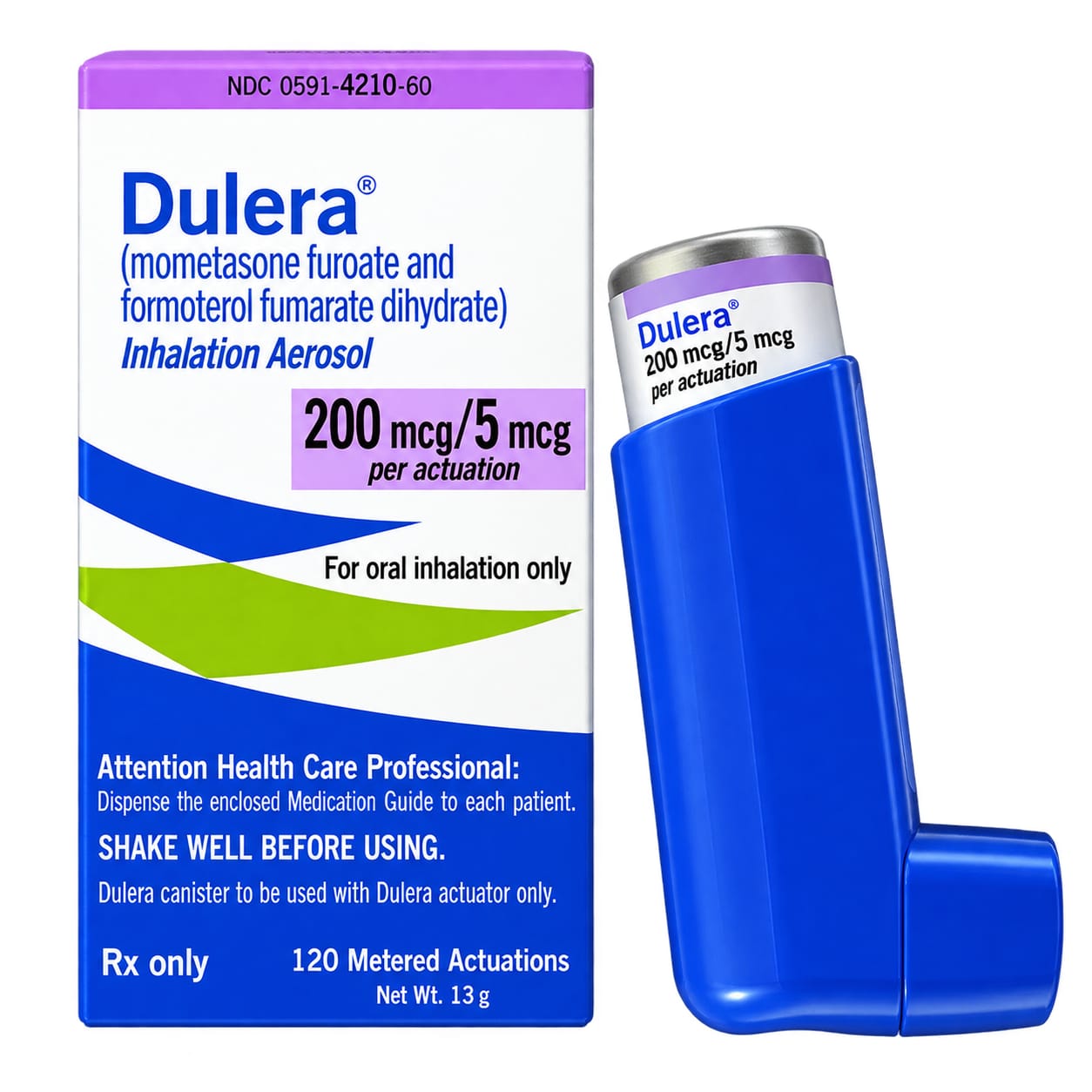
Dulera Inhaler combines mometasone and formoterol, an ICS/LABA bronchodilator combination used for the maintenance treatment of asthma in people ages 5 years and older. It is used regularly every day to help prevent wheezing, shortness of breath, and chest tightness, and it is not meant to treat a sudden asthma attack. Dulera works by reducing airway inflammation and relaxing airway muscles to improve airflow.
What is Dulera Inhaler
Dulera is a prescription inhaler that combines two medicines, mometasone and formoterol, to control and prevent asthma symptoms in adults and children age 5 and older. It is used regularly every day and is not meant to treat a sudden asthma attack.
Dulera Inhaler uses
- Maintenance treatment of asthma in people ages 5 years and older
- Long-term control of ongoing airflow problems by preventing wheezing, shortness of breath, and chest tightness
Benefits of Dulera Inhaler
- Asthma Control: Helps control asthma symptoms and reduce airway inflammation.
- Airway Opening: Formoterol relaxes airway muscles to improve airflow.
- Inflammation Control: Mometasone reduces inflammation inside the airways.
- Wheezing Support: Helps reduce wheezing, coughing, and shortness of breath.
- Maintenance Therapy: Provides long-acting control when used regularly.
How Dulera Inhaler works
Dulera combines two medicines that work together. Mometasone is a steroid that lowers inflammation and swelling in the airways. Formoterol relaxes the muscles around the airways so breathing is easier.
Dulera Inhaler dosage
Use the inhaler twice a day at the same times every day; it works best when used regularly. It is not for use during a sudden asthma attack or sudden trouble breathing — use a fast-acting rescue inhaler instead.
Prime the inhaler before first use or if it hasn't been used in more than 5 days by spraying it into the air away from your face, shaking well before each spray. Shake the inhaler well before each puff. Breathe out fully, seal your lips around the mouthpiece, breathe in slowly and deeply while pressing the canister, then hold your breath for up to 10 seconds or as long as comfortable before breathing out. Wait at least 30 seconds before taking the second puff.
Rinse your mouth with water and spit it out after using the inhaler to help lower the risk of thrush. Check the dose counter and refill your prescription before the inhaler runs out. Clean the inhaler once a week by wiping the mouthpiece with a clean, dry tissue; do not use water to clean the inhaler.
Do not let a young child use this medicine without help from an adult. It may take one to two weeks before symptoms improve; keep using it as directed and tell your doctor if symptoms don't improve. Do not change your dose or stop using it unless your doctor tells you to.
If you miss a dose, skip it and take your next dose at the regular time; do not take two doses at once.
| Age group | Dose |
|---|---|
| 5–11 Years | 2 inhalations twice daily of 50 mcg/5 mcg per inhalation |
| 12–17 Years | 2 inhalations twice daily of 100/5 mcg or 200/5 mcg, according to prior asthma therapy |
| Adults (18+ Years) | 2 inhalations twice daily of 100/5 mcg or 200/5 mcg, according to asthma severity and prior therapy |
Available forms and strengths
- Inhalation aerosol (inhaler)
- 50 mcg/5 mcg per inhalation
- 100 mcg/5 mcg per inhalation
- 200 mcg/5 mcg per inhalation
Side effects of Dulera Inhaler
Common
- Common cold symptoms
- Headache
- Swelling in the sinuses (sinusitis)
- Sore throat, cough, or runny/stuffy nose
- Voice changes
Serious
- Sudden worsening of breathing or wheezing right after use (paradoxical bronchospasm)
- Signs of infection such as fever, chills, body aches, tiredness, or cough that doesn't go away
- Changes in stress hormone (adrenal) levels: tiredness, dizziness, nausea, vomiting, weakness
- Serious allergic reaction: rash, hives, swelling of the face, lips, tongue, or throat, trouble breathing
- Oral thrush: white patches in the mouth, pain when swallowing, changes in taste
- Fast or pounding heartbeat, chest pain, tremors, nervousness, trouble sleeping
- Eye problems: blurred vision, eye pain, seeing halos around lights, increased eye pressure
- Decreased bone density (osteoporosis) with long-term use
- High blood sugar or low potassium levels
- Slowed growth in children with long-term use
Warnings and precautions
- Dulera is not a rescue medicine. It won't work fast enough to stop a sudden asthma attack or sudden trouble breathing. Use a fast-acting rescue inhaler instead and get medical help if your breathing problems suddenly get worse.
- This medicine can cause oral thrush, a fungal infection in the mouth or throat. Rinse your mouth with water and spit it out after each dose to help prevent this.
- This medicine can weaken your immune system and make it harder to fight infections. Avoid close contact with people who have chickenpox or measles, especially if you haven't had these illnesses or been vaccinated, and contact your prescriber right away if you're exposed.
- If you are switching from an oral steroid like prednisone, your dose will usually be lowered slowly. Stopping oral steroids too quickly can cause a serious condition called adrenal insufficiency.
- In rare cases this medicine can suddenly make breathing or wheezing worse right after use, which can be life-threatening. If this happens, use your rescue inhaler right away, stop using this medicine, and get medical help immediately.
- This medicine can sometimes affect the heart. Tell your doctor if you have heart problems, an irregular heartbeat, or high blood pressure before starting it, and don't use more than the prescribed dose.
- Long-term use can weaken bones and raise the risk of bone loss (osteoporosis), especially if you have other risk factors.
- This medicine might slow growth in some children when used long term. Doctors will use the lowest dose that controls asthma and check growth regularly.
- Long-term use might raise the risk of glaucoma, cataracts, or increased eye pressure. Tell your doctor about any vision changes, eye pain, or blurred vision.
- This medicine can sometimes raise blood sugar or lower potassium levels, though this isn't common at recommended doses.
- Tell your doctor if you are pregnant. It isn't known whether this medicine will harm an unborn baby, but untreated or poorly controlled asthma during pregnancy can cause its own problems, so the benefit of treating asthma may outweigh any risk.
- It may not be safe to breastfeed while using this medicine. Ask your doctor about the risks.
- Tell your doctor about kidney disease; routine dose adjustment is generally not required. Inform your doctor if you have heart disease, high blood pressure, diabetes, glaucoma, seizures, thyroid disease, or osteoporosis.
- Tell your doctor if you have liver disease before using this medicine.
Storage
- Keep Dulera at room temperature.
- Store at room temperature away from moisture and high heat.
- The canister may explode if it gets too hot. Do not puncture or burn an empty inhaler canister.
- The 120-inhalation Dulera inhaler does not require specific storage orientation. For the 60-inhalation Dulera inhaler, after priming, store the inhaler with the mouthpiece down or on its side.
- Keep the medicine canister away from open flame or high heat, such as in a car on a hot day.
When to see a doctor
- Get emergency medical help if you notice signs of a serious allergic reaction, such as hives, trouble breathing, or swelling of your face, lips, tongue, or throat.
- Call your doctor right away if your asthma symptoms get worse, or if you have tremors, nervousness, chest pain, or a fast or pounding heartbeat.
- Call your doctor right away if you have fever, chills, cough with mucus, or feel short of breath, or if you have wheezing, choking, or other breathing problems after using this medication.
- Call your doctor if you have blurred or tunnel vision, eye pain or redness, or see halos around lights.
- Call your doctor if you notice signs of thrush, such as sores or white patches in your mouth or throat, or trouble swallowing.
- Call your doctor if you have signs of high blood sugar, such as increased thirst, increased urination, dry mouth, or fruity breath odor.
- Call your doctor if you have signs of low potassium, such as leg cramps, constipation, irregular heartbeats, fluttering in your chest, numbness or tingling, or muscle weakness.
- Call your doctor if you notice signs of a hormonal disorder, such as tiredness or weakness, light-headedness, nausea, or vomiting.
- Seek medical attention right away if your breathing problems get worse quickly, or if you think your asthma medications aren't working as well as before.
Alternatives
- Symbicort
- Breo Ellipta
- Trelegy Ellipta
Watch the video
FAQs
What is Dulera Inhaler used for?
Dulera is used for the maintenance treatment of asthma in people ages 5 years and older. It helps prevent wheezing, shortness of breath, and chest tightness, but it is not meant to treat a sudden asthma attack.
How often should Dulera Inhaler be used?
Dulera should be used twice a day at the same times every day, as it works best when used regularly.
Can Dulera be used for a sudden asthma attack?
No, Dulera is not a rescue medicine and won't work fast enough to stop a sudden asthma attack. A fast-acting rescue inhaler should be used instead.
What are the common side effects of Dulera Inhaler?
Common side effects include common cold symptoms, headache, swelling in the sinuses (sinusitis), sore throat, cough, runny or stuffy nose, and voice changes.
How should Dulera Inhaler be stored?
Dulera should be kept at room temperature away from moisture and high heat. The canister may explode if it gets too hot, so it should not be punctured or burned, even when empty.
General information, not medical advice
Your prescriber and the leaflet in your pack know your situation. This page does not.
- Follow your prescriber and the leaflet
- Don't start, stop, or change a dose on your own
- Doses and warnings differ by country and product
Sources
Video
Related medicines

Injectafer Injection: Uses, Dosage, Side Effects, Precautions and Alternates
Iron products
Injectafer (ferric carboxymaltose) treats iron deficiency anemia and heart failure-related iron deficiency via IV. Learn uses, dosage, side effects, and

Gliclazide Tablet: Uses, Dosage, Side Effects, Precautions and Alternates
Sulfonylurea (hypoglycemic/antidiabetic agent)
Gliclazide Tablet is a sulfonylurea for type 2 diabetes that boosts insulin release. Learn about dosage, side effects, warnings, and precautions.