
Safety
General information, not medical advice
Your prescriber and the leaflet in your pack know your situation. This page does not.
- Follow your prescriber and the leaflet
- Don't start, stop, or change a dose on your own
- Doses and warnings differ by country and product
Duolin Inhaler: Uses, Dosage, Side Effects, Precautions and Alternates
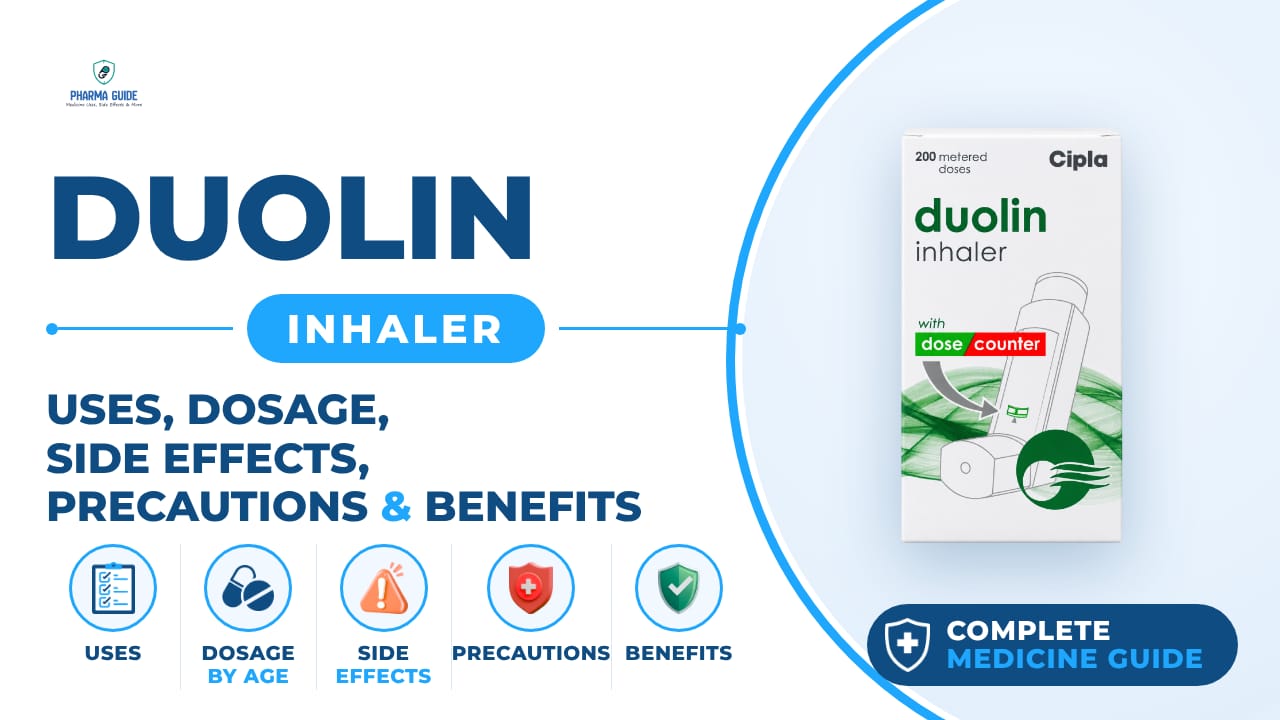
| Generic name | Levosalbutamol sulphate and Ipratropium bromide |
|---|---|
| Drug class | Beta-2 agonist + Anticholinergic (SABA + SAMA combination) |
| Forms | Inhalation aerosol |
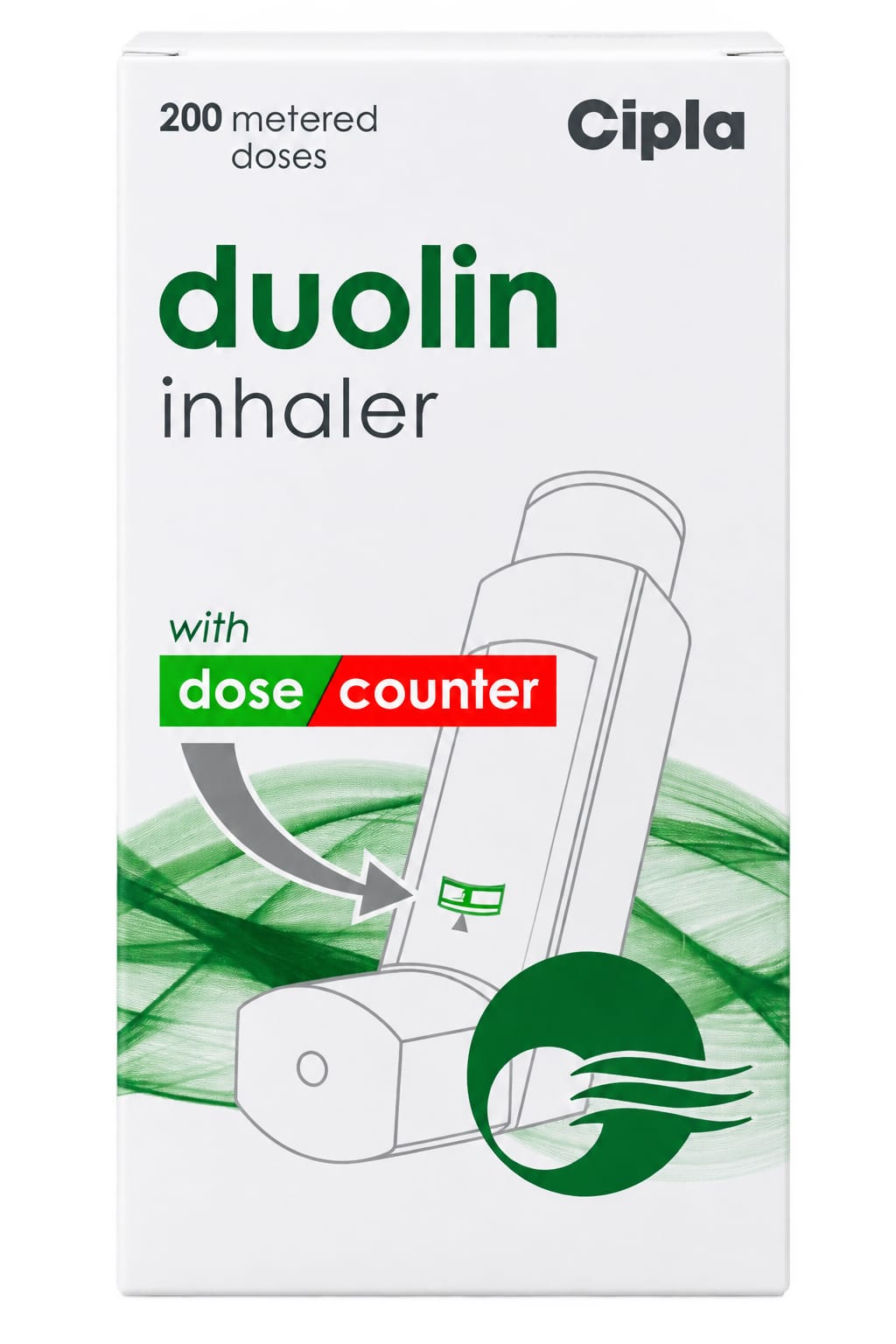
Quick overview
Duolin Inhaler contains Levosalbutamol sulphate and Ipratropium bromide, a combination of a beta-2 agonist and an anticholinergic. It is used to relieve wheezing, shortness of breath, chest tightness, breathing difficulties, and coughing caused by chronic obstructive pulmonary disease (COPD). It works by combining two medicines that relax and open the airways. It is for inhalation only and should be used exactly as prescribed by a doctor.
What is Duolin Inhaler
Duolin Inhaler is a combination of Ipratropium and Levosalbutamol used to relieve symptoms such as wheezing, shortness of breath, chest tightness, breathing difficulties, and coughing caused by chronic obstructive pulmonary disease (COPD), a lung disorder in which airflow is blocked leading to breathing difficulty.
Duolin Inhaler uses
- Chronic obstructive pulmonary disease (COPD), including chronic bronchitis and emphysema
- Treatment or prevention of bronchospasm in reversible obstructive airway diseases like asthma and COPD
- Adjunct bronchodilation in asthma when prescribed
Benefits of Duolin Inhaler
- Relieves wheezing and shortness of breath
- Opens airways quickly
- Improves airflow in COPD
- Reduces bronchospasm frequency
- Provides dual bronchodilation
How Duolin Inhaler works
Duolin Inhaler combines two medicines that work together to relax and open the airways. Levosalbutamol relaxes the muscles around the airways to open them up, while Ipratropium blocks certain nerve signals in the lungs that cause the airways to narrow.
Duolin Inhaler dosage
Use this medicine exactly as prescribed by your doctor, for the dose and duration advised. Use it around the same time every day to help you remember. Do not stop using it even if you feel better, as your symptoms may return or worsen. This medicine is for inhalation only; do not swallow it. It does not act immediately and should not be used to treat short-term or sudden breathing problems; keep a separate rescue inhaler for sudden attacks.
Shake well before use, breathe out fully, seal your lips around the mouthpiece, breathe in slowly while pressing the canister, hold your breath for about 10 seconds, then breathe out. Use a spacer device if advised by your doctor, especially if you find it hard to coordinate pressing the canister with breathing in. Avoid spraying into your eyes.
Rinse your mouth or gargle with warm water after each use to prevent dry mouth and fungal infections in the mouth and throat. Not recommended for children under 12 years of age.
| Age group | Dose |
|---|---|
| Under 6 Years | Use only if prescribed by a doctor |
| 6–11 Years | Dose based on condition and response; use under medical guidance |
| 12 Years and Above | Usually 1–2 inhalations as prescribed, depending on severity |
| Adults (18–64 Years) | Usually 1–2 inhalations as needed or as prescribed |
| Older Adults (65+ Years) | Adult dose; adjustment may be needed based on health condition |
Available forms and strengths
- Inhalation aerosol
Side effects of Duolin Inhaler
Common
- Headache
- Cough
- Mouth dryness
- Nausea
- Constipation
- Dizziness
- Sore throat and hoarseness
- Shaking and trembling of arms and feet
- Decreased appetite
- Muscle pain and cramps
- Nervousness
- Difficulty in swallowing
- Visual disturbances
- Throat irritation
- Tremor
- Palpitations
Serious
- Bladder pain
- Wheezing
- Shortness of breath
- Swelling of eyelids, face, lips, tongue
- Difficulty breathing
- Skin rash or itching
- Fast or irregular heartbeat
Warnings and precautions
- This medicine is not recommended for people with narrow-angle glaucoma, as it may raise the risk of increased eye pressure and widened pupils. Keep the spray away from your eyes.
- Use with extreme caution if you have trouble emptying your bladder, as this medicine can increase the risk of urinary retention and difficulty urinating.
- This medicine is not recommended for children under 12 years of age because its safety and effectiveness have not been established in this age group.
- In rare cases, this medicine can cause the airways to tighten instead of relax, a condition called paradoxical bronchospasm, which has been linked to worsening asthma symptoms. Contact your doctor right away if breathing becomes harder after using it.
- Only use this medicine in the amount your doctor prescribes. Using more than prescribed can cause serious side effects and may become life-threatening.
- Older adults should use this medicine with caution, as they have a higher risk of side effects.
- This medicine is not meant to treat sudden, severe breathing attacks. If your symptoms get worse or you need to use it more often than usual, get medical help right away.
- Duolin Inhaler is not recommended for use in pregnant women unless it is absolutely necessary. Talk to your doctor before using it if you are pregnant.
- Duolin Inhaler is not recommended for breastfeeding women because it is not known if the medicine passes into breast milk. Consult your doctor before using it.
- Use with caution if you have kidney problems, since the medicine is removed from the body through urine and could build up, worsening kidney damage. Tell your doctor about any kidney problems.
- Use with extreme caution if you have liver problems, because the medicine is broken down in the liver and could build up and become toxic. Tell your doctor about any liver problems.
- It is not known how this medicine interacts with alcohol. Talk to your doctor before drinking alcohol while using it.
- This medicine may cause blurred vision, dizziness, drowsiness, or confusion. Do not drive or operate machinery if you experience these effects.
Storage
- Store below 30°C. Do not freeze.
- Store below 25°C, protect from heat and direct sunlight. Do not freeze.
- Pressurised container—do not puncture or expose to temperatures above 50°C.
- Keep cap closed and keep out of reach of children.
When to see a doctor
- Get emergency medical help right away if you notice signs of an allergic reaction, such as skin rash, itching or swelling of the face, tongue, or throat, or difficulty breathing.
- Stop the medicine and get help immediately if you develop a rash, swelling of the face or lips, wheezing, or difficulty breathing.
- Seek emergency medical treatment or contact your doctor right away if you think you have taken too much of this medicine.
- Consult a physician immediately if you notice eye pain or discomfort, blurred vision, or seeing halos or colored images around lights along with red eyes, as these can be signs of a serious eye problem.
Alternatives
- Combivent Inhaler
- Atrovent Inhaler
- Ventolin Inhaler
- Levolukast
Watch the video
FAQs
What is Duolin Inhaler used for?
Duolin Inhaler is used to relieve wheezing, shortness of breath, chest tightness, breathing difficulties, and coughing caused by chronic obstructive pulmonary disease (COPD), including chronic bronchitis and emphysema. It is also used to treat or prevent bronchospasm in reversible obstructive airway diseases like asthma and COPD.
How does Duolin Inhaler work?
It combines two medicines that work together to relax and open the airways. Levosalbutamol relaxes the muscles around the airways, while Ipratropium blocks certain nerve signals in the lungs that cause the airways to narrow.
How should I use Duolin Inhaler?
Shake well before use, breathe out fully, seal your lips around the mouthpiece, breathe in slowly while pressing the canister, hold your breath for about 10 seconds, then breathe out. Use a spacer device if advised by your doctor, and avoid spraying into your eyes. Rinse your mouth after each use to prevent dry mouth and fungal infections.
Can Duolin Inhaler be used for sudden breathing attacks?
No, it does not act immediately and should not be used to treat short-term or sudden breathing problems. A separate rescue inhaler should be kept for sudden attacks.
What are the common side effects of Duolin Inhaler?
Common side effects include headache, cough, mouth dryness, nausea, constipation, dizziness, sore throat and hoarseness, shaking and trembling of arms and feet, decreased appetite, muscle pain and cramps, nervousness, difficulty swallowing, visual disturbances, throat irritation, tremor, and palpitations.
General information, not medical advice
Your prescriber and the leaflet in your pack know your situation. This page does not.
- Follow your prescriber and the leaflet
- Don't start, stop, or change a dose on your own
- Doses and warnings differ by country and product
Sources
Video
Related medicines

Injectafer Injection: Uses, Dosage, Side Effects, Precautions and Alternates
Iron products
Injectafer (ferric carboxymaltose) treats iron deficiency anemia and heart failure-related iron deficiency via IV. Learn uses, dosage, side effects, and

Gliclazide Tablet: Uses, Dosage, Side Effects, Precautions and Alternates
Sulfonylurea (hypoglycemic/antidiabetic agent)
Gliclazide Tablet is a sulfonylurea for type 2 diabetes that boosts insulin release. Learn about dosage, side effects, warnings, and precautions.