
Safety
General information, not medical advice
Your prescriber and the leaflet in your pack know your situation. This page does not.
- Follow your prescriber and the leaflet
- Don't start, stop, or change a dose on your own
- Doses and warnings differ by country and product
Duphaston Tablet: Uses, Dosage, Side Effects, Precautions and Alternates
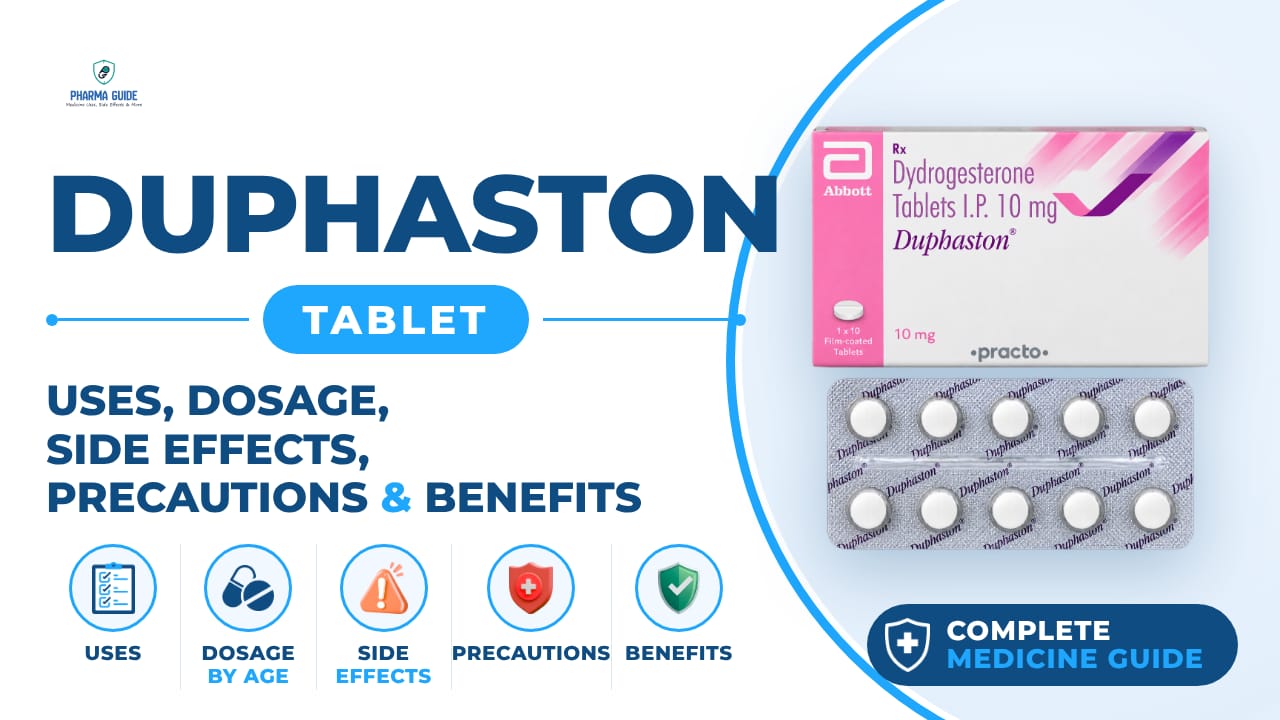
| Generic name | Dydrogesterone |
|---|---|
| Drug class | Progestogen |
| Forms | Tablet (film-coated) |
Quick overview
Duphaston Tablet contains dydrogesterone, a man-made hormone similar to natural progesterone. It belongs to the progestogen drug class and is used to treat menstrual conditions and to support pregnancy. It works by replacing progesterone the body may be lacking, helping correct hormonal imbalance and supporting the womb lining when used with estrogen.
What is Duphaston Tablet
Duphaston Tablet is a hormonal medication. It contains dydrogesterone, a man-made hormone that is very similar to the natural hormone progesterone. It is used to treat menstrual conditions and to support pregnancy.
Duphaston Tablet uses
- Unusual menstrual bleeding or pain
- Irregular periods
- Premenstrual syndrome
- Endometriosis
- Female infertility due to low progesterone
- Threatened abortion (bleeding in early pregnancy)
- Habitual abortion (repeated pregnancy loss)
- Hormone replacement therapy for menopause symptoms
- Painful periods
- Heavy or long periods
- Restarting periods that have stopped before menopause
Benefits of Duphaston Tablet
- Helps relieve painful periods
- Helps relieve symptoms of endometriosis
- Helps treat infertility due to low progesterone
- Helps control irregular periods
- Helps relieve premenstrual syndrome symptoms
- Helps restart periods that have stopped before menopause
- Helps stop or prevent unusually heavy or long periods
- Helps treat menopause symptoms as part of hormone replacement therapy
- Helps maintain pregnancy and reduce risk of miscarriage
How Duphaston Tablet works
Duphaston works by acting like the natural hormone progesterone in the body. It replaces missing progesterone that is normally made by the ovaries, which helps treat problems caused by hormonal imbalance and helps prevent the womb lining from thickening too much when taken with estrogen.
Duphaston Tablet dosage
Duphaston can be taken with or without food. Swallow the tablet with water. Try to take your tablet at the same time each day so there is a constant amount of medicine in your body and to help you remember. If you have to take more than one tablet, spread them evenly over the day, for example one in the morning and one in the evening. The score line on the tablet is only to help break it for easier swallowing and should not be used to take half a tablet. Follow your doctor's instructions about how long to take the medicine and do not stop without talking to your doctor first.
This medicine is not usually given to children before their first menstrual period, and safety and effectiveness in young people aged 12-18 years is not known. Older people (over 65) can use this medicine for hormone replacement therapy following the same instructions as adults.
| Age group | Dose |
|---|---|
| Under 18 Years | Use only if prescribed by a specialist |
| Adults (18–50 Years) | 10 mg tablet 1–3 times daily, depending on the medical condition |
| Adults (50+ Years) | 10 mg tablet as prescribed, based on hormonal needs and condition |
| Older Adults (65+ Years) | Use only under medical supervision |
Available forms and strengths
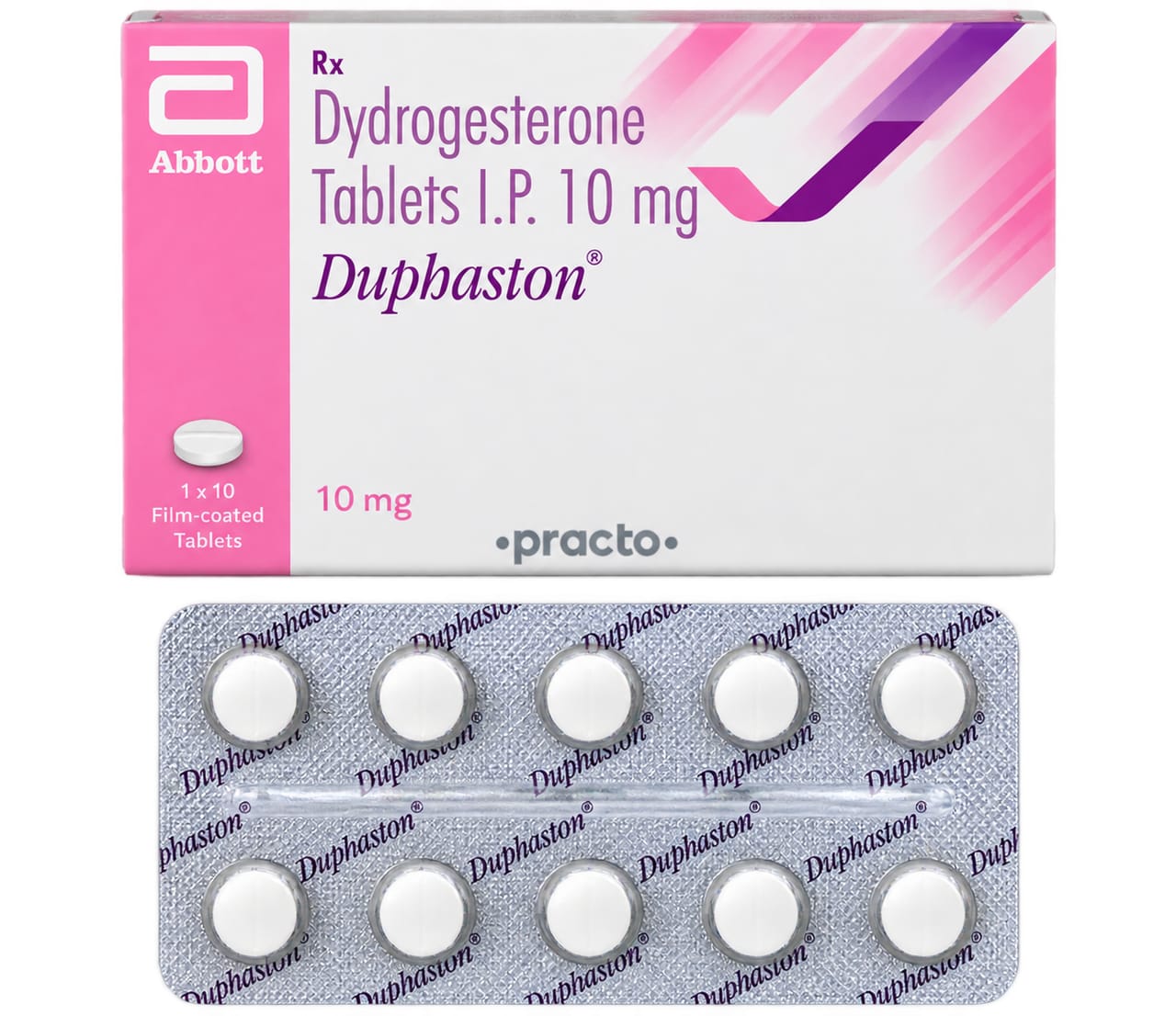
Duphaston is available as a film-coated tablet, 10 mg.
Side effects of Duphaston Tablet
Common
- Nausea
- Abdominal pain
- Vomiting
- Diarrhoea
- Dry mouth
- Indigestion
- Rash
- Itching
- Cough
- Breast pain
- Depression
- Mood swings
- Difficulty falling asleep
- Headache
- Dizziness
- Drowsiness
- Breast tenderness
- Weight gain
- Abnormal and/or painful menstruation
- Migraine
- Feeling bloated
- Spotting or bleeding between periods
Serious
- Bad allergic reaction with swelling of the face and throat causing difficulty breathing
- Liver problems, including yellowing of skin or eyes and abdominal pain
- Signs of a blood clot such as painful swelling in the leg, sudden chest pain, or difficulty breathing
- Low levels of red blood cells (haemolytic anaemia)
- Increase in the size of tumours affected by progestogens, such as meningioma
- Worsening of porphyria
Warnings and precautions
- Do not take this medicine if you have a tumour that is made worse by progestogens, unusual vaginal bleeding that hasn't been checked by a doctor, or a serious allergy to any ingredient.
- Do not take this medicine if you have or have ever had meningioma, a usually non-cancerous tumour between the brain and skull.
- If you get unexpected vaginal bleeding or spotting that lasts more than a few months, starts after you've been on treatment a while, or continues after stopping treatment, see your doctor right away, as it could be a sign your womb lining has thickened.
- Tell your doctor before starting if you have depression, liver problems, or porphyria, as these can get worse with this medicine.
- If taken together with estrogen for hormone replacement therapy, this medicine can increase the risk of blood clots, stroke, heart disease, breast cancer, and (with estrogen-only use) cancer of the womb lining or ovarian cancer.
- Duphaston should only be taken during pregnancy on your doctor's advice.
- There is no evidence so far that taking it during pregnancy is harmful, and it has been used by many pregnant women.
- Duphaston is not recommended while breastfeeding because it is not known if it passes into breast milk or affects the baby.
- Use with caution if you have liver problems, as this medicine can make the condition worse. It should not be used if you have serious liver disease.
- It is not known how this medicine interacts with alcohol, so ask your doctor before drinking alcohol while taking it.
- This medicine may make you feel dizzy or sleepy, especially in the first few hours after taking it. Do not drive or use tools or machines until you know how it affects you.
Storage
- Keep out of the reach and sight of children
- Do not take the tablets after the expiry date shown on the outer carton and blister strip
- Do not throw away any medicines via wastewater or household waste; ask your pharmacist how to throw away medicines you no longer use
- This medicinal product does not require any special storage condition
When to see a doctor
- Get medical help right away if you notice swelling of the face and throat with difficulty breathing, signs of liver problems (yellow skin or eyes, stomach pain), or signs of a serious allergic reaction.
- Get medical help right away if you have painful swelling in your leg, sudden chest pain, or difficulty breathing, as these can be signs of a blood clot.
- Get medical help right away if you have chest pain that spreads to your arm or neck, as this could be a sign of a heart attack.
- Get medical help right away if you have a severe, unexplained headache or migraine, with or without vision problems, as this could be a sign of a stroke.
- See a doctor as soon as possible if you notice changes in your breast such as dimpling of the skin, changes in the nipple, or lumps, as these could be signs of breast cancer.
- Tell your doctor right away if you notice vision changes, hearing loss or ringing in the ears, loss of smell, worsening headaches, memory loss, seizures, or weakness in your arms or legs, as these could be signs of meningioma.
Alternatives
- Micronized Progesterone
- Medroxyprogesterone Acetate
- Progesterone Capsules
Watch the video
FAQs
What is Duphaston Tablet used for?
Duphaston Tablet is used to treat menstrual conditions like irregular, painful, or heavy periods, premenstrual syndrome, endometriosis, infertility due to low progesterone, threatened or habitual abortion, and menopause symptoms as part of hormone replacement therapy.
How does Duphaston Tablet work?
Duphaston contains dydrogesterone, which acts like the natural hormone progesterone. It replaces progesterone the body may be lacking, helping correct hormonal imbalance and preventing the womb lining from thickening too much when taken with estrogen.
What is the dosage of Duphaston Tablet?
Adults typically take a 10 mg tablet 1-3 times daily depending on the condition, with or without food. If more than one tablet is needed, doses should be spread evenly over the day, such as morning and evening, and taken at the same time each day.
What are the common side effects of Duphaston Tablet?
Common side effects include nausea, abdominal pain, vomiting, diarrhoea, headache, dizziness, drowsiness, breast tenderness, weight gain, mood swings, and spotting or bleeding between periods.
Is Duphaston Tablet safe during pregnancy and breastfeeding?
Duphaston should only be taken during pregnancy on a doctor's advice; there is no evidence so far that it is harmful and it has been used by many pregnant women. It is not recommended while breastfeeding because it is not known if it passes into breast milk or affects the baby.
General information, not medical advice
Your prescriber and the leaflet in your pack know your situation. This page does not.
- Follow your prescriber and the leaflet
- Don't start, stop, or change a dose on your own
- Doses and warnings differ by country and product
Sources
Video
Related medicines

Injectafer Injection: Uses, Dosage, Side Effects, Precautions and Alternates
Iron products
Injectafer (ferric carboxymaltose) treats iron deficiency anemia and heart failure-related iron deficiency via IV. Learn uses, dosage, side effects, and

Gliclazide Tablet: Uses, Dosage, Side Effects, Precautions and Alternates
Sulfonylurea (hypoglycemic/antidiabetic agent)
Gliclazide Tablet is a sulfonylurea for type 2 diabetes that boosts insulin release. Learn about dosage, side effects, warnings, and precautions.