
Safety
General information, not medical advice
Your prescriber and the leaflet in your pack know your situation. This page does not.
- Follow your prescriber and the leaflet
- Don't start, stop, or change a dose on your own
- Doses and warnings differ by country and product
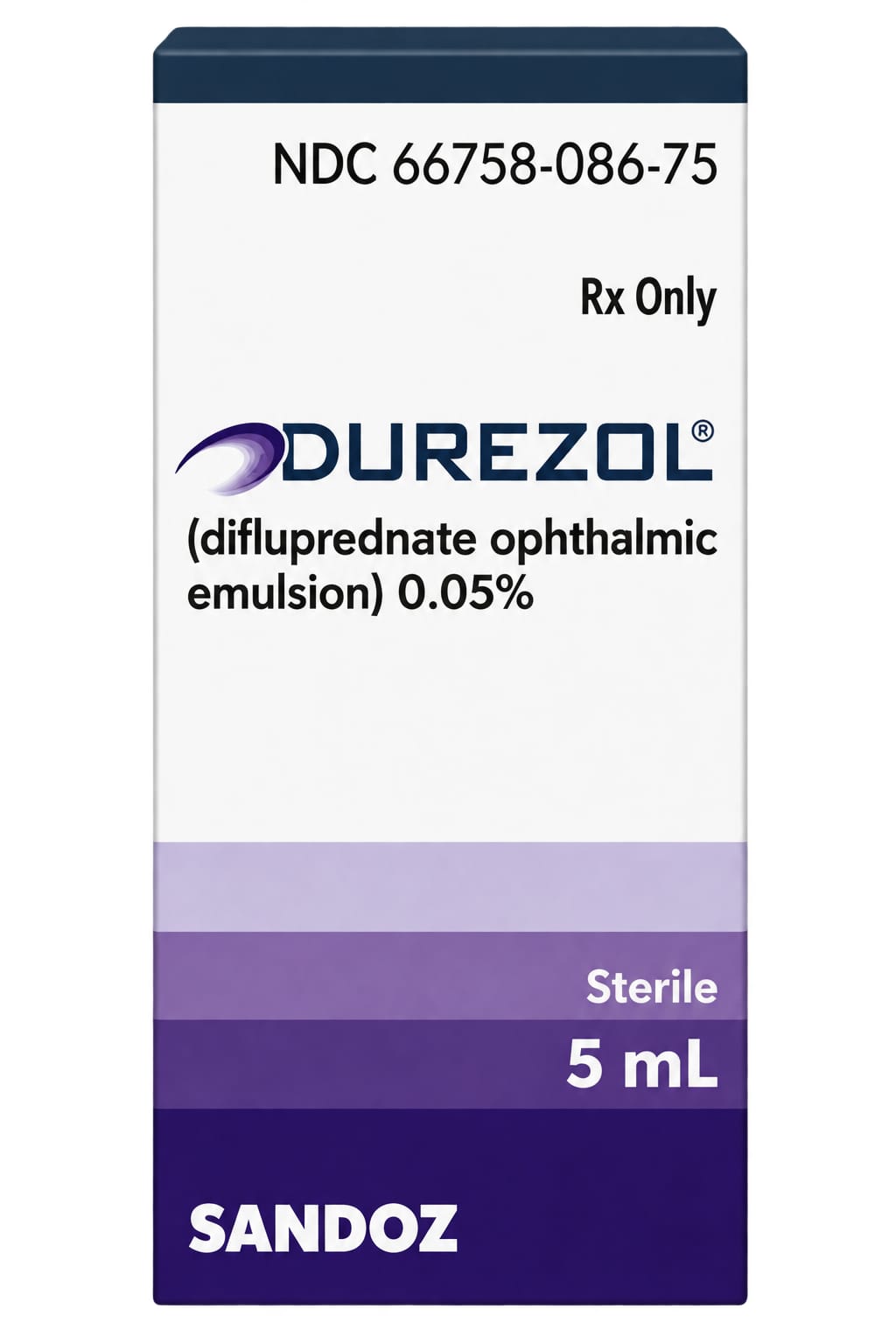
Durezol Eye Drops: Uses, Dosage, Side Effects, Precautions and Alternates
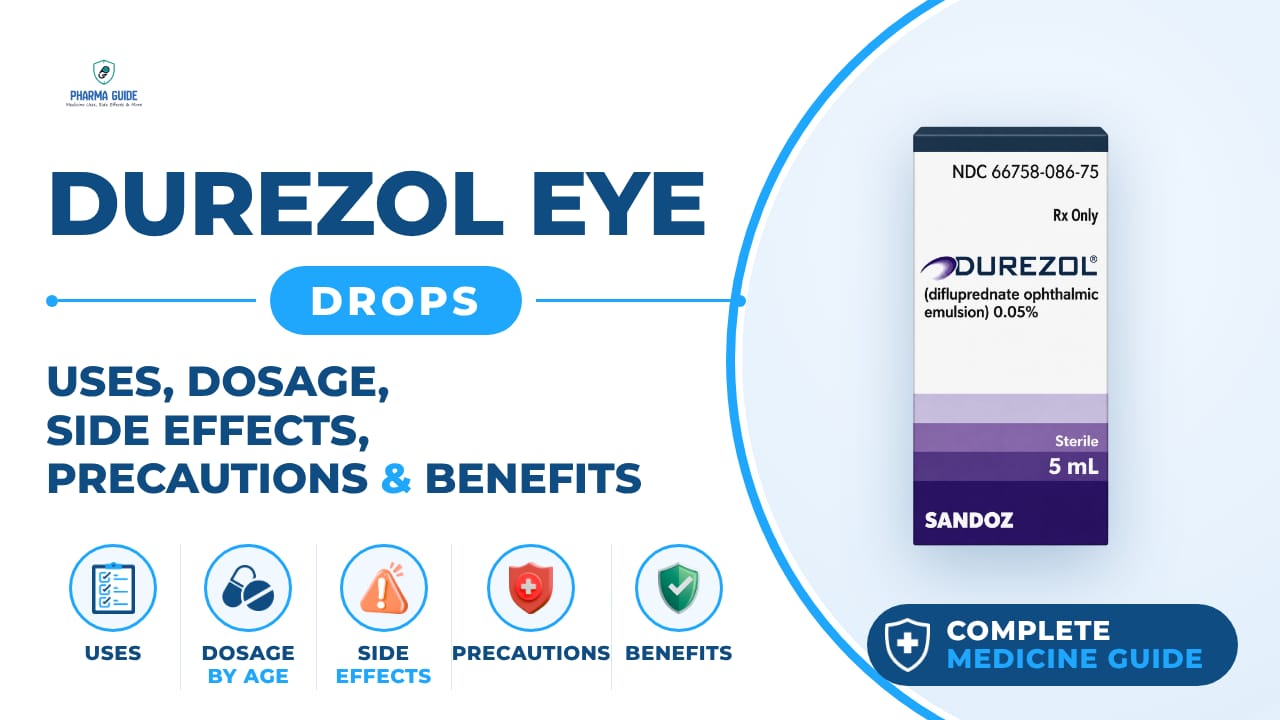
| Generic name | difluprednate ophthalmic |
|---|---|
| Drug class | Ophthalmic steroids (corticosteroid) |
| Forms | Ophthalmic emulsion (eye drops) |
Quick overview
Durezol Eye Drops (difluprednate ophthalmic) is an ophthalmic corticosteroid used to treat eye pain and inflammation after surgery and anterior uveitis. It works by stopping the body from releasing substances that cause inflammation. Common side effects include eye itching, blurred vision, and light sensitivity, while serious effects such as increased eye pressure or signs of infection require medical attention.
What is Durezol Eye Drops
Durezol is a corticosteroid eye drop medicine. It helps prevent the release of substances in the body that cause inflammation.
Durezol Eye Drops uses
- Treats eye pain and inflammation caused by surgery, such as cataract surgery
- Treats anterior uveitis, which is inflammation affecting the front part of the eye, including the iris
Benefits of Durezol Eye Drops
- Reduces pain and swelling after eye surgery
- Reduces inflammation from anterior uveitis
How Durezol Eye Drops works
Durezol is a corticosteroid that works by stopping the body from releasing substances that cause inflammation.
Durezol Eye Drops dosage
Wash your hands before using the eye drops. Tilt your head back and look up, then gently pull down your lower eyelid to make a small pocket for the drop. Shake the container well before use so the medicine is mixed evenly. Do not let the dropper tip touch your eye, hands, or any surface, to avoid contaminating it.
After putting in a drop, close your eyes for one to two minutes with your head tipped down, without blinking or squinting. Gently press your finger to the inner corner of your eye for about a minute to keep the medicine from draining into your tear duct. If you need more than one drop, wait a few minutes between drops.
Wait at least 10 minutes before using any other eye medicine. Do not wear soft contact lenses while using this medicine; wait at least 10 minutes after using the drops before putting in lenses that your doctor has approved.
Your doctor may give you two separate bottles, one for each eye, to prevent spreading infection between eyes; be sure to use each bottle only in the eye it is marked for. Tell your doctor if your symptoms have not improved after a couple of days of treatment.
Do not stop using this medicine suddenly; your doctor will tell you how to reduce the dose gradually before stopping. If you use this medicine for more than about 10 days, you may need regular eye pressure checks.
| Age group | Dose |
|---|---|
| Under 18 years | Doctor-directed only |
| 18–64 years | 1 drop in affected eye 4 times daily |
| 65+ years | 1 drop in affected eye 4 times daily |
Available forms and strengths
- Ophthalmic emulsion (eye drops)
Side effects of Durezol Eye Drops
Common
- Eye itching or irritation
- Blurred vision
- Watery eyes
- Headache
- Feeling like something is in your eye
- Increased sensitivity to light
- Bloodshot eyes
- Dry eye
Serious
- Diarrhea
- Dizziness
- Eye pain
- Flashes of light in vision
- Floaters (spots in your vision)
- Increased eye pressure
- Increased heart rate
- Severe headache
- Signs of eye infection such as swelling, weeping, drainage, or crusting
- Sudden vision loss
- Tunnel vision
- Signs of a serious allergic reaction such as abdominal cramps, difficulty breathing, nausea and vomiting, or swelling of the face and throat
Warnings and precautions
- Do not use this medicine if you have an untreated eye infection (including herpes or chickenpox), untreated glaucoma, or an untreated infection anywhere in your body.
- Never let the dropper tip touch your eye, hands, or any surface. A contaminated dropper can cause an eye infection that may lead to vision loss or serious eye damage.
- Do not wear regular contact lenses while using this medicine. Wait at least 10 minutes after using the drops before putting in lenses, and only wear lenses your doctor has approved.
- Do not stop using this medicine suddenly. You may need to gradually use less before stopping completely, as advised by your doctor.
- Using this type of eye medicine for a long time may cause cataracts to form and may slow healing after cataract surgery.
- This medicine may raise pressure inside the eye, which is a concern if you have glaucoma.
- This medicine can hide the signs of a new or worsening infection because it reduces the immune system's response.
- It is not known whether this medicine will harm an unborn baby, so it should not be used during pregnancy unless the benefits outweigh the risks. Tell your doctor if you are or become pregnant.
- It is not known if this medicine passes into breast milk, so it may affect a nursing baby. Talk to your doctor about whether you should keep breastfeeding while using it.
- Avoid use with active fungal, mycobacterial, or most viral eye infections, including herpes simplex keratitis.
- Do not let the dropper tip touch the eye, eyelids, or other surfaces.
- Remove contact lenses before use; lenses may be reinserted after 10 minutes.
- This medicine can cause blurred vision and may affect your thinking or reactions, so be careful driving or doing anything that requires clear vision or alertness until you know how it affects you.
Storage
- Store at room temperature away from moisture and heat
- Do not freeze
- Keep the bottle tightly closed when not in use
- Protect from light and moisture
- Keep out of the reach of children
- Safely discard any medication remaining in the dropper bottle when your treatment is complete
- If there is any medication remaining 28 days after opening the bottle, discard it
- Do not dispose of medications in wastewater (e.g. down the sink or in the toilet) or in household garbage; ask your pharmacist how to dispose of medications that are no longer needed or have expired
When to see a doctor
- Get emergency medical help right away if you have signs of a serious allergic reaction, such as hives, difficulty breathing, or swelling of your face, lips, tongue, or throat.
- Call your doctor right away if you have sudden eye irritation or pain, severe eye redness or itching, pain behind your eyes, sudden vision changes, a severe headache, slow healing after eye surgery, signs of a new eye infection (swelling, draining, crusting), tunnel vision, seeing halos around lights, or changes in the color or look of your iris.
- If you think you have used too much of this medicine, seek emergency medical help right away.
Alternatives
- Pred Forte
- Flarex
- Inveltys
Watch the video
FAQs
What is Durezol Eye Drops used for?
Durezol is used to treat eye pain and inflammation caused by surgery, such as cataract surgery, and to treat anterior uveitis, which is inflammation affecting the front part of the eye, including the iris.
How is Durezol Eye Drops dosed?
For adults and seniors, the typical dose is 1 drop in the affected eye 4 times daily. Use in children under 18 should only be as directed by a doctor.
What are the common side effects of Durezol Eye Drops?
Common side effects include eye itching or irritation, blurred vision, watery eyes, headache, feeling like something is in your eye, increased sensitivity to light, bloodshot eyes, and dry eye.
Can I wear contact lenses while using Durezol Eye Drops?
You should not wear regular contact lenses while using this medicine. Remove lenses before use, and wait at least 10 minutes after using the drops before putting in lenses that your doctor has approved.
How should Durezol Eye Drops be stored?
Store at room temperature away from moisture and heat, do not freeze, keep the bottle tightly closed, and protect from light. Discard any medication remaining 28 days after opening the bottle.
General information, not medical advice
Your prescriber and the leaflet in your pack know your situation. This page does not.
- Follow your prescriber and the leaflet
- Don't start, stop, or change a dose on your own
- Doses and warnings differ by country and product
Sources
Video
Related medicines
Eysuvis Eye Drops: Uses, Dosage, Side Effects, Precautions and Alternates
Ophthalmic steroids (corticosteroid)
Eysuvis Eye Drops (loteprednol etabonate) treat dry eye disease symptoms short-term. Learn about dosage, side effects, warnings, and precautions.
Lotemax Eye Drops: Uses, Dosage, Side Effects, Precautions and Alternates
Ophthalmic steroids (corticosteroid)
Lotemax Eye Drops contain loteprednol etabonate, a corticosteroid used to reduce eye swelling, inflammation, and allergy-related irritation.