
Safety
General information, not medical advice
Your prescriber and the leaflet in your pack know your situation. This page does not.
- Follow your prescriber and the leaflet
- Don't start, stop, or change a dose on your own
- Doses and warnings differ by country and product
Lotemax Eye Drops: Uses, Dosage, Side Effects, Precautions and Alternates
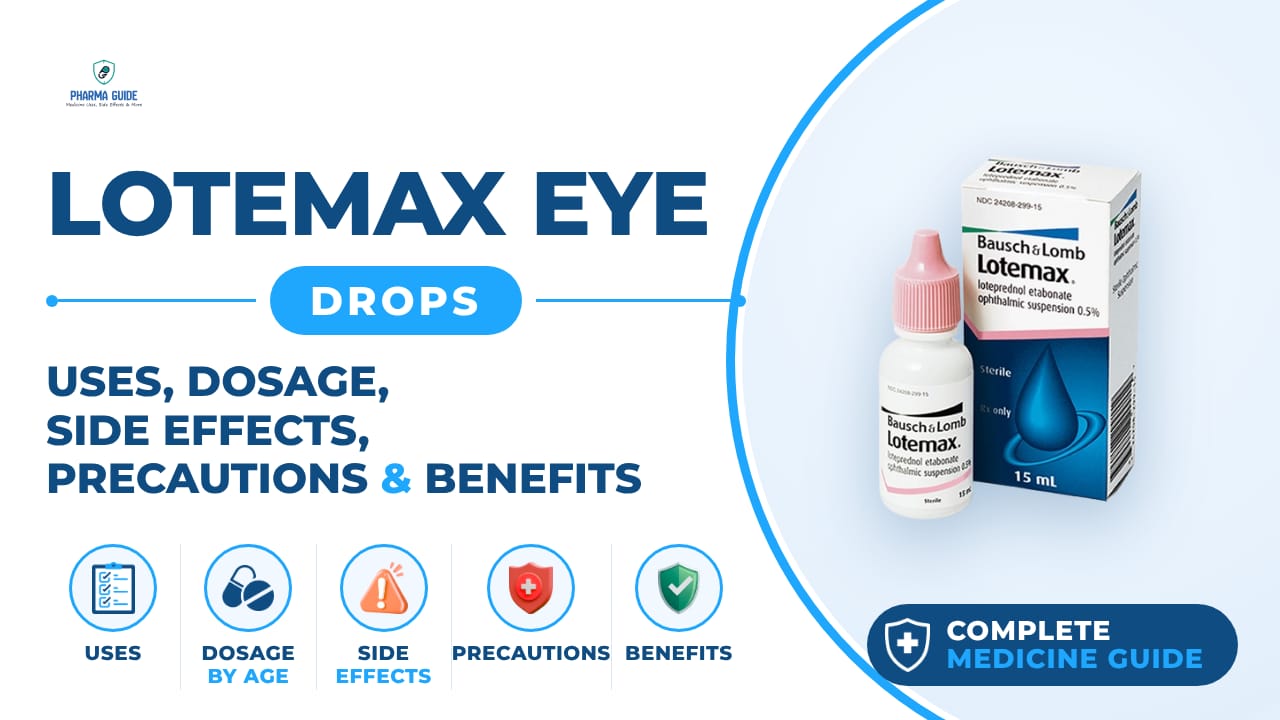
| Generic name | loteprednol etabonate |
|---|---|
| Drug class | Ophthalmic steroids (corticosteroid) |
| Forms | eye drops (suspension), eye gel, eye ointment |
Quick overview
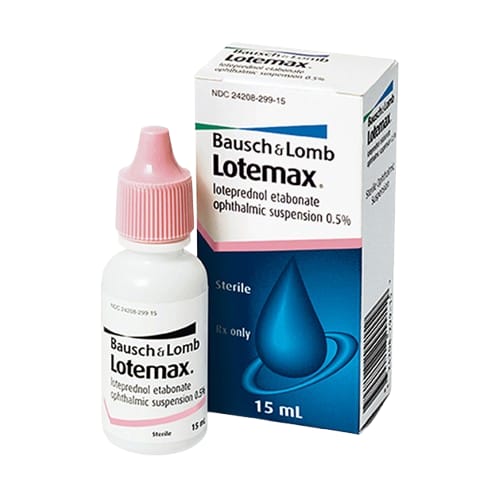
Lotemax Eye Drops contain loteprednol etabonate, a corticosteroid used to reduce swelling and inflammation in the eyes. It is available as eye drops, an eye gel, and an eye ointment. Lotemax is used for conditions such as allergic conjunctivitis, post-surgical eye inflammation, short-term dry eye disease, and seasonal allergy-related eye inflammation. It works by blocking chemicals in the eye that cause inflammation, itching, redness, and swelling.
What is Lotemax Eye Drops
Lotemax is a corticosteroid eye medicine used to reduce swelling and inflammation in the eyes. It comes as eye drops, an eye gel, and an eye ointment.
Lotemax Eye Drops uses
- Treating swelling and inflammation from conditions such as allergic conjunctivitis, acne rosacea, superficial punctate keratitis, herpes zoster keratitis, iritis, cyclitis, and certain infective conjunctivitis
- Treating inflammation and pain after eye surgery
- Treating dry eye disease (short-term)
- Treating eye inflammation caused by seasonal allergies
Benefits of Lotemax Eye Drops
- Applied directly where the pain or inflammation is
- Causes fewer serious side effects than oral steroid medications
- Available as drops, gel, and ointment so you can choose a form that suits you
How Lotemax Eye Drops works
Lotemax is a steroid that works by blocking chemicals in the eye that cause inflammation, itching, redness, and swelling.
Lotemax Eye Drops dosage
Wash your hands before applying the drops. Use the drops exactly as your healthcare provider tells you to. Shake the eye drop bottle well before each use. Gently pull down your lower eyelid and place the drop into the space between your eyelid and eyeball, then close your eye and press lightly at the inner corner of your eye near the nose for a minute or two to help your eye absorb the drop.
Do not let the tip of the bottle touch your eye, hands, or any other surface, to avoid contaminating the medicine. Avoid wearing contact lenses while your eyes are inflamed; if you are allowed to wear contacts, remove soft lenses before your dose and wait at least 15 minutes afterward before putting them back in, since a preservative in some forms can damage soft lenses.
Wait at least 5 minutes before or after using this medicine if you need to use any other eye drops. If your symptoms have not improved after a couple of days, or if they get worse, contact your provider. Do not stop treatment too early, even if you start feeling better. If you use this medicine for more than 10 days, follow up with your provider regularly so they can check the pressure in your eyes.
| Age group | Dose |
|---|---|
| Under 18 years | Safety and effectiveness not established; use only under an ophthalmologist's direction |
| 18–64 years | 1–2 drops in affected eye(s) 4 times daily |
| 65+ years | 1–2 drops in affected eye(s) 4 times daily |
Available forms and strengths
- Eye drops (suspension)
- Eye gel
- Eye ointment
Side effects of Lotemax Eye Drops
Common
- Eye pain
- Increased pressure in the eye
- Blurry vision
- Burning after placing the drops in the eye
- Itching
- Feeling like there's something in your eye
- Dry eyes
- Headache
- Runny nose
- Sore throat or throat irritation
Serious
- Glaucoma (high eye pressure) that can cause blurry vision, loss of side vision, or seeing halos around lights
- Cataracts, which can cause trouble seeing at night, sensitivity to glare, or cloudy/blurry vision
- Slowed healing after cataract surgery
- Eye infection (viral, bacterial, or fungal), which can cause discharge, redness, pain, or light sensitivity
- Allergic reaction, which can include rash, itching, flushing, or swelling of the eyelids, lips, mouth, tongue, or throat
- Vision loss or blindness (rare)
Warnings and precautions
- Using this medicine for a long time can raise eye pressure and lead to glaucoma, which can damage the nerves in your eye and affect your vision. If you have a history of glaucoma, use this medicine with caution and get your eye pressure checked if using it for 10 days or more.
- This medicine can cause cataracts to form with continued use.
- Using steroids after cataract surgery may slow healing and increase the risk of fluid-filled blisters forming in the eye. In people with thinning of the cornea or the white of the eye, this medicine has been linked to holes forming in these tissues.
- This medicine should not be used for most viral eye infections, including herpes simplex, chickenpox-related, or vaccinia infections of the eye, because it can make these infections worse or last longer.
- This medicine should not be used for certain bacterial eye infections. Long-term use may weaken the eye's defenses and increase the risk of new infections, or hide signs of an existing infection.
- Fungal eye infections are more likely to develop with long-term use of this medicine, especially in cases of a persistent corneal ulcer.
- Do not wear contact lenses while your eyes are inflamed.
- Do not use this medicine if you are allergic to loteprednol etabonate or any of its ingredients.
- For ophthalmic use only. Do not swallow or use by another route.
- Do not use for untreated fungal, mycobacterial, or most viral eye infections, including herpes simplex keratitis, unless specifically directed by an ophthalmologist.
- Prolonged use can increase intraocular pressure and may contribute to glaucoma. If used for 10 days or longer, IOP should be monitored. Long-term use may increase the risk of cataracts.
- Steroids can mask or worsen eye infections and may delay healing, particularly after certain eye surgeries. Do not use for longer than prescribed.
- The initial prescription or continuation beyond 14 days should follow an eye examination.
- Long-term steroid use can rarely contribute to fungal infection of the cornea, particularly when a corneal ulcer persists. Avoid contaminating the dropper tip by touching it to the eye, fingers, or other surfaces.
- Lotemax should only be used during pregnancy if the benefit to the mother outweighs the risk to the baby. Tell your doctor if you are pregnant or planning to become pregnant.
- It is not known if Lotemax passes into breast milk. Talk to your doctor about the best way to feed your baby if you use this medicine.
- Lotemax is likely safe to use if you drink alcohol, as there are no known interactions between alcohol and this medicine.
- If symptoms do not improve within 2 days, the eye should be re-evaluated by a doctor.
Storage
- Lotemax eye drops: Store upright between 15° to 25°C (59° to 77°F). Do not freeze. Do not use if neckband imprinted with 'Protective Seal' and yellow mortar and pestle image is not intact.
- Lotemax eye gel: Store upright at 15º to 25º C (59º to 77º F).
- Lotemax eye ointment: Store between 15°C to 25°C (59°F to 77°F). After opening, it can be used until the expiration date on the tube. Do not use if tamper-evident skirt is visible on bottom of cap.
- Keep out of reach of children.
When to see a doctor
- Tell your doctor right away if you have eye pain, discomfort, or any change in vision that does not go away — this could be a sign of high eye pressure, injury, or infection.
- Get medical help right away if you notice worse vision, seeing glares or halos around lights at night, or if your eye symptoms do not improve or get worse after a couple of days.
- If you develop symptoms of an allergic reaction such as rash, itching, or swelling of the lips, mouth, tongue, or throat that makes it hard to breathe, seek emergency medical care right away.
- Call your doctor right away if you develop serious side effects while using this medicine.
Alternatives
- Prednisolone acetate 1% Eye Drops
- Difluprednate 0.05% Eye Drops
- Rimexolone Eye Drops
Watch the video
FAQs
What is Lotemax Eye Drops used for?
Lotemax is used to treat swelling and inflammation from conditions like allergic conjunctivitis, post-surgical eye inflammation, short-term dry eye disease, and seasonal allergy-related eye inflammation.
How do you use Lotemax Eye Drops?
Shake the bottle well, wash your hands, pull down your lower eyelid, and place the drop into the space between your eyelid and eyeball. Close your eye and press lightly at the inner corner near the nose for a minute or two. Avoid touching the dropper tip to your eye or other surfaces.
What are the common side effects of Lotemax Eye Drops?
Common side effects include eye pain, increased eye pressure, blurry vision, burning, itching, a feeling of something in the eye, dry eyes, headache, runny nose, and sore throat.
Can I wear contact lenses while using Lotemax Eye Drops?
You should avoid wearing contact lenses while your eyes are inflamed. If allowed to wear contacts, remove soft lenses before your dose and wait at least 15 minutes afterward before reinserting them.
Is Lotemax safe to use long-term?
Long-term use can raise eye pressure and lead to glaucoma, contribute to cataracts, and increase the risk of fungal or other eye infections, so if used for 10 days or more, your provider should monitor your eye pressure regularly.
General information, not medical advice
Your prescriber and the leaflet in your pack know your situation. This page does not.
- Follow your prescriber and the leaflet
- Don't start, stop, or change a dose on your own
- Doses and warnings differ by country and product
Sources
Video
Related medicines
Eysuvis Eye Drops: Uses, Dosage, Side Effects, Precautions and Alternates
Ophthalmic steroids (corticosteroid)
Eysuvis Eye Drops (loteprednol etabonate) treat dry eye disease symptoms short-term. Learn about dosage, side effects, warnings, and precautions.
Durezol Eye Drops: Uses, Dosage, Side Effects, Precautions and Alternates
Ophthalmic steroids (corticosteroid)
Durezol Eye Drops treat pain and inflammation after eye surgery and anterior uveitis. Learn about dosage, side effects, warnings, and storage tips.