
Safety
General information, not medical advice
Your prescriber and the leaflet in your pack know your situation. This page does not.
- Follow your prescriber and the leaflet
- Don't start, stop, or change a dose on your own
- Doses and warnings differ by country and product
Eysuvis Eye Drops: Uses, Dosage, Side Effects, Precautions and Alternates
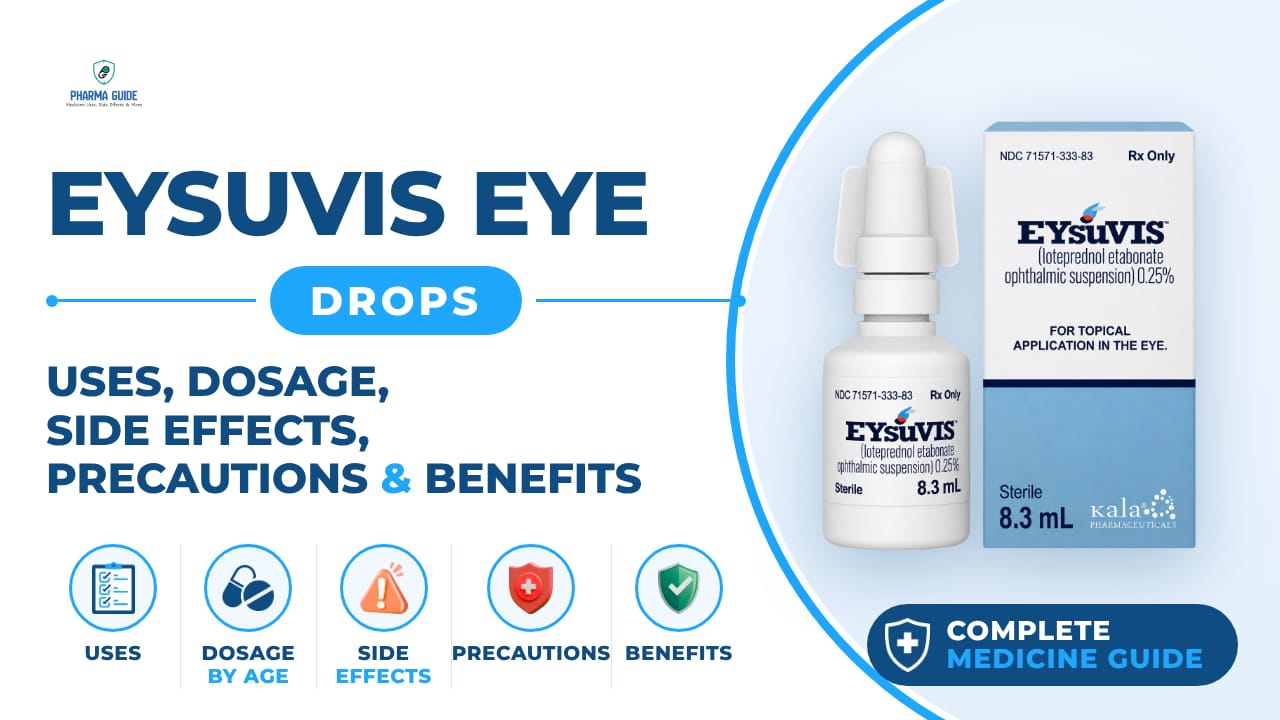
| Generic name | loteprednol etabonate |
|---|---|
| Drug class | Ophthalmic steroids (corticosteroid) |
| Forms | Ophthalmic suspension (eye drops) |
Quick overview
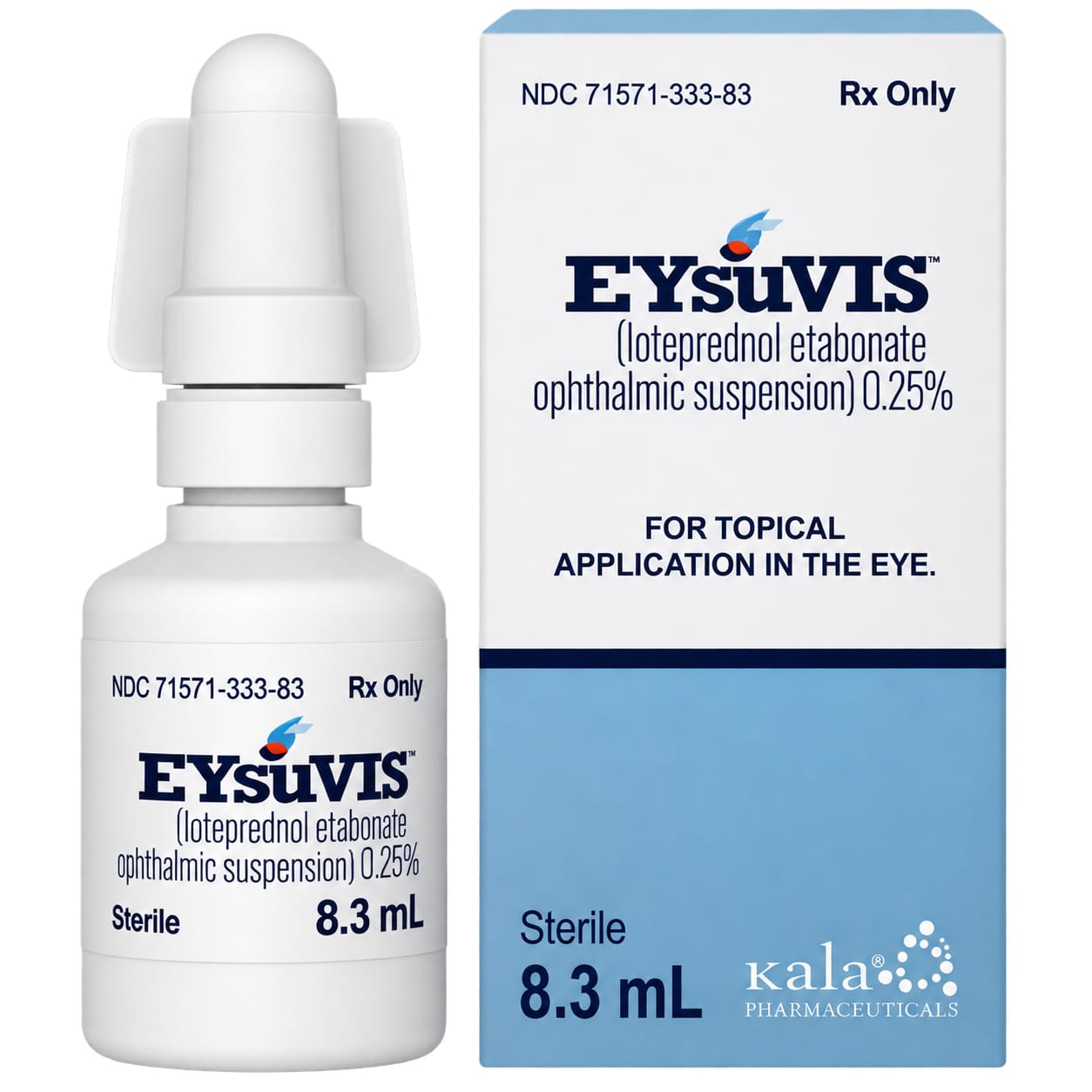
Eysuvis Eye Drops (loteprednol etabonate) is a prescription corticosteroid eye drop belonging to the ophthalmic steroids class. It is used for the short-term treatment, up to two weeks, of the signs and symptoms of dry eye disease. It is a suspension formulated with drug delivery technology to help it pass through the eye's mucus layer so more medicine reaches the affected area.
What is Eysuvis Eye Drops
Eysuvis is a prescription corticosteroid eye drop used for the short-term treatment of dry eye disease. It is a suspension that uses a drug delivery technology to help the medicine get through the mucus layer on the eye so more of it reaches the affected area.
Eysuvis Eye Drops uses
- Short-term (up to two weeks) treatment of the signs and symptoms of dry eye disease
Benefits of Eysuvis Eye Drops
- Helps relieve redness, burning, and scratchy eyes caused by dry eye disease
- Reduces eye inflammation, which drives dry eye flare-ups
- Can be started as soon as you feel a dry eye flare-up coming on
How Eysuvis Eye Drops works
Eysuvis is a corticosteroid that reduces swelling and inflammation in the eye, which is a main cause of dry eye flare-ups.
Eysuvis Eye Drops dosage
Use Eysuvis exactly as your healthcare provider tells you to. Wash your hands well before each use, and shake the bottle for two to three seconds before using. Do not let the dropper tip touch your eye, fingers, or any other surface, since this can contaminate the medicine.
If you wear contact lenses, take them out before using Eysuvis and wait at least 15 minutes after using it before putting them back in. If you use other eye medicines, wait at least 5 minutes between using Eysuvis and the other medicine. Use eye drops before eye ointments so the drops can enter the eye first. Put the pink cap back on the bottle after each use.
Do not use this medicine more often or for longer than your doctor prescribes, since this may increase your risk of side effects. Wait several minutes for your vision to clear before driving or operating machinery. Do not use the drops if they look contaminated, such as if they turn a dark color. Eysuvis is meant for short-term use only, for up to two weeks at a time.
If you miss a dose, use it as soon as you remember; if it is almost time for your next dose, skip the missed dose and do not double up.
| Age group | Dose |
|---|---|
| Under 18 years | Safety and effectiveness not established; use only if specifically prescribed by an eye specialist |
| 18–64 years | 1–2 drops in each affected eye, 4 times daily, for up to 2 weeks |
| 65+ years | 1–2 drops in each affected eye, 4 times daily, for up to 2 weeks |
Available forms and strengths
- Ophthalmic suspension (eye drops)
Side effects of Eysuvis Eye Drops
Common
- Eye pain when putting the drops in your eye
- Blurred vision
- Eye redness
- Eye tearing
- Itchy eyes
- Headache
- Sore throat
- Runny nose
- Light sensitivity
- Feeling like something is in your eye
Serious
- Increased eye pressure, which can lead to glaucoma
- Cataracts
- Eye infections (bacterial, fungal, or viral)
- Thinning or tearing of the outer layer of the eye
- Delayed healing of the eye surface
- Serious allergic reaction (swelling, difficulty breathing)
Warnings and precautions
- Long-term use of this type of eye drop can raise the pressure inside your eye, which may lead to glaucoma and eye damage. Your doctor should check your eyes before you start treatment. This type of eye drop can lead to the formation of cataracts with use.
- This medicine may delay healing of the eye's surface. Your doctor should check your eyes before starting treatment and before renewing your prescription. This medicine may make viral eye infections worse or last longer, and should be used very carefully if you have a history of herpes simplex.
- This medicine should not be used if you have a mycobacterial (tuberculosis-type) eye infection. It can also weaken your immune response, which raises the chance of getting a new infection or hiding signs of an existing one.
- Long-term use of this eye drop can raise the risk of a fungal infection of the cornea.
- Ongoing corneal ulcers while using this medicine may be a sign of fungal infection.
- Do not use Eysuvis if you have a viral infection of the cornea or conjunctiva (including herpes simplex keratitis, vaccinia, or varicella), a mycobacterial eye infection, or a fungal eye disease, or if you are allergic to any of its ingredients.
- Do not use the eye drops if they become contaminated, for example if they change to a dark color, since this can cause infection and serious eye damage, including loss of vision.
- Use only for the prescribed short-term treatment (up to 2 weeks) unless an eye doctor re-examines you. Prolonged use may increase eye pressure (IOP) and can lead to glaucoma or optic-nerve damage. Long-term steroid use may increase the risk of cataracts. May delay corneal healing, especially when the cornea or sclera is thin.
- Do not use for untreated fungal, mycobacterial, or certain viral eye infections, including herpes simplex keratitis, as steroids can worsen or mask these infections.
- If eye pain, redness, itching, or inflammation worsens, contact an eye doctor. Wash hands before use and do not touch the dropper tip to the eye, fingers, or other surfaces. If using other eye drops, leave at least 5 minutes between medications.
- Remove contact lenses before use and wait 15 minutes before putting them back in.
- Wait several minutes for your vision to clear before driving or operating machinery.
- Tell your doctor if you are pregnant or planning to become pregnant. Eysuvis should only be used during pregnancy if the benefits outweigh the risks to the baby. Tell your doctor if you are breastfeeding or planning to breastfeed.
- It isn't known if Eysuvis passes into breast milk, so talk to your doctor about the best way to feed your baby.
Storage
- Store upright at 15°C to 25°C (59°F to 77°F)
- Do not freeze
- After opening, this medication can be used until the expiration date on the bottle
- Do not use if tamper-evident overcap seal is not intact
- The white tamper-evident overcap can be thrown away. Retain the pink cap and keep the bottle tightly closed when not in use
- Keep out of sight and reach of children
- Do not flush medications down the toilet or pour them into a drain unless instructed to do so; consult your pharmacist or local waste disposal company for proper disposal
When to see a doctor
Contact your healthcare provider if you develop eye pain, or if redness, itching, or inflammation get worse. These can be signs of infection. If you notice symptoms of a serious allergic reaction, such as swelling or trouble breathing, get emergency medical help right away. If you suddenly have vision changes, nausea, vomiting, severe eye pain, or see colored rings around lights, get emergency help right away, as these can be signs of a serious form of glaucoma.
Alternatives
- Lotemax (loteprednol etabonate)
- Alrex (loteprednol etabonate)
- Xiidra (lifitegrast)
Watch the video
FAQs
What is Eysuvis Eye Drops used for?
Eysuvis is a prescription corticosteroid eye drop used for the short-term treatment, up to two weeks, of the signs and symptoms of dry eye disease.
What is the dosage for Eysuvis Eye Drops?
For adults, the typical dose is 1-2 drops in each affected eye, 4 times daily, for up to 2 weeks. Safety and effectiveness have not been established in children under 18 years.
What are the common side effects of Eysuvis Eye Drops?
Common side effects include eye pain when putting the drops in, blurred vision, eye redness, eye tearing, itchy eyes, headache, sore throat, runny nose, light sensitivity, and a feeling like something is in your eye.
Can I wear contact lenses while using Eysuvis Eye Drops?
You should remove contact lenses before using Eysuvis and wait at least 15 minutes after using it before putting them back in.
When should I see a doctor while using Eysuvis Eye Drops?
Contact your healthcare provider if you develop eye pain, or if redness, itching, or inflammation get worse, as these can be signs of infection. Seek emergency help for signs of a serious allergic reaction or sudden vision changes, nausea, vomiting, severe eye pain, or colored rings around lights.
General information, not medical advice
Your prescriber and the leaflet in your pack know your situation. This page does not.
- Follow your prescriber and the leaflet
- Don't start, stop, or change a dose on your own
- Doses and warnings differ by country and product
Sources
- Drugs.com: https://www.drugs.com/eysuvis.html
- Medical News Today: https://www.medicalnewstoday.com/articles/drugs-eysuvis-side-effects#specifics
- DailyMed (FDA prescribing information): https://dailymed.nlm.nih.gov/dailymed/fda/fdaDrugXsl.cfm?setid=a2169d82-4275-4ab6-a1c3-c274080b815c
Video
Related medicines
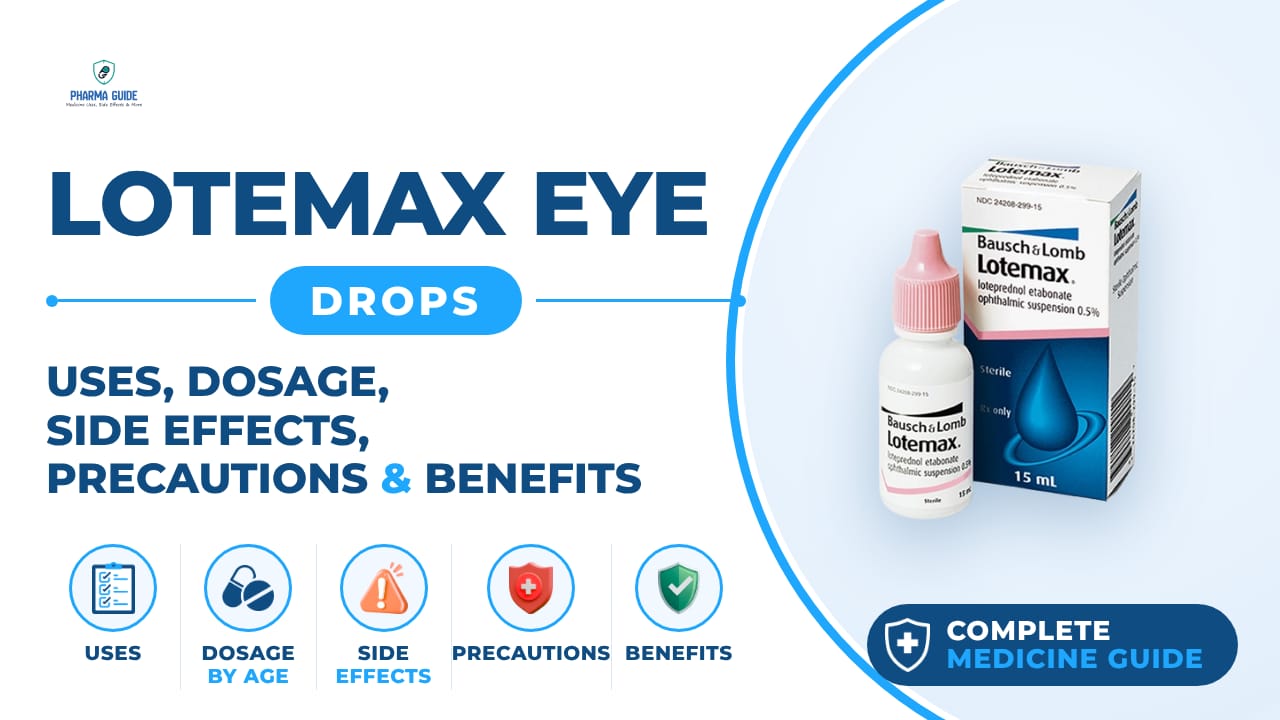
Lotemax Eye Drops: Uses, Dosage, Side Effects, Precautions and Alternates
Ophthalmic steroids (corticosteroid)
Lotemax Eye Drops contain loteprednol etabonate, a corticosteroid used to reduce eye swelling, inflammation, and allergy-related irritation.
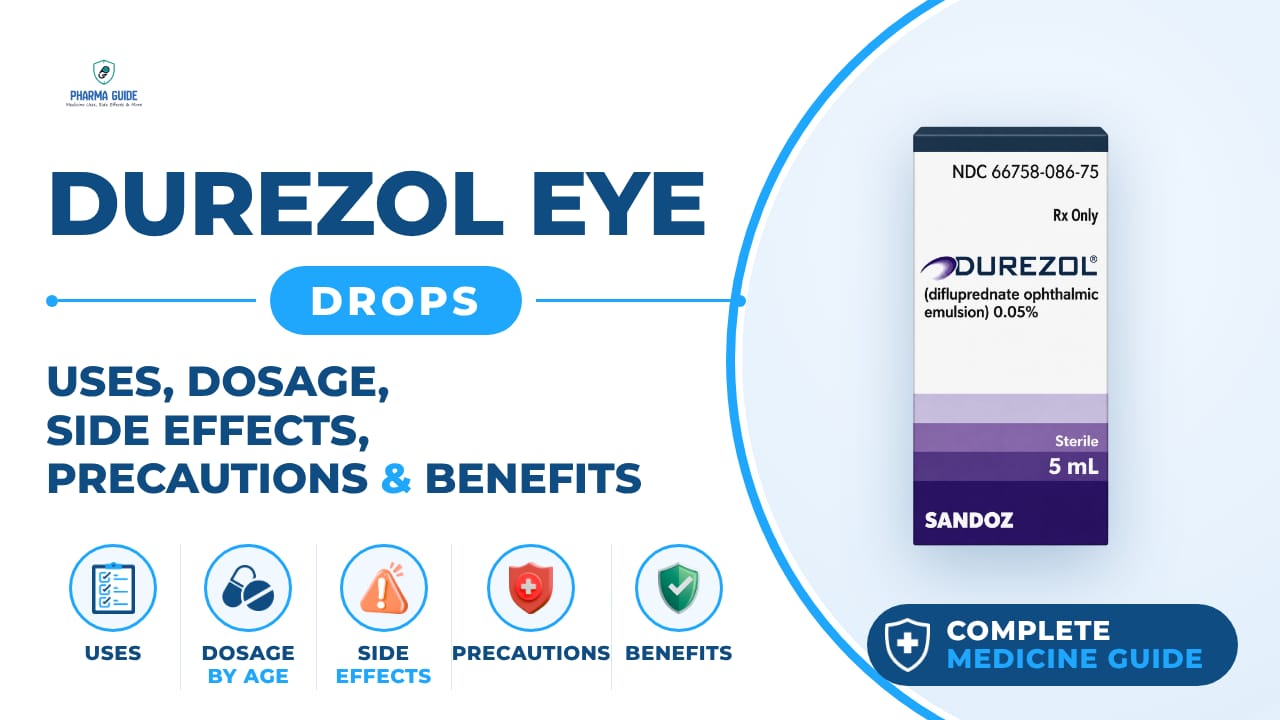
Durezol Eye Drops: Uses, Dosage, Side Effects, Precautions and Alternates
Ophthalmic steroids (corticosteroid)
Durezol Eye Drops treat pain and inflammation after eye surgery and anterior uveitis. Learn about dosage, side effects, warnings, and storage tips.