
Safety
General information, not medical advice
Your prescriber and the leaflet in your pack know your situation. This page does not.
- Follow your prescriber and the leaflet
- Don't start, stop, or change a dose on your own
- Doses and warnings differ by country and product
Dymista Nasal Spray: Uses, Dosage, Side Effects, Precautions and Alternates
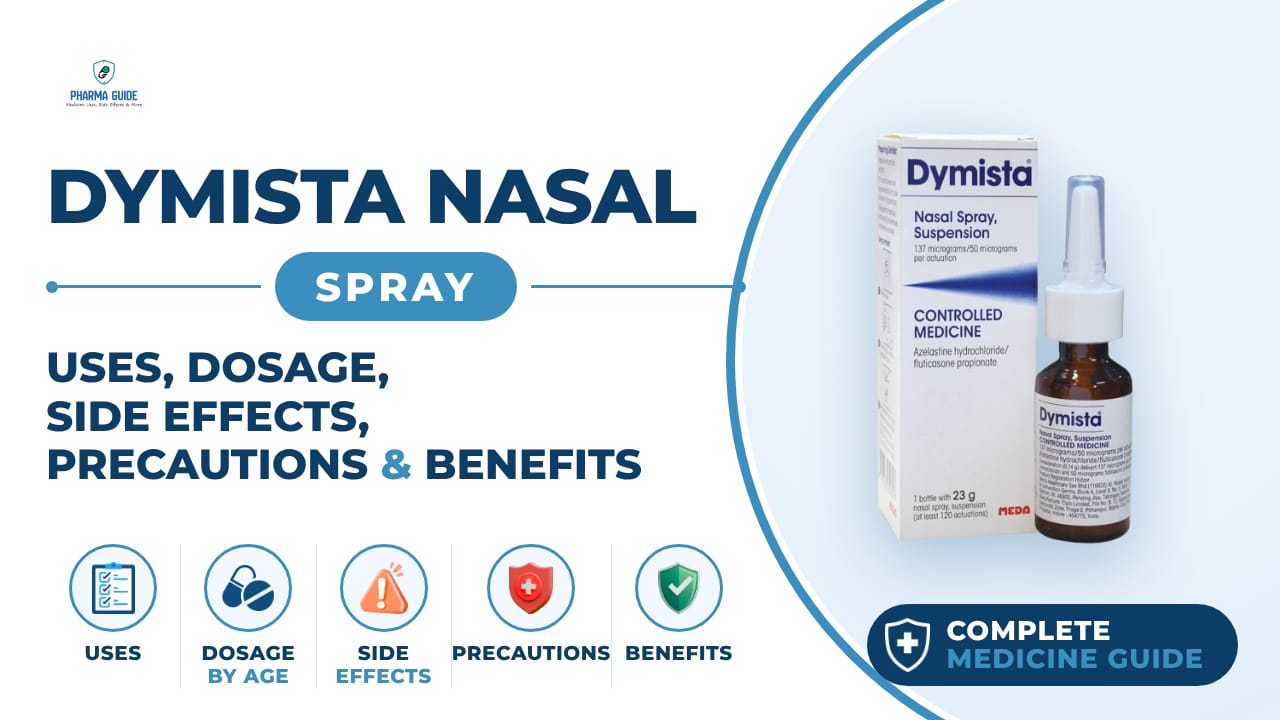
| Generic name | azelastine and fluticasone nasal |
|---|---|
| Drug class | Nasal antihistamines and decongestants, Nasal steroids |
| Forms | Nasal spray |
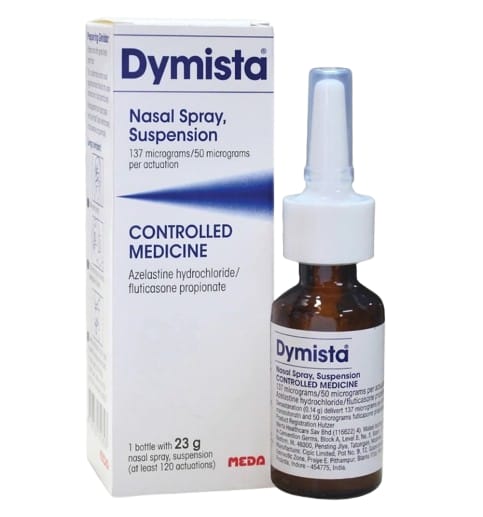
Quick overview
Dymista Nasal Spray combines azelastine, an antihistamine, and fluticasone, a steroid, in one spray. It is a prescription-only treatment used to relieve nasal allergy symptoms such as congestion, sneezing, and runny nose caused by hay fever (seasonal allergic rhinitis). It works quickly and provides long-lasting relief by reducing inflammation and blocking the effects of histamine.
What is Dymista Nasal Spray
Dymista nasal spray combines two medicines in one spray: azelastine, an antihistamine, and fluticasone, a steroid. It is a prescription-only treatment used to relieve nasal allergy symptoms such as congestion, sneezing, and runny nose caused by hay fever (seasonal allergic rhinitis).
Dymista Nasal Spray uses
- Relief of symptoms of seasonal allergic rhinitis (hay fever) such as congestion, sneezing, runny or blocked nose, and itching
- Treats moderate to severe allergic rhinitis and rhinoconjunctivitis affecting the nose and eyes
- Helps relieve itchy, red or watery eyes linked to hay fever
- Can help relieve post-nasal drip caused by allergies
Benefits of Dymista Nasal Spray
- Works quickly, with nasal relief starting from around 5 minutes and eye symptom relief from about 10 minutes
- Provides long-lasting relief lasting up to 24 hours
- Combines an antihistamine and a steroid in one spray for dual-action relief
- Reduces inflammation in the nose and relieves irritation and allergy symptoms
How Dymista Nasal Spray works
Dymista contains an antihistamine (azelastine) that blocks the effects of histamine, the substance your body releases during an allergic reaction, which reduces sneezing, itching and runny nose. It also contains a steroid (fluticasone) that reduces inflammation in the nose.
Dymista Nasal Spray dosage
For use in the nose only — avoid getting it in your eyes or mouth. Shake the bottle gently just before each use. Blow your nose gently to clear your nostrils before using the spray. Keep your head tilted downward, not backward, when using the spray — tilting your head back can cause a bitter taste in your mouth.
Close one nostril with your finger, spray into the other nostril, and sniff gently at the same time, then breathe out through your mouth; repeat in the other nostril. Wipe the spray tip with a clean tissue after each use and replace the cap.
Prime the pump before first use, and reprime if the spray has not been used for 14 days or more. Use the spray regularly as directed, since the steroid's full anti-inflammatory effect can take several days to build up.
If you miss a dose, use it as soon as you remember, but skip it if it is almost time for your next dose — do not use a double dose. This medicine is not recommended for children under 6 years old; a young child should be helped by an adult when using this medicine. If the medicine gets in your eyes, rinse your eyes with water for 10 minutes and then contact your doctor.
| Age group | Dose |
|---|---|
| Under 18 years | Not recommended |
| 18–64 years | 187 mcg, twice/day |
| 65+ years | 187 mcg, twice/day |
Available forms and strengths
- Nasal spray
Side effects of Dymista Nasal Spray
Common
- Nosebleeds, usually minor
- Headaches
- A bitter or unpleasant taste in the mouth
- An unpleasant smell
- Slight irritation, stinging or itching inside the nose
- Sneezing
- Throat irritation, dryness or cough
- Nasal dryness
- Dry mouth
Serious
- Severe or ongoing nosebleeds
- Noisy breathing, runny nose, or crusting around the nostrils
- Redness, sores, or white patches in the mouth or throat
- Fever, chills, tiredness, body aches (possible signs of infection)
- Blurred vision, tunnel vision, eye pain, or seeing halos around lights
- Any wound that will not heal
- Signs of low adrenal gland hormones: worsening tiredness or weakness, feeling light-headed, nausea, vomiting
- Severe drowsiness
- Damage to the skin and lining inside the nose, or sores in the nose
- Problems with breathing, wheezing, or bronchospasm
- Cataracts, glaucoma or increased pressure in the eye, with possible loss of vision or red and painful eyes
- Signs of a severe allergic reaction: hives, swelling of the face, lips, tongue or throat, difficulty breathing
Warnings and precautions
- Do not use Dymista if you are allergic to azelastine or fluticasone, or if you are also taking ritonavir.
- Before using, tell your doctor if you have glaucoma or cataracts, diabetes, herpes infection of the eyes, tuberculosis or other infections, sores or ulcers inside the nose, or if you have recently had an injury or surgery on your nose.
- This medicine can lower the blood cells that help your body fight infection. Avoid being near people who are sick, and call your doctor for preventive treatment if you are exposed to chickenpox or measles, as these can be serious or even fatal in people using steroid medicine.
- Do not share this medicine with others, and do not give it to a child younger than 12 years old without medical advice, since steroid medicine can affect a child's growth.
- Using too much of this medicine for a long time can lead to thinning skin, easy bruising, changes in body fat, increased acne or facial hair, menstrual problems, impotence, or loss of interest in sex.
- Nasal steroid sprays can be linked to sores, ulcers, or a hole in the cartilage inside the nose, and can slow wound healing, so avoid use if you have a recent nasal sore, surgery, or injury until it has healed.
- Nasal and inhaled steroids may cause glaucoma or cataracts, so you should be monitored closely if you notice vision changes or have a history of increased eye pressure, glaucoma, or cataracts.
- Steroid medicine may slow a child's growth rate; children using this medicine should have their growth checked regularly.
- It is not known for certain whether Dymista will harm an unborn baby. Tell your doctor if you are pregnant or planning to become pregnant so they can discuss the risks and benefits with you.
- Using Dymista while breastfeeding may make your breast milk taste bitter. Watch for signs that your baby is not nursing well, and talk to your doctor about the best way to feed your baby.
- Tell your doctor if you have severe liver disease before using this medicine.
- Drinking alcohol with this medicine can increase certain side effects, such as drowsiness.
- Avoid driving or doing anything that requires alertness until you know how this medicine affects you, as your reactions could be impaired.
Storage
- Store the nasal spray upright with the dust cap in place at room temperature
- Do not freeze or refrigerate the spray
- Protect the spray from light
- Throw away the bottle after you have used 120 sprays, even if there is medicine left inside
- Keep the medicine out of reach of children
- If you no longer need the medicine or it is out of date, take it to a pharmacy for safe disposal
When to see a doctor
- Get emergency medical help right away if you notice signs of a serious allergic reaction, such as hives, difficulty breathing, or swelling of your face, lips, tongue, or throat.
- Stop using the medicine and call your doctor right away if you have severe drowsiness, severe or ongoing nosebleeds, noisy breathing, crusting around your nostrils, sores or white patches in your mouth or throat, fever, chills or body aches, blurred or tunnel vision, eye pain, seeing halos around lights, a wound that will not heal, or signs of low adrenal hormone levels such as worsening tiredness, light-headedness, nausea, or vomiting.
- See your doctor or pharmacist if your symptoms are not relieved within 7 days, if your nose bleeds, if you develop signs of a nasal or sinus infection such as fever, pain, swelling, or discoloured nasal discharge, or if you have eye pain or visual disturbances.
- If someone accidentally swallows this medicine, seek emergency medical attention or contact your local poison control center. Call your doctor or go to the nearest hospital emergency room right away if a child accidentally swallows Dymista or if you use too much of it.
Alternatives
- Flonase
- Ryaltris
- Patanase
Watch the video
FAQs
What is Dymista Nasal Spray used for?
It is used to relieve symptoms of seasonal allergic rhinitis (hay fever), including congestion, sneezing, runny or blocked nose, and itching, as well as itchy, red or watery eyes and post-nasal drip caused by allergies.
How fast does Dymista Nasal Spray work?
Nasal relief starts from around 5 minutes and eye symptom relief from about 10 minutes, with effects lasting up to 24 hours.
What is the dosage for Dymista Nasal Spray?
For adults aged 18–64 and those 65 and older, the dose is 187 mcg twice a day. It is not recommended for children under 6, and is not recommended for anyone under 18 according to the dosage table.
What are the common side effects of Dymista Nasal Spray?
Common side effects include nosebleeds, headaches, a bitter or unpleasant taste in the mouth, an unpleasant smell, slight nasal irritation or itching, sneezing, throat irritation or dryness, nasal dryness, and dry mouth.
Can children use Dymista Nasal Spray?
It is not recommended for children under 6 years old, and should not be given to a child younger than 12 without medical advice, since the steroid component can affect a child's growth.
General information, not medical advice
Your prescriber and the leaflet in your pack know your situation. This page does not.
- Follow your prescriber and the leaflet
- Don't start, stop, or change a dose on your own
- Doses and warnings differ by country and product
Sources
Video
Related medicines

Injectafer Injection: Uses, Dosage, Side Effects, Precautions and Alternates
Iron products
Injectafer (ferric carboxymaltose) treats iron deficiency anemia and heart failure-related iron deficiency via IV. Learn uses, dosage, side effects, and

Gliclazide Tablet: Uses, Dosage, Side Effects, Precautions and Alternates
Sulfonylurea (hypoglycemic/antidiabetic agent)
Gliclazide Tablet is a sulfonylurea for type 2 diabetes that boosts insulin release. Learn about dosage, side effects, warnings, and precautions.