
Safety
General information, not medical advice
Your prescriber and the leaflet in your pack know your situation. This page does not.
- Follow your prescriber and the leaflet
- Don't start, stop, or change a dose on your own
- Doses and warnings differ by country and product
Ecospirin Tablet: Uses, Dosage, Side Effects, Precautions and Alternates
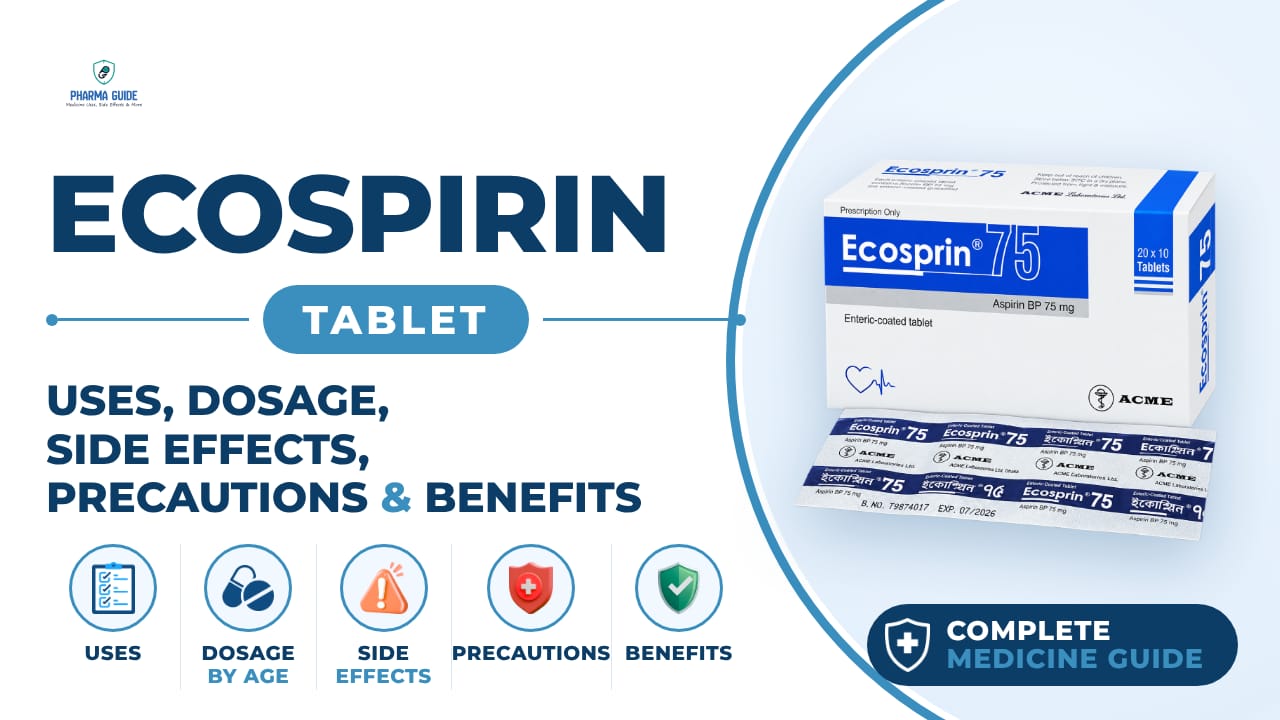
| Generic name | Aspirin (acetylsalicylic acid) |
|---|---|
| Drug class | Antiplatelet Agent / NSAID (Salicylate) |
| Forms | Tablet |
Quick overview
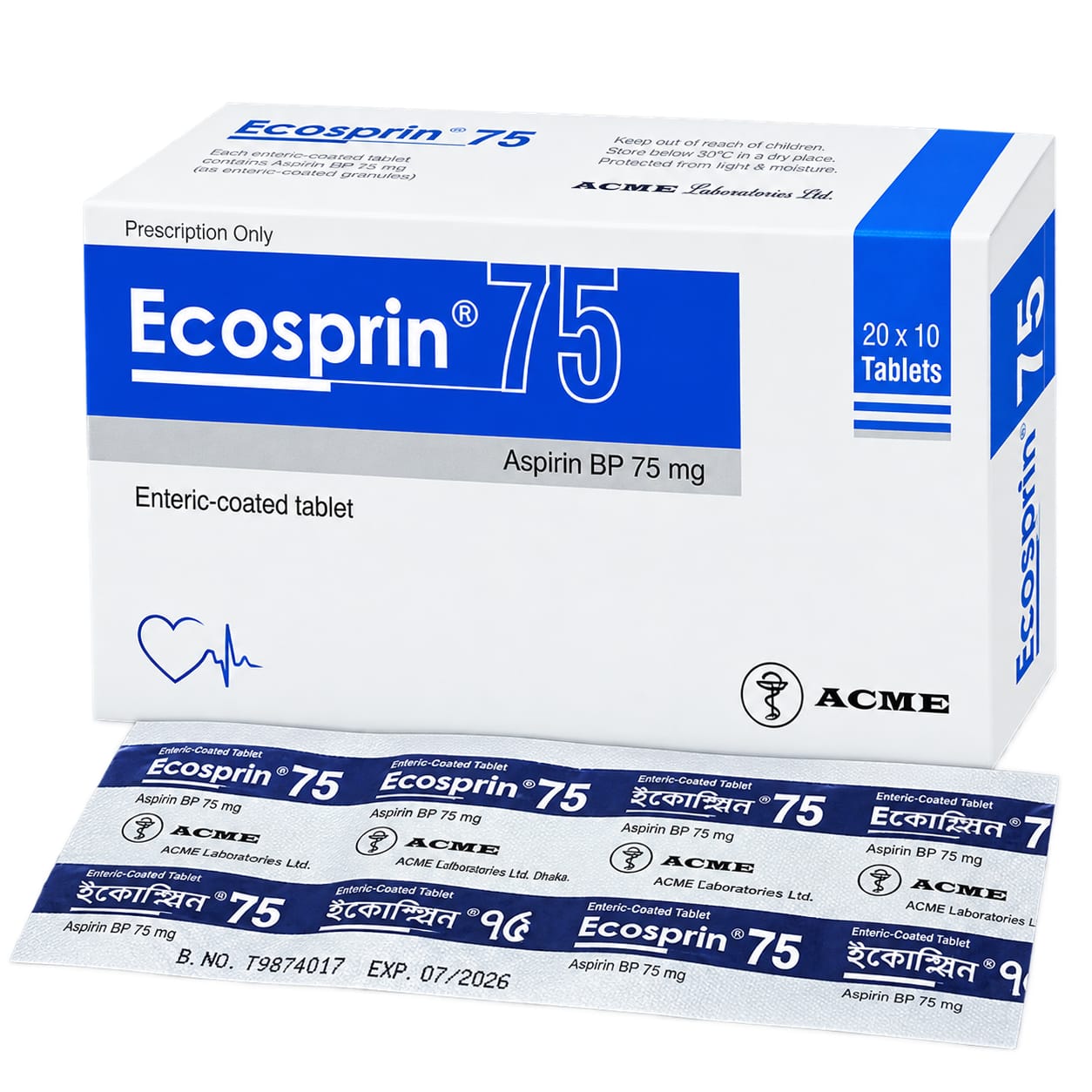
Ecospirin Tablet contains aspirin (acetylsalicylic acid), an antiplatelet agent and salicylate NSAID. It is used mainly to prevent blood clots and lower the risk of heart attack, stroke, and other heart-related problems, and is often used long-term in people with a history of heart disease, heart attack, or stroke caused by a blood clot. It also has pain-relieving, anti-inflammatory, and fever-reducing effects.
What is Ecospirin Tablet
Ecospirin is a brand name for aspirin, used mainly to prevent blood clots and lower the risk of heart attack, stroke, and other heart-related problems. It is often used long-term in people with a history of heart disease, heart attack, or stroke caused by a blood clot.
Ecospirin Tablet uses
- Lowering the risk of heart attack or stroke in high-risk people
- Preventing another heart attack after a first one
- Preventing a first heart attack in high-risk patients
- Relieving chest pain (angina) caused by reduced blood flow to the heart
- Preventing angina episodes in people with coronary artery disease
- Reducing the risk of stroke in people with past mini-strokes (TIAs) or ischemic stroke
- Preventing blood clots after procedures like angioplasty or stent placement
- Reducing joint inflammation and pain in rheumatoid arthritis
- Treating inflammation in the spine and large joints (ankylosing spondylitis)
- Managing inflammation in systemic lupus erythematosus
- Relieving pain and stiffness from osteoarthritis
- Treating mild to moderate pain
- Reducing fever
- Possibly lowering long-term risk of colon or rectal cancer in some people
Benefits of Ecospirin Tablet
- Helps keep blood flowing smoothly through arteries by stopping platelets from clumping together
- Reduces the chance of clots that can cause heart attacks and strokes
- Also has pain-relieving, anti-inflammatory, and fever-reducing effects
How Ecospirin Tablet works
Ecospirin contains aspirin, which blocks an enzyme called cyclooxygenase. This stops the body from making a substance that makes platelets stick together and narrows blood vessels. With fewer sticky platelets, blood clots are less likely to form, which helps keep blood flowing through the arteries and lowers the risk of heart attack and stroke. This effect lasts for the life of the platelet, about 7 to 10 days, so regular dosing is needed to keep protecting the heart.
Ecospirin Tablet dosage
Ecospirin is usually taken once daily, preferably at the same time each day. It is best taken after food or with a full glass of water to help reduce stomach irritation. Swallow the tablet whole; do not crush, cut, or chew it unless your doctor tells you to. If you miss a dose, skip it and take your next dose at the usual time — do not take two doses together to make up for a missed one. Do not stop taking it suddenly without talking to your doctor, as this can raise the risk of a heart problem.
| Age group | Dose |
|---|---|
| Under 18 Years | Not recommended for routine use; use only if specifically prescribed |
| 18–64 Years | 75–150 mg once daily, according to the medical indication |
| 65+ Years | 75–150 mg once daily, as prescribed and based on bleeding risk |
Available forms and strengths
Ecospirin is available as a tablet.
Side effects of Ecospirin Tablet
Common
- Gastric irritation
- Heartburn
- Nausea
- Vomiting
- Abdominal discomfort
- Indigestion (dyspepsia)
- Dizziness
- Easy bruising
- Increased bleeding tendency (e.g., nosebleeds, gum bleeding)
- Rash or hives
- Wheezing or breathlessness
Serious
- Ringing in the ears (tinnitus)
- Unusual bleeding
- Inflammation of the stomach lining
- Cramps in the lower respiratory tract, asthma attack
- Severe allergic reactions like sudden wheezing, swelling of lips or body, and difficulty swallowing
Warnings and precautions
- Keep this medicine stored securely and out of reach of children, as accidental aspirin poisoning is common in young children.
- Aspirin is generally not recommended for children, especially during viral illnesses like flu or chickenpox, because of the risk of a rare but serious condition called Reye's syndrome.
- This medicine affects how blood clots, so it can increase bleeding risk, especially during and after surgery (including minor procedures like dental extractions), for several days after the last dose.
- People with asthma, nasal polyps, or allergies to other anti-inflammatory drugs may have a higher risk of allergic reactions, including asthma attacks, when taking this medicine.
- This medicine is not recommended for people with active stomach ulcers, a history of stomach ulcers, bleeding disorders, severe liver or kidney failure, or severe heart failure, or those who are allergic to aspirin or similar drugs.
- People with G6PD deficiency may develop a type of anemia from this medicine, especially at higher doses, with fever, or during infections.
- Routine use of Ecospirin during pregnancy is generally not advised. It should be avoided in the last trimester because it can cause problems for the baby, such as early closure of a blood vessel near the baby's heart, reduced birth weight, and other complications.
- A low dose may be used in certain high-risk pregnancies under close medical supervision to help prevent preeclampsia, but this should only be done on a doctor's advice.
- Aspirin passes into breast milk in small amounts. Low doses may be acceptable, but prolonged use or high doses are usually avoided because of possible bleeding risk or a rare but serious condition called Reye's syndrome in the nursing baby.
- Talk to your doctor before using it while breastfeeding.
- This medicine should be avoided in people with severe kidney failure or impaired kidney function.
- This medicine should be avoided in people with liver problems or impaired liver function.
- Avoid alcohol while taking this medicine, as it raises the risk of stomach bleeding and ulcers, and can affect how the tablet releases its medicine.
- This medicine does not affect your ability to drive or operate machinery.
Storage
- Store at room temperature, ideally below 25°C, away from moisture and direct sunlight.
- Keep the tablets in their original packaging to maintain their efficacy.
- Store out of reach of children and pets.
- Do not crush or chew the tablets unless instructed, as it may affect the drug's release and absorption profile.
- Improper storage (exposure to air, heat, or light) may degrade the medication and reduce its shelf life or effectiveness.
When to see a doctor
- Get medical help right away if you notice unusual bruising, dark or tarry stools, blood in urine or stool, or any signs of heavy or unexplained bleeding.
- Stop the medicine and seek urgent medical care if you have sudden wheezing, swelling of the lips or body, rash, or trouble swallowing, as these may be signs of a serious allergic reaction.
- Seek medical attention if you have trouble breathing while taking this medicine; your doctor may need to change your treatment.
- If signs of an overdose occur, such as ringing in the ears, confusion, rapid breathing, severe vomiting, or loss of coordination, get emergency medical help immediately.
- In children with a viral illness who are taking aspirin, ongoing vomiting may be an early warning sign of Reye's syndrome and needs immediate medical attention.
Alternatives
- Prasugrel
- Ticagrelor
- Clopidogrel
Watch the video
FAQs
What is Ecospirin Tablet used for?
Ecospirin is used to lower the risk of heart attack and stroke, prevent blood clots after procedures like angioplasty, relieve angina, and manage pain and inflammation in conditions like rheumatoid arthritis and osteoarthritis.
How does Ecospirin Tablet work?
Ecospirin contains aspirin, which blocks the cyclooxygenase enzyme, stopping platelets from sticking together. This reduces the chance of blood clots forming, helping keep blood flowing through the arteries and lowering the risk of heart attack and stroke.
What is the usual dosage of Ecospirin Tablet?
Ecospirin is usually taken once daily, preferably after food or with a full glass of water. For adults, the typical dose is 75–150 mg once daily depending on the medical indication.
What are the common side effects of Ecospirin Tablet?
Common side effects include gastric irritation, heartburn, nausea, vomiting, indigestion, dizziness, easy bruising, increased bleeding tendency, and rash.
Can Ecospirin Tablet be taken during pregnancy?
Routine use during pregnancy is generally not advised, and it should be avoided in the last trimester due to risks to the baby. A low dose may be used in certain high-risk pregnancies only under close medical supervision.
General information, not medical advice
Your prescriber and the leaflet in your pack know your situation. This page does not.
- Follow your prescriber and the leaflet
- Don't start, stop, or change a dose on your own
- Doses and warnings differ by country and product
Sources
Video
Related medicines

Injectafer Injection: Uses, Dosage, Side Effects, Precautions and Alternates
Iron products
Injectafer (ferric carboxymaltose) treats iron deficiency anemia and heart failure-related iron deficiency via IV. Learn uses, dosage, side effects, and

Gliclazide Tablet: Uses, Dosage, Side Effects, Precautions and Alternates
Sulfonylurea (hypoglycemic/antidiabetic agent)
Gliclazide Tablet is a sulfonylurea for type 2 diabetes that boosts insulin release. Learn about dosage, side effects, warnings, and precautions.