
Safety
General information, not medical advice
Your prescriber and the leaflet in your pack know your situation. This page does not.
- Follow your prescriber and the leaflet
- Don't start, stop, or change a dose on your own
- Doses and warnings differ by country and product
Edurant Tablet: Uses, Dosage, Side Effects, Precautions and Alternates
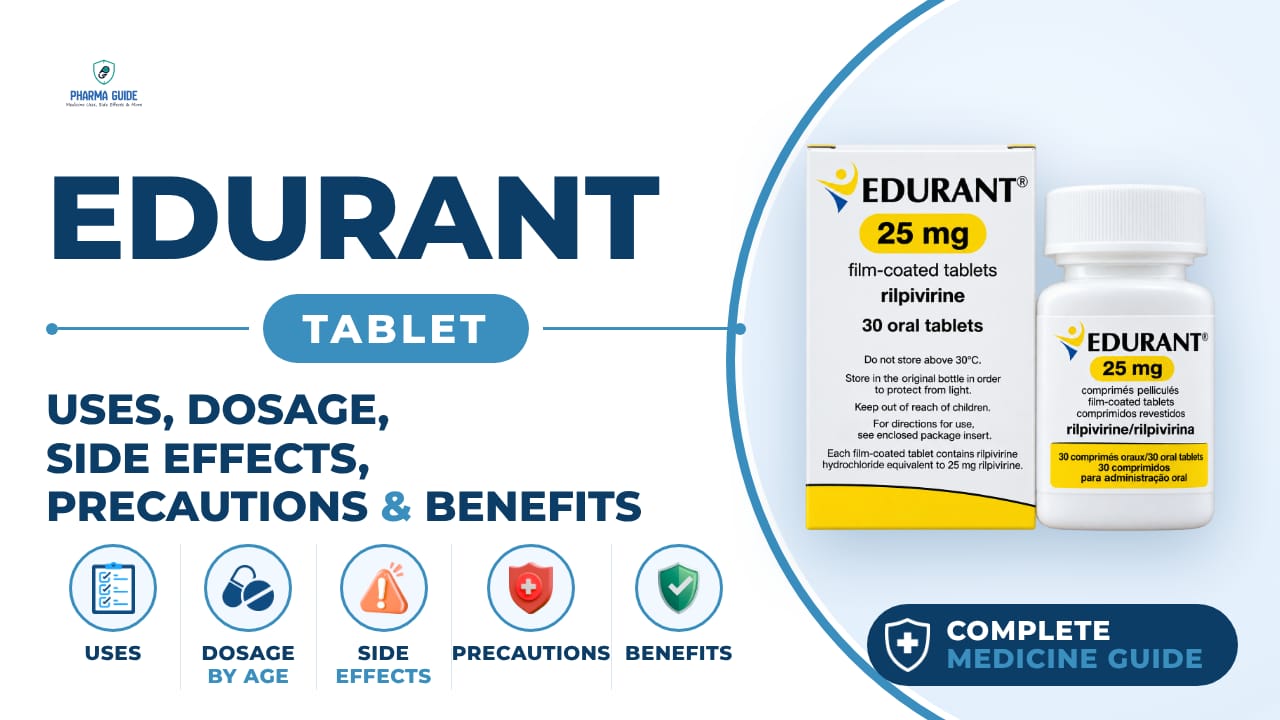
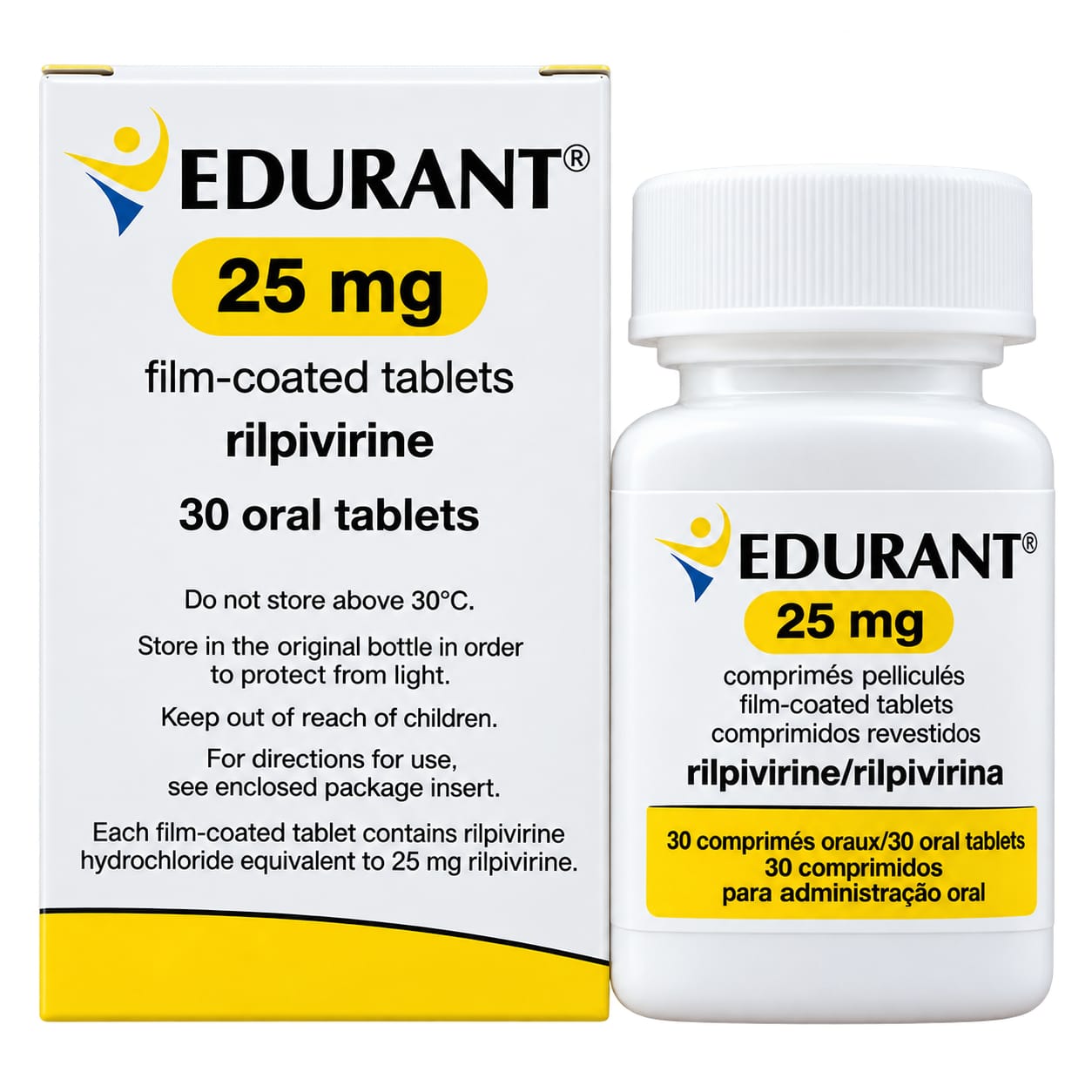
| Generic name | rilpivirine |
|---|---|
| Drug class | HIV non-nucleoside reverse transcriptase inhibitor (NNRTI) |
| Forms | Tablets (25 mg) |
Quick overview
Edurant Tablet contains rilpivirine, a non-nucleoside reverse transcriptase inhibitor (NNRTI) used to treat HIV-1 infection. It is always used in combination with other HIV medicines, never alone. Edurant may help reduce viral load and increase CD4+ cell counts, supporting the immune system. It is taken once daily with a meal, exactly as prescribed by a doctor.
What is Edurant Tablet
Edurant is a prescription medicine used to treat HIV-1 infection. It belongs to a group of anti-HIV medicines called non-nucleoside reverse transcriptase inhibitors (NNRTIs), and it is always used together with other HIV medicines.
Edurant Tablet uses
- Treats HIV-1 infection in adults and adolescents 12 years and older (weighing at least 35 kg) who have not taken HIV medicines before and have a viral load of 100,000 copies/mL or less at the start of treatment
- Used in combination with other antiretroviral medicines, never alone
Benefits of Edurant Tablet
- May help reduce the amount of HIV in the blood (viral load)
- May help increase the number of CD4+ (T) cells that help fight infections
- Reducing HIV and increasing CD4+ cell count may improve the immune system and reduce the risk of death or opportunistic infections
How Edurant Tablet works
Edurant blocks an enzyme called HIV reverse transcriptase that the virus needs to make copies of itself, which lowers the amount of HIV in the blood and helps protect the immune system.
Edurant Tablet dosage
Take every day exactly as prescribed by your doctor. Always take with a meal, as a meal is needed to get the right drug levels in your body; a protein drink alone does not replace a meal. Swallow the tablet whole with water. Do not change your dose or stop taking it without first talking with your doctor. Keep a regular supply so you do not run out, since HIV levels can rise even if the medicine is stopped for a short time.
If you take rifabutin, your doctor may have you take two tablets once daily instead of one; when rifabutin is stopped, go back to one tablet once daily. If you take antacids, take them at least 2 hours before or at least 4 hours after this medicine. If you take an H2-receptor antagonist (such as famotidine, cimetidine, nizatidine, or ranitidine), take it at least 12 hours before or at least 4 hours after this medicine. Avoid grapefruit juice as it may increase blood levels of this medicine.
If you miss a dose within 12 hours of your usual time, take it with a meal as soon as possible and then continue your normal schedule. If you miss a dose by more than 12 hours, skip the missed dose and take your next dose at the regular time; do not double your dose.
| Age group | Dose |
|---|---|
| 2–11 years, ≥25 kg | 25 mg once daily with a meal |
| 12–17 years, ≥25 kg | 25 mg once daily with a meal |
| 18–64 years | 25 mg once daily with a meal |
Available forms and strengths
- Tablets (25 mg)
Side effects of Edurant Tablet
Common
- Decreased appetite
- Depression
- Difficulty falling asleep (insomnia), abnormal dreams, sleep disorders
- Headache, dizziness
- Stomach pain, nausea, vomiting, diarrhea
- Rash
- Tiredness
- Changes in your routine liver tests
Serious
- Severe depression or mood changes, including thoughts of self-harm or suicide
- Liver problems with symptoms such as abdominal pain, vomiting, nausea, yellowing of the eyes or skin, dark urine or fatigue
- Severe and potentially life-threatening rash with fever, blisters, blisters of the mouth and throat, swollen face or limbs, red spots on the skin, abdominal pain, nausea, vomiting, dark urine, or yellowing of the skin and eyes
- Changes to your immune system (immune reconstitution inflammatory syndrome) with fever, joint or muscle pain, redness, rash, swelling, abdominal pain, yellowing of the skin and eyes, or fatigue
- Possible heart rhythm disturbance, such as dizziness, palpitations, fainting or seizures
Warnings and precautions
- This medicine does not cure HIV or AIDS and has not been shown to prevent passing HIV to others through blood or sexual contact, so safe sex precautions should continue.
- Do not take this medicine with certain anticonvulsants, some antibiotics for tuberculosis, systemic dexamethasone (more than a single dose), St. John's wort, or proton pump inhibitors, as these can significantly lower the levels of this medicine in the blood and lead to treatment failure or resistance.
- People starting combination HIV therapy, including this medicine, may develop an inflammatory response to existing infections as their immune system recovers (immune reconstitution inflammatory syndrome), which may need further evaluation and treatment.
- Severe skin and hypersensitivity reactions, including a serious condition called DRESS, have been reported with this medicine and treatment should be stopped immediately if these occur.
- This medicine should be used carefully in people at risk of heart rhythm problems, since it has been linked with a lengthening of the heart's electrical cycle (QT interval), which could raise the risk of abnormal heart rhythms.
- This medicine contains lactose and is not recommended for people with rare hereditary problems such as severe lactase deficiency or glucose-galactose malabsorption.
- It is not known if this medicine can harm an unborn baby. Talk with your doctor about whether taking it during pregnancy is right for you, and about joining the Antiretroviral Pregnancy Registry if you become pregnant while taking it.
- Do not breastfeed while taking this medicine, because of the risk of passing HIV to the baby through breast milk and possible side effects in the infant.
- Caution is needed in people with severe kidney disease, although no dose adjustment is required for mild to moderate kidney impairment.
- This medicine has not been studied in people with severe liver impairment and is not recommended for them. Caution is advised in people with mild to moderate liver impairment.
- This medicine has no or only a very small effect on your ability to drive or use machines.
Storage
- Store tablets at room temperature between 15–30°C
- Keep the tablets in the original bottle given to you by your pharmacist and protect the bottle from light
- Keep out of reach and sight of children
- If you no longer need the medicine or it is out of date, take it to a pharmacy for safe disposal
When to see a doctor
- Get medical help right away if you have symptoms of a severe skin or allergic reaction, such as rash with fever, blisters, mouth sores, swollen face or limbs, or yellowing of the skin or eyes.
- Get medical help right away if you have signs of liver problems, such as stomach pain, vomiting, nausea, yellowing of the eyes or skin, dark urine, or tiredness.
- Talk to your doctor right away if you feel very sad, hopeless, or have thoughts of harming yourself while taking this medicine.
- Call your doctor right away if you notice symptoms of a new infection or inflammation after starting this medicine with other HIV medicines.
- Seek medical help immediately if you experience signs of a heart rhythm problem, such as dizziness, palpitations, fainting, or seizures.
- If you think you have taken too much of this medicine, contact your healthcare professional, hospital emergency department, or local poison control center immediately, even if you do not have symptoms.
Alternatives
- Dolutegravir-based regimens
- Bictegravir-based regimens
- Raltegravir-based regimens
Watch the video
FAQs
What is Edurant Tablet used for?
Edurant is used to treat HIV-1 infection in adults and adolescents 12 years and older weighing at least 35 kg who have not taken HIV medicines before and have a viral load of 100,000 copies/mL or less at the start of treatment. It is always used in combination with other HIV medicines, never alone.
How should I take Edurant Tablet?
Take Edurant once daily exactly as prescribed, always with a meal, since a meal is needed to get the right drug levels; a protein drink alone does not replace a meal. Swallow the tablet whole with water and do not change your dose or stop without talking to your doctor.
What should I do if I miss a dose of Edurant?
If you miss a dose within 12 hours of your usual time, take it with a meal as soon as possible and continue your normal schedule. If it has been more than 12 hours, skip the missed dose and take your next dose at the regular time without doubling up.
What are the common side effects of Edurant Tablet?
Common side effects include decreased appetite, depression, insomnia, abnormal dreams, sleep disorders, headache, dizziness, stomach pain, nausea, vomiting, diarrhea, rash, tiredness, and changes in routine liver tests.
Can Edurant be taken with antacids or other medicines?
If you take antacids, take them at least 2 hours before or 4 hours after Edurant. If you take an H2-receptor antagonist like famotidine or ranitidine, take it at least 12 hours before or 4 hours after Edurant, and avoid grapefruit juice as it may increase blood levels of this medicine.
General information, not medical advice
Your prescriber and the leaflet in your pack know your situation. This page does not.
- Follow your prescriber and the leaflet
- Don't start, stop, or change a dose on your own
- Doses and warnings differ by country and product
Sources
Video
Related medicines

Injectafer Injection: Uses, Dosage, Side Effects, Precautions and Alternates
Iron products
Injectafer (ferric carboxymaltose) treats iron deficiency anemia and heart failure-related iron deficiency via IV. Learn uses, dosage, side effects, and

Gliclazide Tablet: Uses, Dosage, Side Effects, Precautions and Alternates
Sulfonylurea (hypoglycemic/antidiabetic agent)
Gliclazide Tablet is a sulfonylurea for type 2 diabetes that boosts insulin release. Learn about dosage, side effects, warnings, and precautions.