
Safety
General information, not medical advice
Your prescriber and the leaflet in your pack know your situation. This page does not.
- Follow your prescriber and the leaflet
- Don't start, stop, or change a dose on your own
- Doses and warnings differ by country and product
Efavirenz Tablet: Uses, Dosage, Side Effects, Precautions and Alternates
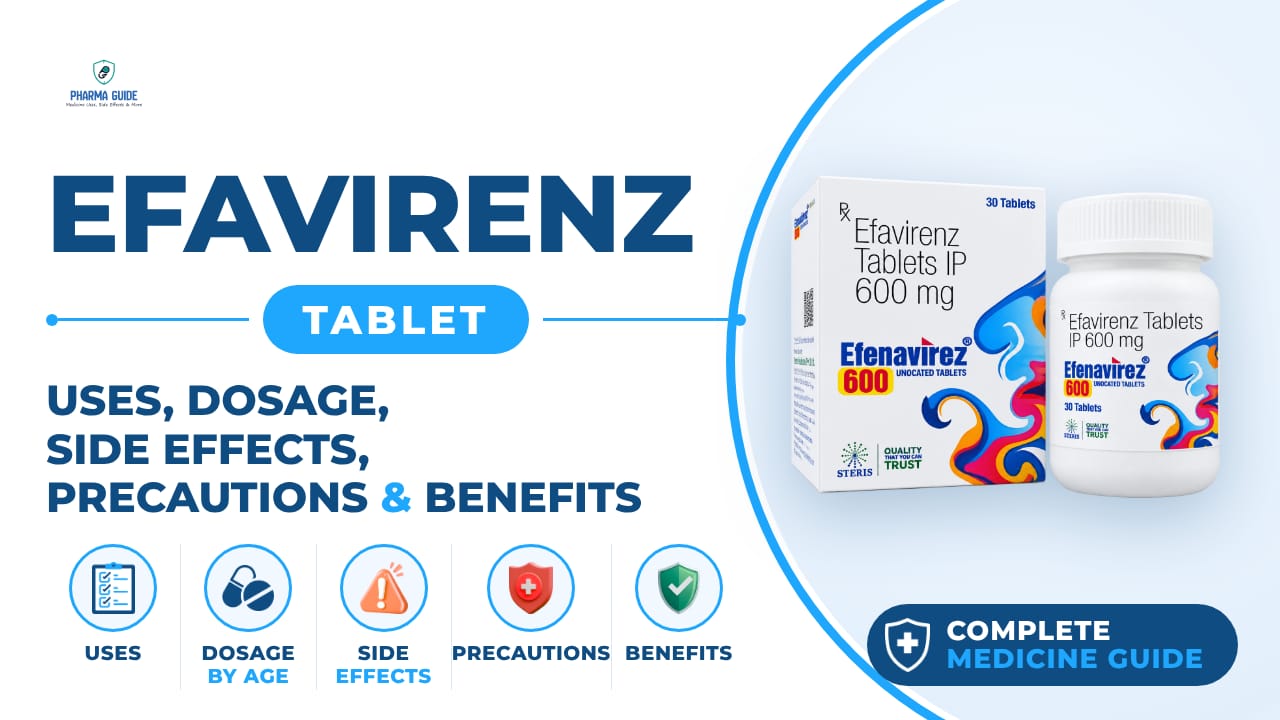
| Generic name | Efavirenz |
|---|---|
| Drug class | NNRTIs (non-nucleoside reverse transcriptase inhibitors) |
| Forms | Tablet, Capsule |
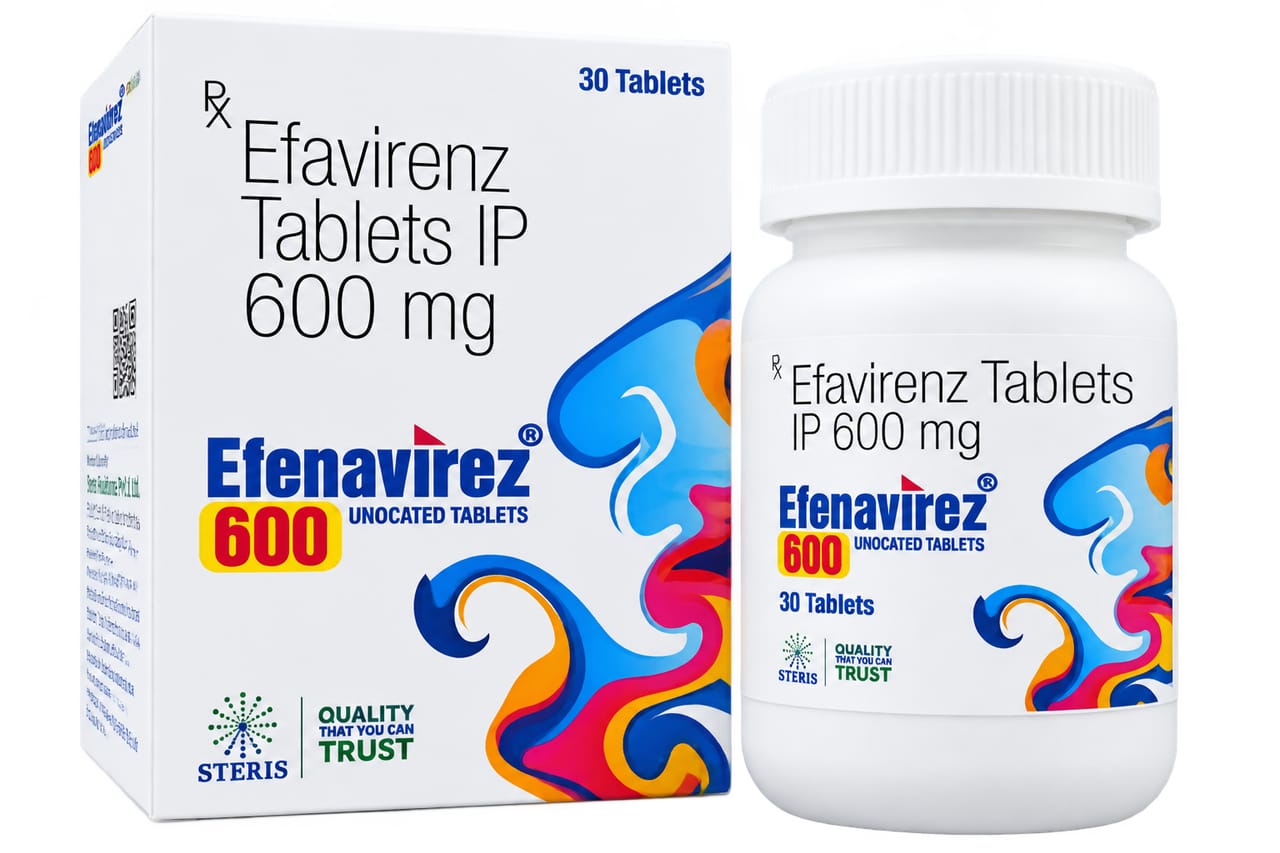
Quick overview
Efavirenz Tablet is an antiretroviral medicine used to treat HIV-1 infection in combination with other HIV medicines. It belongs to the NNRTI (non-nucleoside reverse transcriptase inhibitor) drug class and is not a cure for HIV or AIDS. It is taken once daily, usually at bedtime on an empty stomach, and must always be used together with other antiretroviral medicines as part of a complete treatment plan.
What is Efavirenz Tablet
Efavirenz is an antiretroviral medicine used to treat HIV infection, the virus that can cause AIDS. It is not a cure for HIV or AIDS and must be used together with other HIV medicines.
Efavirenz Tablet uses
- Treatment of HIV-1 infection in combination with other antiretroviral medicines, in adults and children who meet minimum age/weight requirements
Benefits of Efavirenz Tablet
- Lowers the amount of HIV in the blood and helps the immune system
- May help delay some of the medical conditions that usually result from AIDS or HIV disease
- If taken correctly as part of combination therapy, can improve the immune system and reduce the risk of developing HIV-related illnesses
How Efavirenz Tablet works
Efavirenz works by lowering the amount of HIV virus in the blood, which helps protect and support the immune system.
Efavirenz Tablet dosage
Take Efavirenz on an empty stomach at bedtime. Swallow the tablet whole with water; do not crush, chew, or break it. If you cannot swallow the tablet or capsule whole, it can be opened and mixed into a small amount of soft food such as applesauce, yogurt, grape jelly, or infant formula, and taken right away rather than saved for later. Do not eat anything else for 2 hours after taking the medicine mixed with food or formula.
Efavirenz must always be taken together with other HIV medicines; do not use alone. Try to take the dose at the same time every day to keep a steady level of medicine in the blood. Keep taking the medicine regularly, even if you begin to feel better, and do not stop without talking to your doctor.
Doses in children are based on body weight, so the dose may need to change if the child gains or loses weight. Avoid grapefruit juice while taking this medicine.
| Age group | Dose |
|---|---|
| Under 3 months | Not established |
| 3 months–11 years | Dose is weight-based |
| 12–17 years | 600 mg once daily if ≥40 kg |
| Adults ≥18 years | 600 mg once daily |
Available forms and strengths
- Tablet
- Capsule
Side effects of Efavirenz Tablet
Common
- Nausea, vomiting
- Dizziness, drowsiness, trouble concentrating
- Rash
- Headache, tired feeling
- Sleep problems (insomnia), strange dreams
- Changes in the shape or location of body fat (arms, legs, face, neck, breasts, waist)
- Diarrhea
- Increased sweating
- Poor concentration
- Trouble sleeping
- Feeling worried, feeling depressed
- Increase in certain liver or pancreatic enzymes
- Increase in triglycerides
Serious
- Signs of an allergic reaction: hives, difficulty breathing, swelling of face or throat
- Severe skin reaction: fever, sore throat, burning eyes, skin pain, red or purple rash with blistering and peeling
- Seizures
- Hallucinations, trouble concentrating, trouble speaking or moving (may occur months or years after starting treatment)
- Nervous system problems: dizziness, drowsiness, confusion, strange dreams, insomnia, problems with speech, balance, or muscle movement
- Serious psychiatric symptoms: anxiety, paranoia, unusual behavior, feeling sad or hopeless, hallucinations, suicidal thoughts
- Liver problems: nausea, stomach pain, loss of appetite, dark urine, clay-colored stools, jaundice (yellowing of skin or eyes)
- Signs of a new infection: fever, night sweats, swollen glands, cold sores, cough, wheezing, diarrhea, weight loss
- Trouble speaking or swallowing, problems with balance or eye movement, weakness or prickly feeling
- Swelling in neck or throat (enlarged thyroid), menstrual changes, impotence
- Changes in heart rhythm: dizziness, fainting, fast, pounding, or uneven heartbeat
- Severe skin reactions such as erythema multiforme or Stevens-Johnson syndrome
- Liver failure, in some cases leading to death or needing a liver transplant
- Suicidal thoughts or suicide
Warnings and precautions
- Do not use efavirenz together with elbasvir and grazoprevir (Zepatier), a hepatitis C treatment.
- Efavirenz can cause a serious heart rhythm problem; risk may be higher when combined with certain other medicines.
- Do not use if you have a heart condition such as an irregular or slow heartbeat, severe heart disease, or a family history of sudden cardiac death or congenital heart problems.
- Do not use if you have abnormal blood levels of electrolytes like potassium or magnesium.
- This medicine will not stop you from spreading HIV to others; safe sex practices and avoiding needle sharing are still needed.
- Skipping doses may allow the virus to become resistant to treatment.
- Do not take with certain other medicines, including some used for allergies, heart disease, heartburn, migraine, sleep, certain mental health conditions, St. John's wort, some antibiotics, antifungals, and antimalarials, as this can cause serious or life-threatening effects or make the medicine not work properly.
- Pregnancy: Sources differ: one source advises against use in pregnancy due to possible harm or birth defects, while another notes current guidelines recommend efavirenz for pregnant women and women who may become pregnant. Effective birth control including a barrier method should be used during treatment and for at least 12 weeks after the last dose.
- Breastfeeding: Women with HIV should generally not breastfeed since the virus may pass to the baby through breast milk, though one source says to discuss risks and benefits with a health care provider.
- Liver: Do not use if you have severe liver disease. Tell your doctor if you have a history of liver disease, including hepatitis B or C, as liver problems may occur during treatment.
- Alcohol: Drinking alcohol can increase certain side effects of efavirenz, and using alcohol along with other medicines that affect the central nervous system may worsen side effects like dizziness and drowsiness.
- Driving: Avoid driving or hazardous activities until you know how this medicine affects you, since it can cause dizziness, drowsiness, or reduced alertness even the morning after taking it at bedtime.
Storage
- Store the medicine in a closed container at room temperature, away from heat, moisture, and direct light
- Keep from freezing
- Do not store above 30ºC; store in the original container
- Keep out of the sight and reach of children
- Do not use after the expiry date
- Do not keep outdated medicine or medicine no longer needed
- Ask your healthcare professional how to dispose of any medicine you do not use
- Do not throw away medicines in wastewater or household waste
When to see a doctor
- Get emergency medical help for signs of an allergic reaction such as hives, difficulty breathing, or swelling of the face or throat, or for a severe skin reaction with fever, sore throat, burning eyes, or skin rash with blistering and peeling.
- Call your doctor right away if you have a seizure, hallucinations, trouble concentrating or speaking, or signs of nervous system or serious psychiatric problems such as feeling sad, hopeless, or having suicidal thoughts.
- Contact your doctor right away if you notice changes in your heart rhythm, feel dizzy or faint, or have a fast, pounding, or uneven heartbeat.
- Call your doctor right away if you or your child have any strange feelings, thoughts, or behaviors, including feeling sad, hopeless, nervous, hostile, or thoughts of harming yourself or others.
- Tell your doctor about any skin rash, even a mild one, and get help right away for a rash with blisters, fever, mouth sores, red or irritated eyes, facial swelling, or muscle or joint pain.
- Check with your doctor right away about possible liver problems, including stomach pain, dark urine, clay-colored stools, fever, loss of appetite, nausea, vomiting, yellow skin or eyes, or unusual tiredness.
Alternatives
- Atripla
- Efavirenz/emtricitabine/tenofovir combination
Watch the video
FAQs
What is Efavirenz Tablet used for?
It is used to treat HIV-1 infection in combination with other antiretroviral medicines in adults and children who meet minimum age/weight requirements. It is not a cure for HIV or AIDS.
How should Efavirenz Tablet be taken?
It should be taken on an empty stomach at bedtime, swallowed whole with water without crushing, chewing, or breaking. If needed, it can be opened and mixed into soft food like applesauce, yogurt, grape jelly, or infant formula and taken right away, avoiding food for 2 hours afterward. It must always be taken with other HIV medicines and at the same time daily.
What is the dosage of Efavirenz for adults?
Adults 18 years and older take 600 mg once daily. For children aged 12-17 years weighing at least 40 kg, the dose is also 600 mg once daily, while younger children have weight-based dosing.
What are the common side effects of Efavirenz Tablet?
Common side effects include nausea, vomiting, dizziness, drowsiness, trouble concentrating, rash, headache, tiredness, insomnia, strange dreams, diarrhea, increased sweating, changes in body fat distribution, and increases in liver enzymes or triglycerides.
Can Efavirenz Tablet be taken during pregnancy?
Sources differ: one advises against use in pregnancy due to possible harm or birth defects, while another notes current guidelines recommend efavirenz for pregnant women and women who may become pregnant. Effective birth control, including a barrier method, should be used during treatment and for at least 12 weeks after the last dose.
General information, not medical advice
Your prescriber and the leaflet in your pack know your situation. This page does not.
- Follow your prescriber and the leaflet
- Don't start, stop, or change a dose on your own
- Doses and warnings differ by country and product
Sources
Video
Related medicines

Injectafer Injection: Uses, Dosage, Side Effects, Precautions and Alternates
Iron products
Injectafer (ferric carboxymaltose) treats iron deficiency anemia and heart failure-related iron deficiency via IV. Learn uses, dosage, side effects, and

Gliclazide Tablet: Uses, Dosage, Side Effects, Precautions and Alternates
Sulfonylurea (hypoglycemic/antidiabetic agent)
Gliclazide Tablet is a sulfonylurea for type 2 diabetes that boosts insulin release. Learn about dosage, side effects, warnings, and precautions.