
Safety
General information, not medical advice
Your prescriber and the leaflet in your pack know your situation. This page does not.
- Follow your prescriber and the leaflet
- Don't start, stop, or change a dose on your own
- Doses and warnings differ by country and product
Elidel Cream: Uses, Dosage, Side Effects, Precautions and Alternates
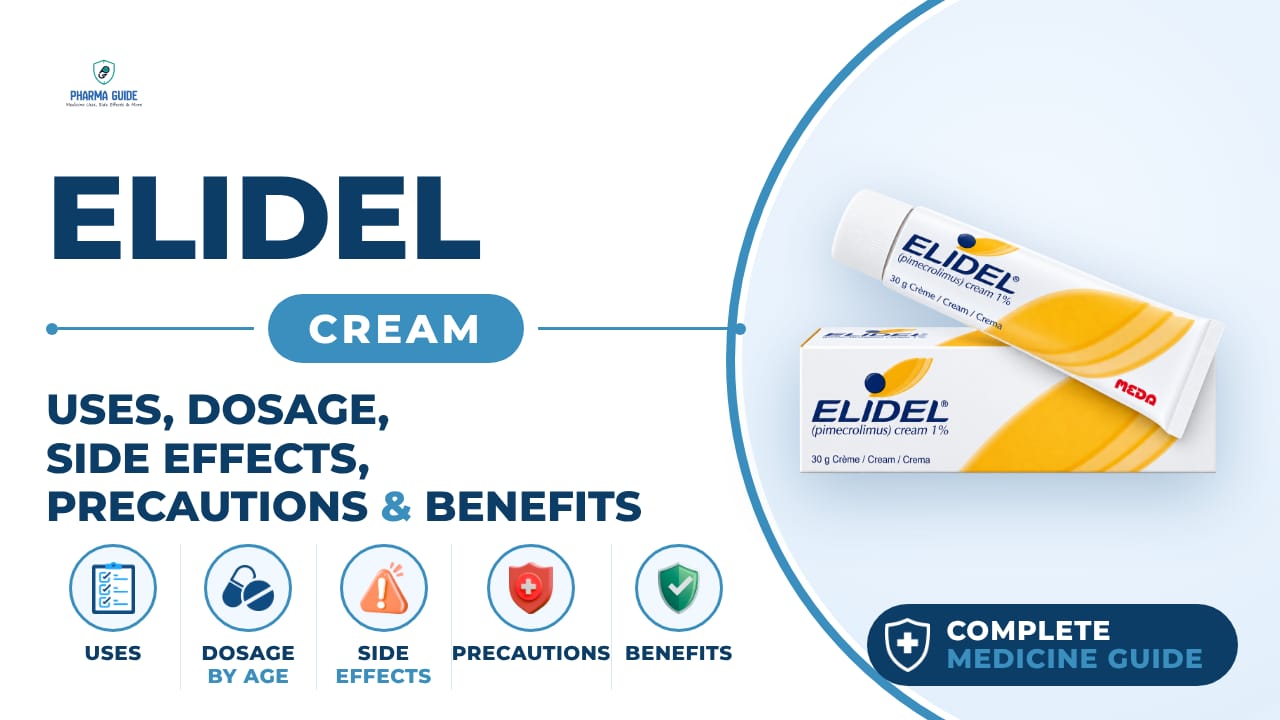
| Generic name | pimecrolimus |
|---|---|
| Drug class | calcineurin inhibitor immunosuppressant |
| Forms | Cream |
Quick overview
Elidel Cream contains pimecrolimus, a calcineurin inhibitor immunosuppressant, and is applied to the skin to treat mild to moderate atopic dermatitis (eczema). It can be used for short-term treatment of eczema symptoms or for intermittent long-term management of flare-ups when a steroid cream is not suitable. It works by calming an overactive immune response in the skin to reduce itching, redness, and inflammation.
What is Elidel Cream
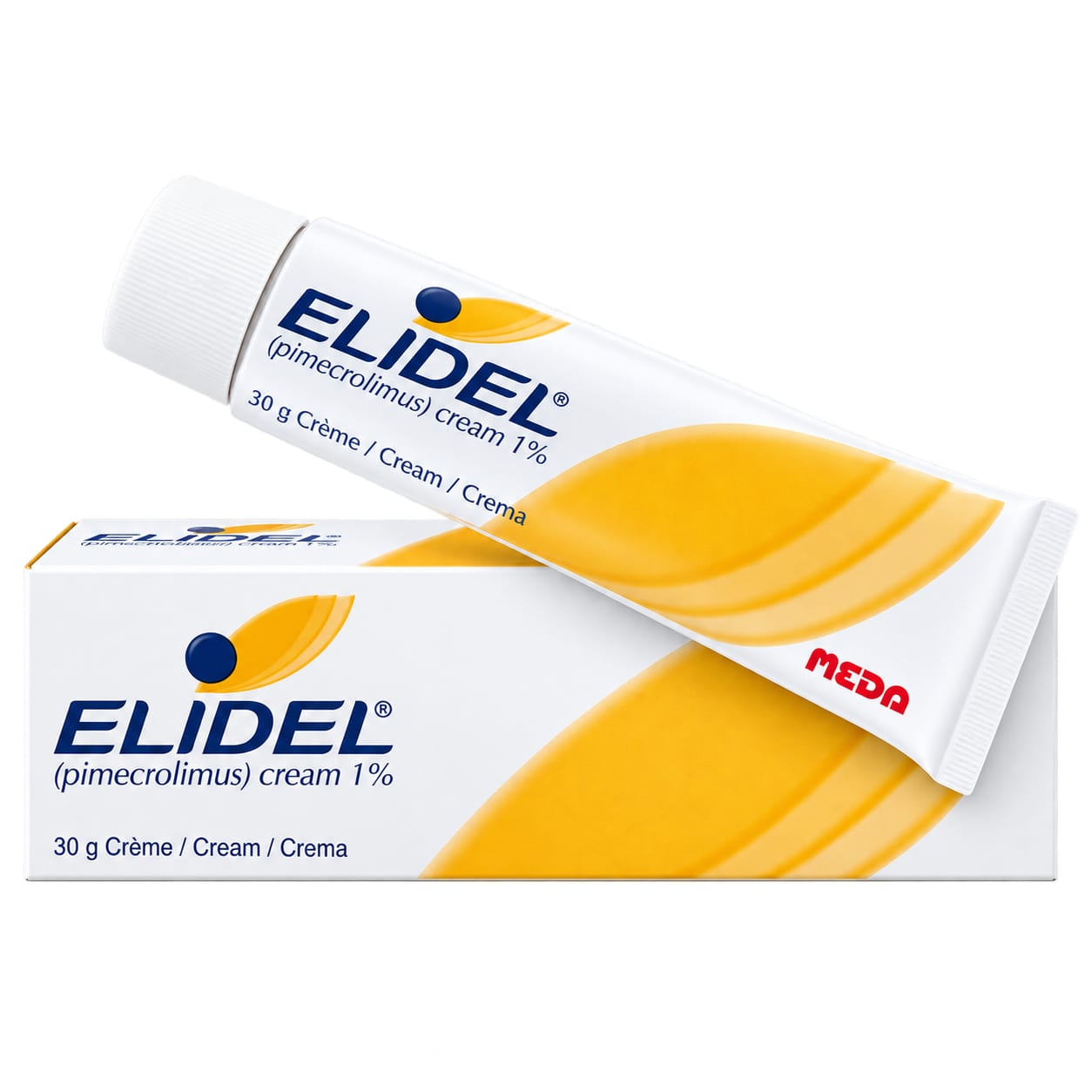
Elidel is a prescription cream used on the skin to treat mild to moderate atopic dermatitis (eczema). It is applied topically and contains the active ingredient pimecrolimus in a whitish cream base.
Elidel Cream uses
- Short-term treatment of signs and symptoms of atopic dermatitis (eczema)
- Intermittent long-term treatment of flare-ups in atopic dermatitis when a steroid cream is not suitable, no longer needed, or not advised
- Second-line therapy for mild to moderate eczema in people who have not responded well to other prescription treatments, or when those treatments are not advisable
Benefits of Elidel Cream
- Reduces itching
- Helps reduce redness and inflammation
- Provides a non-steroid treatment option
- Can help control eczema flare-ups
How Elidel Cream works
Elidel works by calming an overactive immune response in the skin. It blocks a substance called calcineurin, which stops certain immune cells from releasing chemicals that cause inflammation, redness, and itching in eczema.
Elidel Cream dosage
Apply a thin layer to the affected skin twice daily and rub it in gently and completely. Use only on areas of skin affected by eczema, not on healthy skin. Wash your hands before applying, unless treating eczema on your hands. Make sure skin is dry if applying after a bath or shower. Carers should wash their hands after applying the cream to a child.
Moisturizers can be applied after using the cream, but should be applied after, not before. Do not cover treated skin with bandages or dressings; normal clothing is fine. Do not bathe, shower, or swim right after applying, as this may wash off the cream.
Start using the cream at the first signs of itching, redness, or skin thickening to help prevent flares. Stop using the cream once symptoms clear up, unless your doctor says otherwise. Treatment for each eczema episode generally should not continue beyond 6 weeks; see your doctor if there is no improvement or if symptoms worsen.
For infants 3 to 23 months old, treatment area should be kept as small as practical and each episode generally should last no more than 3 weeks. Avoid long-term continuous use; treatment should be used on and off, alongside other therapies as needed.
| Age group | Dose |
|---|---|
| 2–11 years | Apply a thin layer to affected skin twice daily |
| 12–17 years | Apply a thin layer to affected skin twice daily |
| 18–64 years | Apply a thin layer to affected skin twice daily |
Available forms and strengths
- Cream
Side effects of Elidel Cream
Common
- Burning or stinging feeling where the cream is applied, especially during the first few days
- Headache
- Common cold or stuffy nose
- Sore throat
- Cough
- Flu-like symptoms
- Fever
- Skin infections such as folliculitis (inflamed hair follicles)
- Swollen glands
Serious
- Swollen lymph nodes (soreness, swelling, or pain under the chin, sides of neck, armpits, or groin)
- Signs of a severe skin or viral infection (cold sores, widespread blistering or oozing, shingles, chicken pox)
- A mole that changes in size or color, or new skin growths/lesions
- Signs of a serious allergic reaction such as hives, difficulty breathing, or swelling of the face, lips, tongue, or throat
- Rare reports of skin cancer or lymphoma in people using this type of medicine long-term
Warnings and precautions
- The long-term safety of this medicine has not been established. It should not be used continuously for a long time, and should only be applied to the areas of skin with eczema.
- A small number of people using this type of medicine have developed skin cancer or lymphoma, although it has not been proven that the medicine causes this.
- This medicine is not meant for children younger than 2 years old.
- Do not use this cream on areas of skin with cancer or pre-cancerous changes, such as patches caused by too much sun exposure, or where skin cancers have been removed.
- This medicine should not be used by people with weakened immune systems, including those on medicines that suppress the immune system.
- Do not use on skin with an active viral infection such as herpes simplex (cold sores) or chicken pox, since eczema patients are more prone to certain skin infections.
- Limit sun exposure while using this cream, even on skin where the cream isn't currently applied, and avoid tanning beds, sun lamps, and light therapy treatments.
- Avoid covering treated skin with bandages or dressings, as this hasn't been tested and may increase how much medicine the body absorbs.
- Be careful to avoid getting the cream in your eyes or mucous membranes. If this happens, wipe it off and rinse well with water.
- It is not known if this medicine could harm an unborn baby. The cream should generally not be used in pregnant women; tell your doctor if you are pregnant or planning pregnancy.
- It isn't known whether this medicine passes into breast milk. Breastfeeding women should not apply the cream to the breast area, and should use caution if using it elsewhere.
- No dose changes appear to be needed for people with kidney problems, though formal studies have not been done.
- No dose changes appear to be needed for people with liver problems, though formal studies have not been done.
- Drinking alcohol while using this medicine can cause flushing, warmth, redness, rash, burning, itching, or swelling of the skin.
- There is no information on whether this medicine affects your ability to drive or use machines.
Storage
- Store below 25°C
- Do not freeze
- Keep out of reach and sight of children
- Once opened, use the contents within 12 weeks
- Any unused medicine or waste material should be disposed of by taking it to your local pharmacy
When to see a doctor
- Get emergency help right away if you have signs of a serious allergic reaction, such as hives, trouble breathing, or swelling of the face, lips, tongue, or throat.
- Call your doctor if you develop swollen glands or lymph nodes, which can show up as soreness or swelling under the chin, on the sides of the neck, in the armpits, or in the groin.
- Contact your doctor if you notice new or worsening skin symptoms like warts, unusual rashes, blistering, or oozing, or if a mole changes in size or color.
- Tell your doctor if your eczema symptoms do not improve after 6 weeks of treatment, or if your condition gets worse.
- Seek medical help right away if someone accidentally swallows the cream.
- Talk to your doctor if you develop signs of a skin infection, such as cold sores, blisters, oozing sores, or scabs.
Alternatives
- Hydrocortisone cream
- Desonide cream
- Crisaborole ointment
Watch the video
FAQs
What is Elidel Cream used for?
Elidel Cream is used for short-term treatment of atopic dermatitis (eczema) symptoms and for intermittent long-term management of flare-ups when a steroid cream is not suitable, no longer needed, or not advised.
How do you apply Elidel Cream?
Apply a thin layer to the affected skin twice daily, rubbing it in gently and completely. Use it only on skin affected by eczema, not healthy skin, and avoid bathing, showering, or swimming right after application.
How long can you use Elidel Cream?
Treatment for each eczema episode generally should not continue beyond 6 weeks. For infants 3 to 23 months old, each episode generally should last no more than 3 weeks, and long-term continuous use should be avoided.
What are the side effects of Elidel Cream?
Common side effects include burning or stinging at the application site, headache, cold symptoms, sore throat, cough, fever, and skin infections like folliculitis. Serious side effects can include swollen lymph nodes, severe skin or viral infections, changes in moles, allergic reactions, and rare reports of skin cancer or lymphoma with long-term use.
Can children use Elidel Cream?
Elidel Cream is not meant for children younger than 2 years old, but dosing guidance is provided for ages 2 to 17.
General information, not medical advice
Your prescriber and the leaflet in your pack know your situation. This page does not.
- Follow your prescriber and the leaflet
- Don't start, stop, or change a dose on your own
- Doses and warnings differ by country and product
Sources
- Australian Product Information - ELIDEL (pimecrolimus), Viatris Pty Ltd, revised 21/02/2022
- FDA Prescribing Information - ELIDEL (pimecrolimus) Cream, 1%, Revised 03/2014, accessdata.fda.gov
- Medical News Today - Elidel side effects: What you should know, medically reviewed by Audrey Amos, PharmD, October 7, 2024
Video
Related medicines

Tacrolimus Capsule: Uses, Dosage, Side Effects, Precautions and Alternates
Calcineurin-inhibitor immunosuppressant
Tacrolimus Capsule prevents organ transplant rejection by suppressing immune activity. Learn about dosage, side effects, warnings, and precautions here.

Injectafer Injection: Uses, Dosage, Side Effects, Precautions and Alternates
Iron products
Injectafer (ferric carboxymaltose) treats iron deficiency anemia and heart failure-related iron deficiency via IV. Learn uses, dosage, side effects, and