
Safety
General information, not medical advice
Your prescriber and the leaflet in your pack know your situation. This page does not.
- Follow your prescriber and the leaflet
- Don't start, stop, or change a dose on your own
- Doses and warnings differ by country and product
Tacrolimus Capsule: Uses, Dosage, Side Effects, Precautions and Alternates
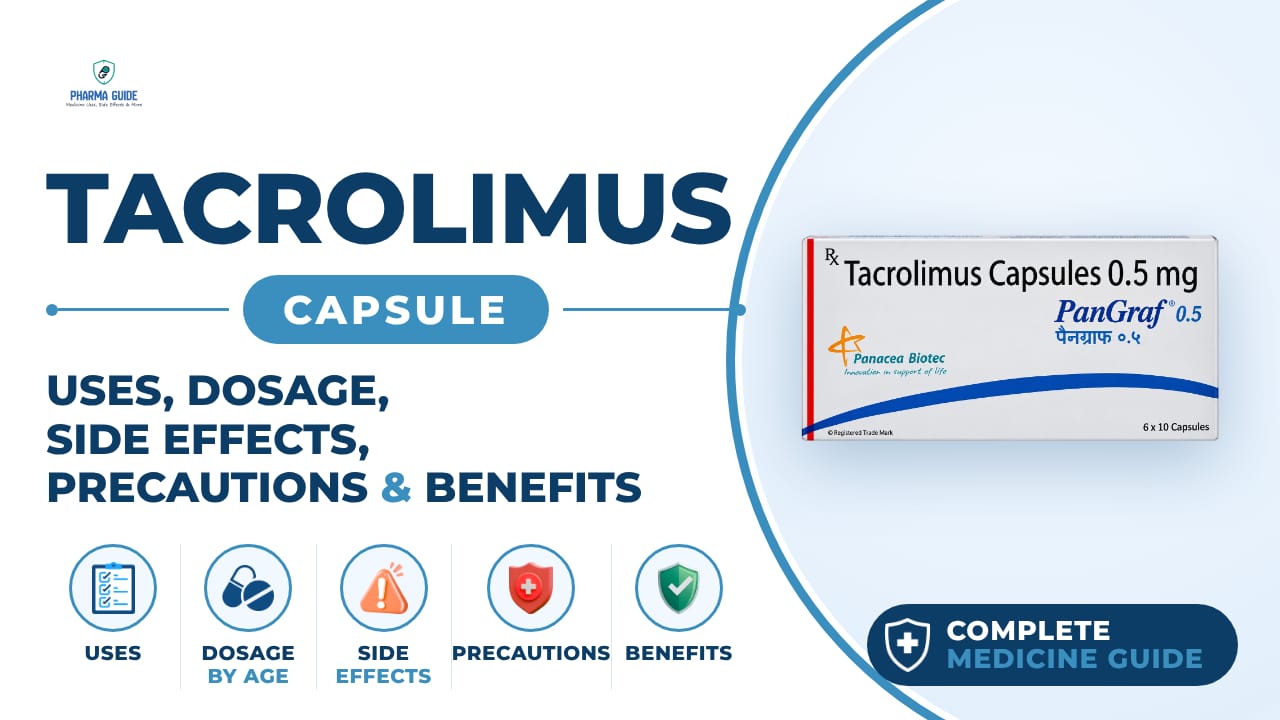
| Generic name | Tacrolimus |
|---|---|
| Drug class | Calcineurin-inhibitor immunosuppressant |
| Forms | Capsules (0.5 mg, 1 mg, and 5 mg) |

Quick overview
Tacrolimus Capsule is a prescription calcineurin-inhibitor immunosuppressant that lowers the activity of the immune system. It is used together with other medicines to help prevent the body from rejecting a transplanted kidney, liver, or heart. It is taken by mouth on a consistent schedule and requires regular monitoring by a healthcare provider.
What is Tacrolimus Capsule
Tacrolimus is a prescription medicine that lowers the activity of your immune system. It is used along with other medicines to help prevent your body from rejecting a transplanted kidney, liver, or heart.
Tacrolimus Capsule uses
- Prevention of organ rejection in adults who have had a kidney, liver, or heart transplant
- Prevention of organ rejection in children who have had a liver transplant
- Used together with other immunosuppressant medicines
Benefits of Tacrolimus Capsule
- Helps the body accept a transplanted organ instead of attacking it
- Supports long-term survival of the transplanted organ when used as prescribed
How Tacrolimus Capsule works
Tacrolimus works by calming down a part of the immune system called T-cells, which are the cells that normally attack anything the body sees as foreign, including a transplanted organ. By blocking a step these cells need to become active, tacrolimus lowers the immune system's ability to attack the new organ.
Tacrolimus Capsule dosage
Take tacrolimus capsules by mouth with water, swallowing them whole. Do not open, crush, or chew the capsules. Take the medicine either with food or without food, but be consistent — always take it the same way each time. Take your doses about 12 hours apart, at the same times every day, to keep steady levels in your body. Do not eat grapefruit or drink grapefruit juice while taking this medicine. Do not stop or change your dose without talking to your healthcare provider first.
If you miss a dose, take it as soon as you remember; if it is almost time for your next dose, skip the missed one and do not double up. Keep all appointments for blood tests so your healthcare provider can monitor your medicine levels and organ function.
| Age group | Dose |
|---|---|
| Under 18 years | Not fixed |
| 18–60 years | 1–4 mg, 2 times/day |
| 60+ years | 1–2 mg, 2 times/day |
Available forms and strengths
- Capsules (0.5 mg, 1 mg, and 5 mg)
Side effects of Tacrolimus Capsule
Common
- Tremor (shaking)
- Headache
- Diarrhea
- Nausea
- Constipation
- Abdominal pain
- Trouble sleeping (insomnia)
- Numbness or tingling in hands and feet
- High blood pressure
- High blood sugar (diabetes)
- High potassium levels
- Low magnesium levels
- Low phosphate levels
- Swelling of hands, legs, ankles, or feet
- Weakness
- Pain
- Fever
- Low red blood cell count (anemia)
- Low white blood cell count
- Infections, including cytomegalovirus (CMV) infection
- Inflammation of the airway (bronchitis)
- Fluid around the heart
Serious
- Increased risk of cancer, including skin cancer and lymphoma
- Serious infections that can lead to hospitalization or death
- Kidney problems (nephrotoxicity)
- Nervous system problems including seizures, confusion, coma, tremors, and vision changes (including posterior reversible encephalopathy syndrome)
- High potassium levels (hyperkalemia)
- High blood pressure that may need treatment
- Changes in heart electrical activity (QT prolongation) and abnormal heart rhythms
- Heart problems such as thickening of the heart muscle (myocardial hypertrophy) causing shortness of breath, swelling, or fatigue
- Severe low red blood cell count (anemia)
- Blood clotting problems, including hemolytic uremic syndrome and thrombotic thrombocytopenic purpura
- New onset diabetes after transplant
- Allergic reactions, including with the injectable form
- Medication errors from confusing this product with extended-release tacrolimus products
Warnings and precautions
- This medicine increases the risk of serious infections and certain cancers, including skin cancer and lymphoma, which can lead to hospitalization or death.
- Tacrolimus capsules cannot be swapped with extended-release tacrolimus products; mix-ups between these products have caused organ rejection or other serious harm.
- Avoid grapefruit and grapefruit juice, as they can raise tacrolimus levels in your blood and increase the risk of serious side effects.
- Avoid live vaccines while taking this medicine, since your immune system is suppressed.
- Using tacrolimus together with sirolimus is not recommended because it increases the risk of serious problems, including organ damage and blood clotting disorders.
- This medicine can cause high potassium levels in the blood, which should be monitored with regular blood tests.
- This medicine can harm an unborn baby. Women who can become pregnant should use effective birth control before and during treatment, and should talk to their doctor about the risks and benefits.
- Tacrolimus passes into breast milk. You and your doctor should decide together whether you should breastfeed while taking this medicine.
- Tacrolimus can be toxic to the kidneys. Your doctor will monitor your kidney function closely with blood tests, and your dose may need to be lowered if you already have kidney problems.
- People with severe liver problems may need lower doses of this medicine because their body clears it more slowly. Close monitoring of blood levels is needed.
- It is not known how alcohol interacts with this medicine, so check with your doctor before drinking alcohol.
Storage
- Store tacrolimus capsules at room temperature between 68°F to 77°F (20°C to 25°C)
- Keep tacrolimus and all medicines out of the reach of children
- Take unused or expired medication to a medication take-back program; if that is not possible, follow label or healthcare provider instructions for safe disposal in household trash after mixing with an unwanted substance
When to see a doctor
- Get medical help right away if you have signs of infection such as fever, chills, sore throat, cough, or flu-like symptoms.
- Seek help if you notice signs of high blood sugar such as frequent urination, increased thirst or hunger, blurred vision, or confusion.
- Get medical attention right away for nervous system symptoms like severe headache, confusion, seizures, vision changes, or tremors.
- Seek help immediately for symptoms of heart problems like shortness of breath, chest pain, feeling faint, or lightheadedness.
- Contact your doctor right away if you develop fever with bruising or red spots under the skin, confusion, yellowing of skin or eyes, or decreased urination, which could signal a serious blood clotting problem.
- If you think you have taken too much of this medicine, contact a poison control center or go to the emergency room right away.
Alternatives
- Cyclosporine
- Sirolimus
Watch the video
FAQs
What is Tacrolimus Capsule used for?
It is used along with other medicines to help prevent the body from rejecting a transplanted kidney, liver, or heart in adults, and liver transplants in children.
How should I take Tacrolimus Capsule?
Swallow the capsules whole with water without opening, crushing, or chewing them. Take doses about 12 hours apart at the same times daily, consistently with or without food, and avoid grapefruit or grapefruit juice.
What should I do if I miss a dose of Tacrolimus Capsule?
Take it as soon as you remember, but if it is almost time for your next dose, skip the missed one and do not double up.
What are the serious side effects of Tacrolimus Capsule?
Serious side effects include increased risk of cancer, serious infections, kidney problems, nervous system problems like seizures and confusion, high potassium levels, heart problems, and blood clotting disorders.
Can I drink alcohol while taking Tacrolimus Capsule?
It is not known how alcohol interacts with this medicine, so you should check with your doctor before drinking alcohol.
General information, not medical advice
Your prescriber and the leaflet in your pack know your situation. This page does not.
- Follow your prescriber and the leaflet
- Don't start, stop, or change a dose on your own
- Doses and warnings differ by country and product
Sources
- https://dailymed.nlm.nih.gov/dailymed/drugInfo.cfm?setid=759cf905-7406-4d1b-a1a8-10068cb11f04&audience=consumer
- https://www.sterispharma.com/latest-update/tacrolimus-capsules-uses-dosage-side-effects-and-benefits/2220?srsltid=AU7gw4U2bvjOuxAbKXegTF9Q3rV145nqbyykaQASsA2Y5vEV0udALRLr
- https://www.practo.com/medicine-info/tacrolimus-261-api
Video
Related medicines

Elidel Cream: Uses, Dosage, Side Effects, Precautions and Alternates
calcineurin inhibitor immunosuppressant
Elidel Cream (pimecrolimus) treats mild to moderate eczema by calming skin inflammation. Learn about dosage, side effects, warnings, and alternatives.

Injectafer Injection: Uses, Dosage, Side Effects, Precautions and Alternates
Iron products
Injectafer (ferric carboxymaltose) treats iron deficiency anemia and heart failure-related iron deficiency via IV. Learn uses, dosage, side effects, and