
Safety
General information, not medical advice
Your prescriber and the leaflet in your pack know your situation. This page does not.
- Follow your prescriber and the leaflet
- Don't start, stop, or change a dose on your own
- Doses and warnings differ by country and product
Elimite Cream: Uses, Dosage, Side Effects, Precautions and Alternates
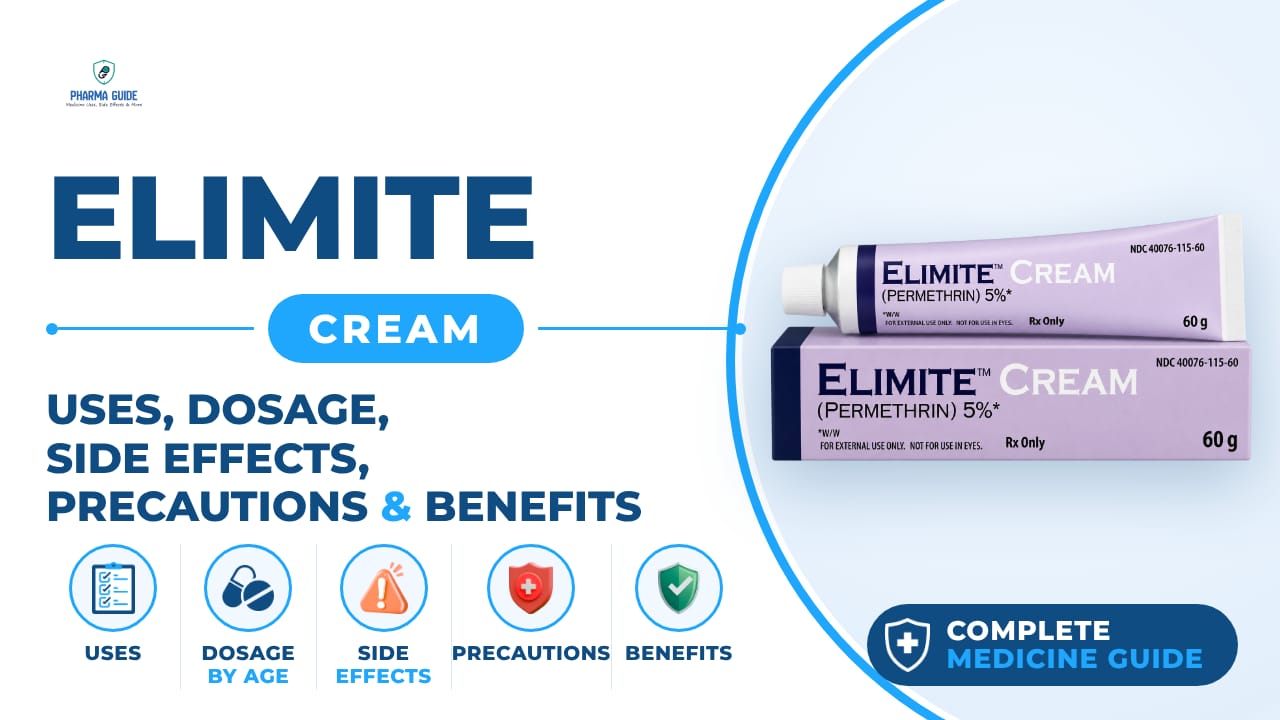
| Generic name | permethrin |
|---|---|
| Drug class | Topical scabicidal agent |
| Forms | Cream (5%) |
Quick overview
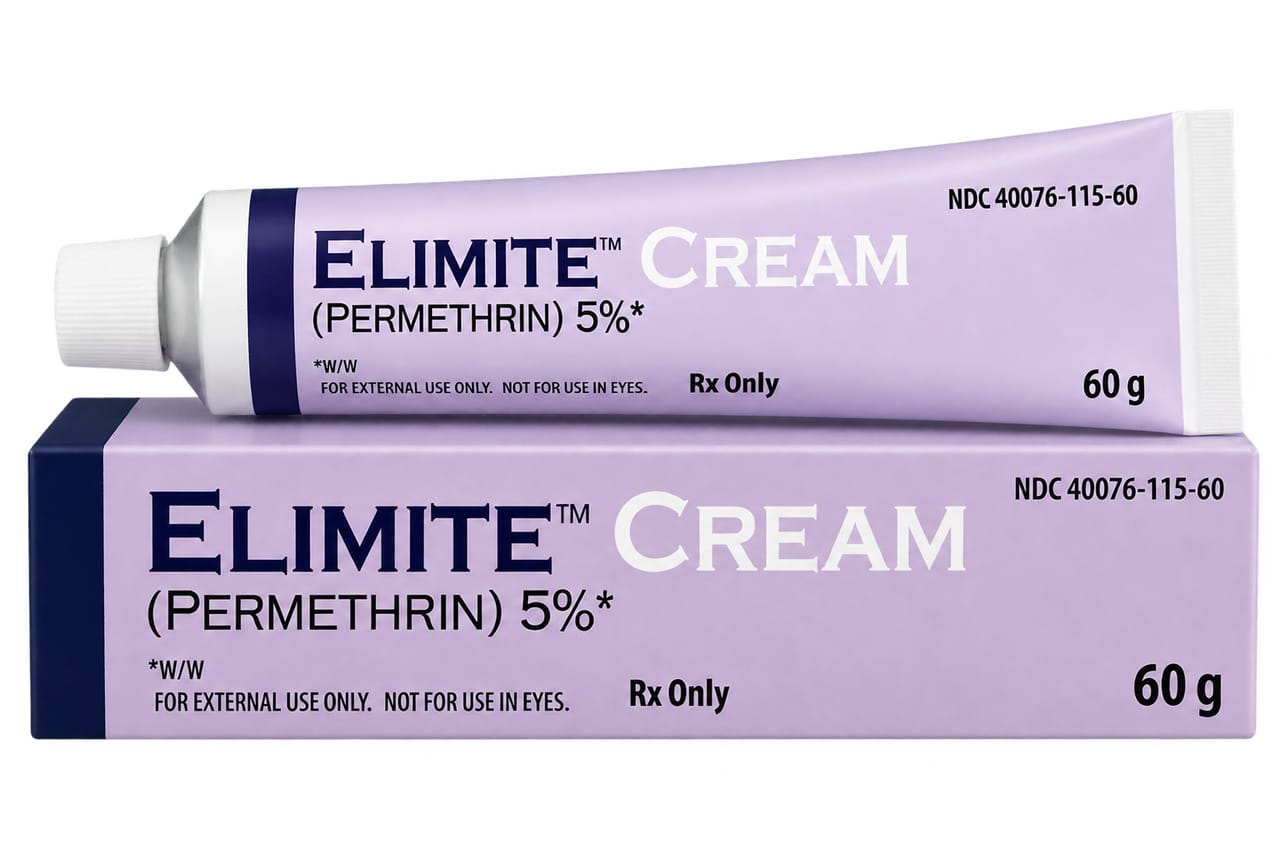
Elimite Cream is a prescription topical medicine containing permethrin, used to treat scabies caused by the Sarcoptes scabiei mite. It is applied to the skin only and usually requires just one application to cure the infestation. Some sources also note its use for head lice. It works by paralyzing and killing mites through action on their nerve cells.
What is Elimite Cream
Elimite Cream is a prescription skin cream that contains permethrin, a medicine that kills scabies mites. It is applied to the skin only and is not taken by mouth.
Elimite Cream uses
- Treats scabies, a skin condition caused by tiny mites called Sarcoptes scabiei that burrow into the skin
- Also used to treat head lice (per some sources)
Benefits of Elimite Cream
- Kills scabies mites and their eggs
- Usually only one application is needed to cure the infestation
- Helps relieve itching, redness, and irritation caused by mites
How Elimite Cream works
Permethrin acts on the nerve cells of mites, disrupting the sodium channels that control the electrical charge of the nerve membrane. This delays the mite's nerve signals and causes paralysis, which kills the mites.
Elimite Cream dosage
For use on the skin only; do not swallow it. Clean and dry the skin before applying. Apply a thin layer over the entire body from the neck down to the soles of the feet, rubbing it in completely, including under the nails and in skin folds like between the toes. For infants, also apply the cream to the scalp, temples, and forehead, since scabies can affect these areas in babies and older adults. Avoid the eyes, nose, mouth, and genital area when applying.
Leave the cream on the skin for 8 to 14 hours, often overnight, then wash it off completely with a shower or bath. One application is usually enough to cure the infestation. If living mites are still seen after 14 days, a second application may be needed. If the medicine gets in the eyes, flush right away with water.
Wash clothing, bedding, and towels used in the days before treatment in hot water and dry on high heat to prevent reinfection.
| Age group | Dose |
|---|---|
| Under 2 months | Safety and effectiveness not established; use only if specifically directed by a pediatrician |
| 2 months–17 years | Apply permethrin 5% thoroughly to the entire body; in infants/young children, include the scalp, forehead, and neck. Wash off after 8–14 hours |
| 18–64 years | Apply thoroughly from neck to soles of feet; wash off after 8–14 hours |
| 65+ years | Apply thoroughly from head/scalp as needed to soles of feet; wash off after 8–14 hours, as older adults may have scalp involvement |
Available forms and strengths
- Cream (5%)
Side effects of Elimite Cream
Common
- Mild burning, stinging, or tingling where the cream was applied
- Itching, swelling, and redness of the skin, which may temporarily worsen after treatment
- Skin rash
- Numbness where the medicine was applied
- Headache, dizziness
- Fever
- Stomach pain, nausea, vomiting, diarrhea
Serious
- Signs of a serious allergic reaction: hives, rash, itching or swelling especially of the face, lips, tongue, or throat, severe dizziness, or trouble breathing
- Severe burning, stinging, redness, or swelling after applying the cream
- Rare occurrences of seizure have been reported, though not confirmed to be caused by this medicine
Warnings and precautions
- Tell your doctor if you are pregnant. Animal studies did not show harm to the fetus, but there are no well-controlled studies in pregnant women, so this drug should only be used during pregnancy if clearly needed.
- It is not known if this drug passes into breast milk. Because of possible risks seen in animal studies, you should consider stopping breastfeeding temporarily or not using the drug while nursing, and talk to your doctor first.
- This drug is broken down by the liver and removed from the body through the kidneys as inactive substances, so it does not appear to increase the risk of toxic effects in people with reduced kidney function when used as directed.
- For external use only — do not swallow or use internally. Avoid contact with the eyes.
- If the cream gets into the eyes, rinse thoroughly with water immediately.
- Do not use if you have a known allergy to permethrin, pyrethrins, or synthetic pyrethroids. Treatment may temporarily increase itching, redness, or swelling because of the scabies infestation itself and the treatment.
- Mild burning or stinging can occur after application. If significant or persistent irritation occurs, contact a healthcare professional.
- Persistent itching after treatment does not necessarily mean treatment failure; itching can continue for several weeks after the mites have been eliminated. Apply only as directed. Excessive application can increase skin irritation and redness.
- Keep away from children's reach when not being used.
- In infants and older adults, scabies may involve the scalp, forehead, and neck, so these areas may need treatment according to the prescribed instructions.
- If live mites are still present after 14 days, medical reassessment and possible retreatment may be necessary.
- If you have an allergic reaction to this cream, stop using it right away.
- Do not use this cream if you are allergic to permethrin, other synthetic pyrethroids, pyrethrins, or chrysanthemums.
- Scabies often causes itching, swelling, and redness, and using this cream may make these symptoms temporarily worse.
- This cream can be mildly irritating to the eyes. Avoid getting it in your eyes during application, and rinse right away with water if it happens.
- This medicine should not be used on infants younger than 2 months old unless a doctor says to.
Storage
- Store at 20-25°C (68-77°F) [see USP Controlled Room Temperature]
- Store at room temperature away from moisture and heat
- Keep all medications away from children and pets
- Do not flush medications down the toilet or pour them into a drain unless instructed to do so. Properly discard this product when it is expired or no longer needed. Consult your pharmacist or local waste disposal company.
When to see a doctor
- Get emergency medical help right away if you have signs of a serious allergic reaction, such as hives, trouble breathing, or swelling of your face, lips, tongue, or throat.
- Call your doctor right away if you have severe burning, stinging, redness, or swelling after applying this cream.
- If irritation from the cream does not go away, contact your doctor.
- Tell your doctor right away if you develop worsening redness or pus, which could mean a skin infection from scratching.
- Tell your doctor if your symptoms last or get worse two weeks after treatment, since you may need to be checked for live mites and possibly retreated.
- This medicine may be harmful if swallowed. If someone has serious symptoms like passing out or trouble breathing after swallowing it, get emergency help immediately. Otherwise, contact your local poison control center.
Alternatives
- Ivermectin oral tablets
- Spinosad 0.9% topical suspension
- Sulfur 5–10% ointment
Watch the video
FAQs
What is Elimite Cream used for?
Elimite Cream is used to treat scabies caused by the Sarcoptes scabiei mite, and some sources note it is also used for head lice.
How do you apply Elimite Cream?
Apply a thin layer over the entire body from the neck down to the soles of the feet, including under the nails and in skin folds, avoiding the eyes, nose, mouth, and genital area. In infants, also apply to the scalp, temples, and forehead.
How long should Elimite Cream stay on the skin?
Leave the cream on for 8 to 14 hours, often overnight, then wash it off completely. One application is usually enough to cure the infestation.
What are the common side effects of Elimite Cream?
Common side effects include mild burning, stinging, or tingling, itching, swelling, redness, skin rash, numbness, headache, dizziness, fever, and stomach upset.
What should I do if mites are still present after treatment?
If living mites are still seen after 14 days, a second application may be needed, and you should contact your doctor for reassessment and possible retreatment.
General information, not medical advice
Your prescriber and the leaflet in your pack know your situation. This page does not.
- Follow your prescriber and the leaflet
- Don't start, stop, or change a dose on your own
- Doses and warnings differ by country and product
Sources
Video
Related medicines

Injectafer Injection: Uses, Dosage, Side Effects, Precautions and Alternates
Iron products
Injectafer (ferric carboxymaltose) treats iron deficiency anemia and heart failure-related iron deficiency via IV. Learn uses, dosage, side effects, and

Gliclazide Tablet: Uses, Dosage, Side Effects, Precautions and Alternates
Sulfonylurea (hypoglycemic/antidiabetic agent)
Gliclazide Tablet is a sulfonylurea for type 2 diabetes that boosts insulin release. Learn about dosage, side effects, warnings, and precautions.