
Safety
General information, not medical advice
Your prescriber and the leaflet in your pack know your situation. This page does not.
- Follow your prescriber and the leaflet
- Don't start, stop, or change a dose on your own
- Doses and warnings differ by country and product
Elmiron Capsule: Uses, Dosage, Side Effects, Precautions and Alternates
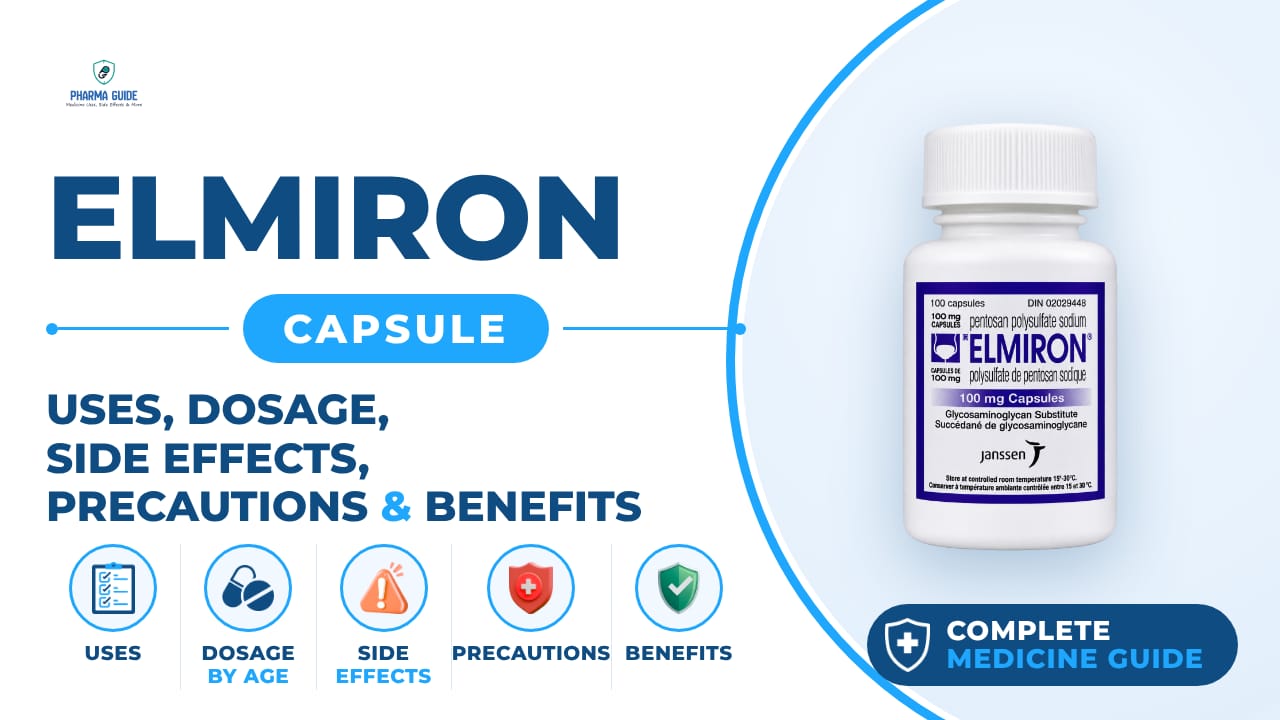
| Generic name | pentosan polysulfate sodium |
|---|---|
| Drug class | Miscellaneous genitourinary tract agents |
| Forms | Capsule (delayed-release/hard gelatin capsule) |
Quick overview
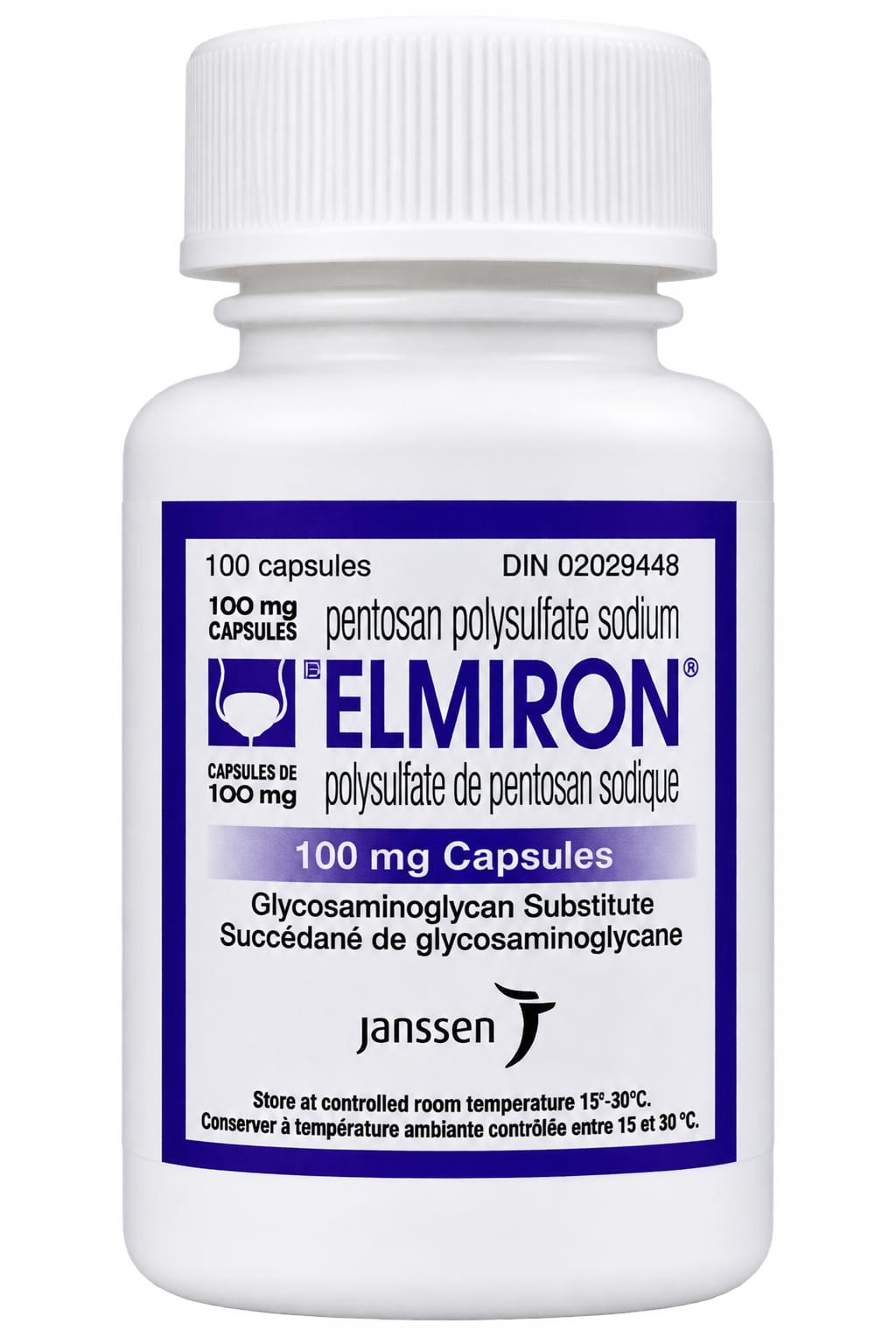
Elmiron Capsule (generic name: pentosan polysulfate sodium) is a prescription medicine belonging to the miscellaneous genitourinary tract agents class. It is used to treat bladder pain and discomfort caused by interstitial cystitis, also called bladder pain syndrome, a condition that causes bladder pain, urgency, and frequent urination. It works by forming a protective layer on the bladder lining. It is taken as a capsule, typically three times daily for adults, as prescribed by a doctor.
What is Elmiron Capsule
Elmiron is a prescription capsule used to treat bladder pain and discomfort caused by interstitial cystitis (also called bladder pain syndrome), a condition that causes bladder pain, urgency, and frequent urination.
Elmiron Capsule uses
- Treats bladder pain and discomfort caused by cystitis (bladder inflammation or irritation)
- Used for bladder pain syndrome with tiny bleeds (glomerulations) or lesions (Hunner's lesions) on the bladder wall, with moderate to severe pain, urgency and frequent urination
Benefits of Elmiron Capsule
- Helps reduce bladder pain and the urge to pass urine frequently
- In studies, about 1 in 3 patients taking the medicine showed overall improvement compared to about 1 in 6 on placebo
How Elmiron Capsule works
After you take the capsule, it passes into your urine and attaches to the lining of the bladder, forming a protective layer that may help repair the bladder's natural protective coating and reduce inflammation and pain. The exact way it works is not completely understood.
Elmiron Capsule dosage
Take with a full glass of water, on an empty stomach, at least 1 hour before or 2 hours after a meal. Swallow the capsule whole; do not crush, chew, break, or open it. Take exactly as your doctor prescribes, no more often than prescribed. Your doctor will check your progress regularly (about every 3 to 6 months) to see if the medicine should be continued, and you may need blood tests and eye exams. Tell your surgeon or dentist you are taking this medicine before any surgery or procedure, as you may need to stop it for a short time.
If you miss a dose, take it as soon as you remember, but skip it if it's almost time for your next dose; do not take two doses at once.
| Age group | Dose |
|---|---|
| Under 16 years | Not recommended — safety and effectiveness have not been established |
| 16–17 years | Not established; specialist advice required |
| 18–64 years | 100 mg 3 times daily |
| 65 years and older | 100 mg 3 times daily; medical monitoring recommended |
Available forms and strengths
- Capsule (delayed-release/hard gelatin capsule)
Side effects of Elmiron Capsule
Common
- Bruising, blood in stools
- Hair loss
- Nausea, diarrhea, upset stomach (indigestion)
- Headache
- Swelling, weight gain
- Dizziness
- Rash
- Abnormal liver function tests
- Back pain
- Infections, flu-like symptoms
- Weakness, pelvic pain
- Frequent urination
Serious
- Nosebleeds, bleeding gums
- Blood in urine or stools
- Rectal bleeding
- Coughing up blood
- Light-headed feeling, like you might pass out
- Vision problems: blurred vision, trouble reading, trouble seeing in low light
- Signs of allergic reaction: hives, difficulty breathing, swelling of face, lips, tongue, or throat
- Retinal disorder (pigmentary maculopathy), especially with long-term use
- Reduced blood platelets, red or white blood cells
- Severe mood swings or depression
- Blood clotting disorders
Warnings and precautions
- This medicine can make it easier for you to bleed. Call your doctor right away if you have any unusual bleeding such as nosebleeds, blood in urine or stools, rectal bleeding, coughing up blood, or bleeding gums.
- Rare cases of a serious eye condition called pigmentary maculopathy have been reported, especially with long-term use. This can cause trouble reading, distorted vision, changes in color vision, or difficulty adjusting to low light. You should have an eye exam after 6 months of using this medicine to check for early signs of eye damage, and regular exams afterward.
- Do not use this medicine if you are actively bleeding (menstrual bleeding is not included in this warning).
- Ask a doctor or pharmacist before using medicines like aspirin, ibuprofen, or similar drugs for pain, fever, swelling, or cold/flu symptoms, as these can increase bleeding risk when combined with this medicine.
- If you have a history of a blood clotting disorder, low platelet count from heparin, eye problems (especially retina problems in you or a family member), an aneurysm or stroke, stomach ulcers, intestinal polyps or diverticulitis, or liver disease, tell your doctor before starting this medicine.
- This medicine is not recommended during pregnancy because there isn't enough information about its safety for unborn babies. It is also not recommended while breastfeeding because it is not known if it passes into breast milk and could affect the baby.
- This medicine has not been specifically studied in people with reduced kidney function, and kidney problems may affect how the body processes the drug, so your doctor will monitor you carefully. It has also not been studied in people with liver problems, and liver impairment may affect how the drug is processed, so careful monitoring is needed. Mildly elevated liver test results have been seen in some patients.
- This medicine is not expected to affect your ability to drive or use machines.
Storage
- Store at room temperature away from moisture and heat
- Keep the bottle tightly closed to protect from moisture
- After first opening a bottle, use the capsules within the stated period and dispose of any remaining capsules afterward
- Keep out of the sight and reach of children
- Do not use after the expiry date on the label or carton
- Do not throw away medicines via wastewater; ask your pharmacist how to dispose of medicines you no longer use
When to see a doctor
Get emergency medical help right away if you show signs of an allergic reaction: hives, difficulty breathing, or swelling of your face, lips, tongue, or throat.
Call your doctor immediately if you have nosebleeds, bleeding gums, blood in your urine or stools, rectal bleeding, coughing up blood, feeling like you might pass out, or vision problems such as blurred vision, trouble reading, or trouble seeing in low light.
Tell your doctor right away if you notice any changes in your vision, such as difficulty reading, visual distortions, changes in how you see color, or slower adjustment to low or dim light.
Alternatives
- Pyridium (phenazopyridine)
- Azo Urinary Pain Relief
- Azo-Standard
- Rimso-50
- Uricalm
- Dimethyl sulfoxide
- Imipramine
- Phenazopyridine
Watch the video
FAQs
What is Elmiron Capsule used for?
Elmiron Capsule is used to treat bladder pain and discomfort caused by interstitial cystitis (bladder pain syndrome), a condition that causes bladder pain, urgency, and frequent urination.
How does Elmiron Capsule work?
After you take the capsule, it passes into your urine and attaches to the bladder lining, forming a protective layer that may help repair the bladder's natural protective coating and reduce inflammation and pain.
What is the dosage of Elmiron Capsule for adults?
Adults aged 18-64 take 100 mg three times daily. It should be taken with a full glass of water on an empty stomach, at least 1 hour before or 2 hours after a meal, and the capsule should be swallowed whole.
What are the serious side effects of Elmiron Capsule?
Serious side effects include nosebleeds, bleeding gums, blood in urine or stools, rectal bleeding, coughing up blood, light-headedness, vision problems, allergic reactions, and a rare retinal disorder called pigmentary maculopathy, especially with long-term use.
Can Elmiron Capsule be used during pregnancy?
Elmiron Capsule is not recommended during pregnancy because there isn't enough information about its safety for unborn babies, and it is also not recommended while breastfeeding.
General information, not medical advice
Your prescriber and the leaflet in your pack know your situation. This page does not.
- Follow your prescriber and the leaflet
- Don't start, stop, or change a dose on your own
- Doses and warnings differ by country and product
Sources
Video
Related medicines
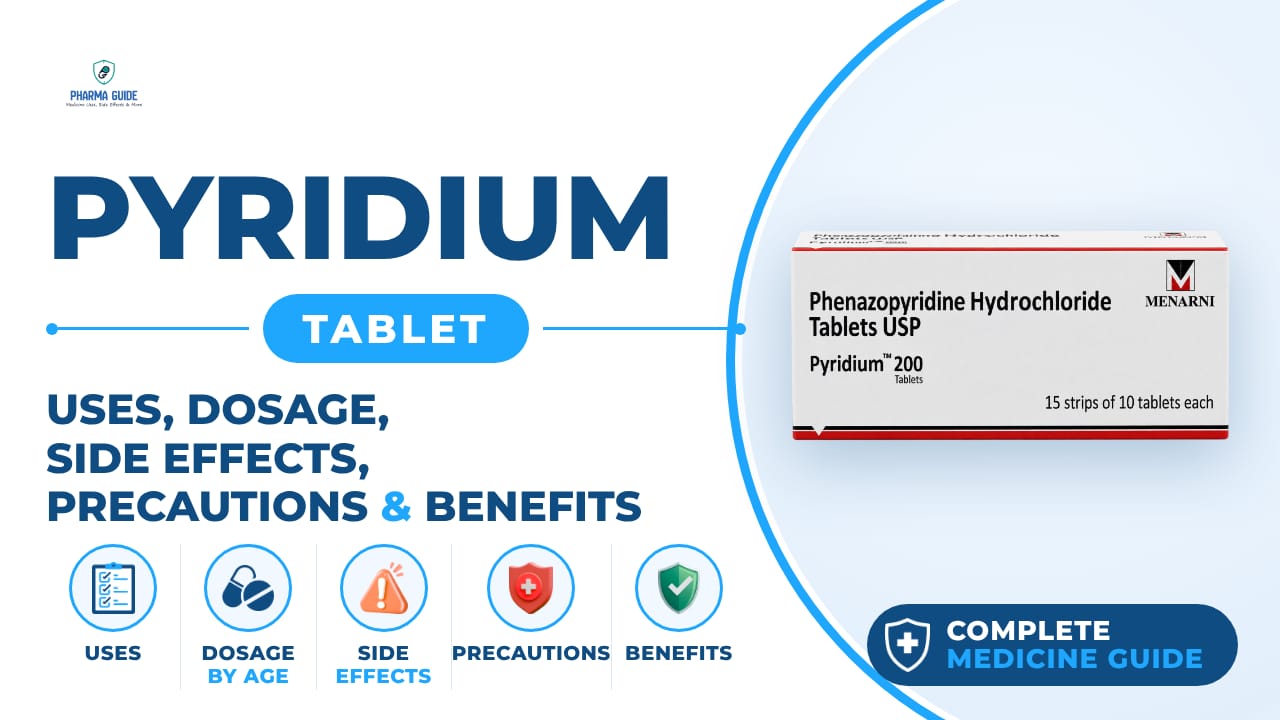
Pyridium Tablet: Uses, Dosage, Side Effects, Precautions and Alternates
Miscellaneous genitourinary tract agents
Pyridium Tablet (Phenazopyridine) relieves urinary pain, burning, and urgency. Learn uses, dosage, side effects, warnings, and precautions before use.

Injectafer Injection: Uses, Dosage, Side Effects, Precautions and Alternates
Iron products
Injectafer (ferric carboxymaltose) treats iron deficiency anemia and heart failure-related iron deficiency via IV. Learn uses, dosage, side effects, and