
Safety
General information, not medical advice
Your prescriber and the leaflet in your pack know your situation. This page does not.
- Follow your prescriber and the leaflet
- Don't start, stop, or change a dose on your own
- Doses and warnings differ by country and product
Pyridium Tablet: Uses, Dosage, Side Effects, Precautions and Alternates
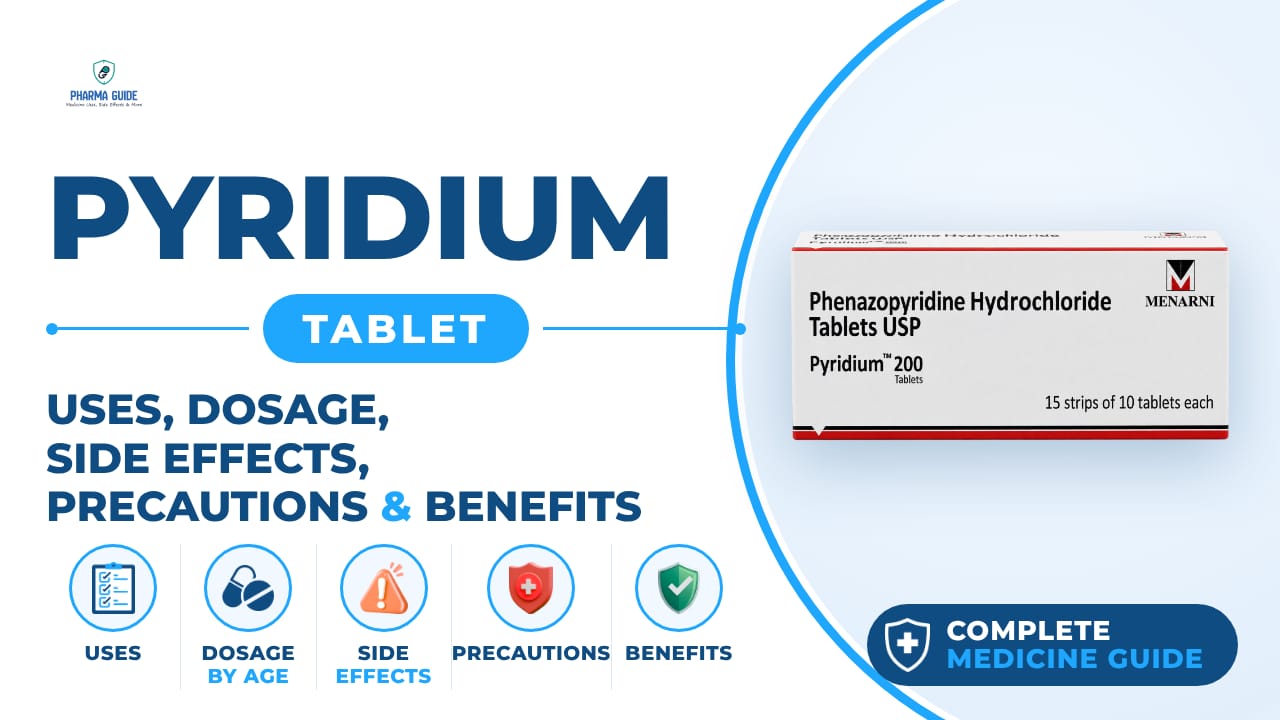
| Generic name | Phenazopyridine |
|---|---|
| Drug class | Miscellaneous genitourinary tract agents |
| Forms | Tablet (film-coated) |
Quick overview
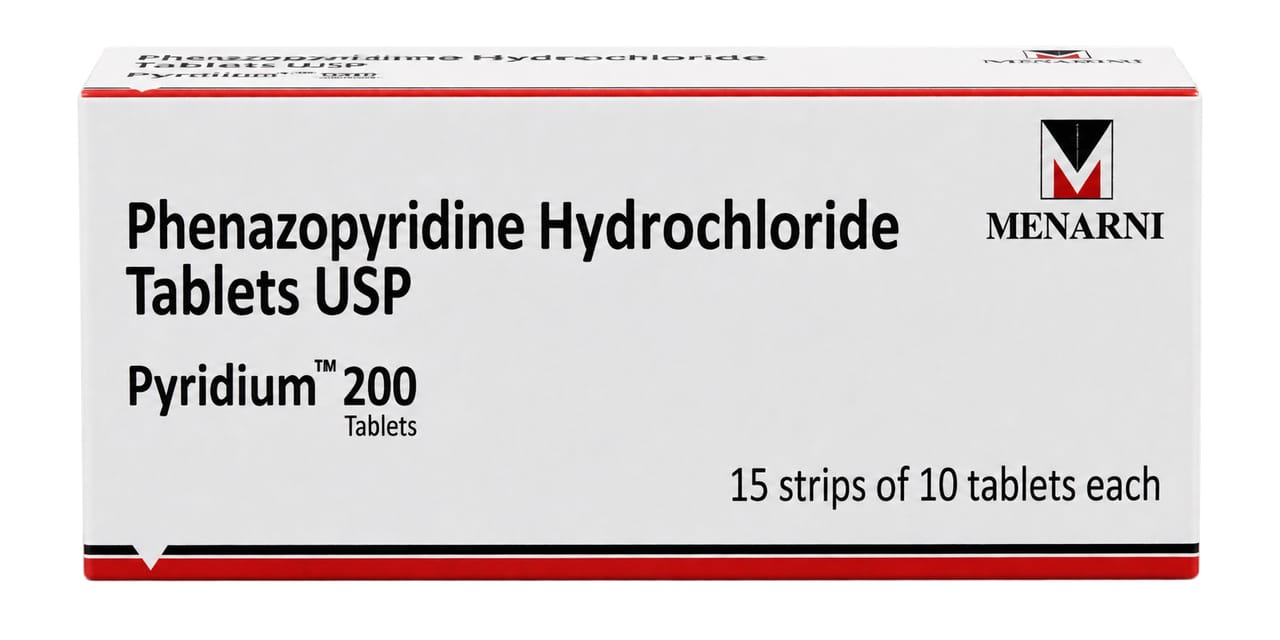
Pyridium Tablet contains Phenazopyridine, a medicine from the miscellaneous genitourinary tract agents class. It is a pain reliever that works on the lower urinary tract to relieve pain, burning, urgency, and frequent urination, but it treats symptoms only and not the underlying infection. It comes as a film-coated tablet and is typically used for up to 2 days alongside other treatment such as antibiotics.
What is Pyridium Tablet
Pyridium is a pain reliever that works on the lower part of the urinary tract, meaning the bladder and urethra. It comes as a film-coated tablet and treats symptoms only, not the underlying infection.
Pyridium Tablet uses
- Relief of pain, burning, urgency, and frequent urination caused by irritation of the lower urinary tract
- Symptom relief from infection, injury, surgery, catheter use, endoscopic procedures, or passage of instruments in the urinary tract
- Bladder disorders
Benefits of Pyridium Tablet
- Provides prompt relief of burning and pain in the urinary tract
- May reduce or remove the need for additional pain medicines while an antibiotic starts working
- Can be used alongside antibiotics without reducing their effect
How Pyridium Tablet works
The medicine is passed out through the urine, where it acts directly on the lining of the urinary tract to ease pain, burning, urgency, and the frequent need to urinate. The exact way it works is not fully known.
Pyridium Tablet dosage
Take this medicine after meals. Take it exactly as directed by your doctor; do not take more or less than prescribed, and do not use it for longer than recommended. Drink plenty of liquids while taking this medicine. Do not use for longer than 2 days unless your doctor tells you to.
This medicine will likely turn your urine orange or red; this is normal and not harmful. Do not wear soft contact lenses while taking this medicine, as it can permanently stain them.
If you miss a dose, take it as soon as you remember, but skip it if it is almost time for your next dose; do not take extra to make up for it. Tell any doctor treating you that you are taking this medicine, since it can affect urine test results.
| Age group | Dose |
|---|---|
| Under 12 years | Consult a doctor before use |
| 12–17 years | 2 tablets (99.5 mg each) 3 times daily, with or after meals, for up to 2 days |
| 18–64 years | 2 tablets (99.5 mg each) 3 times daily, with or after meals, for up to 2 days |
| 65 years and older | 2 tablets (99.5 mg each) 3 times daily, with or after meals, for up to 2 days |
Available forms and strengths
- Tablet (film-coated), 99.5 mg
Side effects of Pyridium Tablet
Common
- Headache
- Dizziness
- Upset stomach
- Skin itching
- Stomach pain
Serious
- Little or no urination
- Swelling or rapid weight gain
- Confusion, loss of appetite, or pain in the side or lower back
- Fever, pale or yellowed skin, stomach pain, nausea, and vomiting
- Blue or purple appearance of the skin
- Signs of an allergic reaction such as hives, difficulty breathing, or swelling of the face, lips, tongue, or throat
Warnings and precautions
- Do not take this medicine if you are allergic to phenazopyridine or if you have kidney disease.
- This medicine treats urinary symptoms but does not treat the infection itself; take any antibiotic your doctor prescribes for the infection.
- Your urine will likely turn orange or red, which is normal, but tell your doctor if you also notice pale or yellowed skin, fever, stomach pain, nausea, or vomiting.
- This medicine can permanently stain soft contact lenses, so avoid wearing them while taking it.
- Do not take this medicine for more than 2 days unless your doctor has told you to.
- A yellow tinge to the skin or eyes may be a sign the medicine is building up in the body because of poor kidney function, and treatment should be stopped; older adults are more likely to have reduced kidney function.
- This medicine should be used very carefully in elderly patients because of a higher risk of kidney problems, and kidney function should be monitored.
- This medicine is not recommended for children under 12 years old because its safety and effectiveness have not been established in that age group.
- People with a genetic condition called G6PD deficiency should use this medicine cautiously, as it raises the risk of a blood disorder that reduces oxygen supply to the body.
- This medicine is not expected to harm an unborn baby based on animal studies, but there are no well-controlled studies in pregnant women. It should be used during pregnancy only if your doctor says it is clearly needed.
- It is not known if this medicine passes into breast milk or if it could harm a nursing baby. Talk to your doctor before using it while breastfeeding.
- This medicine should not be used by people with kidney disease or reduced kidney function, since it can build up in the body and cause harm.
- Tell your doctor if you have liver disease before taking this medicine, and it should not be used in people with severe liver problems.
- It is not known how this medicine interacts with alcohol, so it's best to ask your doctor before drinking alcohol while taking it.
Storage
- Store at room temperature away from moisture and heat
- Store at 20° to 25°C (68° to 77°F); brief changes between 15° to 30°C (59° to 86°F) are allowed
- Dispense in a container that is hard for children to open and keep it tightly closed
When to see a doctor
- Get emergency help right away if you have signs of an allergic reaction, such as hives, trouble breathing, or swelling of the face, lips, tongue, or throat.
- Stop taking this medicine and call your doctor right away if you urinate little or not at all, or if you have swelling, rapid weight gain, confusion, loss of appetite, pain in your side or back, fever, pale or yellowed skin, stomach pain, nausea, vomiting, or a blue or purple color to your skin.
- Seek emergency medical care if you have serious eye symptoms like sudden vision loss, blurred vision, tunnel vision, eye pain or swelling, or seeing halos around lights.
- Seek emergency medical care for serious heart symptoms such as a fast, irregular, or pounding heartbeat, fluttering in the chest, shortness of breath, or sudden dizziness or fainting.
- Seek emergency medical care for severe headache, confusion, slurred speech, arm or leg weakness, trouble walking, loss of coordination, very stiff muscles, high fever, heavy sweating, or tremors.
- If you think you have taken too much of this medicine, seek emergency medical attention or contact your local poison control center right away.
Alternatives
- Azo Urinary Pain Relief
- Azo-Standard
- Azo-Gesic
- Baridium
Watch the video
FAQs
What is Pyridium Tablet used for?
It relieves pain, burning, urgency, and frequent urination caused by irritation of the lower urinary tract, often from infection, injury, surgery, catheter use, or endoscopic procedures. It treats symptoms only, not the underlying infection.
How long can I take Pyridium Tablet?
It should not be used for longer than 2 days unless your doctor tells you to, and it is typically used alongside other treatment such as antibiotics.
Does Pyridium Tablet change urine color?
Yes, it will likely turn your urine orange or red, which is normal and not harmful. However, you should tell your doctor if you also notice pale or yellowed skin, fever, stomach pain, nausea, or vomiting.
Can Pyridium Tablet be used with contact lenses?
No, you should not wear soft contact lenses while taking this medicine, as it can permanently stain them.
Who should not take Pyridium Tablet?
People who are allergic to phenazopyridine or who have kidney disease should not take it. It should also be used cautiously in people with G6PD deficiency, liver disease, and elderly patients due to a higher risk of kidney problems.
General information, not medical advice
Your prescriber and the leaflet in your pack know your situation. This page does not.
- Follow your prescriber and the leaflet
- Don't start, stop, or change a dose on your own
- Doses and warnings differ by country and product
Sources
Video
Related medicines
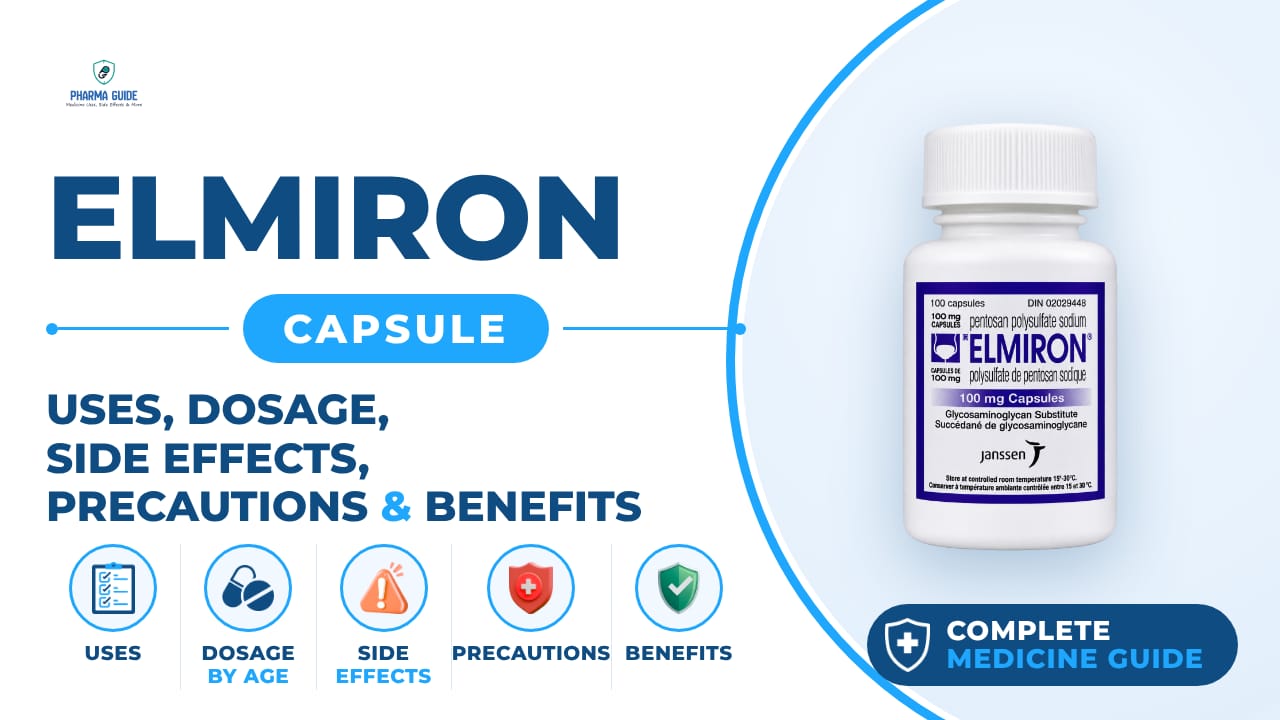
Elmiron Capsule: Uses, Dosage, Side Effects, Precautions and Alternates
Miscellaneous genitourinary tract agents
Elmiron Capsule treats bladder pain from interstitial cystitis by coating the bladder lining. Learn its dosage, side effects, and precautions.

Injectafer Injection: Uses, Dosage, Side Effects, Precautions and Alternates
Iron products
Injectafer (ferric carboxymaltose) treats iron deficiency anemia and heart failure-related iron deficiency via IV. Learn uses, dosage, side effects, and