
Safety
General information, not medical advice
Your prescriber and the leaflet in your pack know your situation. This page does not.
- Follow your prescriber and the leaflet
- Don't start, stop, or change a dose on your own
- Doses and warnings differ by country and product
Elocon Cream: Uses, Dosage, Side Effects, Precautions and Alternates
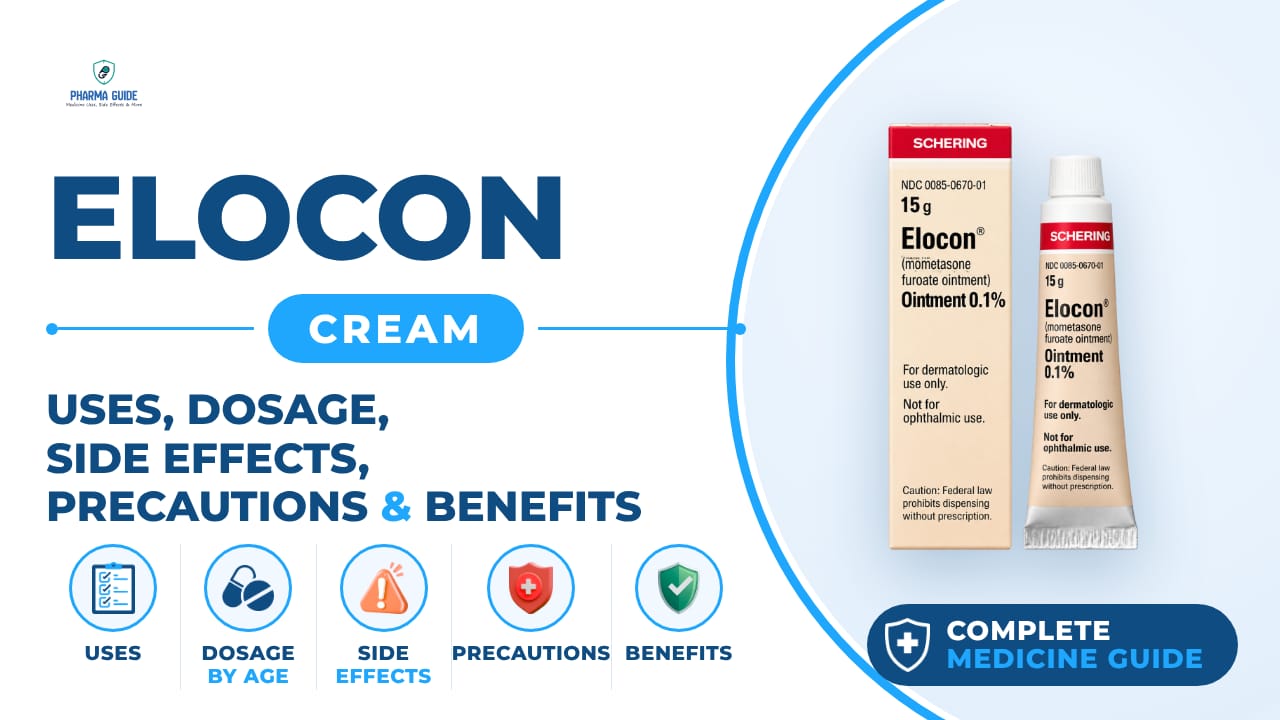
| Generic name | mometasone furoate |
|---|---|
| Drug class | Topical corticosteroids (topical steroids) |
| Forms | Cream, Ointment, Lotion (topical solution) |
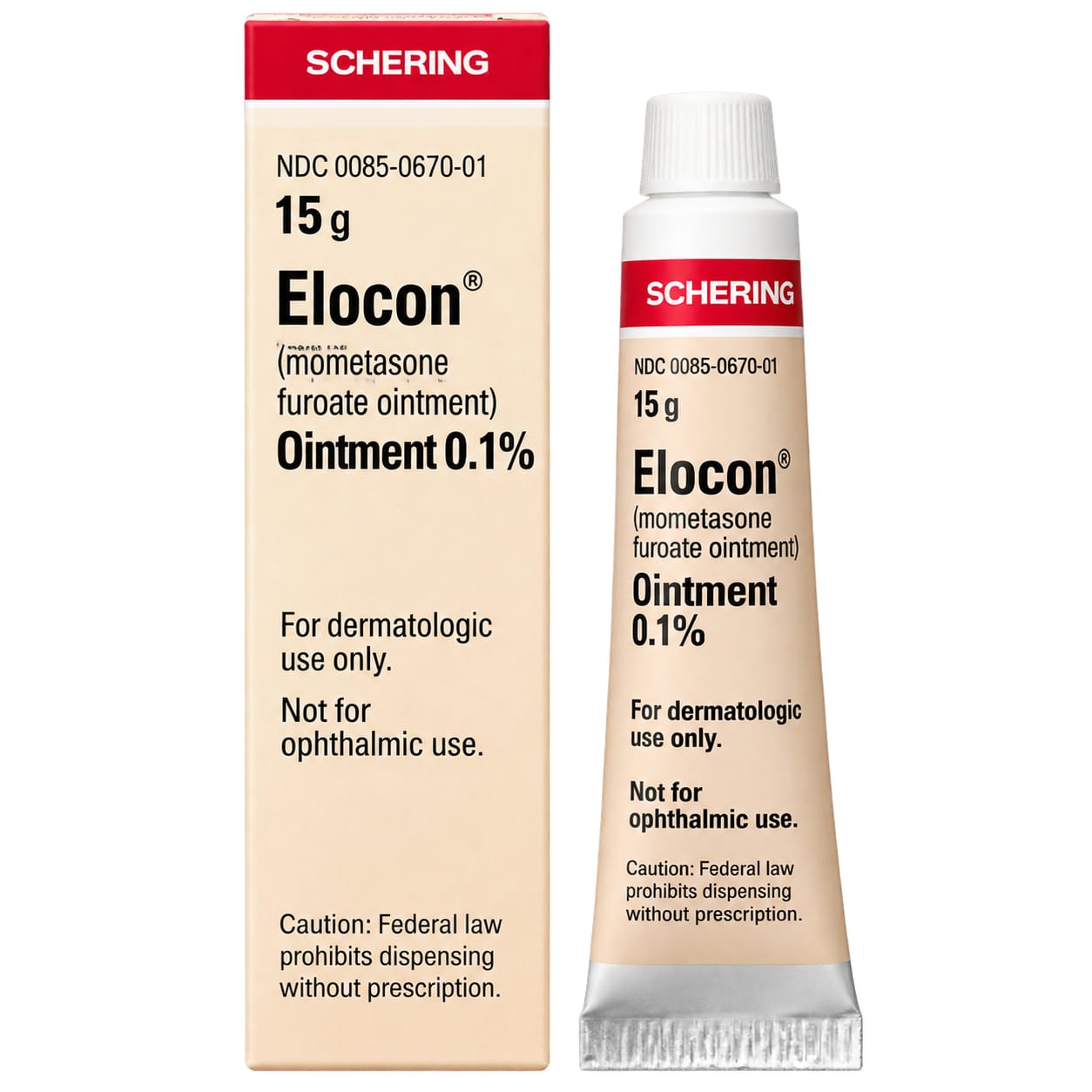
Quick overview
Elocon Cream (mometasone furoate 0.1%) is a prescription topical corticosteroid used to relieve redness, swelling, heat, pain, and itching caused by skin conditions such as psoriasis, eczema, and dermatitis. It is classed as a medium-to-strong potency steroid and is applied once daily to the affected skin. As with other topical steroids, it carries risks of local skin changes and, with overuse, more serious effects, so it should be used exactly as prescribed.
What is Elocon Cream
Elocon Cream is a prescription medicine applied to the skin to relieve redness, swelling, heat, pain, and itching caused by certain skin problems such as psoriasis, eczema, and dermatitis. It contains 0.1% mometasone furoate and is classed as a medium-to-strong potency topical corticosteroid.
Elocon Cream uses
- Relieving redness, swelling, and itching caused by psoriasis
- Relieving redness, swelling, and itching caused by dermatitis and eczema
- Treating other corticosteroid-responsive skin conditions
Benefits of Elocon Cream
- Reduces redness, swelling, heat, and itching of affected skin
- Once-daily application
- Lighter, less greasy feel than the ointment, making it easier to spread on larger areas
How Elocon Cream works
Elocon contains mometasone, a man-made steroid. When applied to the skin, it calms the local immune response and reduces the release of chemicals that cause redness, swelling, and itching. Only a small amount is absorbed into the bloodstream from unbroken skin, but more can be absorbed if the skin is inflamed or damaged.
Elocon Cream dosage
Apply a thin layer to the affected skin area once a day, exactly as your doctor tells you, then wash your hands after applying the cream. Do not bandage, cover, or wrap the treated area unless your doctor tells you to. Avoid using it on the face, groin, or underarms unless your doctor says otherwise, and do not use it in the diaper area or under a diaper or plastic pants.
Continue use until the affected area improves, but tell your doctor if there is no improvement after two weeks of treatment. Do not stop long-term use suddenly; ask your doctor about gradually reducing use to avoid the skin becoming red, stinging, or burning. If you miss a dose, apply it as soon as you remember, then continue as before; do not double up.
| Age group | Dose |
|---|---|
| Under 2 Years | Use only if prescribed by a doctor |
| 2–12 Years | Apply a thin layer to affected area once daily (as prescribed) |
| 13–17 Years | Apply a thin layer once daily; use for the shortest duration recommended |
| Adults (18–64 Years) | Apply a thin layer to affected area once daily |
| Older Adults (65+ Years) | Apply a thin layer once daily; use cautiously on thin or sensitive skin |
Available forms and strengths
- Cream (0.1%)
- Ointment
- Lotion (topical solution)
Side effects of Elocon Cream
Common
- Burning
- Itching
- Stinging
- Tingling
- Thinning of the skin (atrophy)
- Redness of the skin when first applied
- Dryness
- Irritation
- Inflammation of the hair follicle (folliculitis)
- Boils
- Acne
- Increased hair growth
Serious
- Adrenal gland problems from too much medicine passing through the skin
- Cushing's syndrome (too much cortisol hormone)
- High blood sugar (increased thirst, increased urination, dry mouth, fruity breath odor)
- Effects on growth and weight in children
- Vision problems such as blurred vision, tunnel vision, eye pain, seeing halos around lights, cataract, and glaucoma
- Allergic skin reactions (contact dermatitis)
- Skin infections at the treatment site
- Severe skin irritation, pain, tenderness, swelling, or problems healing
- Steroid withdrawal reaction with redness, burning or stinging, intense itching, peeling, or oozing sores after stopping long-term use
Warnings and precautions
- Do not use Elocon in your eyes, mouth, or vagina, or in or around your eyes including eyelids.
- Do not use other products containing a corticosteroid medicine while using Elocon without talking to your healthcare provider first.
- Do not use Elocon to treat diaper rash, and do not apply it in the diaper area if wearing diapers or plastic pants.
- Do not smoke or go near naked flames while using this product, as fabric that has contacted it can catch fire more easily, creating a serious fire hazard.
- Do not use on skin that has an infection, thinning (atrophy), rosacea, acne, dermatitis around the mouth, genital itching, cold sores, chickenpox, shingles, warts, ulcerated skin, or wounds, as it could make these conditions worse.
- If you have a recurrence of your condition within 2 weeks of stopping treatment, do not restart the medicine without consulting your prescriber, unless they have already told you to do so.
- Using large amounts over large areas of skin for a long time is not recommended, as it increases the risk of side effects.
- It is not known if Elocon will harm an unborn baby. If you use it during pregnancy, use it on the smallest area of skin and for the shortest time needed. Topical corticosteroids should be used during pregnancy only if the benefit justifies the risk to the baby.
- It is not known if Elocon passes into breast milk. If you use it while breastfeeding, use it on the smallest area of skin for the shortest time needed, and do not apply it directly to the nipple and areola to avoid contact with your baby.
- Tell your healthcare provider if you have liver problems before using Elocon.
- It is not known how Elocon interacts with alcohol. Ask your doctor before drinking alcohol while using this medicine.
Storage
- Store Elocon at room temperature between 68°F and 77°F (20°C and 25°C)
- Keep Elocon and all medicines out of the reach of children
- Do not use after the expiry date printed on the carton
- Do not throw away medicines via wastewater or household waste; ask your pharmacist how to dispose of medicines you no longer use
When to see a doctor
- Stop using Elocon and tell your healthcare provider if you develop skin reactions such as pain, tenderness, swelling, or problems healing.
- Tell your healthcare provider if you develop blurred vision or other vision problems during treatment.
- Contact your doctor immediately if you experience blurred vision or other visual disturbances.
- Contact your doctor if your psoriasis gets worse or you develop raised, pus-filled bumps under your skin.
- Tell your healthcare provider if the treated skin area has not improved after two weeks of treatment.
- If your skin becomes irritated or sensitive after using Elocon, stop using it and tell your doctor.
Alternatives
- Hydrocortisone Cream
- Triamcinolone Cream
- Betamethasone Cream
Watch the video
FAQs
What is Elocon Cream used for?
Elocon Cream is used to relieve redness, swelling, heat, pain, and itching caused by skin conditions such as psoriasis, eczema, dermatitis, and other corticosteroid-responsive skin conditions.
How often should Elocon Cream be applied?
Apply a thin layer to the affected skin once a day, exactly as your doctor tells you, and wash your hands after applying.
Can Elocon Cream be used on the face?
Elocon Cream should be avoided on the face, groin, or underarms unless your doctor says otherwise.
What are the common side effects of Elocon Cream?
Common side effects include burning, itching, stinging, tingling, thinning of the skin, redness when first applied, dryness, irritation, folliculitis, boils, acne, and increased hair growth.
What should I do if Elocon Cream doesn't improve my skin after two weeks?
You should tell your doctor if there is no improvement after two weeks of treatment, as continued use should be discussed with your healthcare provider.
General information, not medical advice
Your prescriber and the leaflet in your pack know your situation. This page does not.
- Follow your prescriber and the leaflet
- Don't start, stop, or change a dose on your own
- Doses and warnings differ by country and product
Sources
Video
Related medicines

Injectafer Injection: Uses, Dosage, Side Effects, Precautions and Alternates
Iron products
Injectafer (ferric carboxymaltose) treats iron deficiency anemia and heart failure-related iron deficiency via IV. Learn uses, dosage, side effects, and

Gliclazide Tablet: Uses, Dosage, Side Effects, Precautions and Alternates
Sulfonylurea (hypoglycemic/antidiabetic agent)
Gliclazide Tablet is a sulfonylurea for type 2 diabetes that boosts insulin release. Learn about dosage, side effects, warnings, and precautions.