
Safety
General information, not medical advice
Your prescriber and the leaflet in your pack know your situation. This page does not.
- Follow your prescriber and the leaflet
- Don't start, stop, or change a dose on your own
- Doses and warnings differ by country and product
Elzonris Injection: Uses, Dosage, Side Effects, Precautions and Alternates
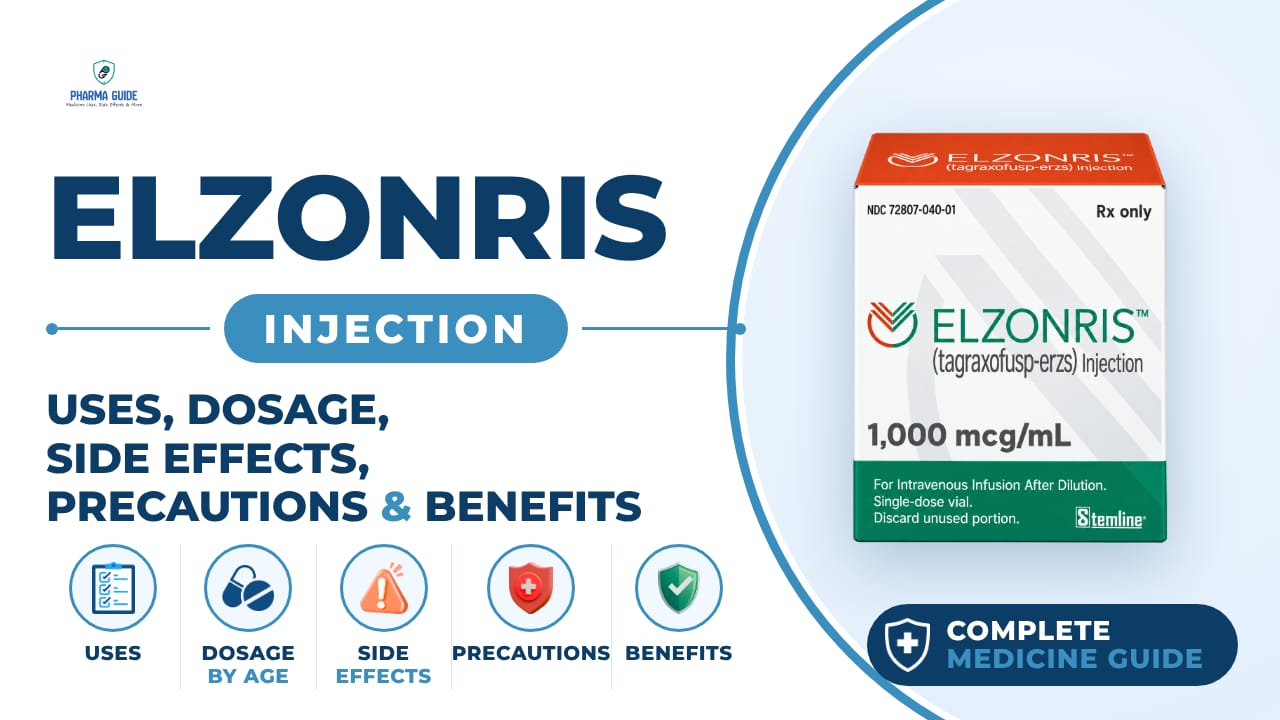
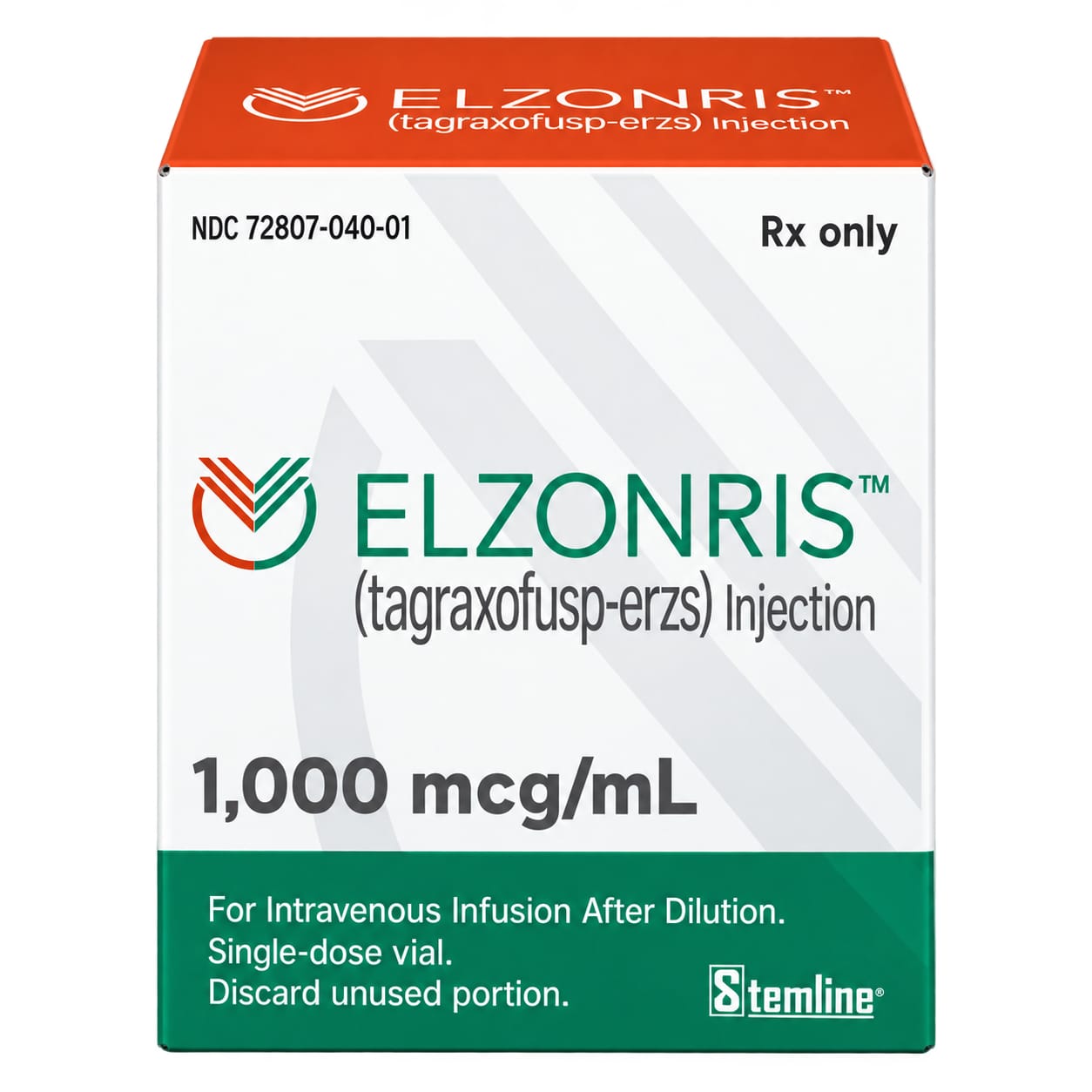
| Generic name | tagraxofusp-erzs |
|---|---|
| Drug class | Miscellaneous antineoplastics (antineoplastic agent) |
| Forms | Injection (solution for intravenous infusion) |
Quick overview
Elzonris Injection (tagraxofusp-erzs) is a prescription antineoplastic medicine given by intravenous infusion to treat blastic plasmacytoid dendritic cell neoplasm (BPDCN), a rare and aggressive blood cancer, in adults and children aged 2 years and older. It works by targeting the CD123 protein on cancer cells, delivering a cell-killing toxin directly to them. Treatment is given in cycles under close medical supervision, with monitoring for side effects such as capillary leak syndrome and allergic reactions.
What is Elzonris Injection
Elzonris is a prescription medicine given through a vein (intravenous infusion). It is used to treat a rare and aggressive blood cancer called blastic plasmacytoid dendritic cell neoplasm (BPDCN) in adults and children aged 2 years and older.
Elzonris Injection uses
- Treats blastic plasmacytoid dendritic cell neoplasm (BPDCN), a rare cancer that can affect the skin, lymph nodes, bone marrow, and blood, in adults and children 2 years and older.
Benefits of Elzonris Injection
- Clinical studies showed high response rates in patients newly diagnosed with BPDCN, helping shrink cancer cells.
- Helped some patients become well enough to go on to have a stem cell transplant, which may help them live longer.
How Elzonris Injection works
Elzonris targets a protein called CD123 found on cancer cells. It combines a cell-killing toxin (from diphtheria toxin) with a protein (interleukin-3) that attaches to the cancer cells. Once attached, the medicine is taken up by the cancer cells, and the toxin is released inside to kill them.
Elzonris Injection dosage
Elzonris is given as an infusion into a vein by a healthcare provider; you cannot give it to yourself at home. It is given once a day for the first several days of each treatment cycle, with cycles repeated unless the disease worsens or side effects become too severe.
Your doctor will give you blood tests before each dose to make sure it is safe for you to continue treatment. You may be given other medicines, such as an antihistamine, a corticosteroid, and a pain/fever reducer, before each infusion to help prevent allergic reactions or other serious side effects — keep taking these as long as your doctor prescribes.
The first treatment cycle is usually given in a hospital, and you will be monitored for side effects for a period after your last infusion in that cycle; later cycles may be given in an outpatient clinic equipped to monitor you closely.
You will need frequent medical tests during treatment to check that the medicine is not causing harmful effects; your treatment may be delayed or stopped based on the results. If you miss a scheduled treatment appointment, call your doctor for instructions.
| Age group | Dose |
|---|---|
| Under 2 years | Safety and effectiveness have not been established |
| 2–17 years | 12 mcg/kg IV once daily on Days 1–5 of each 21-day cycle |
| 18–64 years | 12 mcg/kg IV once daily on Days 1–5 of each 21-day cycle |
Available forms and strengths
- Injection (solution for intravenous infusion)
Side effects of Elzonris Injection
Common
- Nausea
- Fatigue (extreme tiredness)
- Fever
- Swelling in the hands, legs, or feet (peripheral edema)
- Weight gain
- High or low blood pressure
- Constipation
- Vomiting
- Diarrhea
- Chills
- Headache
- Dizziness
- Decreased appetite
- Back pain
- Pain in arms or legs
- Shortness of breath
- Cough
- Nosebleed
- Sore throat or mouth pain
- Trouble sleeping (insomnia)
- Anxiety
- Confusion
- Fast heart rate
- Itching
- Small red or purple spots on the skin
- Blood in the urine
Serious
- Capillary leak syndrome: a serious, potentially life-threatening condition where fluid leaks from small blood vessels into body tissues, causing rapid weight gain, swelling, low blood pressure, and breathing trouble
- Severe allergic reactions (hypersensitivity): hives, rash, itching, mouth sores, sudden warmth or tingly feeling, wheezing, difficulty breathing, swelling of the face, lips, tongue, or throat
- Liver damage (hepatotoxicity): shown by elevated liver enzymes on blood tests; may cause yellowing of the skin or eyes (jaundice) and upper right belly pain
- Serious eye symptoms: sudden vision loss, blurred vision, tunnel vision, eye pain or swelling, or seeing halos around lights
- Serious heart symptoms: fast, irregular, or pounding heartbeat; fluttering in the chest; shortness of breath; sudden dizziness, lightheadedness, or passing out
- Severe neurological symptoms: severe headache, confusion, slurred speech, arm or leg weakness, trouble walking, loss of coordination, feeling unsteady, very stiff muscles, high fever, heavy sweating, or tremors
Warnings and precautions
- Capillary leak syndrome is a serious, sometimes life-threatening or fatal side effect of Elzonris.
- Your doctor will watch for signs during treatment. Elzonris should only be given under the supervision of a doctor experienced in cancer treatment, in a place with equipment ready to handle medical emergencies.
- Before starting treatment, your blood albumin level and heart function need to be checked to make sure it is safe to begin.
- Elzonris may harm an unborn baby. You may need a negative pregnancy test before starting treatment, and you should use effective birth control during treatment and for at least 1 week after your last dose.
- Do not breastfeed while using Elzonris and for at least 1 week after your last dose, because of the risk of serious side effects in a breastfed child.
- No clinically significant differences in how the drug is processed were seen in people with mild to moderate kidney problems; the effect of severe kidney impairment on the medicine is unknown. Your doctor will check your kidney function before and during treatment, and treatment may be paused if certain kidney test results are too high.
- Elzonris can cause liver enzyme elevations. No significant differences were seen in people with mild to moderate liver impairment, but the effect of severe liver impairment is unknown. Your doctor will monitor your liver function tests before each dose.
- The source does not provide specific guidance about alcohol use with Elzonris, other than to follow your doctor's instructions about restrictions on food, drinks, or activities.
- The source does not give specific driving instructions, but notes that Elzonris can cause dizziness, confusion, and altered mental status, especially in older patients, which could affect your ability to drive safely.
Storage
- Store in a freezer between -25°C and -15°C (-13°F and 5°F).
- Protect Elzonris from light by keeping it in its original package until it is time to use it.
- Thaw vials at room temperature between 15°C and 25°C (59°F and 77°F) before preparing the dose.
- Do not refreeze the vial once it has been thawed.
- Do not use beyond the expiration date on the container.
When to see a doctor
- Get emergency medical help right away if you have signs of a severe allergic reaction, such as hives, rash, itching, mouth sores, sudden warmth or tingling, trouble breathing, or swelling of your face, lips, tongue, or throat.
- Call your doctor right away if you have a stuffy or runny nose followed by tiredness, dizziness, thirst, less urination, trouble breathing, or sudden swelling or weight gain — these can be signs of capillary leak syndrome.
- Seek medical care right away for serious eye symptoms such as sudden vision loss, blurred vision, tunnel vision, eye pain or swelling, or seeing halos around lights.
- Seek medical care right away for serious heart symptoms such as a fast, irregular, or pounding heartbeat, fluttering in your chest, shortness of breath, or sudden dizziness, lightheadedness, or passing out.
- Seek medical care right away for severe headache, confusion, slurred speech, weakness in an arm or leg, trouble walking, loss of coordination, feeling unsteady, very stiff muscles, high fever, heavy sweating, or tremors.
- Report any symptoms that may suggest liver problems, such as tiredness, loss of appetite, or pain in the upper right side of your belly.
Alternatives
- Clinical-trial therapies
- Venetoclax-based regimens in selected cases
- Stem-cell transplantation
- AML-type chemotherapy regimens in selected patients
Watch the video
FAQs
What is Elzonris Injection used for?
Elzonris is used to treat blastic plasmacytoid dendritic cell neoplasm (BPDCN), a rare and aggressive blood cancer that can affect the skin, lymph nodes, bone marrow, and blood, in adults and children 2 years and older.
How does Elzonris Injection work?
Elzonris targets a protein called CD123 found on cancer cells. It combines a cell-killing toxin from diphtheria toxin with interleukin-3, which attaches to cancer cells; once taken up, the toxin is released inside to kill the cells.
What is the dosage of Elzonris Injection?
Elzonris is given by a healthcare provider as an IV infusion once daily on Days 1–5 of each 21-day cycle, at a dose of 12 mcg/kg for both adults aged 18-64 and children aged 2-17. Safety and effectiveness have not been established in children under 2.
What are the serious side effects of Elzonris Injection?
Serious side effects include capillary leak syndrome, severe allergic reactions, liver damage, serious eye symptoms, serious heart symptoms, and severe neurological symptoms such as confusion, slurred speech, or weakness.
How should Elzonris Injection be stored?
Elzonris should be stored in a freezer between -25°C and -15°C (-13°F and 5°F), protected from light in its original package, and thawed at room temperature before use. It should not be refrozen once thawed.
General information, not medical advice
Your prescriber and the leaflet in your pack know your situation. This page does not.
- Follow your prescriber and the leaflet
- Don't start, stop, or change a dose on your own
- Doses and warnings differ by country and product
Sources
Video
Related medicines

Injectafer Injection: Uses, Dosage, Side Effects, Precautions and Alternates
Iron products
Injectafer (ferric carboxymaltose) treats iron deficiency anemia and heart failure-related iron deficiency via IV. Learn uses, dosage, side effects, and

Gliclazide Tablet: Uses, Dosage, Side Effects, Precautions and Alternates
Sulfonylurea (hypoglycemic/antidiabetic agent)
Gliclazide Tablet is a sulfonylurea for type 2 diabetes that boosts insulin release. Learn about dosage, side effects, warnings, and precautions.