
Safety
General information, not medical advice
Your prescriber and the leaflet in your pack know your situation. This page does not.
- Follow your prescriber and the leaflet
- Don't start, stop, or change a dose on your own
- Doses and warnings differ by country and product
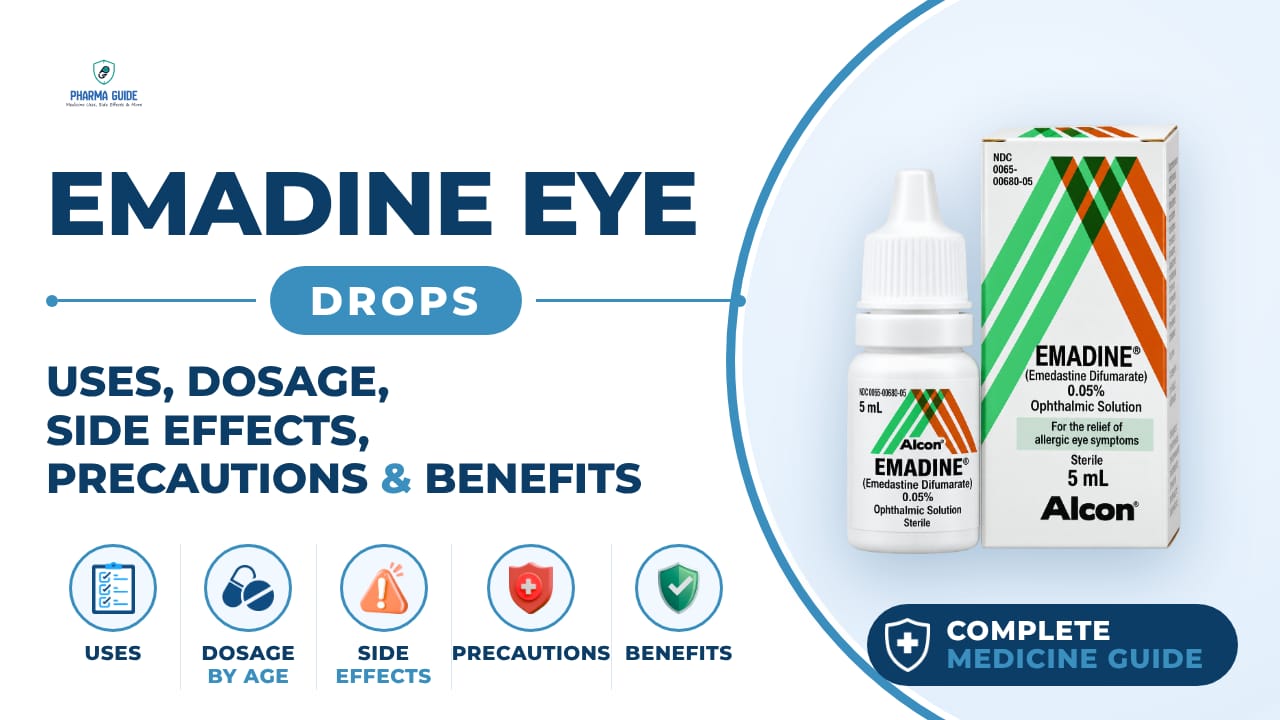
Emadine Eye Drops: Uses, Dosage, Side Effects, Precautions and Alternates
| Generic name | Emedastine Difumarate |
|---|---|
| Drug class | Ophthalmic antihistamine (H1 receptor blocker) |
| Forms | Eye Drops |
Quick overview
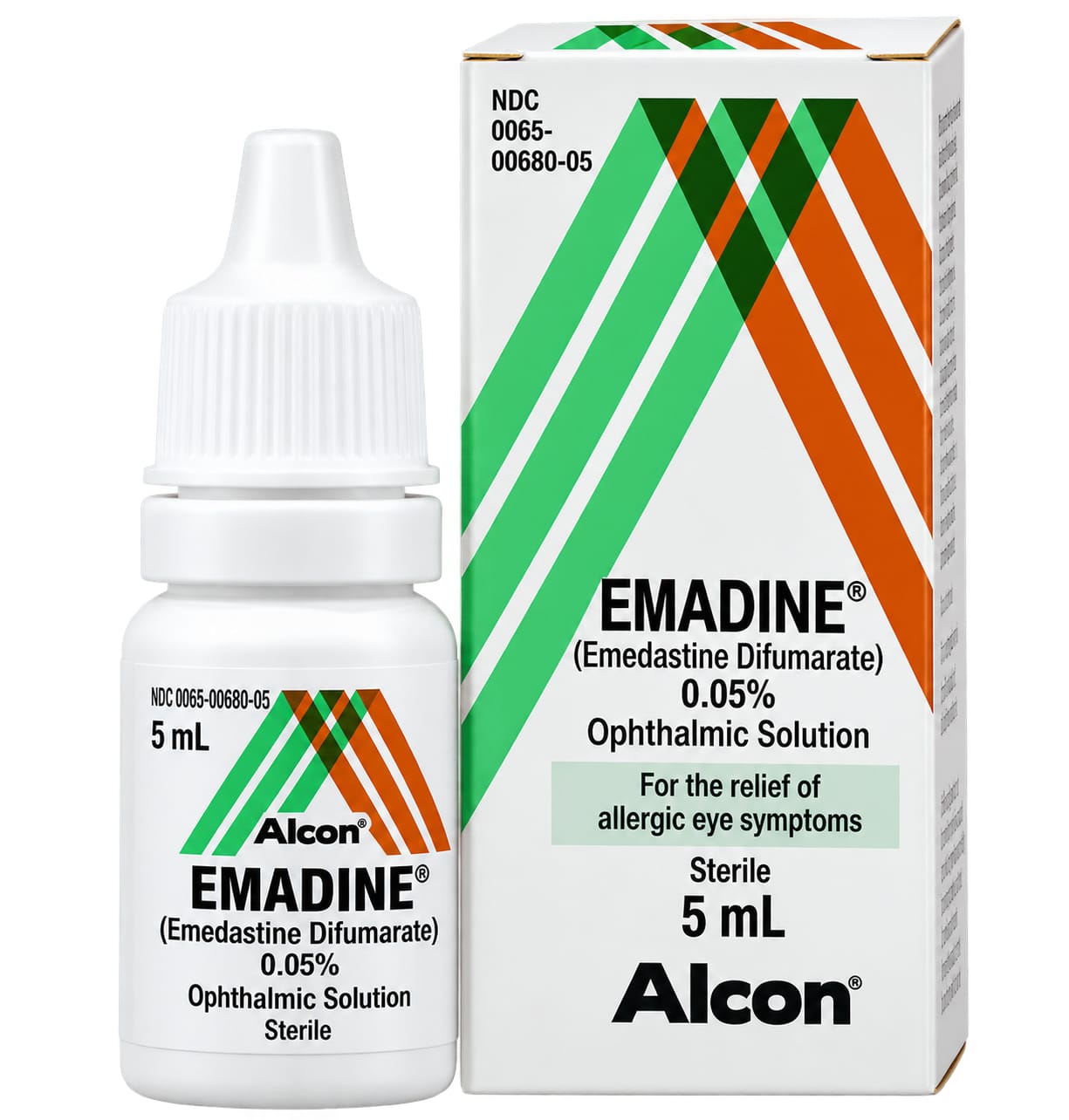
Emadine Eye Drops contain Emedastine Difumarate, an ophthalmic antihistamine that blocks H1 receptors. This prescription eye drop relieves eye allergy symptoms like itching, redness, and watering caused by triggers such as pollen, dust, or pet dander. It is used twice daily and works within minutes of application.
What is Emadine Eye Drops
Emadine is a prescription eye drop that contains an antihistamine. It is used to relieve eye allergy symptoms like itching, redness, and watering caused by things such as pollen, dust, or pet dander.
Emadine Eye Drops uses
- Relieves itching caused by seasonal or perennial allergic conjunctivitis
- Reduces eye redness linked to pollen, dust and pet dander exposure
- Controls watering and mild swelling of the conjunctiva during allergy flare ups
- Eases the gritty, foreign body feeling that comes with eye allergies
- Treats symptoms of seasonal allergic conjunctivitis such as itching, redness, and swelling
Benefits of Emadine Eye Drops
- Works within minutes of application for fast symptom relief
- Twice daily dosing makes it easier to stick to the full course
- Selective action on histamine receptors limits unwanted sedation
- Gentle formulation suitable for daily use during allergy season
- Itching typically decreases in less than 3 minutes, and redness improves in about 8 minutes
How Emadine Eye Drops works
Emadine blocks histamine receptors in the eye. Histamine is a substance the body releases during an allergic reaction, and when its receptors are blocked, it cannot cause itching, redness, and swelling.
Emadine Eye Drops dosage
Wash your hands before opening the bottle. Tilt your head back and gently pull down the lower eyelid to make a small space. Place the drop into this space without letting the dropper tip touch your eye or eyelid. Let go of the eyelid, close your eyes gently, and keep them closed for a minute or two without blinking so the medicine can absorb. Use the drops at the same times each day, about 12 hours apart.
If you think the drop missed your eye, use another drop. Remove contact lenses before use and wait at least 10 to 15 minutes before putting them back in, unless your eyes are red, in which case don't wear contacts at all. If using other eye drops, space them at least 10 minutes apart, and apply any eye ointments last.
If you miss a dose, take it as soon as you remember, but skip it if it is almost time for your next dose; do not double up. Children younger than 3 years should only use this medicine as directed by a doctor.
| Age group | Dose |
|---|---|
| Under 3 years | Safety and effectiveness are not established |
| 3–11 years | Usually 1 drop in the affected eye(s) up to 4 times daily |
| 12–64 years | Usually 1 drop in the affected eye(s) up to 4 times daily |
Available forms and strengths
- Eye Drops
Side effects of Emadine Eye Drops
Common
- Brief stinging or burning right after the drop is applied
- Temporary blurred vision
- Mild headache
- Dry eye or a gritty sensation
- Runny nose or nasal irritation
- Bad or altered taste
- Abnormal dreams
- Weakness
Serious
- Swelling of the eyelids, face or lips
- Severe eye pain or sudden vision changes
- Skin rash, hives or itching spreading beyond the eye
- Difficulty breathing or tightness in the chest
Warnings and precautions
- If you wear contact lenses, remove them before using the drops and wait 15 minutes before putting them back in. The preservative in the drops can discolor soft contact lenses.
- People with a history of corneal infiltration (a type of corneal damage) should use this drop only under close medical supervision.
- This medicine is not recommended for people older than 65 years.
- Only use in children under a doctor's guidance, since dosing needs vary by age, and studies in children younger than 3 years are limited.
- Pregnancy: Use this medicine only if your doctor confirms it is needed, since there isn't enough safety data for pregnancy.
- Breastfeeding: Weigh the possible benefits against the possible risks with your doctor before using this medicine while breastfeeding.
- Kidney: Use with caution if you have kidney problems, and tell your doctor beforehand. This medicine is not recommended for patients with kidney problems.
- Liver: Use with caution if you have liver problems, and tell your doctor beforehand. This medicine is not recommended for patients with liver problems.
- Alcohol: Talk to your doctor about using this medicine with alcohol, since interactions may occur.
- Driving: Avoid driving or using machinery until your vision is clear, since this medicine can cause temporary blurred vision.
Storage
- Store between 15 and 25 degrees Celsius, away from direct sunlight
- Keep the bottle tightly closed when not in use
- Discard the bottle four weeks after first opening, even if drops remain
- Keep out of reach of children
- Do not freeze
- Store at room temperature, away from heat, moisture, and direct light
- Do not refrigerate
When to see a doctor
- Contact a doctor or seek urgent care if you notice swelling of the eyelids, face, or lips.
- Seek urgent care for severe eye pain or sudden changes in vision.
- Seek urgent care for a skin rash, hives, or itching that spreads beyond the eye.
- Seek urgent care right away if you have difficulty breathing or tightness in the chest.
- Check with your doctor if your symptoms do not improve or if your condition gets worse.
Alternatives
- Olopatadine
- Ketotifen
- Azelastine
- Bepotastine
Watch the video
FAQs
What is Emadine Eye Drops used for?
It is used to relieve eye allergy symptoms like itching, redness, and watering caused by triggers such as pollen, dust, or pet dander.
How fast does Emadine Eye Drops work?
It works within minutes of application, with itching typically decreasing in less than 3 minutes and redness improving in about 8 minutes.
How is Emadine Eye Drops used?
A drop is placed in the affected eye, with doses spaced about 12 hours apart for twice daily use, or up to 4 times daily for ages 3-64 as per the dosage table. Contact lenses should be removed before use and reinserted after 10 to 15 minutes.
What are the common side effects of Emadine Eye Drops?
Common side effects include brief stinging or burning, temporary blurred vision, mild headache, dry eye, runny nose, altered taste, abnormal dreams, and weakness.
Can older adults use Emadine Eye Drops?
This medicine is not recommended for people older than 65 years.
General information, not medical advice
Your prescriber and the leaflet in your pack know your situation. This page does not.
- Follow your prescriber and the leaflet
- Don't start, stop, or change a dose on your own
- Doses and warnings differ by country and product
Sources
Video
Related medicines

Injectafer Injection: Uses, Dosage, Side Effects, Precautions and Alternates
Iron products
Injectafer (ferric carboxymaltose) treats iron deficiency anemia and heart failure-related iron deficiency via IV. Learn uses, dosage, side effects, and

Gliclazide Tablet: Uses, Dosage, Side Effects, Precautions and Alternates
Sulfonylurea (hypoglycemic/antidiabetic agent)
Gliclazide Tablet is a sulfonylurea for type 2 diabetes that boosts insulin release. Learn about dosage, side effects, warnings, and precautions.