
Safety
General information, not medical advice
Your prescriber and the leaflet in your pack know your situation. This page does not.
- Follow your prescriber and the leaflet
- Don't start, stop, or change a dose on your own
- Doses and warnings differ by country and product
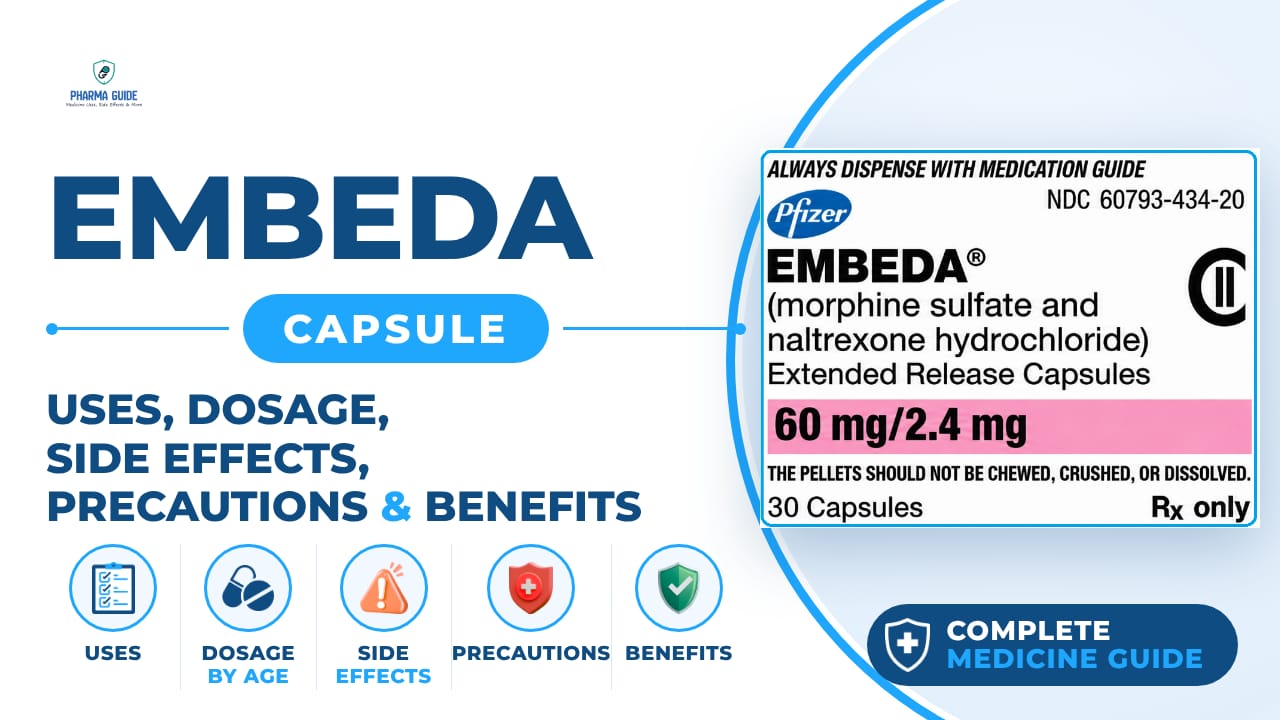
Embeda Capsule: Uses, Dosage, Side Effects, Precautions and Alternates
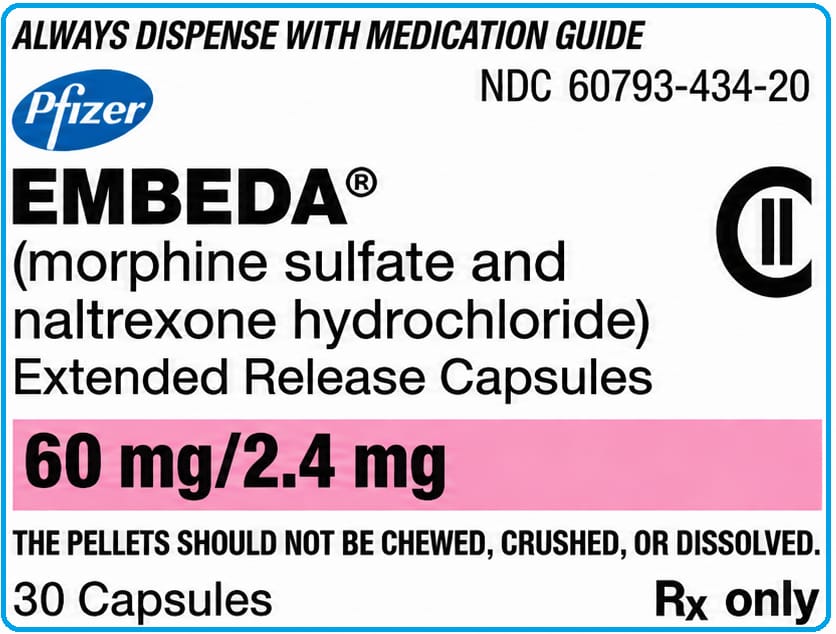
| Generic name | morphine sulfate and naltrexone hydrochloride |
|---|---|
| Drug class | Narcotic analgesic combinations |
| Forms | Extended-release capsule |
Quick overview
Embeda Capsule is a combination of morphine sulfate, an opioid pain medication, and naltrexone hydrochloride, which blocks certain opioid effects linked to abuse. It is an extended-release capsule used for around-the-clock treatment of moderate to severe pain, not for as-needed use. Note that the Embeda brand and its generics have been discontinued in the United States.
What is Embeda Capsule
Embeda contains a combination of morphine and naltrexone. Morphine is an opioid pain medication (a narcotic). Naltrexone blocks certain effects of opioid medication, including feelings of well-being that can lead to opioid abuse. It is an extended-release capsule and is not meant to be used on an as-needed basis.
Embeda Capsule uses
- Treats moderate to severe pain when around-the-clock pain relief is needed for a long period of time
- For managing pain severe enough to require daily, around-the-clock, long-term opioid treatment when other treatment options are not enough
Benefits of Embeda Capsule
- Provides long-lasting relief of severe, persistent pain that requires an opioid medicine
- Helps reduce continuous pain intensity when other pain treatments are inadequate or not tolerated
- Provides around-the-clock pain control through its extended-release morphine formulation
- Contains sequestered naltrexone, which is designed to be released if the capsule pellets are crushed or tampered with
- May improve comfort and daily functioning when severe chronic pain is appropriately controlled
How Embeda Capsule works
Morphine is an opioid that attaches to specific receptors in the brain and spinal cord to reduce pain and cause sleepiness. Naltrexone, sealed inside the pellet, blocks some of morphine's effects if the capsule is tampered with, but does not reduce the risk of abuse when the capsule is taken as directed.
Embeda Capsule dosage
Take Embeda exactly as prescribed. Follow the directions on your prescription label and read all medication guides. Never use Embeda in larger amounts or for longer than prescribed. Stop taking all other around-the-clock narcotic pain medications when you start taking Embeda. You may take Embeda with or without food.
Do not crush, break, or open an extended-release Embeda capsule; swallow the capsule whole. If you cannot swallow the capsule whole, open it and sprinkle the medicine into a spoonful of applesauce, mix only one dose, and swallow the mixture right away without chewing; drink a glass of water afterward to be sure all the medicine has been swallowed. Do not divide the applesauce dose or save part of it for later. Rinse your mouth to make sure all pellets have been swallowed. Do not give Embeda pellets through a feeding tube (nasogastric or gastric tube).
Do not stop using Embeda suddenly; ask your doctor how to safely taper off the medicine. If you miss a dose, skip it if it is almost time for your next dose; do not take extra medicine to make up for a missed dose. The first dose may be taken along with the last dose of any immediate-release opioid you were previously using.
| Age group | Dose |
|---|---|
| Under 18 years | Safety and effectiveness not established |
| 18–64 years – Opioid-naïve | Historically, initial dosing was 20 mg morphine/0.8 mg naltrexone once daily when ER opioid therapy was appropriate |
| Opioid-tolerant adults | Dose was individualized based on the previous opioid regimen |
| 65+ years | Lower initial dosing and slow titration were advised |
| Kidney/liver impairment | Required cautious individualized dosing and close monitoring |
Available forms and strengths
- Extended-release capsule
Side effects of Embeda Capsule
Common
- Constipation
- Nausea
- Vomiting
- Stomach pain
- Drowsiness
- Dizziness
- Headache
- Tired feeling
- Itching (pruritus)
Serious
- Weak or shallow breathing, or breathing that stops during sleep
- A light-headed feeling, like you might pass out
- Seizures (convulsions)
- Low cortisol levels - nausea, vomiting, loss of appetite, dizziness, worsening tiredness or weakness
- Symptoms of serotonin syndrome such as agitation, hallucinations, fever, sweating, shivering, fast heart rate, muscle stiffness, twitching, loss of coordination, nausea, vomiting, or diarrhea
- Allergic reaction: hives, difficult breathing, chest pain, anxiety, pounding heartbeats, fainting, swelling of face, lips, tongue, or throat
- Severe low blood pressure, dizziness or fainting when standing up
Warnings and precautions
- Morphine can slow or stop your breathing and can be habit-forming. Misusing Embeda can cause addiction, overdose, or death. Keep it where others cannot get to it.
- Do not use Embeda if you have taken an MAO inhibitor (such as isocarboxazid, linezolid, methylene blue injection, phenelzine, rasagiline, selegiline, or tranylcypromine) in the past 14 days, as this can cause a dangerous drug interaction.
- Never crush, break, chew, or dissolve the capsule. This can cause the medicine to release too fast, which can be fatal.
- The highest strength capsule (100 mg/4 mg) should only be used in patients who are already tolerant to opioids, since it can cause fatal breathing problems in people who are not opioid-tolerant.
- Do not use Embeda if you have severe asthma or other serious breathing problems, or a bowel blockage called paralytic ileus.
- Taking Embeda with certain other medicines that affect serotonin can cause a serious condition called serotonin syndrome.
- Do not stop taking Embeda suddenly, as this can cause unpleasant withdrawal symptoms. Ask your doctor how to stop safely.
- Serious side effects, including breathing problems, may be more likely in older adults and in people who are overweight, malnourished, or in poor health.
- Long-term opioid use may affect fertility in men and women, and it is not known if these effects are permanent.
- Taking Embeda during pregnancy may cause life-threatening withdrawal symptoms in the newborn.
- If you use morphine while pregnant, your baby could become dependent on the drug and may need medical treatment for withdrawal for several weeks after birth.
- Do not breastfeed while taking Embeda. The medicine can pass into breast milk and cause drowsiness, breathing problems, or death in a nursing baby.
- Tell your doctor if you have kidney disease, since Embeda should be used with caution and possibly at a reduced dose in people with severe kidney problems.
- Tell your doctor if you have liver disease, since Embeda should be used with caution and possibly at a reduced dose in people with severe liver problems.
- Do not drink alcohol while using Embeda. Combining alcohol with this medicine can raise morphine levels in your blood to dangerous levels and cause a fatal overdose.
- This medicine may affect your thinking or reactions. Avoid driving or operating machinery until you know how Embeda affects you, since dizziness or drowsiness can cause falls, accidents, or serious injuries.
Storage
- Store at 20–25°C (68–77°F) at controlled room temperature
- Keep in a cool, dry place away from excessive heat and moisture
- Keep capsules in the original, tightly closed container
- Protect from direct light and avoid hot or humid storage areas
- Store securely to prevent accidental ingestion, misuse, or unauthorized access
- Keep out of reach and sight of children and pets
When to see a doctor
- Get emergency help right away for signs of a severe allergic reaction: hives, difficulty breathing, chest pain, anxiety, pounding heartbeat, fainting, or swelling of the face, lips, tongue, or throat
- Seek emergency help if breathing slows with long pauses, lips turn blue, or the person is very hard to wake up
- Call your doctor right away if you have weak or shallow breathing, breathing that stops during sleep, feeling like you might faint, seizures, or signs of low cortisol such as nausea, vomiting, loss of appetite, dizziness, or worsening tiredness
- Seek medical attention right away if you notice symptoms of serotonin syndrome, such as agitation, hallucinations, fever, sweating, shivering, fast heartbeat, muscle stiffness, twitching, loss of coordination, nausea, vomiting, or diarrhea
- If you take too much Embeda or think you have overdosed, get emergency medical help right away or contact your local poison control center
- If a child accidentally takes Embeda, this is a medical emergency — get emergency help right away
Alternatives
- Tapentadol Extended-Release
- Hydrocodone Extended-Release
- Oxycodone Extended-Release
- MS Contin
Watch the video
FAQs
What is Embeda Capsule used for?
Embeda is used to treat moderate to severe pain when around-the-clock, long-term opioid treatment is needed and other treatment options are not enough.
Is Embeda Capsule still available?
No, the Embeda brand and its generics have been discontinued in the United States.
How does Embeda Capsule work?
Morphine attaches to receptors in the brain and spinal cord to reduce pain and cause sleepiness, while naltrexone is sealed inside the pellet and blocks some of morphine's effects only if the capsule is tampered with; it does not reduce abuse risk when taken as directed.
Can I crush or chew Embeda Capsule?
No, you should never crush, break, chew, or dissolve the capsule, as this can cause the medicine to release too fast, which can be fatal.
Can I drink alcohol while taking Embeda Capsule?
No, alcohol should be avoided while using Embeda because it can raise morphine levels in your blood to dangerous levels and cause a fatal overdose.
General information, not medical advice
Your prescriber and the leaflet in your pack know your situation. This page does not.
- Follow your prescriber and the leaflet
- Don't start, stop, or change a dose on your own
- Doses and warnings differ by country and product
Sources
Video
Related medicines

Injectafer Injection: Uses, Dosage, Side Effects, Precautions and Alternates
Iron products
Injectafer (ferric carboxymaltose) treats iron deficiency anemia and heart failure-related iron deficiency via IV. Learn uses, dosage, side effects, and

Gliclazide Tablet: Uses, Dosage, Side Effects, Precautions and Alternates
Sulfonylurea (hypoglycemic/antidiabetic agent)
Gliclazide Tablet is a sulfonylurea for type 2 diabetes that boosts insulin release. Learn about dosage, side effects, warnings, and precautions.