
Safety
General information, not medical advice
Your prescriber and the leaflet in your pack know your situation. This page does not.
- Follow your prescriber and the leaflet
- Don't start, stop, or change a dose on your own
- Doses and warnings differ by country and product
Emgality Injection: Uses, Dosage, Side Effects, Precautions and Alternates

| Generic name | galcanezumab-gnlm |
|---|---|
| Drug class | Calcitonin gene-related peptide (CGRP) antagonist |
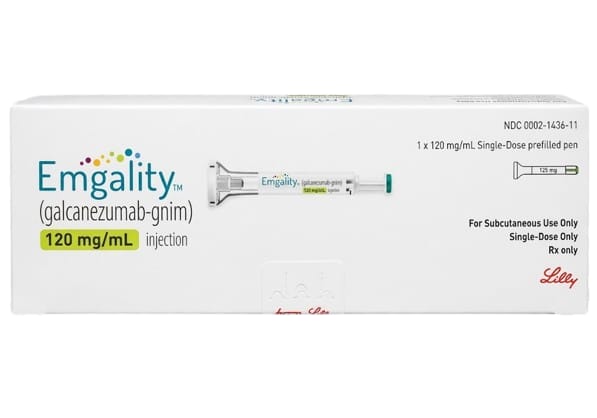
| Forms | Single-dose prefilled pen (120 mg/mL solution) |
Quick overview
Emgality Injection contains galcanezumab-gnlm, a calcitonin gene-related peptide (CGRP) antagonist. It is a prescription injection used in adults to prevent migraine attacks and to treat episodic cluster headaches. It works by blocking a protein linked to headache pain. It is given as a monthly injection under the skin.
What is Emgality Injection
Emgality is a prescription injection medicine used in adults to prevent migraine attacks and to treat episodic cluster headaches. It contains the active ingredient galcanezumab-gnlm, a lab-made antibody that blocks a protein linked to headache pain.
Emgality Injection uses
- Preventive treatment of migraine in adults, including both episodic and chronic migraine
- Treatment of episodic cluster headache in adults
Benefits of Emgality Injection
- Can help reduce the number of migraine days per month
- Can help reduce the number of cluster headache attacks
- May help people who have not been helped enough by, or cannot tolerate, other migraine medicines
How Emgality Injection works
Emgality is a lab-made antibody that attaches to a protein called CGRP, stopping it from binding to its receptors in the brain. CGRP is linked to inflammation and widening of blood vessels in the brain, which can cause headache pain, so blocking it helps prevent migraine attacks and treat cluster headaches.
Emgality Injection dosage
Emgality is given as an injection under the skin (subcutaneous injection) that you or a caregiver can learn to do at home after being shown by your doctor or nurse. It can be injected into the stomach area, front of the thighs, back of the upper arm, or buttocks.
For migraine prevention, the first dose is two injections given one after the other, followed by one injection once a month. For cluster headache treatment, each dose is three injections given one after the other, once a month until the cluster period ends. It can be taken with or without food.
Let a refrigerated syringe or pen warm up at room temperature for about 30 minutes before injecting; do not warm it with hot water, sunlight, or a microwave. Do not shake the medicine before use. Do not inject into skin that is hard, red, bruised, or tender.
Each prefilled syringe or pen is for one use only and should be thrown away after use, even if some medicine is left. Emgality is not approved for use in children or anyone younger than 18 years old.
If you miss a dose, give yourself the dose as soon as you remember, then resume your monthly schedule from that date; do not use two doses at once to make up for a missed one.
| Age group | Dose |
|---|---|
| Under 18 years | Not recommended |
| 18–60 years | 240 mg, once/month |
| 60+ years | 240 mg, once/month |
Available forms and strengths
- Single-dose prefilled pen (120 mg/mL solution)
Side effects of Emgality Injection
Common
- Pain, redness, itching, or swelling where the medicine was injected
- Skin discoloration at the injection site
Serious
- Severe allergic reaction, which can occur days after an injection (swelling of the face, lips, tongue, or throat; trouble breathing; hives; skin rash)
- Severe constipation, sometimes with serious complications requiring hospitalization or surgery
- High blood pressure or worsening of existing high blood pressure
- Raynaud's phenomenon (fingers or toes becoming numb, cool, painful, or changing color from pale to blue to red)
Warnings and precautions
- Do not use Emgality if you have had a serious allergic reaction to it in the past.
- Emgality can cause severe constipation with serious complications, including hospitalization or surgery in some cases.
- Emgality can cause high blood pressure or make existing high blood pressure worse.
- Emgality can cause or worsen Raynaud's phenomenon, affecting circulation in the fingers and toes.
- Injecting multiple doses can increase the risk of injection site reactions, and allergic people may have a more severe reaction.
- It is not known for certain whether Emgality is safe during pregnancy. Animal studies showed no harm, but this does not guarantee safety in humans. Talk with your doctor if you are pregnant or planning to become pregnant, and consider joining the pregnancy registry if you take Emgality while pregnant.
- It is not known whether Emgality passes into breast milk. Talk with your doctor about the risks and benefits of breastfeeding while using this medicine; you may need to stop breastfeeding.
- Emgality is not broken down by the liver like most other migraine medicines, so it generally does not interact with other drugs processed there.
- There is no known interaction between Emgality and alcohol, but alcohol can trigger migraine attacks in some people and may seem to make headaches worse.
Storage
- Store in a refrigerator between 36°F and 46°F (2°C and 8°C)
- Do not freeze
- May be stored out of the refrigerator in the original carton at temperatures up to 86°F (30°C) for up to 7 days
- Once removed from the refrigerator, do not put it back in the refrigerator
- Keep in the original carton to protect it from light until time of use
- Do not shake
- Throw away the medicine if any of these storage conditions are not followed
- Keep out of the reach of children
- Dispose of used needles safely, such as in a sharps disposal container
- If you have leftover medicine you no longer need, dispose of it safely rather than throwing it in household trash; ask your pharmacist for guidance
When to see a doctor
- Get emergency medical help right away if you notice swelling of the face, lips, tongue, or throat, or trouble breathing — these may be signs of a serious allergic reaction.
- Contact your doctor if you have severe constipation or constipation with severe or constant belly pain, vomiting, swelling of the belly, or bloating.
- Contact your doctor if you notice your blood pressure has increased.
- Contact your doctor if your fingers or toes become numb, cool, painful, or change color.
- If you think you have received too much of this medicine, get emergency medical help or contact a poison control center right away; if symptoms are severe, seek emergency care immediately.
Alternatives
- Aimovig
- Ajovy
- Qulipta
Watch the video
FAQs
What is Emgality Injection used for?
Emgality is used in adults for preventive treatment of migraine, including episodic and chronic migraine, and for treatment of episodic cluster headache.
How does Emgality work?
Emgality is a lab-made antibody that attaches to a protein called CGRP, stopping it from binding to its receptors in the brain, which helps prevent migraine attacks and treat cluster headaches.
What is the dosage schedule for Emgality?
For migraine prevention, the first dose is two injections given one after the other, followed by one injection once a month. For cluster headache treatment, each dose is three injections given one after the other, once a month until the cluster period ends.
What are the common side effects of Emgality?
Common side effects include pain, redness, itching, or swelling where the medicine was injected, and skin discoloration at the injection site.
How should Emgality be stored?
Store it in a refrigerator between 36°F and 46°F, do not freeze, and keep it in the original carton to protect it from light. It may be stored out of the refrigerator at up to 86°F for up to 7 days, but once removed, do not put it back in the refrigerator.
General information, not medical advice
Your prescriber and the leaflet in your pack know your situation. This page does not.
- Follow your prescriber and the leaflet
- Don't start, stop, or change a dose on your own
- Doses and warnings differ by country and product
Sources
Video
Related medicines

Injectafer Injection: Uses, Dosage, Side Effects, Precautions and Alternates
Iron products
Injectafer (ferric carboxymaltose) treats iron deficiency anemia and heart failure-related iron deficiency via IV. Learn uses, dosage, side effects, and

Gliclazide Tablet: Uses, Dosage, Side Effects, Precautions and Alternates
Sulfonylurea (hypoglycemic/antidiabetic agent)
Gliclazide Tablet is a sulfonylurea for type 2 diabetes that boosts insulin release. Learn about dosage, side effects, warnings, and precautions.