
Safety
General information, not medical advice
Your prescriber and the leaflet in your pack know your situation. This page does not.
- Follow your prescriber and the leaflet
- Don't start, stop, or change a dose on your own
- Doses and warnings differ by country and product
Enalapril Tablet: Uses, Dosage, Side Effects, Precautions and Alternates
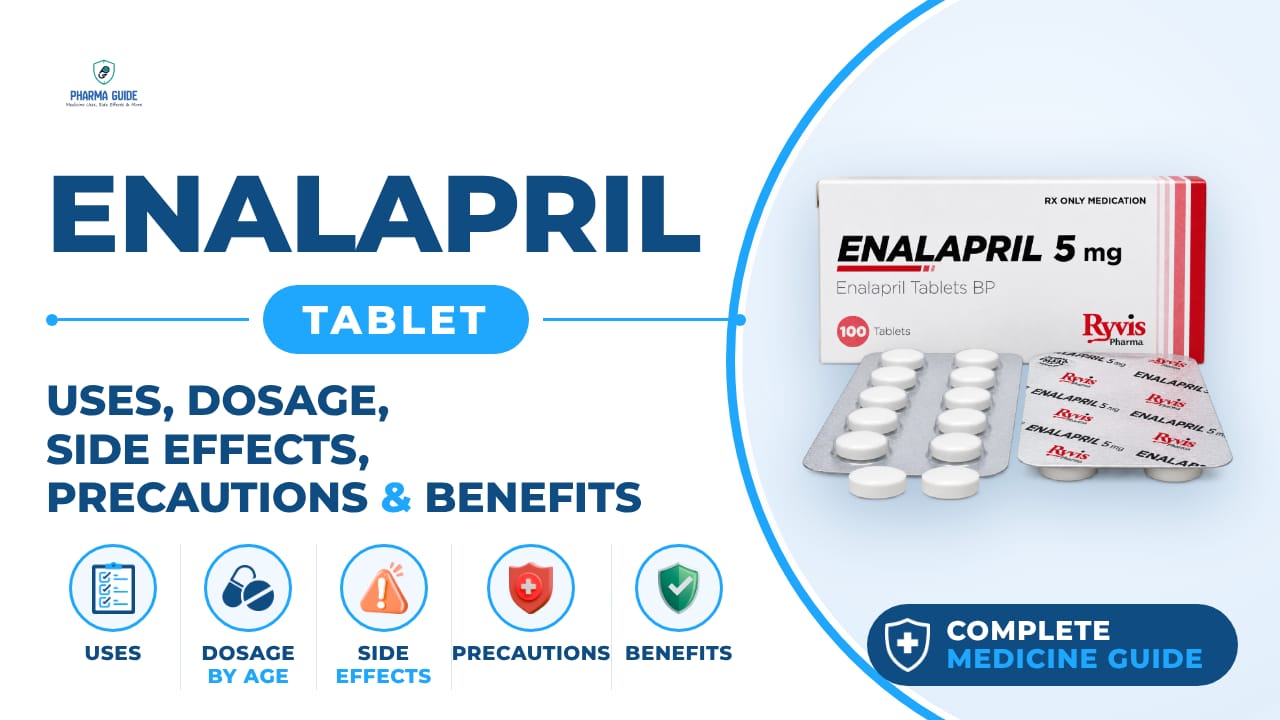
| Generic name | Enalapril maleate |
|---|---|
| Drug class | Angiotensin Converting Enzyme (ACE) Inhibitor |
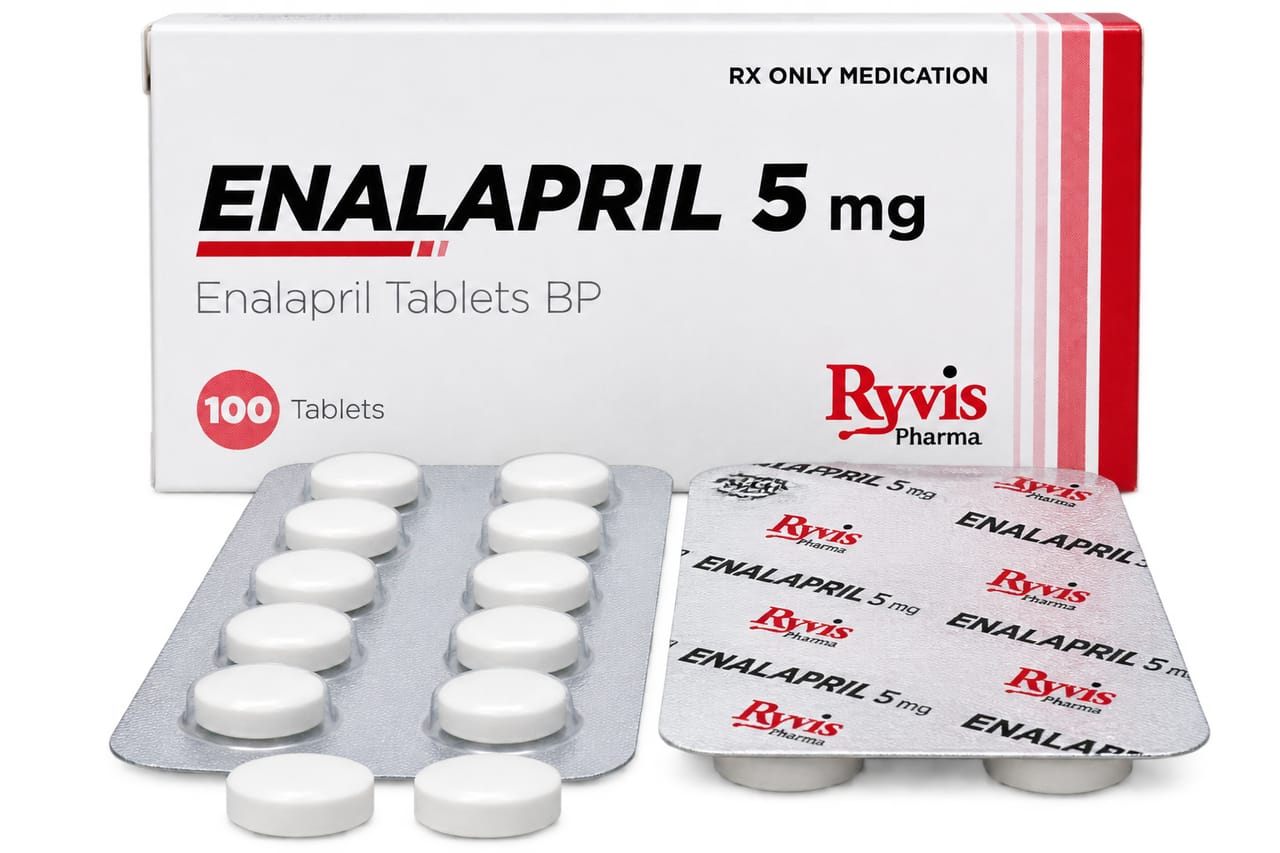
| Forms | Tablet (2.5 mg, 5 mg, 10 mg, 20 mg), Oral liquid/solution, Intravenous injection |
Quick overview
Enalapril Tablet, generically known as enalapril maleate, is a prescription angiotensin converting enzyme (ACE) inhibitor. It is used to reduce high blood pressure and to treat symptomatic congestive heart failure, as well as in clinically stable patients with reduced heart pumping function. It works by blocking a substance that tightens blood vessels, allowing them to relax and lowering blood pressure and the workload on the heart.
What is Enalapril Tablet
Enalapril is a prescription medicine belonging to a class of medicines called angiotensin converting enzyme (ACE) inhibitors. It lowers blood pressure by blocking a naturally occurring substance called angiotensin II, which normally tightens blood vessels.
Enalapril Tablet uses
- Reducing high blood pressure (hypertension)
- Treating symptomatic congestive heart failure
- Treating clinically stable patients with reduced heart pumping function (left ventricular dysfunction) even without symptoms
Benefits of Enalapril Tablet
- Helps control high blood pressure, which can otherwise damage the brain, heart, and kidneys over time
- In heart failure, can improve symptoms, increase survival, and decrease the frequency of hospitalization
- Widens blood vessels so the heart does not have to pump as hard to move blood around the body
How Enalapril Tablet works
Enalapril blocks an enzyme that makes a substance called angiotensin II, which normally tightens blood vessels. By blocking this enzyme, enalapril allows blood vessels to relax, which lowers blood pressure and reduces the workload on the heart.
Enalapril Tablet dosage
Take this medicine exactly as your doctor ordered. It can be taken with or without food since absorption is not affected by food. Try to take your medicine every day at the same time so it is easier to remember your doses. Tablets should not be split. Swallow the tablet with a glass of water.
If you miss a dose, take it as soon as possible; however, if more than six hours have passed since the missed dose, skip it and go back to your regular schedule without doubling the dose. Keep taking this medicine regularly even if you feel well, since high blood pressure often has no symptoms.
Children may be given this medicine starting with a lower dose based on body weight, adjusted according to blood pressure response. Elderly patients may start on a lower dose and may respond more strongly to the medicine than younger patients.
| Age group | Dose |
|---|---|
| Under 1 month | Not routinely recommended |
| 1 month–16 years | Doctor-directed dosing required |
| 17 years & older | 5 mg once daily initially |
| Adults | 5–10 mg once daily initially; usual maintenance 10–40 mg/day |
| Older adults | Usually lower starting dose, especially with kidney impairment |
Available forms and strengths
- Tablet (2.5 mg, 5 mg, 10 mg, 20 mg)
- Oral liquid/solution
- Intravenous injection
Side effects of Enalapril Tablet
Common
- Dry cough, sore throat
- Fatigue
- Dizziness/lightheadedness, especially after the first dose or when the dose is increased
- Headache
- Rash/itching
- Nausea, vomiting, diarrhea
- Low blood pressure
- Mild stomach upsets such as feeling sick, diarrhea, or stomach pains
- Muscle cramps
Serious
- Allergic reaction/angioedema (sudden difficulty breathing or swallowing, swelling of face, eyes, lips, tongue, throat, hands or feet)
- Chest pain
- Shortness of breath
- Lasting cough
- Flu-like symptoms (fever, malaise, muscle pain, rash, itching, abdominal pain, nausea, vomiting, diarrhea, jaundice, loss of appetite)
- Liver impairment such as jaundice, dark/brown urine
- Abdominal pain
- Low blood sugars in diabetic patients
- Loss of appetite
- Fast or irregular heartbeat, fainting
- Signs of dehydration such as nausea, vomiting, muscle cramps, headache, drowsiness, and tiredness
- Passing less urine than normal (kidney problems)
- Signs of frequent or worrying infections such as fever, severe chills, sore throat, or mouth ulcers
Warnings and precautions
- Do not use this medicine during pregnancy. It can cause injury or even death to the developing baby. If you become pregnant while taking this medicine, stop taking it and contact your doctor right away.
- This medicine is not recommended while breastfeeding because small amounts pass into breast milk.
- Tell your doctor if you have kidney disease or are on dialysis, as your dose may need adjustment and your kidney function should be checked regularly.
- Use this medicine with particular caution if you have liver disease. Tell your doctor about any unexplained symptoms, especially in the first weeks or months of treatment, as liver tests may be needed.
- If you drink alcohol, dizziness or lightheadedness caused by this medicine may be worse.
- This medicine may cause dizziness or drowsiness. Before driving a car, operating machinery, or doing anything that could be dangerous, wait until you know how the medicine affects you.
- This medicine can cause swelling of the face, lips, tongue, or throat (angioedema), which may be life-threatening. If this happens, stop the medicine and get medical help immediately.
- Black patients may have a higher risk of angioedema with this type of medicine.
- Do not take this medicine together with a medicine containing aliskiren if you have diabetes or kidney disease, as this combination is not recommended and can increase risk of low blood pressure, fainting, stroke, high potassium, and kidney problems.
- Do not take this medicine within 36 hours of taking or switching to a medicine containing sacubitril, as combining them can increase the risk of angioedema.
- This medicine can cause a sudden drop in blood pressure, especially after the first dose or when the dose is increased, particularly in people also taking water pills or who are dehydrated.
- This medicine can rarely cause a persistent dry cough that goes away after stopping or lowering the dose.
- People with diabetes taking insulin or oral diabetes medicines should watch closely for low blood sugar, especially during the first month of combined treatment.
- Do not use potassium supplements or salt substitutes containing potassium unless your doctor has told you to, since this medicine can raise blood potassium levels, which can cause serious heart rhythm problems.
Storage
- Store at controlled room temperature between 15°C and 30°C
- Keep container tightly closed
- Protect from moisture
- Keep away from heat and direct light, and out of damp places such as the bathroom or kitchen
- Tablets should be discarded after 6 months of opening the bottle
- Keep all medicines out of the reach and sight of children
When to see a doctor
- Get emergency help right away if you notice swelling of the face, lips, tongue, or throat, or sudden difficulty breathing or swallowing.
- Stop taking the medicine and call your doctor right away if you become pregnant while taking it.
- Seek medical attention if you feel like you might faint, have chest pain, an irregular or fast heartbeat, or shortness of breath.
- Contact your doctor immediately if you notice yellowing of the skin or eyes, dark or brown urine, or other signs of liver problems.
- Tell your doctor right away if you notice signs of high potassium such as nausea, weakness, tingling, chest pain, or irregular heartbeats.
- Contact your doctor if you have ongoing vomiting or diarrhea, or if you are sweating much more than usual, since this can cause dehydration, very low blood pressure, or kidney problems.
- If you think you have taken too much of this medicine, contact your doctor, pharmacist, hospital emergency department, or your regional poison control center immediately, even if you have no symptoms.
Alternatives
- Vasotec
- Epaned
- Lisinopril
- Perindopril
Watch the video
FAQs
What is Enalapril Tablet used for?
It is used for reducing high blood pressure, treating symptomatic congestive heart failure, and treating clinically stable patients with reduced heart pumping function even without symptoms.
How does Enalapril Tablet work?
It blocks an enzyme that makes angiotensin II, a substance that normally tightens blood vessels. This allows blood vessels to relax, lowering blood pressure and reducing the workload on the heart.
What is the dosage of Enalapril Tablet for adults?
Adults typically start with 5–10 mg once daily, with a usual maintenance dose of 10–40 mg per day, taken as directed by a doctor with or without food.
What are the common side effects of Enalapril Tablet?
Common side effects include dry cough, sore throat, fatigue, dizziness or lightheadedness, headache, rash or itching, nausea, vomiting, diarrhea, low blood pressure, and muscle cramps.
Can Enalapril Tablet be taken during pregnancy?
No, it should not be used during pregnancy as it can cause injury or even death to the developing baby. If you become pregnant while taking it, stop and contact your doctor right away.
General information, not medical advice
Your prescriber and the leaflet in your pack know your situation. This page does not.
- Follow your prescriber and the leaflet
- Don't start, stop, or change a dose on your own
- Doses and warnings differ by country and product
Sources
- Priva-ENALAPRIL Product Monograph, Pharmapar Inc., February 17, 2021
- ENALAPRIL Product Monograph, Sivem Pharmaceuticals ULC, January 25, 2019
- Drugs.com Enalapril consumer and professional information
- Enalapril Sandoz Consumer Medicine Information, Australian Commission on Safety and Quality in Health Care
Video
Related medicines
Benazepril Tablet: Uses, Dosage, Side Effects, Precautions and Alternates
Angiotensin Converting Enzyme (ACE) Inhibitor
Benazepril Tablet is an ACE inhibitor used to treat high blood pressure in adults. Learn its uses, dosage, side effects, and warnings here.
Perindopril Tablet: Uses, Dosage, Side Effects, Precautions and Alternates
Angiotensin-converting enzyme (ACE) inhibitor
Perindopril Tablet is an ACE inhibitor used for high blood pressure, heart failure, and cardiac risk reduction. Learn dosage, side effects, and precautions.