
Safety
General information, not medical advice
Your prescriber and the leaflet in your pack know your situation. This page does not.
- Follow your prescriber and the leaflet
- Don't start, stop, or change a dose on your own
- Doses and warnings differ by country and product
Enbrel Injection: Uses, Dosage, Side Effects, Precautions and Alternates
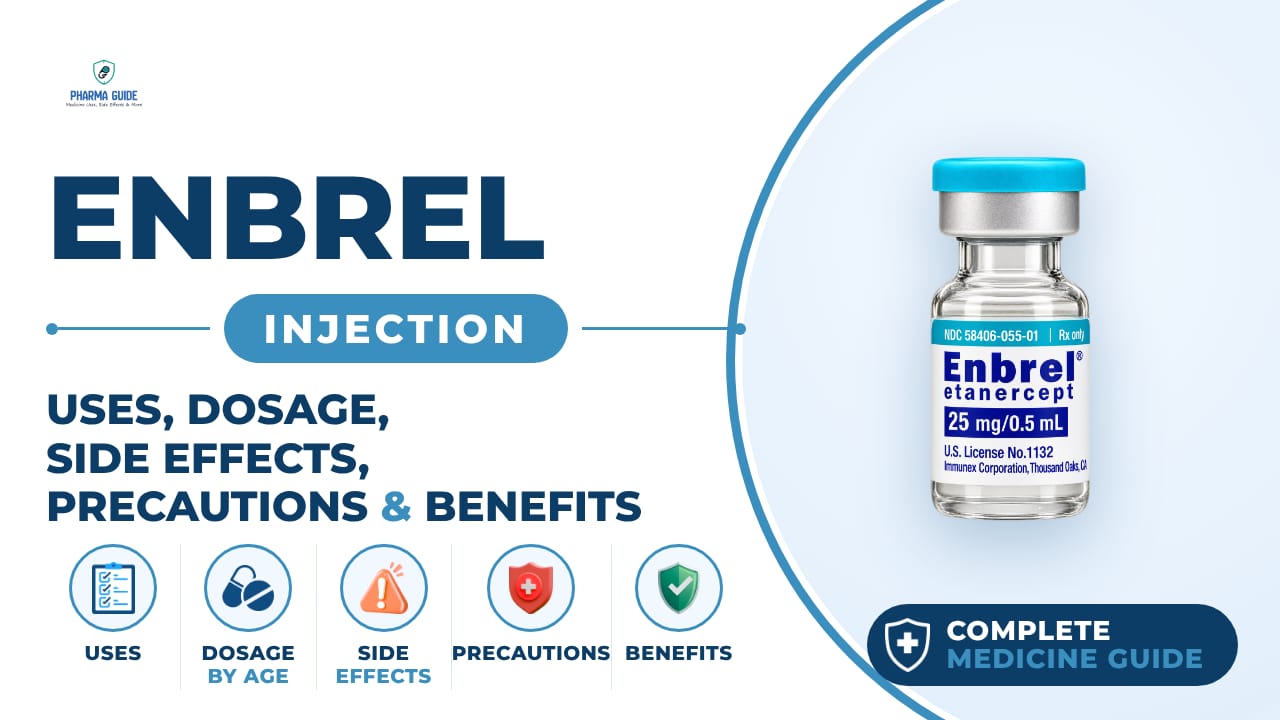
| Generic name | etanercept |
|---|---|
| Drug class | Antirheumatics, TNF alfa inhibitors |
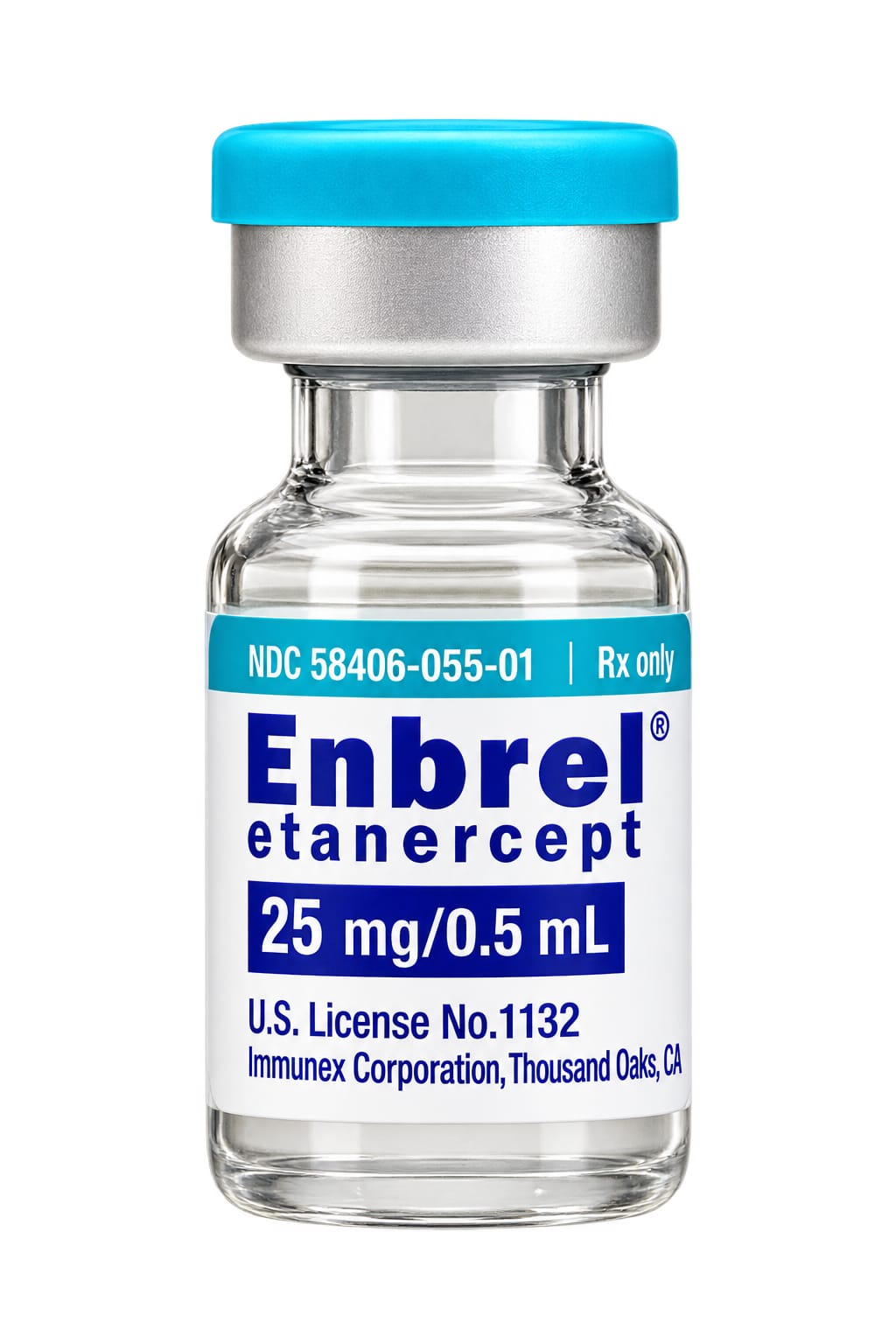
| Forms | Autoinjector (50 mg/mL), Multi-dose vial (25 mg), Pre-filled syringe (25 mg/0.5 mL), Pre-filled syringe (50 mg/mL), Single-dose vial (25 mg, discontinued), Single-dose vial (25 mg/0.5 mL) |
Quick overview
Enbrel Injection (etanercept) is a biologic medicine belonging to the antirheumatics, TNF alfa inhibitor class. It works by blocking a protein called tumor necrosis factor (TNF), which the immune system overproduces in autoimmune diseases, causing it to attack healthy tissue. Enbrel is used to treat conditions such as rheumatoid arthritis, psoriatic arthritis, ankylosing spondylitis, and plaque psoriasis, and it may help relieve inflammation and slow joint damage. It is given as an injection under the skin, and it requires monitoring for infections and other serious risks.
What is Enbrel Injection
Enbrel is a biologic medicine that blocks a protein called tumor necrosis factor (TNF). TNF is made by the immune system to help fight infections, but in people with autoimmune diseases, the body makes too much of it and attacks healthy tissue.
Enbrel Injection uses
- Rheumatoid arthritis
- Psoriatic arthritis
- Ankylosing spondylitis
- Preventing joint damage caused by these conditions
- Polyarticular juvenile idiopathic arthritis and juvenile psoriatic arthritis in children at least 2 years old
- Plaque psoriasis in adults and children at least 4 years old
- Sometimes used together with methotrexate for rheumatoid arthritis and psoriatic arthritis
Benefits of Enbrel Injection
- Reduces inflammation, which helps relieve joint pain, stiffness, and swelling
- May slow or stop joint damage from getting worse
- Can improve mobility, energy, and daily functioning
- Some patients notice improvement within 2 to 4 weeks of starting treatment
How Enbrel Injection works
Enbrel works by lowering the amount of TNF, a protein the immune system makes to fight infections. In autoimmune diseases, the body produces too much TNF and attacks its own healthy cells, so reducing TNF helps calm this attack.
Enbrel Injection dosage
This medicine is injected under the skin. A healthcare provider may teach you how to give yourself the injection, and you should carefully follow the written instructions that come with your medicine. Do not shake the medicine before use. Only prepare an injection right before you plan to give it. Do not use the medicine if it looks cloudy, has changed color, or has particles in it — call your pharmacist for a replacement. You may need to mix the medicine with a liquid before use; make sure you understand how to do this correctly.
In children, the dose is based on weight, so the amount needed may change if the child gains or loses weight. If you have surgery planned, tell your surgeon ahead of time that you are using this medicine. Call your doctor for instructions if you miss a dose rather than guessing on your own.
Use exactly as prescribed by your doctor or pharmacist.
Available forms and strengths
- Autoinjector (50 mg/mL)
- Multi-dose vial (25 mg)
- Pre-filled syringe (25 mg/0.5 mL)
- Pre-filled syringe (50 mg/mL)
- Single-dose vial (25 mg, discontinued)
- Single-dose vial (25 mg/0.5 mL)
Side effects of Enbrel Injection
Common
- Pain, swelling, itching, or redness where the medicine was injected
- Headache
- Cold symptoms such as stuffy nose, sneezing, or sore throat
- Upper respiratory infections (sinus infections)
Serious
- Signs of allergic reaction such as hives, trouble breathing, or swelling of the face, lips, tongue, or throat
- Signs of infection such as fever, chills, cough, sweating, body aches, skin sores or redness, diarrhea, weight loss, burning when urinating, coughing up blood, or feeling very tired or short of breath
- Pale skin, easy bruising or bleeding
- Pain, redness, or swelling at the injection site lasting longer than 5 days
- Signs of lymphoma such as fever, night sweats, weight loss, stomach pain or swelling, or swollen glands
- Signs of tuberculosis such as cough, night sweats, loss of appetite, weight loss, or feeling very tired
- New or worsening psoriasis - skin redness, scaly patches, or raised bumps filled with pus
- Nerve problems such as dizziness, numbness or tingling, vision problems, or weakness in the arms or legs
- Signs of heart failure such as shortness of breath or swelling in the lower legs
- Lupus-like syndrome - joint pain or swelling, chest discomfort, shortness of breath, or a skin rash on the cheeks or arms that worsens in sunlight
- Liver problems - right-sided upper stomach pain, vomiting, tiredness, loss of appetite, or yellowing of the skin or eyes
Warnings and precautions
- This medicine may increase the risk of certain cancers, including a rare and sometimes fatal lymphoma, especially in teenagers and young adults using this or similar medicines for Crohn's disease or ulcerative colitis.
- This medicine can weaken your immune system, leading to serious and sometimes fatal infections.
- Do not use this medicine if you are allergic to etanercept or have a severe infection such as sepsis.
- Before starting, tell your doctor about any history of tuberculosis exposure, travel to areas with higher infection risk, or household contacts with tuberculosis.
- Children should be up to date on all childhood vaccines before starting this medicine, and live vaccines should not be given while using it.
- Do not receive live vaccines while using this medicine, since they may not work as well and may not fully protect you.
- Avoid being near people who are sick or have infections, and call your doctor if you are exposed to chicken pox.
- Tell your doctor if you are pregnant or planning to become pregnant, since your name may be listed on a pregnancy registry to track effects on the baby.
- The medicine can pass into breast milk, so you and your doctor should decide whether you will use this medicine or breastfeed, not both.
- If you have ever had hepatitis B, this medicine can cause the virus to become active again or get worse, so you may need regular liver function tests.
Storage
- Store Enbrel in the refrigerator at 36°F to 46°F (2°C to 8°C).
- Store Enbrel in the original carton to protect from light or physical damage.
- If needed, you may store the unmixed Enbrel multiple-dose vial and diluent syringe (dose tray) at room temperature between 68°F to 77°F (20°C to 25°C) for up to 14 days. You may store the Enbrel prefilled syringe, autoinjector, single-dose vial, or cartridge at room temperature for up to 30 days.
- Once an Enbrel prefilled syringe or an unmixed multiple-dose vial has reached room temperature, do not put it back in the refrigerator.
- Throw away any multiple-dose vial dose tray that has been stored at room temperature after 14 days, and any single-dose prefilled syringe, autoinjector, vial, or cartridge after 30 days.
- A mixed (reconstituted) Enbrel multiple-dose vial should be used right away or kept in the refrigerator at 36°F to 46°F (2°C to 8°C) for up to 14 days.
- Do not store the Enbrel in extreme heat or cold. For example, avoid storing Enbrel in your vehicle's glove box or trunk.
- Do not use after the expiration date on the label has passed.
- Do not freeze.
- Do not shake.
- Each cartridge, injection pen, or prefilled syringe is for one use only. Throw it away after one use, even if there is still medicine left inside.
- Use a needle and syringe only once and then place them in a puncture-proof 'sharps' container. Follow state or local laws about how to dispose of this container. Keep it out of the reach of children and pets.
When to see a doctor
- Get emergency help right away if you have signs of an allergic reaction such as hives, trouble breathing, or swelling of the face, lips, tongue, or throat.
- Call your doctor right away if you have signs of infection such as fever, chills, cough, sweating, body aches, skin sores or redness, diarrhea, burning when you urinate, or feeling very tired or short of breath.
- Call your doctor if you notice fever, night sweats, itching, loss of appetite, weight loss, tiredness, feeling full quickly after eating, upper stomach pain that spreads to the shoulder, nausea, easy bruising or bleeding, pale skin, light-headedness, rapid heart rate, dark urine, clay-colored stools, or yellowing of the skin or eyes.
- If an injection site stays painful, red, or swollen for more than 5 days, contact your doctor.
- Seek emergency help or contact a poison control center right away if you think you have used too much of this medicine.
Alternatives
- Certolizumab pegol
- Golimumab
- Infliximab
Watch the video
FAQs
What is Enbrel Injection used for?
Enbrel is used to treat rheumatoid arthritis, psoriatic arthritis, ankylosing spondylitis, polyarticular juvenile idiopathic arthritis, juvenile psoriatic arthritis, and plaque psoriasis. It may also help prevent joint damage caused by these conditions and is sometimes used with methotrexate.
How does Enbrel Injection work?
Enbrel works by lowering the amount of tumor necrosis factor (TNF), a protein the immune system makes to fight infections. In autoimmune diseases, the body produces too much TNF and attacks its own healthy cells, so reducing TNF helps calm this attack.
How is Enbrel Injection given?
Enbrel is injected under the skin. A healthcare provider may teach you how to give yourself the injection, and you should follow the written instructions carefully. Do not shake the medicine, and only prepare an injection right before you plan to give it.
What are the common side effects of Enbrel Injection?
Common side effects include pain, swelling, itching, or redness where the medicine was injected, headache, cold symptoms like stuffy nose or sore throat, and upper respiratory infections such as sinus infections.
How should Enbrel Injection be stored?
Enbrel should be stored in the refrigerator at 36°F to 46°F in its original carton. Some forms can be kept at room temperature for a limited time—up to 14 days for the multi-dose vial dose tray or up to 30 days for prefilled syringes, autoinjectors, single-dose vials, or cartridges. Do not freeze or shake it.
General information, not medical advice
Your prescriber and the leaflet in your pack know your situation. This page does not.
- Follow your prescriber and the leaflet
- Don't start, stop, or change a dose on your own
- Doses and warnings differ by country and product
Sources
Video
Related medicines

Injectafer Injection: Uses, Dosage, Side Effects, Precautions and Alternates
Iron products
Injectafer (ferric carboxymaltose) treats iron deficiency anemia and heart failure-related iron deficiency via IV. Learn uses, dosage, side effects, and

Gliclazide Tablet: Uses, Dosage, Side Effects, Precautions and Alternates
Sulfonylurea (hypoglycemic/antidiabetic agent)
Gliclazide Tablet is a sulfonylurea for type 2 diabetes that boosts insulin release. Learn about dosage, side effects, warnings, and precautions.