
Safety
General information, not medical advice
Your prescriber and the leaflet in your pack know your situation. This page does not.
- Follow your prescriber and the leaflet
- Don't start, stop, or change a dose on your own
- Doses and warnings differ by country and product
Enoxaparin Injection: Uses, Dosage, Side Effects, Precautions and Alternates
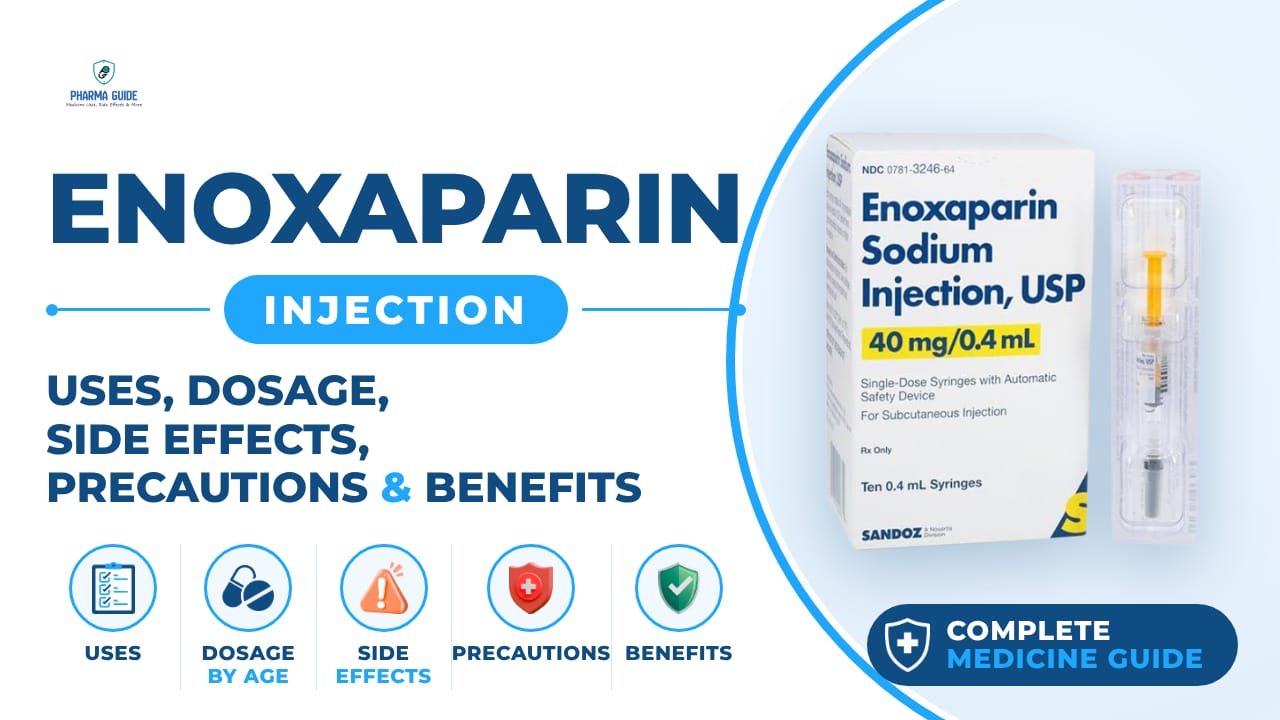
| Generic name | Enoxaparin sodium |
|---|---|
| Drug class | Low molecular weight heparin (LMWH), anticoagulant |
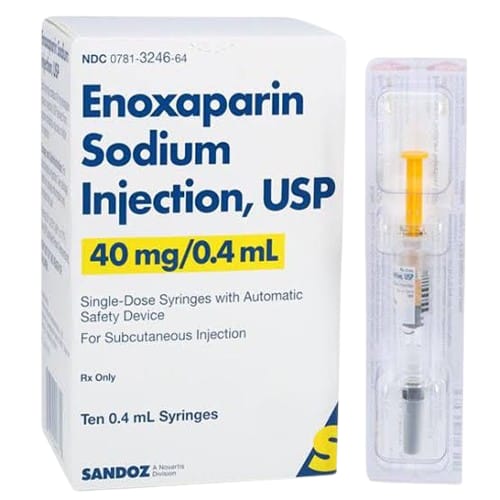
| Forms | Injection (prefilled syringes), Tablet, Gel |
Quick overview
Enoxaparin Injection (enoxaparin sodium) is a low molecular weight heparin (LMWH) anticoagulant, or blood thinner, used to prevent and treat harmful blood clots. It is used after certain surgeries, in patients with restricted mobility, for deep vein thrombosis and pulmonary embolism, and in certain heart conditions. It works by blocking factor Xa, a substance needed for blood clotting.
What is Enoxaparin Injection
Enoxaparin is an anticoagulant medicine, also known as a blood thinner. It is a type of heparin that is used to prevent and treat harmful blood clots.
Enoxaparin Injection uses
- Prevention of deep vein thrombosis (DVT) after hip replacement, knee replacement, or abdominal surgery
- Prevention of DVT in medical patients with severely restricted mobility during acute illness
- Treatment of acute deep vein thrombosis with or without pulmonary embolism (used with warfarin)
- Prevention of complications from unstable angina and certain types of heart attack (non-Q-wave myocardial infarction), used with aspirin
- Treatment of acute ST-segment elevation heart attack (STEMI), managed medically or with a procedure to open blocked arteries (PCI)
Benefits of Enoxaparin Injection
- Helps reduce the risk of stroke or heart attack by preventing harmful blood clots
- Reduces the risk of blood clots forming after certain surgeries
How Enoxaparin Injection works
Enoxaparin works by blocking a substance in the blood called factor Xa, which is needed for blood to clot. This helps keep the blood flowing smoothly and lowers the activity of clotting proteins.
Enoxaparin Injection dosage
This medicine is injected under the skin (subcutaneously), usually once or twice a day, in the stomach area at least 2 inches away from the belly button. Do not inject into a muscle. Change the injection site each time between the left and right sides of the abdomen to lessen injury under the skin. To lessen bruising, do not rub the injection site after the injection.
Check the liquid before use; do not use if it is discolored, cloudy, or contains particles. Do not remove any air bubbles from the prefilled syringe before injecting, as this can cause loss of medicine. It may also be given as an injection into a vein by a healthcare professional.
Use this medicine regularly, at the same time each day, to get the most benefit. Patients may self-inject only after their doctor determines it is appropriate and provides proper training.
| Age group | Dose |
|---|---|
| Newborns/infants | Specialist-directed dosing only |
| Children & adolescents | Weight- and indication-based; specialist supervision required |
| Adults — DVT/PE treatment | 1 mg/kg every 12 hours or 1.5 mg/kg once daily, depending on the situation |
| Adults — DVT prevention | 40 mg once daily in many medical patients |
Available forms and strengths
- Injection (prefilled syringes)
- Tablet
- Gel
Side effects of Enoxaparin Injection
Common
- Mild irritation, pain, bruising, redness, and swelling at the injection site
- Tiredness
- Fever
- Stomach discomfort
- Nausea
- Rash
- Increase in liver enzymes
- Increase in blood platelet count
- Back pain
- Dizziness
- Fast heartbeat
- Diarrhoea
Serious
- Unusual pain, swelling, or discomfort
- Unusual or prolonged bleeding
- Unusual or easy bruising
- Dark urine
- Black stools
- Severe headache
- Confusion
- Vision changes
- Unusual dizziness
- Fainting
- Seizures
- Weakness
- Numbness
- Bleeding gums
- Increased menstrual flow
- Collection of blood under the skin
- Swollen ankles or feet
- Blood in urine
- Signs of a serious allergic reaction such as rash, itching or swelling of the face, tongue, or throat, severe dizziness, or trouble breathing
Warnings and precautions
- This medicine is generally not recommended during pregnancy and should be used only if clearly needed. Your doctor will weigh the benefits and risks before prescribing it.
- It is not known if this medicine passes into breast milk. Talk to your doctor before breastfeeding while using this medicine.
- This medicine may increase the risk of bleeding if you have kidney problems. Your doctor may need to adjust your dose or monitor you more closely.
- This medicine should be used with caution if you have liver problems, as it may increase liver enzyme levels and the risk of bleeding.
- Limit alcohol while using this medicine because it may increase the risk of stomach bleeding.
- People using this medicine may bleed near the spinal cord after certain spinal procedures such as epidural anesthesia or spinal puncture. This bleeding can cause long-lasting or permanent paralysis.
- The risk of spinal bleeding is higher if you have a deformed spine, have had previous spinal procedures or surgery, or are taking other drugs that increase bleeding risk, such as antiplatelet drugs, other blood thinners, or NSAIDs like ibuprofen.
- This medicine can cause serious bleeding, including major bleeding in the retroperitoneal area or brain, and some cases have been fatal.
- This medicine can cause a serious drop in platelet count called heparin-induced thrombocytopenia (HIT), which can lead to organ damage, limb problems, or death.
- This medicine cannot be swapped, unit for unit, with heparin or other low molecular weight heparins, since they are made differently and dosed differently.
- Pregnant women with mechanical prosthetic heart valves may be at higher risk of blood clots forming on the valve while using this medicine, which can lead to serious harm to the mother or baby.
Storage
- Store at room temperature away from light
- Store in the original carton or packaging until ready to use
- Discard the multiple dose vials 28 days after the first use
- Keep all medications away from children and pets
- Do not flush medications down the toilet or pour them into a drain unless instructed to do so
- Properly discard this product when it is expired or no longer needed
When to see a doctor
- Tell your doctor right away if you notice back pain, numbness, tingling, or weakness in your legs, or loss of control of your bowels or bladder, as these may be signs of bleeding near the spinal cord.
- Get medical help right away if you notice signs of a serious allergic reaction, such as rash, itching or swelling of the face, tongue, or throat, severe dizziness, or trouble breathing.
- Tell your doctor right away if you have any serious signs of bleeding, including unusual pain, swelling or discomfort, unusual or prolonged bleeding, easy bruising, dark urine, black stools, severe headache, confusion, vision changes, unusual dizziness, fainting, seizures, weakness, or numbness.
- If someone has taken too much of this medicine and has serious symptoms such as passing out or trouble breathing, seek emergency medical help immediately. Otherwise, call your local poison control center right away.
Alternatives
- Warfarin
- Lovenox
- Unfractionated heparin
- Fondaparinux
Watch the video
FAQs
What is Enoxaparin Injection used for?
It is used to prevent DVT after hip, knee, or abdominal surgery, in medical patients with restricted mobility, to treat DVT with or without pulmonary embolism, and to prevent complications from unstable angina, certain heart attacks, and STEMI.
How is Enoxaparin Injection given?
It is injected under the skin, usually once or twice a day, in the stomach area at least 2 inches from the belly button, alternating sides each time. It should not be injected into a muscle, and air bubbles in prefilled syringes should not be removed before injecting.
What are the common side effects of Enoxaparin Injection?
Common side effects include mild irritation, pain, bruising, redness and swelling at the injection site, tiredness, fever, stomach discomfort, nausea, rash, increased liver enzymes, increased platelet count, back pain, dizziness, fast heartbeat, and diarrhoea.
What are serious risks associated with Enoxaparin Injection?
Serious risks include unusual bleeding or bruising, bleeding near the spinal cord after spinal procedures which can cause paralysis, major bleeding in the retroperitoneal area or brain, and a serious drop in platelet count called heparin-induced thrombocytopenia (HIT).
Can Enoxaparin Injection be used during pregnancy?
It is generally not recommended during pregnancy and should be used only if clearly needed, with your doctor weighing the benefits and risks. Pregnant women with mechanical prosthetic heart valves may be at higher risk of blood clots forming on the valve.
General information, not medical advice
Your prescriber and the leaflet in your pack know your situation. This page does not.
- Follow your prescriber and the leaflet
- Don't start, stop, or change a dose on your own
- Doses and warnings differ by country and product
Sources
Video
Related medicines

Injectafer Injection: Uses, Dosage, Side Effects, Precautions and Alternates
Iron products
Injectafer (ferric carboxymaltose) treats iron deficiency anemia and heart failure-related iron deficiency via IV. Learn uses, dosage, side effects, and

Gliclazide Tablet: Uses, Dosage, Side Effects, Precautions and Alternates
Sulfonylurea (hypoglycemic/antidiabetic agent)
Gliclazide Tablet is a sulfonylurea for type 2 diabetes that boosts insulin release. Learn about dosage, side effects, warnings, and precautions.