
Safety
General information, not medical advice
Your prescriber and the leaflet in your pack know your situation. This page does not.
- Follow your prescriber and the leaflet
- Don't start, stop, or change a dose on your own
- Doses and warnings differ by country and product
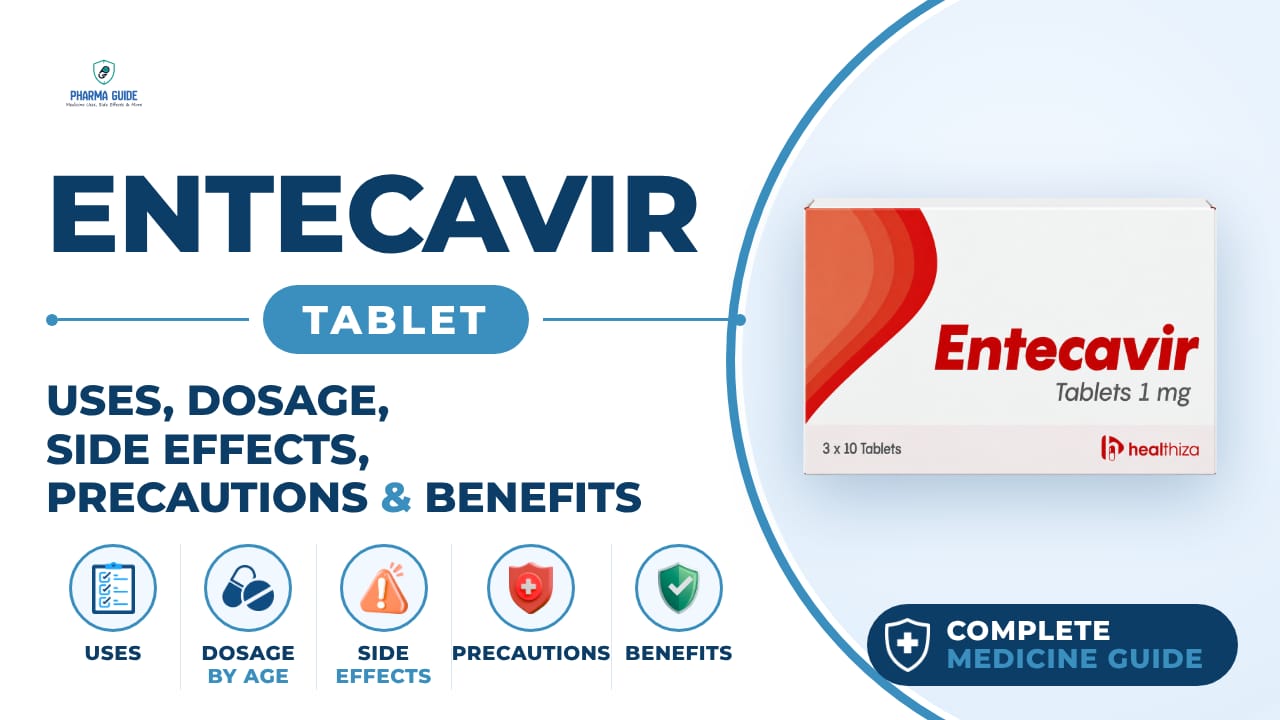
Entecavir Tablet: Uses, Dosage, Side Effects, Precautions and Alternates
| Generic name | Entecavir |
|---|---|
| Drug class | Hepatitis B virus nucleoside analogue reverse transcriptase inhibitor (antiviral) |
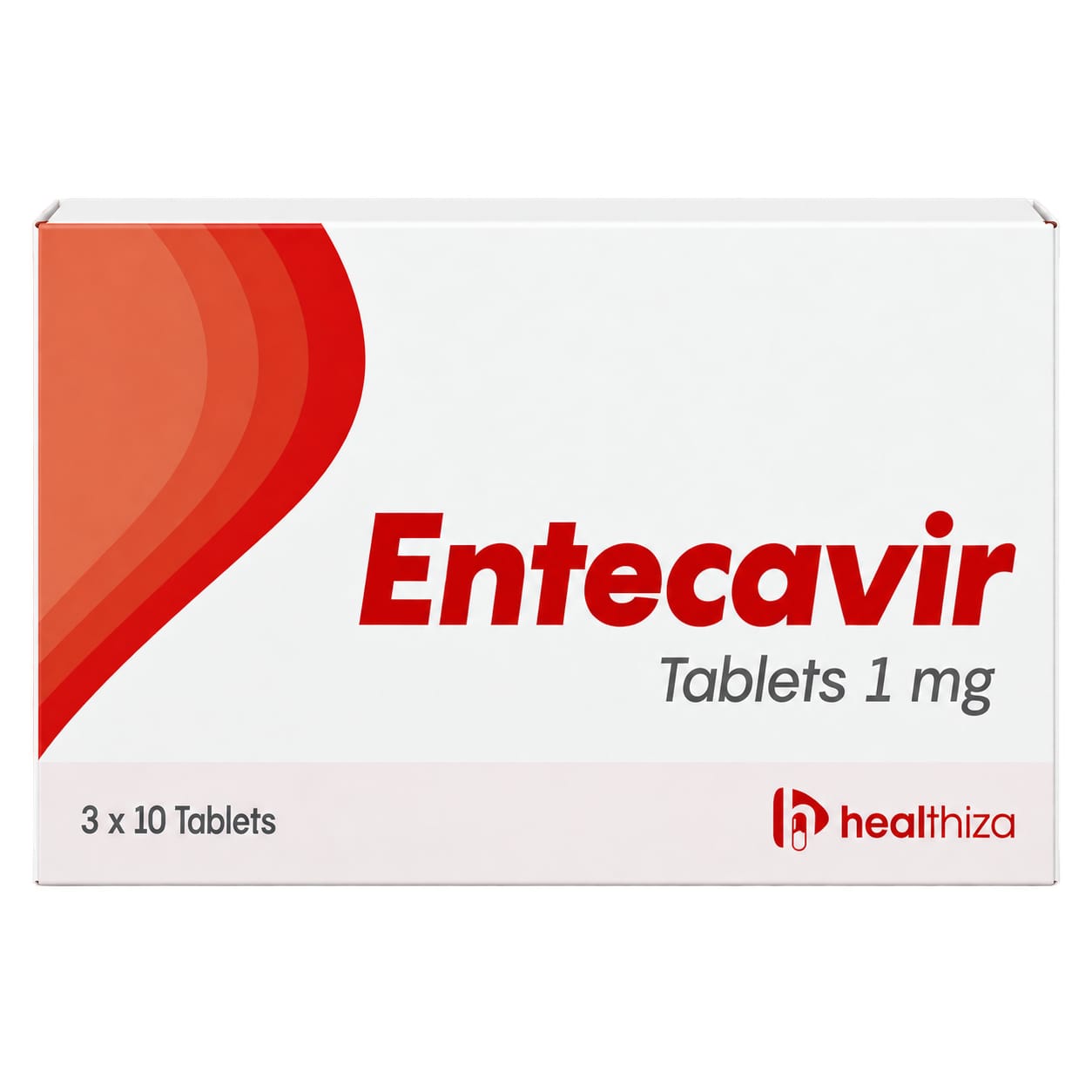
| Forms | Tablet (0.5 mg and 1 mg, film-coated), Oral solution |
Quick overview
Entecavir Tablet is a prescription antiviral medicine used to treat long-term (chronic) hepatitis B virus infection in adults and children at least 2 years of age. It does not cure hepatitis B, but it can lower the amount of virus in the body and help improve liver health. It works by blocking an enzyme the virus needs to multiply.
What is Entecavir Tablet
Entecavir is a prescription antiviral medicine used to treat long-term (chronic) hepatitis B virus infection. It does not cure hepatitis B, but it can lower the amount of virus in the body and help improve liver health.
Entecavir Tablet uses
- Treatment of chronic hepatitis B virus infection in adults and children at least 2 years of age who have signs of active viral replication and either persistently elevated liver enzymes (ALT or AST) or active liver disease seen on biopsy
Benefits of Entecavir Tablet
- May lower the amount of hepatitis B virus in the body
- May lower the ability of the virus to multiply and infect new liver cells
- May improve the condition of the liver
- Treats chronic hepatitis B
- Reduces HBV replication
- Lowers HBV DNA levels
- Helps reduce liver inflammation
- May slow progression of chronic liver disease
How Entecavir Tablet works
Entecavir blocks an enzyme the hepatitis B virus needs to copy itself, which stops the virus from multiplying.
Entecavir Tablet dosage
Take on an empty stomach, at least 2 hours after a meal and at least 2 hours before the next meal. Take exactly as prescribed, on a regular schedule, and do not skip doses. Do not stop taking this medicine without first talking to your healthcare provider, since stopping can cause your hepatitis B to get worse.
If you miss a dose, take it as soon as you remember, then take your next dose at its regular time; if it is almost time for the next dose, skip the missed dose and do not take two doses at once. Do not let your supply run out; contact your healthcare provider or pharmacy for a refill before you run out. The oral solution and tablet form can be used interchangeably.
| Age group | Dose |
|---|---|
| Under 2 years | Safety and effectiveness are not established |
| 12–17 years | Commonly 0.5 mg once daily; selected resistant cases may require 1 mg once daily |
| 18–64 years | Usually 0.5 mg once daily; 1 mg once daily in selected lamivudine-resistant or decompensated-liver-disease cases |
Available forms and strengths
- Tablet (0.5 mg and 1 mg, film-coated)
- Oral solution
Side effects of Entecavir Tablet
Common
- Headache
- Tiredness (fatigue)
- Dizziness
- Nausea
- Diarrhea
- Indigestion (dyspepsia)
- Vomiting
- Sleepiness
- Trouble sleeping (insomnia)
Serious
- Severe worsening of hepatitis B after stopping treatment
- Lactic acidosis (buildup of acid in the blood)
- Severe liver problems including liver enlargement (hepatomegaly) and fatty liver (steatosis)
- Development of resistance to HIV medicines in people with untreated HIV/HBV co-infection
- Allergic reaction (anaphylactoid reaction)
- Hair loss (alopecia)
- Rash
- Low white blood cell counts (leukopenia, neutropenia)
- Low platelet count
Warnings and precautions
- Stopping entecavir can cause a sudden, severe worsening of hepatitis B, which may happen even months after stopping. Your liver function should be checked closely for several months after stopping the medicine.
- If you have HIV along with hepatitis B, entecavir is not recommended unless you are also taking a full HIV treatment regimen, because it could make the HIV virus resistant to certain HIV medicines.
- Entecavir and similar medicines have caused a serious and sometimes fatal condition involving buildup of acid in the blood and liver swelling with fat buildup. You may be more likely to develop lactic acidosis or serious liver problems if you are female, very overweight, or have taken this type of medicine for a long time.
- Entecavir does not stop you from spreading hepatitis B to others through sex, sharing needles, or contact with blood.
- It is not known if entecavir is safe to use during pregnancy. Talk with your healthcare provider about the risks and benefits, and about enrolling in the pregnancy exposure registry if you take entecavir while pregnant.
- It is not known whether entecavir passes into human breast milk or whether it could harm a breastfeeding baby. Discuss with your healthcare provider whether to breastfeed or take entecavir.
- People with reduced kidney function may need a lower dose or less frequent dosing of entecavir, since the drug is removed from the body mainly through the kidneys.
- No dose change is needed for people with liver problems, but liver function should be monitored closely, especially after stopping the medicine.
- Alcohol is best avoided or minimized because it can worsen liver damage.
- Entecavir usually does not impair driving, but avoid driving if dizziness or fatigue occurs.
Storage
- Store at room temperature, between 20° to 25°C (68° to 77°F)
- Keep in a tightly closed container
- Protect from light
- Dispose of unused medicine through a community take-back disposal program when available, or place in a closed container in the household trash if no take-back program is available
- Keep out of reach of children
When to see a doctor
Get medical help right away if you feel very weak or tired, have unusual muscle pain, trouble breathing, stomach pain with nausea and vomiting, feel cold especially in your arms and legs, feel dizzy or light-headed, or have a fast or irregular heartbeat — these can be signs of lactic acidosis.
Get medical help right away if your skin or the white part of your eyes turn yellow, your urine turns dark, your stools turn light in color, you lose your appetite for several days or more, or you feel sick to your stomach with lower stomach pain — these can be signs of serious liver problems.
If you think you have taken too much entecavir, contact your healthcare provider or go to the nearest emergency room right away.
Do not stop taking entecavir without talking to your healthcare provider first, since this can cause a dangerous flare-up of hepatitis B.
Alternatives
- Tenofovir disoproxil fumarate
- Tenofovir alafenamide
- Peginterferon alfa
Watch the video
FAQs
What is Entecavir Tablet used for?
It is used to treat chronic hepatitis B virus infection in adults and children at least 2 years of age who show signs of active viral replication along with elevated liver enzymes or active liver disease on biopsy.
How should Entecavir Tablet be taken?
It should be taken on an empty stomach, at least 2 hours after a meal and at least 2 hours before the next meal, exactly as prescribed on a regular schedule without skipping doses.
What happens if I stop taking Entecavir Tablet suddenly?
Stopping entecavir can cause a sudden, severe worsening of hepatitis B, which may occur even months after stopping, so liver function should be monitored closely after discontinuation.
What are the serious side effects of Entecavir Tablet?
Serious side effects include severe worsening of hepatitis B after stopping treatment, lactic acidosis, severe liver problems like hepatomegaly and fatty liver, allergic reactions, hair loss, rash, and low blood cell or platelet counts.
Can Entecavir Tablet be used by people with HIV and hepatitis B co-infection?
It is not recommended unless the person is also taking a full HIV treatment regimen, because it could cause the HIV virus to become resistant to certain HIV medicines.
General information, not medical advice
Your prescriber and the leaflet in your pack know your situation. This page does not.
- Follow your prescriber and the leaflet
- Don't start, stop, or change a dose on your own
- Doses and warnings differ by country and product
Sources
Video
Related medicines

Injectafer Injection: Uses, Dosage, Side Effects, Precautions and Alternates
Iron products
Injectafer (ferric carboxymaltose) treats iron deficiency anemia and heart failure-related iron deficiency via IV. Learn uses, dosage, side effects, and

Gliclazide Tablet: Uses, Dosage, Side Effects, Precautions and Alternates
Sulfonylurea (hypoglycemic/antidiabetic agent)
Gliclazide Tablet is a sulfonylurea for type 2 diabetes that boosts insulin release. Learn about dosage, side effects, warnings, and precautions.