
Safety
General information, not medical advice
Your prescriber and the leaflet in your pack know your situation. This page does not.
- Follow your prescriber and the leaflet
- Don't start, stop, or change a dose on your own
- Doses and warnings differ by country and product
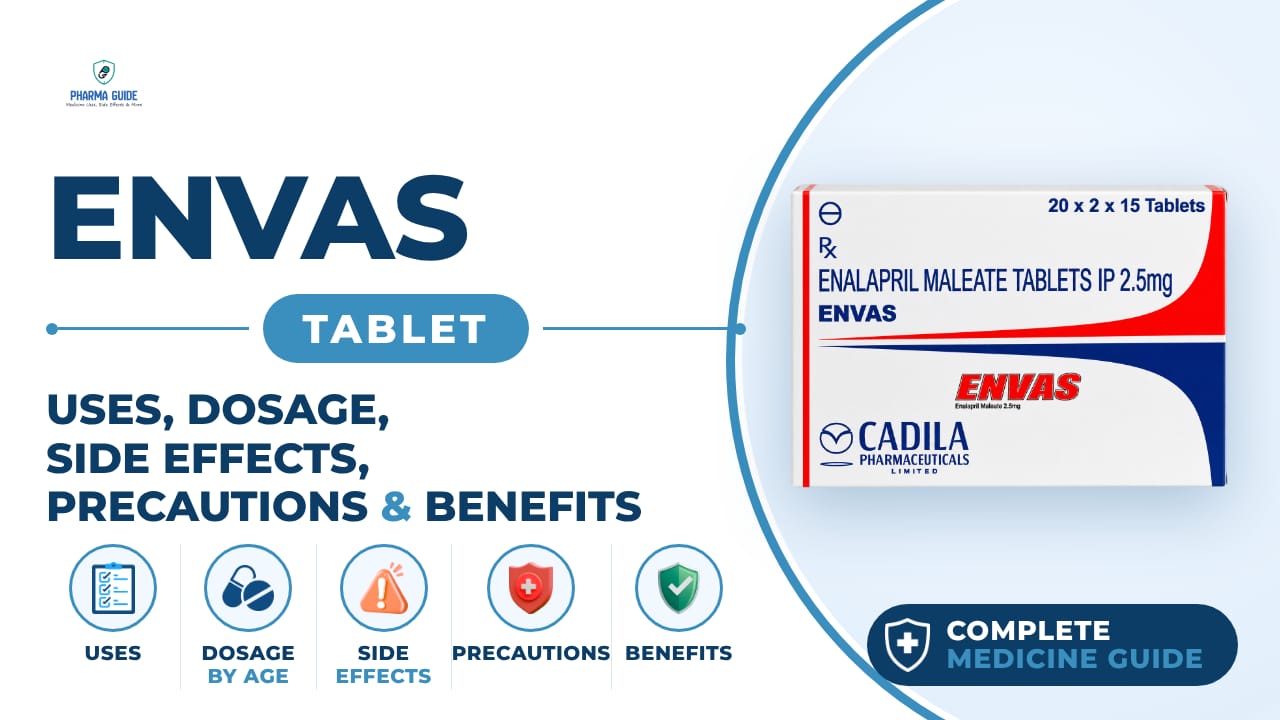
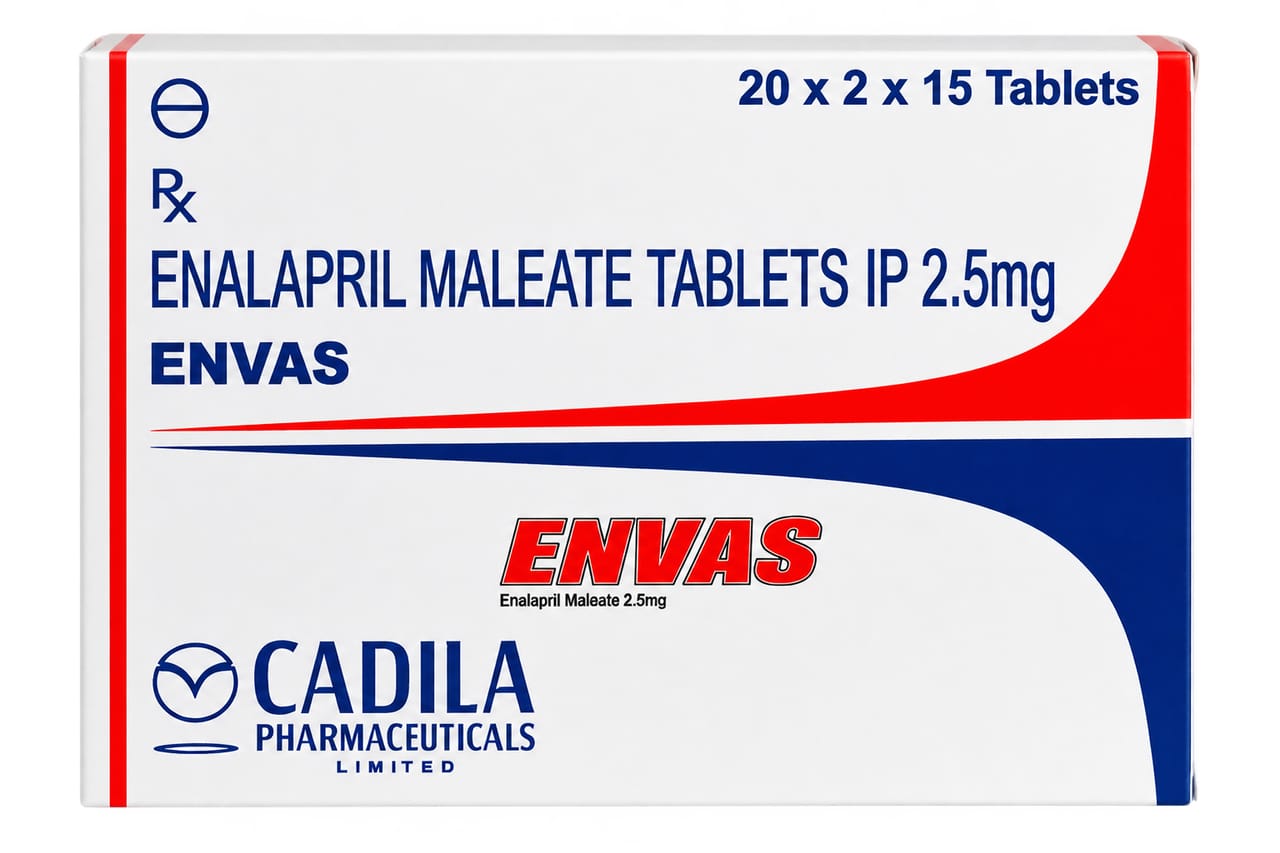
Envas Tablet: Uses, Dosage, Side Effects, Precautions and Alternates
| Generic name | Enalapril |
|---|---|
| Drug class | ACE inhibitor |
| Forms | Tablet, Injection |
Quick overview
Envas Tablet contains enalapril, an ACE inhibitor used to treat high blood pressure and support heart function in people with heart failure. It works by relaxing blood vessels, which allows blood to flow more smoothly and reduces the strain on the heart. It is available as a tablet and as an injection, and should be taken exactly as prescribed by a doctor.
What is Envas Tablet
Envas is a medicine that contains enalapril, an ACE inhibitor. It is used to treat high blood pressure and support heart function in people with heart failure.
Envas Tablet uses
- Hypertension (high blood pressure)
- Congestive heart failure
- Prevention of cardiovascular events - stroke and heart attack
- Protection of kidney function in people with high blood pressure or diabetes
Benefits of Envas Tablet
- Helps control blood pressure
- Useful as a low starting dose in heart failure
- Reduces heart workload
- Supports long-term cardiovascular protection
- Improves heart function and symptom control in heart failure
- Protects kidney function in individuals with high blood pressure or diabetes
How Envas Tablet works
Envas works by blocking an enzyme called ACE, which normally helps make a substance that tightens blood vessels. By blocking this enzyme, the medicine relaxes blood vessels, allowing blood to flow more smoothly and reducing the strain on the heart.
Envas Tablet dosage
Take the tablet with a sufficient amount of water. Do not break, crush, or chew the tablet. Take it as advised by your doctor and do not take more than prescribed. Take it at the same time each day to maintain a consistent routine. It can be taken with or without food. Do not stop taking this medicine suddenly without consulting your doctor, as it can cause your blood pressure to rise. Complete the full course of treatment for better results. Rise slowly from a sitting or lying position if you feel dizzy.
| Age group | Dose |
|---|---|
| Children | Dose based on body weight and medical condition (as prescribed) |
| Adults (18–64 Years) | 5 mg once or twice daily, adjusted according to blood pressure response |
| Older Adults (65+ Years) | 2.5 mg once daily initially, adjusted as needed |
Available forms and strengths
- Tablet
- Injection
Side effects of Envas Tablet
Common
- Headache
- Cough
- Diarrhoea
- Stomach pain
- Nausea
- Dizziness when getting up suddenly from a sitting position
- Unusual tiredness and weakness
- Dry cough
- Fatigue
- Changes in taste
- Low blood pressure
- Increased potassium levels
Serious
- Chest pain
- Fever or chills
- Vomiting
- Skin rash
- Allergic skin reaction
- Swelling of the face or lips
- Wheezing or difficulty breathing
Warnings and precautions
- Do not use this medicine if you are allergic to it. Get medical help right away if you notice a rash, itching or swelling of the face, tongue, or throat, severe dizziness, or trouble breathing.
- Do not take this medicine together with aliskiren, another blood pressure medicine. Taking both together can cause serious side effects such as low blood pressure and high potassium levels, especially if you have kidney problems or diabetes.
- This medicine is not recommended if you have a history of angioedema, a condition causing painless swelling under the skin, often around the face and lips, as it may make the condition worse.
- This medicine may cause a persistent dry cough that usually goes away once the medicine is stopped. Tell your doctor if the cough does not go away.
- Elderly people over 65 years should use this medicine with extreme caution because they have a higher risk of side effects.
- This medicine is not recommended for children under 18 years because there is not enough safety information for this age group.
- Do not stop taking this medicine suddenly, as it can cause your blood pressure to rise and increase your risk of heart attack and stroke.
- This medicine must not be used during pregnancy, as it can seriously harm the developing baby. It is also not recommended for people with narrowing of both kidney arteries.
- This medicine should not be used during pregnancy unless absolutely necessary, as it may harm the developing baby. Tell your doctor right away if you are pregnant or planning to become pregnant.
- This medicine should not be used while breastfeeding unless absolutely necessary. Talk to your doctor if you are breastfeeding.
- Use this medicine with caution if you have kidney problems, since it is removed from the body by the kidneys and could build up if your kidneys are not working well.
- Use this medicine with caution if you have liver problems, as there is an increased risk of serious side effects. Your doctor may adjust your dose or choose a different medicine.
- Avoid drinking alcohol while taking this medicine, as it may increase the blood pressure-lowering effect and lead to dizziness or drowsiness.
- This medicine may affect your ability to drive safely because it can cause dizziness or weakness from low blood pressure. Avoid driving or operating machinery if you feel this way.
Storage
- Store below 30°C
- Store in a cool, dry place, away from light and moisture
- Keep this medicine out of reach of children
- Check the expiry date before using
When to see a doctor
- Get emergency help right away if you overdose on this medicine, as it can cause a severe drop in blood pressure with dizziness, fainting, and an unusually fast or slow pulse.
- Stop taking the medicine and get help immediately if you develop a rash, swelling of the face or lips, wheezing, or difficulty breathing.
- Seek immediate medical attention for signs of an allergic reaction such as skin rash, itching or swelling of the face, tongue, or throat, severe dizziness, or breathing difficulty.
- Get urgent medical help for any swelling of the face, lips, or tongue, as this can be a sign of a serious allergic reaction called angioedema.
Alternatives
- Ramipril
- Lisinopril
- Telmisartan
Watch the video
FAQs
What is Envas Tablet used for?
Envas Tablet is used to treat high blood pressure, support heart function in congestive heart failure, help prevent cardiovascular events like stroke and heart attack, and protect kidney function in people with high blood pressure or diabetes.
How does Envas Tablet work?
Envas works by blocking an enzyme called ACE, which normally helps make a substance that tightens blood vessels. By blocking this enzyme, it relaxes blood vessels, allowing blood to flow more smoothly and reducing the strain on the heart.
What is the common dose of Envas Tablet for adults?
Adults aged 18–64 years are typically given 5 mg once or twice daily, adjusted according to blood pressure response, while older adults over 65 usually start with 2.5 mg once daily.
What are the common side effects of Envas Tablet?
Common side effects include headache, cough, diarrhoea, stomach pain, nausea, dizziness on standing up, unusual tiredness, dry cough, fatigue, changes in taste, low blood pressure, and increased potassium levels.
Can Envas Tablet be used during pregnancy?
No, this medicine must not be used during pregnancy as it can seriously harm the developing baby, and it should be avoided during breastfeeding unless absolutely necessary.
General information, not medical advice
Your prescriber and the leaflet in your pack know your situation. This page does not.
- Follow your prescriber and the leaflet
- Don't start, stop, or change a dose on your own
- Doses and warnings differ by country and product
Sources
Video
Related medicines

Injectafer Injection: Uses, Dosage, Side Effects, Precautions and Alternates
Iron products
Injectafer (ferric carboxymaltose) treats iron deficiency anemia and heart failure-related iron deficiency via IV. Learn uses, dosage, side effects, and

Gliclazide Tablet: Uses, Dosage, Side Effects, Precautions and Alternates
Sulfonylurea (hypoglycemic/antidiabetic agent)
Gliclazide Tablet is a sulfonylurea for type 2 diabetes that boosts insulin release. Learn about dosage, side effects, warnings, and precautions.