
Safety
General information, not medical advice
Your prescriber and the leaflet in your pack know your situation. This page does not.
- Follow your prescriber and the leaflet
- Don't start, stop, or change a dose on your own
- Doses and warnings differ by country and product
Enzomac Tablet: Uses, Dosage, Side Effects, Precautions and Alternates
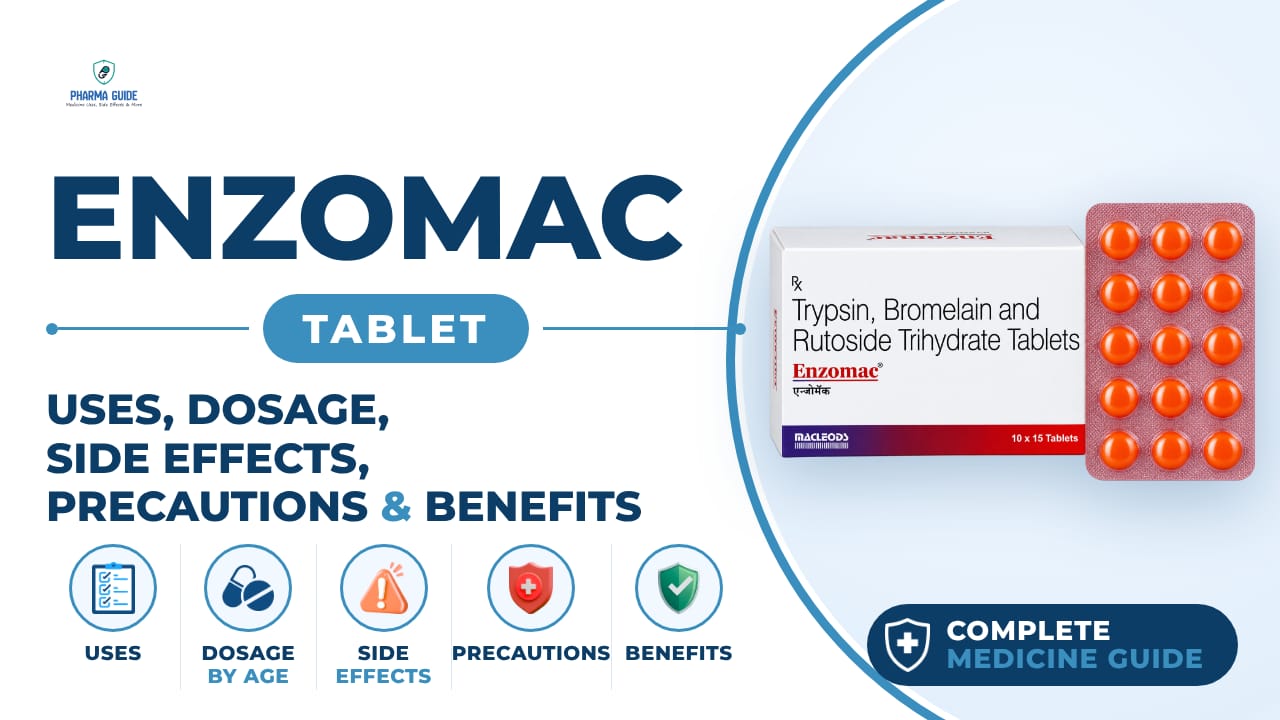
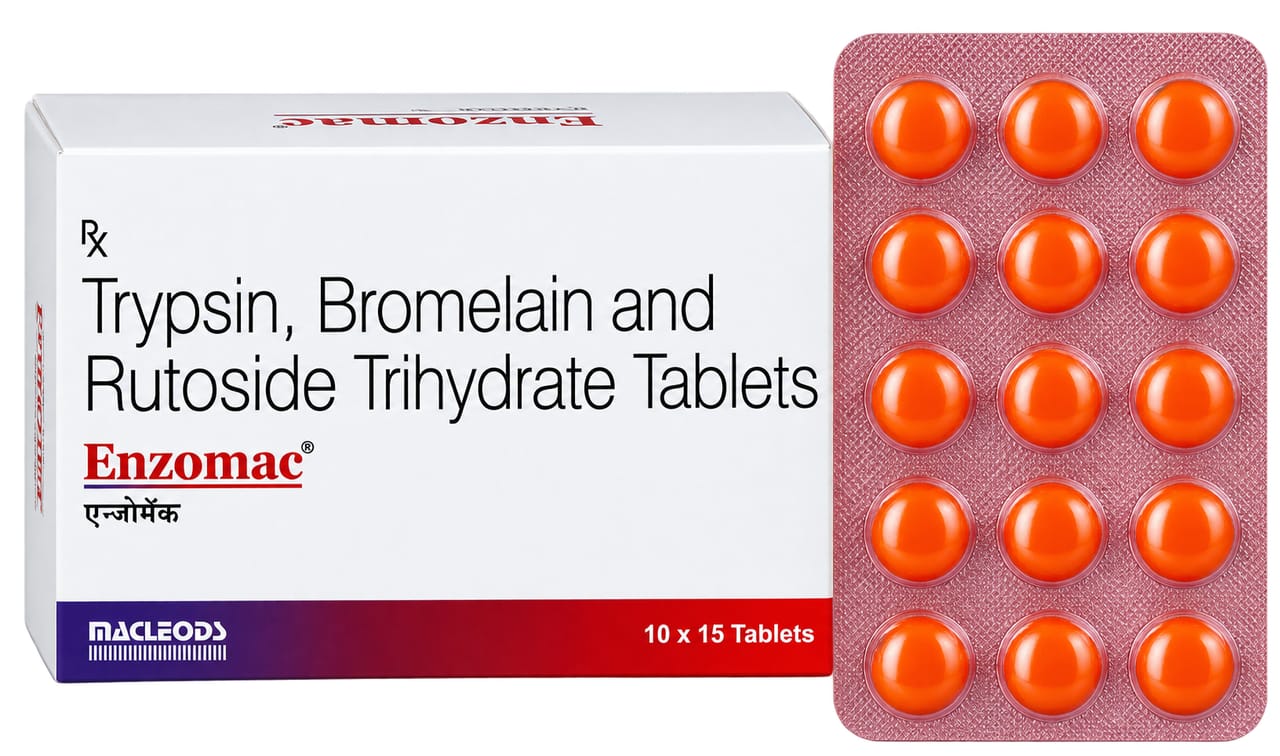
| Generic name | Trypsin + Bromelain + Rutoside |
|---|---|
| Drug class | Proteolytic enzyme supplement / anti-inflammatory and analgesic |
| Forms | Tablet |
Quick overview
Enzomac Tablet is a combination medicine containing trypsin, bromelain, and rutoside, used to reduce pain, swelling, and inflammation in the body. It is commonly used for joint disorders, muscle strains, dental procedures, and swelling after injury or surgery. The tablet works by combining enzyme action with antioxidant support from rutoside to ease inflammation and promote healing.
What is Enzomac Tablet
Enzomac Tablet is a combination medicine containing the enzymes trypsin and bromelain along with rutoside, a compound that supports blood vessel health. It is used to reduce pain, swelling, and inflammation.
Enzomac Tablet uses
- Reduces pain and swelling in joint disorders like rheumatoid arthritis and osteoarthritis
- Eases discomfort and inflammation from muscle strains
- Helps relieve pain and swelling after dental procedures
- Relieves pain from back pain, sprains, strains, menstrual cramps, and headaches
- Helps manage swelling (edema) after injury or surgery
- Promotes healing of wounds due to injury or surgery
Benefits of Enzomac Tablet
- Helps reduce swelling and inflammation
- Supports pain relief in joint and muscle problems
- Supports healthy blood vessels
- Promotes wound healing
How Enzomac Tablet works
The tablet combines three ingredients that work together. Bromelain (from pineapple) reduces swelling by limiting clot-forming substances at the injury site. Trypsin helps clear away dead skin cells and supports healthy tissue growth. Rutoside acts as an antioxidant, protecting the body from damage caused by free radicals and helping reduce swelling.
Enzomac Tablet dosage
Take the tablet exactly as your doctor tells you to. Swallow the tablet whole with a glass of water. Do not crush, break, or chew the tablet. Some sources say it can be taken with or without food, while others say it should be taken an hour before or two hours after a meal, so check with your doctor or pharmacist about timing. Drink plenty of water while taking this medicine. If you have a surgery planned, tell your doctor you are taking this medicine because it may increase bleeding risk. Keep out of reach of children.
| Age group | Dose |
|---|---|
| Under 12 years | Not recommended |
| 12–18 years | 1 tablet, 1–2 times daily |
| 18–60 years | 1 tablet, 2–3 times daily |
| 60+ years | 1 tablet, 2 times daily |
Available forms and strengths
- Tablet
Side effects of Enzomac Tablet
Common
- Nausea
- Vomiting
- Diarrhoea (loose motions)
- Skin rash
- Mouth sores (rare)
- Stomach upset
- Headache
- Stomach pain
- Blurred vision
- Dizziness
- Change in stool color or odor (harmless)
Serious
- Signs of serious allergic reaction such as skin rash, itching or swelling especially of the face, tongue, or throat, severe dizziness, or breathing difficulties
- Unusual bruising or bleeding
- Persistent or painful mouth sores
Warnings and precautions
- This medicine is not recommended during pregnancy. It is not known to be safe, so talk to your doctor before use if you are pregnant or planning pregnancy.
- It is not clearly established whether this medicine passes into breast milk, so check with your doctor before using it while breastfeeding.
- This medicine is not recommended for people with kidney problems or those on hemodialysis. Talk to your doctor before taking it.
- If you have a liver problem, use this medicine with caution and talk to your doctor first.
- Avoid alcohol while taking this medicine, as it may increase the risk of side effects.
- This medicine may cause dizziness, blurred vision, or drowsiness in some people, so avoid driving or operating machines if you feel affected.
- Tell your doctor about any bleeding disorder, stomach problems, or if you take blood-thinning medicines before using this medicine.
- This medicine can increase the risk of bleeding, especially around surgery. Your doctor may tell you to stop it at least two weeks before a planned surgery.
- Be careful using this medicine if you are allergic to cypress pollen, pineapple, papain, carrot, grass pollen, or fennel.
- This medicine should not be given to children without a doctor's prescription.
- This medicine may interact with blood thinners, NSAIDs, anticoagulants, corticosteroids, and antiplatelet drugs.
Storage
- Store below 30°C in a cool and dry place
- Protect it from direct sunlight and moisture
- Keep the medicine out of reach and sight of children
- Use the product before the expiry date mentioned on the packaging
When to see a doctor
- Get medical help right away if you notice signs of a serious allergic reaction, such as rash, swelling of the face, tongue, or throat, severe dizziness, or trouble breathing.
- If you think you or someone else has taken too much of this medicine, get medical help right away by contacting your doctor or visiting a nearby hospital.
- Tell your doctor right away if side effects do not improve or get worse.
Alternatives
- Edinase
- Rezynoid
- Phlogam
Watch the video
FAQs
What is Enzomac Tablet used for?
Enzomac Tablet is used to reduce pain, swelling, and inflammation in joint disorders like arthritis, muscle strains, dental procedures, sprains, menstrual cramps, headaches, and swelling after injury or surgery. It also promotes wound healing.
How does Enzomac Tablet work?
Bromelain reduces swelling by limiting clot-forming substances at the injury site, trypsin clears dead skin cells and supports healthy tissue growth, and rutoside acts as an antioxidant that protects against free radical damage and helps reduce swelling.
What is the dosage of Enzomac Tablet?
Dosage varies by age: it is not recommended under 12 years; 12-18 years can take 1 tablet 1-2 times daily; 18-60 years can take 1 tablet 2-3 times daily; and those over 60 can take 1 tablet twice daily. The tablet should be swallowed whole with water, not crushed or chewed.
What are the side effects of Enzomac Tablet?
Common side effects include nausea, vomiting, diarrhoea, skin rash, stomach upset, headache, stomach pain, blurred vision, and dizziness. Serious side effects include allergic reactions, unusual bruising or bleeding, and persistent mouth sores.
Who should avoid taking Enzomac Tablet?
It is not recommended during pregnancy, for people with kidney problems or on hemodialysis, and should be used cautiously by those with liver problems. People allergic to cypress pollen, pineapple, papain, carrot, grass pollen, or fennel should also be careful.
General information, not medical advice
Your prescriber and the leaflet in your pack know your situation. This page does not.
- Follow your prescriber and the leaflet
- Don't start, stop, or change a dose on your own
- Doses and warnings differ by country and product
Sources
- Pavan, R., Jain, S., Shraddha, & Kumar, A. (2012). Properties and therapeutic applications of bromelain: a review.
- Shah, D., & Mital, K. (2018). The Role of Trypsin: Chymotrypsin in Tissue Repair.
- ScienceDirect. Bromelain.
- Therapeutic benefits of rutin and its nanoformulations - PubMed. (2021).
- CFR - Code of Federal Regulations Title 21 (Bromelain).
- UNII - RF4N03853G (RUTOSIDE TRIHYDRATE).
- CFR - Code of Federal Regulations Title 21 (Trypsin).
- Ck Kokate, AP Purohit, SB Gokhale, Pharmacognosy, Enzymes and Protein drugs, 55th edition, 2018.
- HR Maurer; Bromelain: biochemistry, pharmacology and medical use; Cellular and Molecular Life Sciences 2001.
- Dilip Shah, Kushal Mital; The Role of Trypsin: Chymotrypsin in Tissue Repair; Advances in Therapy 2018.
- Jayachandran S, Priyanka Khobre; Efficacy of Bromelain along with Trypsin, Rutoside Trihydrate Enzymes and Diclofenac Sodium Combination Therapy for the treatment of TMJ Osteoarthritis; Journal of Clinical and Diagnostic Research 2017.
Video
Related medicines

Injectafer Injection: Uses, Dosage, Side Effects, Precautions and Alternates
Iron products
Injectafer (ferric carboxymaltose) treats iron deficiency anemia and heart failure-related iron deficiency via IV. Learn uses, dosage, side effects, and

Gliclazide Tablet: Uses, Dosage, Side Effects, Precautions and Alternates
Sulfonylurea (hypoglycemic/antidiabetic agent)
Gliclazide Tablet is a sulfonylurea for type 2 diabetes that boosts insulin release. Learn about dosage, side effects, warnings, and precautions.