
Safety
General information, not medical advice
Your prescriber and the leaflet in your pack know your situation. This page does not.
- Follow your prescriber and the leaflet
- Don't start, stop, or change a dose on your own
- Doses and warnings differ by country and product
Epclusa Tablet: Uses, Dosage, Side Effects, Precautions and Alternates
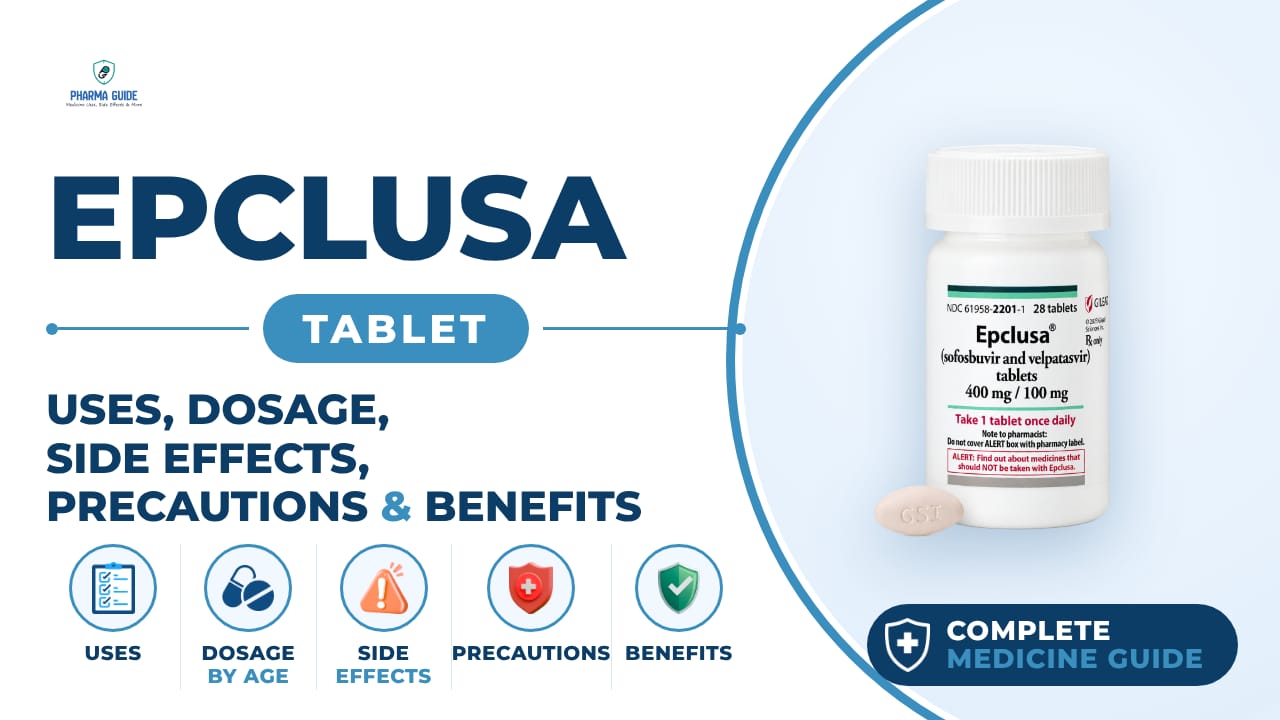
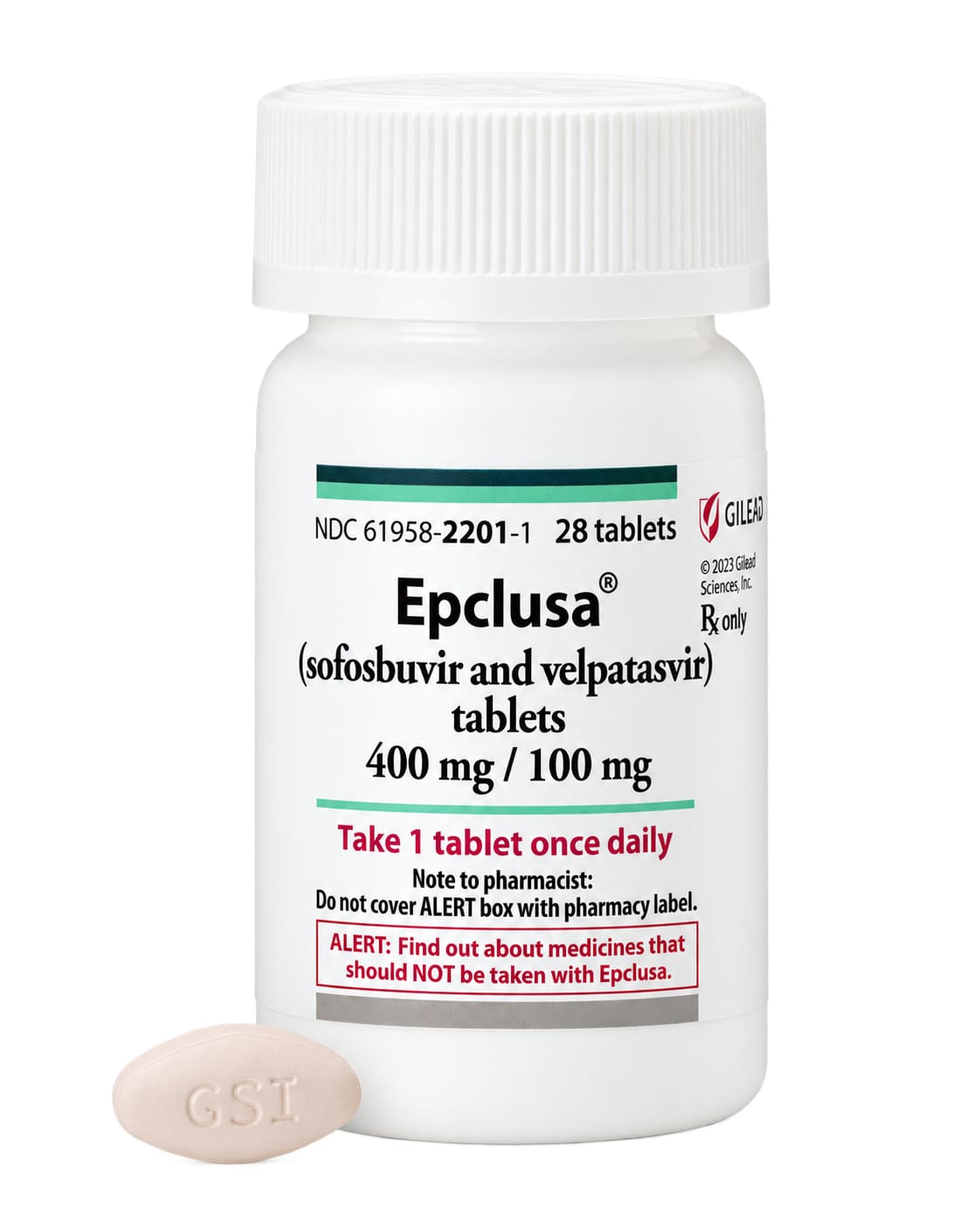
| Generic name | sofosbuvir and velpatasvir |
|---|---|
| Drug class | Antiviral combinations |
| Forms | Tablet, Oral pellet |
Quick overview
Epclusa Tablet combines two antiviral medicines, sofosbuvir and velpatasvir, used to treat chronic hepatitis C virus infection in adults and children 12 years and older weighing 30 kg or more. It works against hepatitis C genotypes 1 through 6, with or without compensated cirrhosis, and is used together with ribavirin in people with decompensated cirrhosis. Treatment may lead to a cure by lowering the amount of virus in the body. It is available as a tablet and as oral pellets.
What is Epclusa Tablet
Epclusa is a tablet that combines two antiviral medicines, sofosbuvir and velpatasvir, in one pill. It is used to treat long-term (chronic) hepatitis C virus infection, a disease that infects and damages the liver.
Epclusa Tablet uses
- Treats chronic hepatitis C virus infection in adults and children 12 years of age and older who weigh 30 kg or more
- Used for hepatitis C genotypes 1, 2, 3, 4, 5, or 6, with or without compensated cirrhosis
- Used together with ribavirin in people with decompensated (advanced) cirrhosis
Benefits of Epclusa Tablet
- May lead to a cure of hepatitis C infection over several weeks of treatment
- Lowers the amount of hepatitis C virus in the body
- Cure means the virus is cleared from the blood to an undetectable level 12 weeks after finishing treatment
How Epclusa Tablet works
Epclusa is a direct-acting antiviral that lowers the amount of hepatitis C virus in the body, which may lead to a cure of the infection over time.
Epclusa Tablet dosage
Take one tablet by mouth once a day. It can be taken with or without food. Try to take it at the same time every day to help it work best and help you remember. Continue taking it for the full length of treatment your doctor prescribes; do not stop early. If you take a proton pump inhibitor for stomach acid, take it at the same time as Epclusa and with food. If you take an antacid, take it at least 4 hours before or after Epclusa. Do not stop taking this medicine suddenly without checking with your doctor.
| Age group | Dose |
|---|---|
| 6–17 years, 17 to <30 kg | 200 mg sofosbuvir / 50 mg velpatasvir once daily |
| 6–17 years, ≥30 kg | 400 mg sofosbuvir / 100 mg velpatasvir once daily |
| 18–64 years | 400 mg / 100 mg once daily |
Available forms and strengths
- Tablet — 200 mg sofosbuvir / 50 mg velpatasvir; 400 mg sofosbuvir / 100 mg velpatasvir
- Oral pellet
Side effects of Epclusa Tablet
Common
- Headache
- Tiredness
- Feeling sick to the stomach (nausea)
- Stuffy nose and sore throat (nasopharyngitis)
- Vomiting
- Sleep problems (insomnia)
- Diarrhea
- Low red blood cells (anemia) in people with cirrhosis
- Pale skin
- Feeling light-headed or short of breath
- Cold hands and feet
Serious
- Signs of allergic reaction such as skin rash or hives
- Swelling of the face, lips, mouth, or throat causing difficulty swallowing or breathing
- Wheezing, chest pain, or tightness
- Fainting
- A wide-spread severe rash with peeling skin, possibly with fever, flu-like symptoms, or blisters in the mouth, eyes, or genitals (Stevens-Johnson syndrome)
- Worsening of hepatitis B infection if you have had it before, which can cause serious liver problems
- Right-sided upper stomach pain, vomiting, loss of appetite, or yellowing of skin or eyes (signs of liver problems)
- Dangerous slowing of the heartbeat if taken with amiodarone, with symptoms like fainting, dizziness, weakness, extreme tiredness, shortness of breath, chest pain, confusion, or memory problems
Warnings and precautions
- If you have ever had hepatitis B virus infection, it can become active again (reactivate) during or after treatment with Epclusa, which may cause serious liver problems, including liver failure and death.
- Taking amiodarone, a heart rhythm medicine, together with Epclusa can cause dangerously slow heartbeats, which has led to death or the need for a pacemaker in some cases; this combination is not recommended. Certain medicines, such as rifampin, St. John's Wort, and some epilepsy drugs, can reduce how well Epclusa works and are not recommended during treatment.
- Do not stop taking this medicine suddenly, or your hepatitis C could become harder to treat. Do not give this medicine to anyone else, even if they have the same condition, as it may harm them.
- Talk to your doctor if you are pregnant or planning to become pregnant. It is not known if Epclusa will harm an unborn baby. If used with ribavirin, you and your partner must use effective birth control during treatment and for 6 months after, because ribavirin can harm an unborn baby.
- Talk to your doctor if you are breastfeeding or plan to breastfeed, as it is not known if the ingredients in Epclusa pass into breast milk.
- Tell your doctor if you have kidney problems or are on dialysis, since dosing has not been established for severe kidney problems.
- Tell your doctor if you have liver problems other than hepatitis C, since this medicine may need closer monitoring in these cases.
- Alcohol is best avoided because it can worsen liver damage.
- Be careful before driving or using machines or tools until you know how this medicine affects you.
Storage
- Keep the tablets in the bottle with the cap tightly closed until you take them
- If you take the tablets out of their original pack they may not keep well
- Store in a cool, dry place below 30°C
- Store it in a cool dry place away from moisture, heat, or sunlight
- Do not store it in the bathroom or near a sink, or in the car or on window sills
- Keep it where young children cannot reach it
- If you no longer need the medicine or it is out of date, take it to any pharmacy for safe disposal
- Do not use this medicine after the expiry date
When to see a doctor
- Get emergency help right away for signs of a serious allergic reaction, such as hives, difficulty breathing, or swelling of the face, lips, tongue, or throat
- Call your doctor right away if you notice signs of liver problems, such as right-sided upper stomach pain, vomiting, loss of appetite, or yellowing of your skin or eyes
- If you take amiodarone with this medicine, get medical help right away if you notice fainting or near-fainting, dizziness, confusion, memory problems, weakness, extreme tiredness, or a feeling like you might pass out
- If you think you have taken too much of this medicine, seek urgent medical attention right away, even if you feel fine
- Do not take any more Epclusa and go straight to the emergency department if you develop a severe rash with peeling skin, possibly with fever, flu-like symptoms, or blisters in the mouth, eyes, or genitals
Alternatives
- Mavyret (glecaprevir/pibrentasvir)
- Harvoni (ledipasvir/sofosbuvir)
Watch the video
FAQs
What is Epclusa Tablet used for?
Epclusa treats chronic hepatitis C virus infection in adults and children 12 years and older weighing 30 kg or more, covering genotypes 1 through 6, with or without compensated cirrhosis. It is used with ribavirin in people with decompensated cirrhosis.
How should I take Epclusa Tablet?
Take one tablet by mouth once a day, with or without food, at the same time each day, for the full length of treatment prescribed by your doctor. Do not stop taking it early or suddenly without checking with your doctor.
What are the common side effects of Epclusa Tablet?
Common side effects include headache, tiredness, nausea, nasopharyngitis, vomiting, insomnia, diarrhea, and low red blood cells (anemia) in people with cirrhosis.
Can Epclusa Tablet be taken with other medicines?
Taking amiodarone with Epclusa is not recommended due to risk of dangerously slow heartbeats. Medicines like rifampin, St. John's Wort, and certain epilepsy drugs can reduce how well Epclusa works and are also not recommended. If using a proton pump inhibitor, take it with food at the same time as Epclusa, and take antacids at least 4 hours apart.
Is Epclusa Tablet safe during pregnancy or breastfeeding?
It is not known if Epclusa will harm an unborn baby, so talk to your doctor if pregnant or planning pregnancy. If used with ribavirin, effective birth control is needed during and for 6 months after treatment. It is also not known if Epclusa passes into breast milk, so consult your doctor if breastfeeding.
General information, not medical advice
Your prescriber and the leaflet in your pack know your situation. This page does not.
- Follow your prescriber and the leaflet
- Don't start, stop, or change a dose on your own
- Doses and warnings differ by country and product
Sources
Video
Related medicines

Injectafer Injection: Uses, Dosage, Side Effects, Precautions and Alternates
Iron products
Injectafer (ferric carboxymaltose) treats iron deficiency anemia and heart failure-related iron deficiency via IV. Learn uses, dosage, side effects, and

Gliclazide Tablet: Uses, Dosage, Side Effects, Precautions and Alternates
Sulfonylurea (hypoglycemic/antidiabetic agent)
Gliclazide Tablet is a sulfonylurea for type 2 diabetes that boosts insulin release. Learn about dosage, side effects, warnings, and precautions.