
Safety
General information, not medical advice
Your prescriber and the leaflet in your pack know your situation. This page does not.
- Follow your prescriber and the leaflet
- Don't start, stop, or change a dose on your own
- Doses and warnings differ by country and product
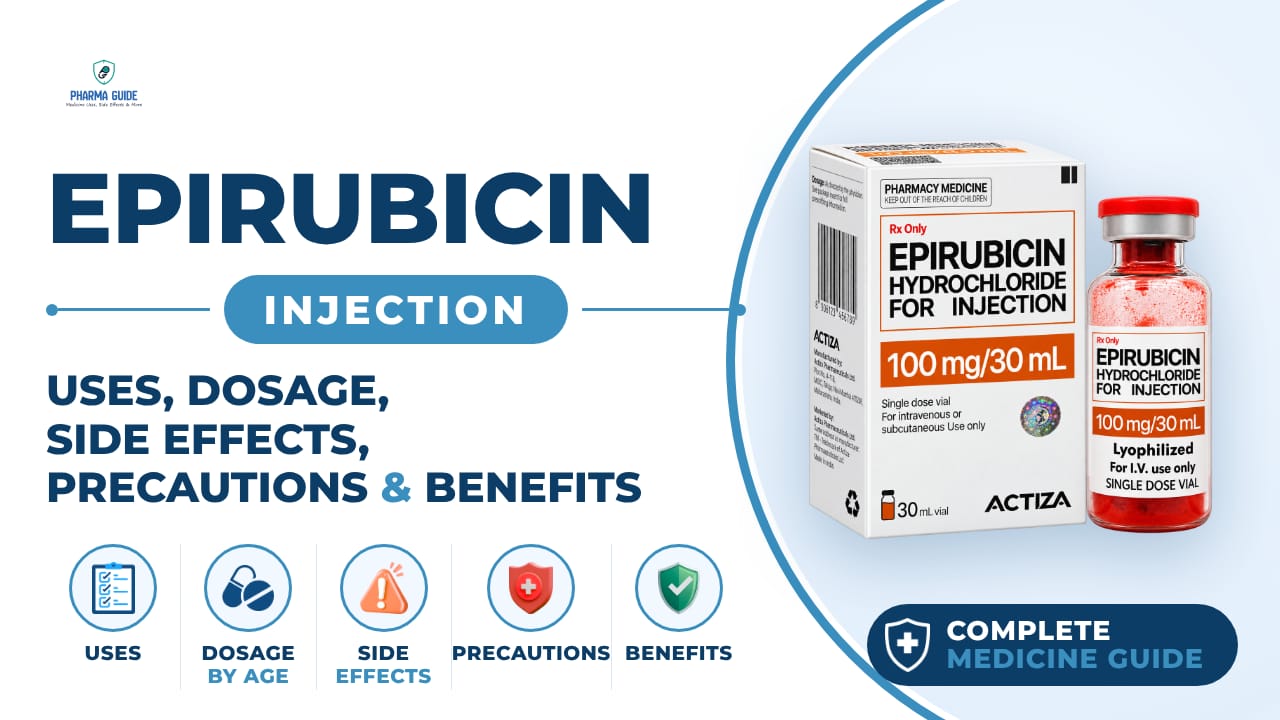
Epirubicin Injection: Uses, Dosage, Side Effects, Precautions and Alternates
| Generic name | Epirubicin hydrochloride |
|---|---|
| Drug class | Anthracycline cytotoxic agent (anticancer agent); topoisomerase II inhibitor |
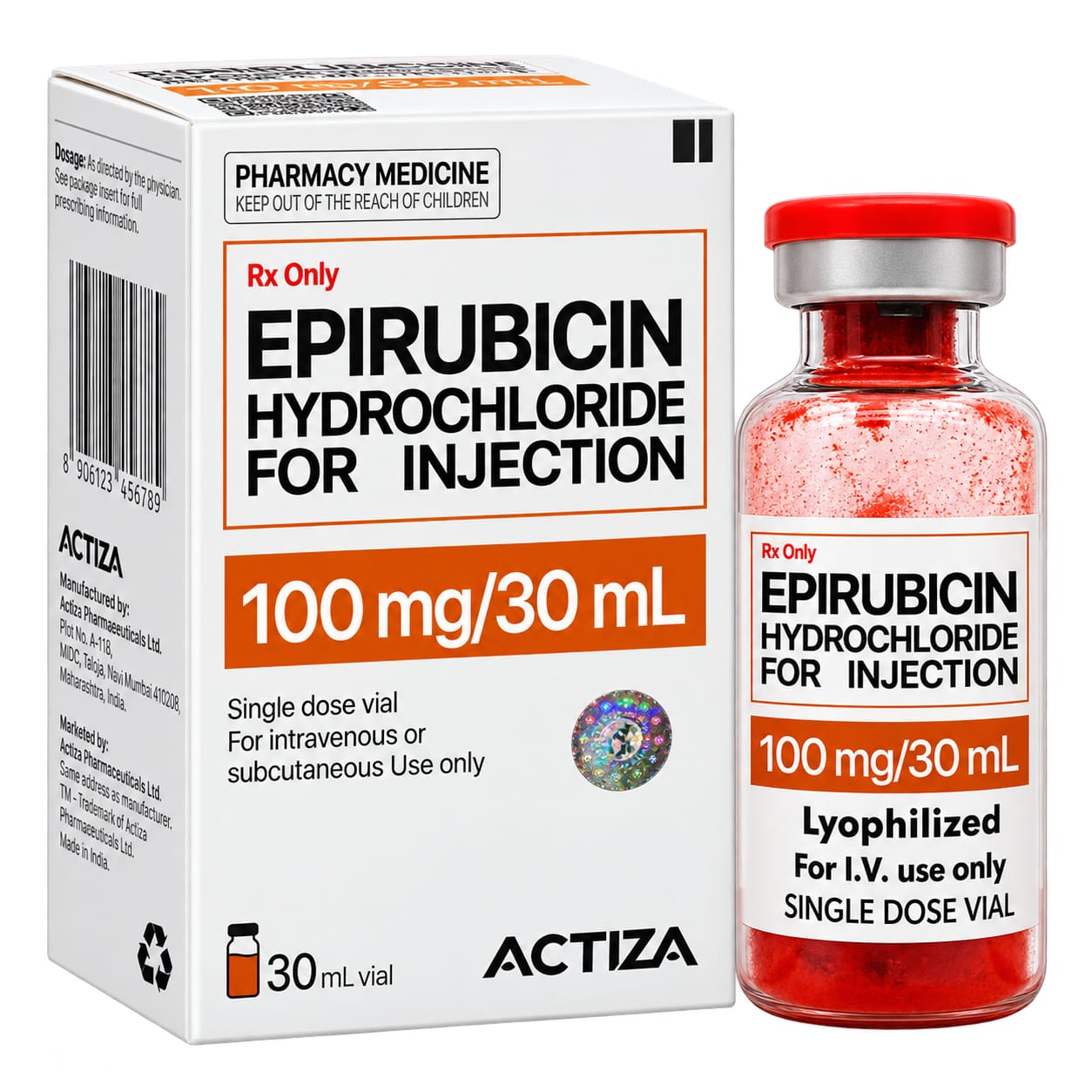
| Forms | Lyophilized (freeze-dried) powder for injection, supplied in single-use vials of 50 mg or 200 mg, to be reconstituted into a solution for IV infusion. |
Quick overview
Epirubicin Injection (epirubicin hydrochloride) is an anthracycline cytotoxic agent and topoisomerase II inhibitor given by intravenous infusion. It is used as part of combination chemotherapy for breast cancer patients with axillary lymph node involvement after surgical removal of the primary tumor. It works by attaching to cancer cell DNA to stop cell growth and division. It must be given by a doctor or nurse experienced with cancer chemotherapy and carries important warnings, including risks of heart damage and severe tissue injury if it leaks outside the vein.
What is Epirubicin Injection
Epirubicin is a chemotherapy medicine given by injection into a vein. It belongs to a group of cancer drugs called anthracyclines and is used along with other anticancer medications to help destroy remaining cancer cells after breast cancer surgery.
Epirubicin Injection uses
- Used as part of combination chemotherapy for patients with evidence of axillary (armpit) lymph node cancer involvement after surgical removal of the primary breast tumor.
Benefits of Epirubicin Injection
- In clinical studies, epirubicin-containing combination chemotherapy showed longer relapse-free survival and overall survival compared to non-epirubicin or lower-dose epirubicin regimens in early breast cancer patients.
- Helps reduce the risk of cancer recurrence when used in appropriate adjuvant regimens
- Can be combined with other chemotherapy medicines
- Provides an anthracycline option in oncology treatment
How Epirubicin Injection works
Epirubicin works by attaching to the cancer cell's DNA and blocking the cell from copying its genetic material and making proteins, which stops the cancer cells from growing and causes them to die.
Epirubicin Injection dosage
Epirubicin is given by a doctor or nurse as an intravenous (IV) infusion into a running IV line, not injected into muscle or under the skin. It is typically given once on Day 1, or split into two smaller doses given on Day 1 and Day 8, of each treatment cycle. Treatment cycles are usually repeated every 3 to 4 weeks for a total of 6 cycles.
Your doctor may give you antibiotics or antiemetic (anti-nausea) medication alongside treatment to help prevent complications. Tell your doctor right away if you feel burning, stinging, or pain at the injection site during the infusion, as this could mean the drug is leaking outside the vein. Your urine may appear red for 1 to 2 days after you receive a dose; this is expected and not a cause for alarm. Do not receive any vaccinations without first talking to your doctor, since epirubicin can weaken your immune system.
| Age group | Dose |
|---|---|
| 18–64 years | Common breast-cancer regimens use 100–120 mg/m² IV per treatment cycle, divided according to the specific chemotherapy protocol |
Available forms and strengths
Lyophilized (freeze-dried) powder for injection, supplied in single-use vials of 50 mg or 200 mg, to be reconstituted into a solution for IV infusion.
Side effects of Epirubicin Injection
Common
- Hair loss
- Nausea and vomiting
- Low blood cell counts
- Missed or irregular menstrual periods
- Painful mouth and throat sores
- Lower energy levels/tiredness
- Hot flashes
- Diarrhea
- Infection
- Loss of appetite
- Red-colored urine for 1 to 2 days after dose
- Eye redness, soreness, or inflammation
- Skin or nail darkening
- Rash or itchy skin
Serious
- Severe tissue damage, pain, or necrosis if the drug leaks outside the vein (extravasation)
- Heart problems, including abnormal heart rhythm and potentially fatal congestive heart failure, which can occur during or months to years after treatment
- Severe myelosuppression (very low white blood cells, red blood cells, or platelets), leading to infection, bleeding, or anemia
- Secondary leukemia (acute myelogenous leukemia or myelodysplastic syndrome)
- Tumor lysis syndrome (nausea, vomiting, muscle cramps, numbness, irregular heartbeat, seizures)
- Blood clots, including potentially fatal pulmonary embolism
- Severe allergic reactions including hives, rash, and difficulty breathing or swallowing
Warnings and precautions
- Leakage of the drug outside the vein during injection can cause severe tissue damage and must be avoided; the drug must never be injected into a muscle or under the skin.
- Epirubicin can cause serious heart damage, including potentially fatal heart failure, that may occur during treatment or even years later. The risk rises with higher total lifetime doses.
- A secondary blood cancer (leukemia) has occurred in some patients who received epirubicin, especially with higher cumulative doses or when combined with other chemotherapy drugs.
- Patients with liver problems need a reduced dose of epirubicin.
- Epirubicin can severely lower blood cell counts produced by the bone marrow.
- This medicine should only be given under the care of a doctor experienced with cancer chemotherapy drugs.
- Patients should not receive live vaccines during epirubicin treatment because the medicine weakens the immune system.
- Epirubicin can harm an unborn baby and should be avoided during pregnancy. Women who can become pregnant should use effective birth control during treatment, and should tell their doctor right away if they become pregnant.
- It is not known if epirubicin passes into human breast milk, but because of the risk of serious harm to a nursing infant, mothers should stop breastfeeding before starting this medicine.
- Patients with severe kidney impairment may need a lower dose, and should be monitored, since the drug may not be cleared from the body as quickly.
- Epirubicin is processed by the liver, so patients with liver problems may need a lower dose, and those with severe liver impairment should not receive this medicine.
- Alcohol is best limited or avoided during chemotherapy, especially if liver function is abnormal.
- Fatigue, dizziness, weakness, or nausea may make driving unsafe.
Storage
- Store unopened vials at room temperature (25°C/77°F), with excursions permitted between 15-30°C (59-86°F).
- Protect vials from light.
- Store vials upright.
- Retain in carton until time of use.
- Discard any unused portion of the reconstituted solution.
- Reconstituted solution should be used within 24 hours of first puncturing the vial stopper; discard any unused solution after that.
When to see a doctor
- Get medical help right away if you notice pain, itching, redness, swelling, blisters, or sores at the injection site, as this may mean the drug has leaked into surrounding tissue.
- Seek immediate medical attention for signs of heart problems such as shortness of breath, swelling in the hands, feet, ankles or lower legs, or a fast, irregular, or pounding heartbeat.
- Contact your doctor immediately if you have signs of infection or bleeding, such as fever, sore throat, ongoing cough, unusual bleeding, or bruising.
- Get emergency help if you experience signs of a severe allergic reaction, including pale skin, fainting, dizziness, rash, hives, itching, or difficulty breathing or swallowing.
- If you suspect an overdose, seek emergency medical help right away, especially if there is collapse, seizure, trouble breathing, or unresponsiveness, or if you notice symptoms like mouth sores, fever, unusual bleeding or bruising, black tarry stools, or vomiting blood.
Alternatives
- Doxorubicin
- Daunorubicin
- Idarubicin
Watch the video
FAQs
What is Epirubicin Injection used for?
It is used as part of combination chemotherapy for breast cancer patients with evidence of axillary lymph node involvement after surgical removal of the primary tumor.
How is Epirubicin Injection given?
It is given by a doctor or nurse as an intravenous infusion into a running IV line, typically once on Day 1 or split into two doses on Day 1 and Day 8 of each cycle, repeated every 3 to 4 weeks for a total of 6 cycles.
Why does urine turn red after Epirubicin Injection?
Red-colored urine for 1 to 2 days after a dose is expected and not a cause for alarm.
What are the serious side effects of Epirubicin Injection?
Serious side effects include severe tissue damage if the drug leaks outside the vein, heart problems including heart failure, severe myelosuppression, secondary leukemia, tumor lysis syndrome, blood clots, and severe allergic reactions.
Can Epirubicin Injection be used during pregnancy?
No, it can harm an unborn baby and should be avoided during pregnancy; effective birth control should be used during treatment.
General information, not medical advice
Your prescriber and the leaflet in your pack know your situation. This page does not.
- Follow your prescriber and the leaflet
- Don't start, stop, or change a dose on your own
- Doses and warnings differ by country and product
Sources
Video
Related medicines

Injectafer Injection: Uses, Dosage, Side Effects, Precautions and Alternates
Iron products
Injectafer (ferric carboxymaltose) treats iron deficiency anemia and heart failure-related iron deficiency via IV. Learn uses, dosage, side effects, and

Gliclazide Tablet: Uses, Dosage, Side Effects, Precautions and Alternates
Sulfonylurea (hypoglycemic/antidiabetic agent)
Gliclazide Tablet is a sulfonylurea for type 2 diabetes that boosts insulin release. Learn about dosage, side effects, warnings, and precautions.