
Safety
General information, not medical advice
Your prescriber and the leaflet in your pack know your situation. This page does not.
- Follow your prescriber and the leaflet
- Don't start, stop, or change a dose on your own
- Doses and warnings differ by country and product
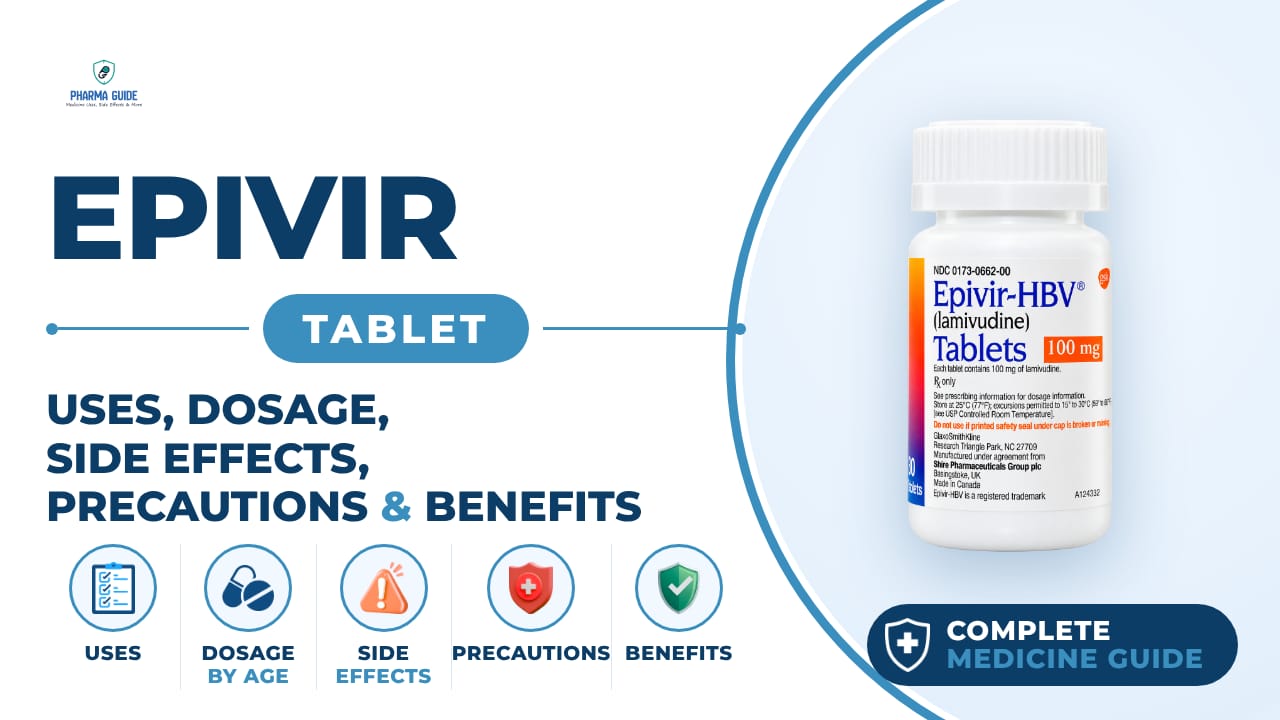
Epivir Tablet: Uses, Dosage, Side Effects, Precautions and Alternates
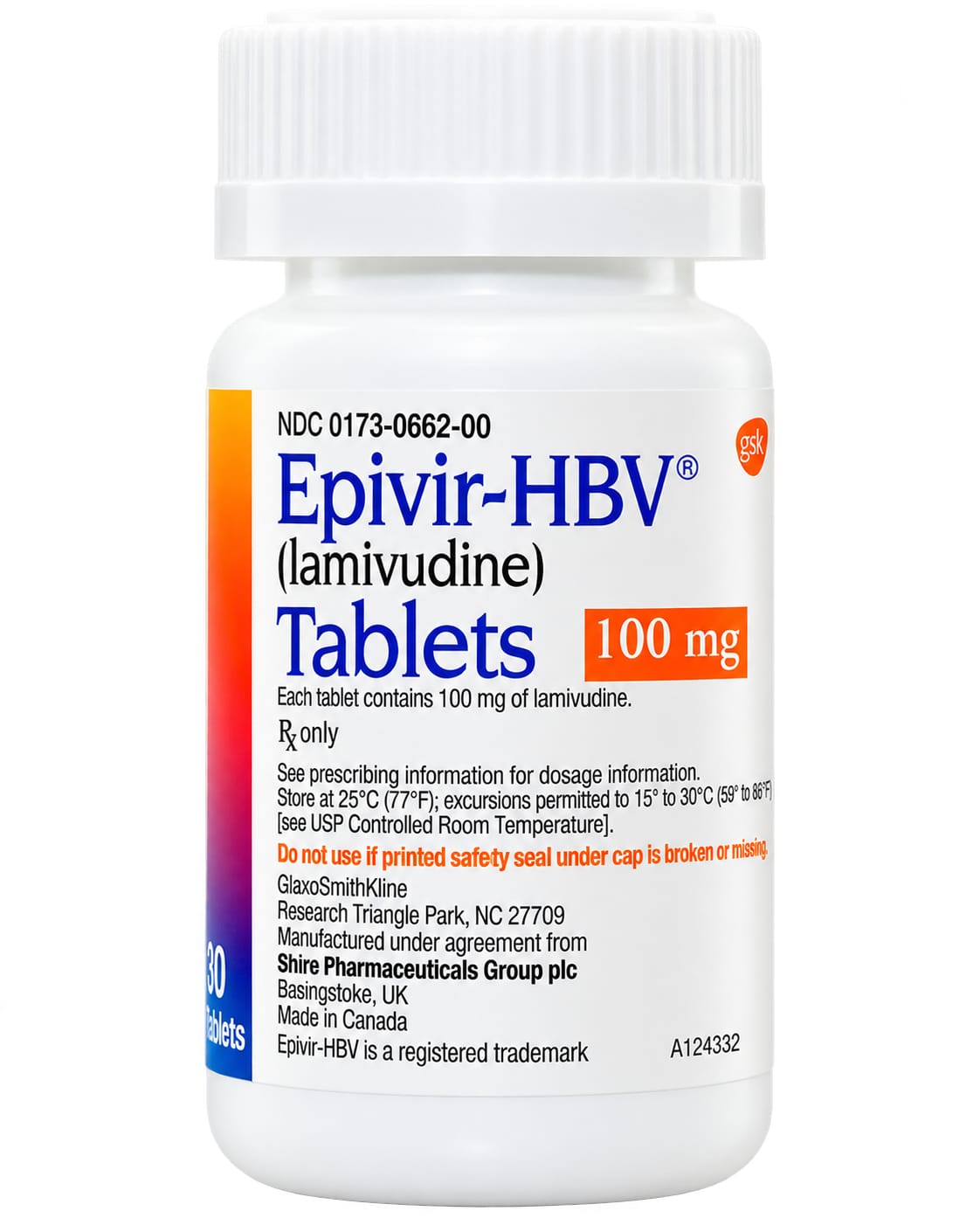
| Generic name | lamivudine |
|---|---|
| Drug class | nucleoside analogue reverse transcriptase inhibitor (NRTI) |
| Forms | Film-coated tablet (150 mg), Film-coated tablet (300 mg), Oral solution (10 mg/ml) |
Quick overview
Epivir Tablet contains lamivudine, a nucleoside analogue reverse transcriptase inhibitor (NRTI). It is used together with other antiretroviral medicines to treat HIV-1 infection in adults and children, and it is not a cure for HIV or AIDS. It works by blocking an enzyme the HIV virus needs to multiply, helping to reduce viral load and support CD4 cell counts. It is available as tablets and an oral solution, and must be used as part of combination therapy, not alone.
What is Epivir Tablet
Epivir is an antiviral medicine that belongs to a group of HIV medicines called nucleoside analogue reverse transcriptase inhibitors (NRTIs). It is used together with other antiretroviral medicines to treat HIV infection and is not a cure for HIV or AIDS.
Epivir Tablet uses
- Treatment of HIV-1 infection in adults and children, used in combination with other antiretroviral medicines
- Treats HIV-1 infection
- Helps reduce HIV viral load
- Helps maintain CD4 cell counts
- Blocks HIV reverse transcriptase
- Used as part of combination antiretroviral therapy
Benefits of Epivir Tablet
- Reduces the amount of HIV virus in the body and keeps it at a low level
- Increases CD4 cell counts, which help the immune system fight infection
- Supports long-term viral suppression
- Helps protect immune-system function
- Provides convenient once- or twice-daily dosing
- Can be combined with several other HIV medicines
How Epivir Tablet works
Lamivudine is changed inside the body's cells into its active form, which blocks an enzyme the HIV virus needs (reverse transcriptase) to copy itself, stopping the virus from multiplying.
Epivir Tablet dosage
Epivir may be taken with or without food. Tablets should be swallowed with water or another drink; ideally swallow the tablet whole without crushing, though it can be crushed and mixed into a small amount of soft food or liquid and taken right away if needed. Doses are usually spaced about 12 hours apart when taken twice daily. Children who are able to swallow tablets should use the tablet form when possible, as the liquid form may be less effective. Take this medicine every day exactly as prescribed; do not stop without talking to your doctor. If you forget a dose, take it as soon as you remember, then continue as before; do not take a double dose to make up for a missed one.
| Age group | Dose |
|---|---|
| 12–17 years, ≥25 kg | 150 mg twice daily or 300 mg once daily |
| 18–64 years | 150 mg twice daily or 300 mg once daily |
Available forms and strengths
- Film-coated tablet (150 mg)
- Film-coated tablet (300 mg)
- Oral solution (10 mg/ml)
Side effects of Epivir Tablet
Common
- Nausea
- Vomiting
- Stomach pain or cramps
- Diarrhoea
- Headache
- Insomnia (trouble sleeping)
- Cough
- Nasal symptoms (runny or stuffy nose)
- Rash
- Hair loss
- Joint pain
- Muscle disorders
- Fatigue
- Malaise (general feeling of being unwell)
- Fever
Serious
- Lactic acidosis (build-up of lactic acid in the body), which can be fatal
- Severe liver problems, including an enlarged liver and fatty liver (hepatomegaly with steatosis)
- Pancreatitis (inflammation of the pancreas)
- Severe anaemia and neutropenia (low blood cell counts)
- Thrombocytopenia (low platelet count)
- Hepatitis (liver inflammation)
- Rhabdomyolysis (breakdown of muscle tissue)
- Peripheral neuropathy (numbness, tingling, or weakness in limbs)
- Worsening of hepatitis B after stopping the medicine, which can be severe
- Immune reconstitution syndrome (inflammatory reaction to hidden infections after starting treatment)
- Changes in body fat distribution (lipodystrophy)
- Osteonecrosis (bone tissue damage from loss of blood supply)
Warnings and precautions
- Epivir is not recommended during the first three months of pregnancy. Talk to your doctor if you are pregnant or planning to become pregnant, as treatment should only continue if the benefits outweigh the risks.
- Mothers taking Epivir should not breastfeed, because the medicine and the HIV virus can pass into breast milk.
- People with kidney problems may need a lower dose because the medicine is cleared more slowly from the body. Discuss this with your doctor.
- People with liver disease, including hepatitis B or C, should discuss their condition with their doctor, as there is a higher risk of serious liver problems. Stopping Epivir in people with both HIV and hepatitis B can cause the hepatitis to suddenly become worse.
- Caution is needed in people who drink alcohol, as this is a known risk factor for liver disease and may increase the risk of serious liver side effects.
- No studies have looked at how this medicine affects driving or using machines, so caution is advised based on how you feel.
- This medicine can cause lactic acidosis, a serious and sometimes fatal build-up of acid in the blood. Watch for symptoms like unusual tiredness, muscle pain, trouble breathing, stomach pain, or feeling cold, and get medical help right away if they occur.
- Serious liver problems can occur and may be fatal. Watch for yellowing of the skin or eyes, dark urine, pale stools, loss of appetite, nausea, or stomach pain.
- If you have both HIV and hepatitis B, your hepatitis B may suddenly get worse if you stop taking this medicine. Do not stop without talking to your doctor, and expect close monitoring for several months after stopping.
- This medicine does not cure HIV and does not prevent passing HIV to others through sex or blood contact, so continue to take precautions.
- Children should not take this medicine as a liquid together with other liquid antiretroviral medicines if a tablet option is available, because this combination has been linked to lower effectiveness and more drug resistance.
- This medicine should not be used alone (monotherapy) for treating HIV; it must be combined with other antiretroviral medicines.
- Avoid taking other liquid medicines that contain sorbitol along with this medicine, as sorbitol can lower the amount of this medicine absorbed by the body.
Storage
- Keep out of the reach and sight of children
- Do not store above 30°C (for tablets)
- Do not store above 25°C (for oral solution)
- Discard the oral solution one month after first opening
- Medicines should not be disposed of via wastewater or household waste; ask your pharmacist how to dispose of medicines no longer required
When to see a doctor
- Get emergency help if you have signs of a serious allergic reaction, such as hives, difficulty breathing, or swelling of the face, lips, tongue, or throat.
- Call your doctor right away if you feel very weak or tired, have unusual muscle pain, trouble breathing, stomach pain with nausea and vomiting, feel cold especially in the arms or legs, feel dizzy, or have a fast or irregular heartbeat, as these may be signs of lactic acidosis.
- Seek medical advice if you notice joint aches, pain, stiffness, or difficulty moving, as these can be signs of a bone problem called osteonecrosis.
- Tell your doctor immediately if you notice new symptoms of infection after starting treatment, as this could be a sign of immune reconstitution syndrome.
- If you accidentally take too much of this medicine, contact your doctor, pharmacist, or local poison control center, or go to the nearest hospital emergency department.
Alternatives
- Emtricitabine
- Abacavir
- Tenofovir disoproxil fumarate
Watch the video
FAQs
What is Epivir Tablet used for?
Epivir Tablet contains lamivudine and is used together with other antiretroviral medicines to treat HIV-1 infection in adults and children. It is not a cure for HIV or AIDS.
Can Epivir Tablet cure HIV?
No, Epivir Tablet is not a cure for HIV or AIDS. It helps reduce viral load and supports CD4 cell counts when used as part of combination antiretroviral therapy.
Can Epivir Tablet be taken alone for HIV treatment?
No, Epivir should not be used alone (monotherapy) for treating HIV; it must be combined with other antiretroviral medicines.
What should I do if I miss a dose of Epivir Tablet?
If you forget a dose, take it as soon as you remember, then continue as before. Do not take a double dose to make up for a missed one.
Is Epivir Tablet safe to take during pregnancy?
Epivir is not recommended during the first three months of pregnancy. You should talk to your doctor if you are pregnant or planning to become pregnant, as treatment should only continue if the benefits outweigh the risks.
General information, not medical advice
Your prescriber and the leaflet in your pack know your situation. This page does not.
- Follow your prescriber and the leaflet
- Don't start, stop, or change a dose on your own
- Doses and warnings differ by country and product
Sources
Video
Related medicines

Injectafer Injection: Uses, Dosage, Side Effects, Precautions and Alternates
Iron products
Injectafer (ferric carboxymaltose) treats iron deficiency anemia and heart failure-related iron deficiency via IV. Learn uses, dosage, side effects, and

Gliclazide Tablet: Uses, Dosage, Side Effects, Precautions and Alternates
Sulfonylurea (hypoglycemic/antidiabetic agent)
Gliclazide Tablet is a sulfonylurea for type 2 diabetes that boosts insulin release. Learn about dosage, side effects, warnings, and precautions.