
Safety
General information, not medical advice
Your prescriber and the leaflet in your pack know your situation. This page does not.
- Follow your prescriber and the leaflet
- Don't start, stop, or change a dose on your own
- Doses and warnings differ by country and product
Epzicom Tablet: Uses, Dosage, Side Effects, Precautions and Alternates
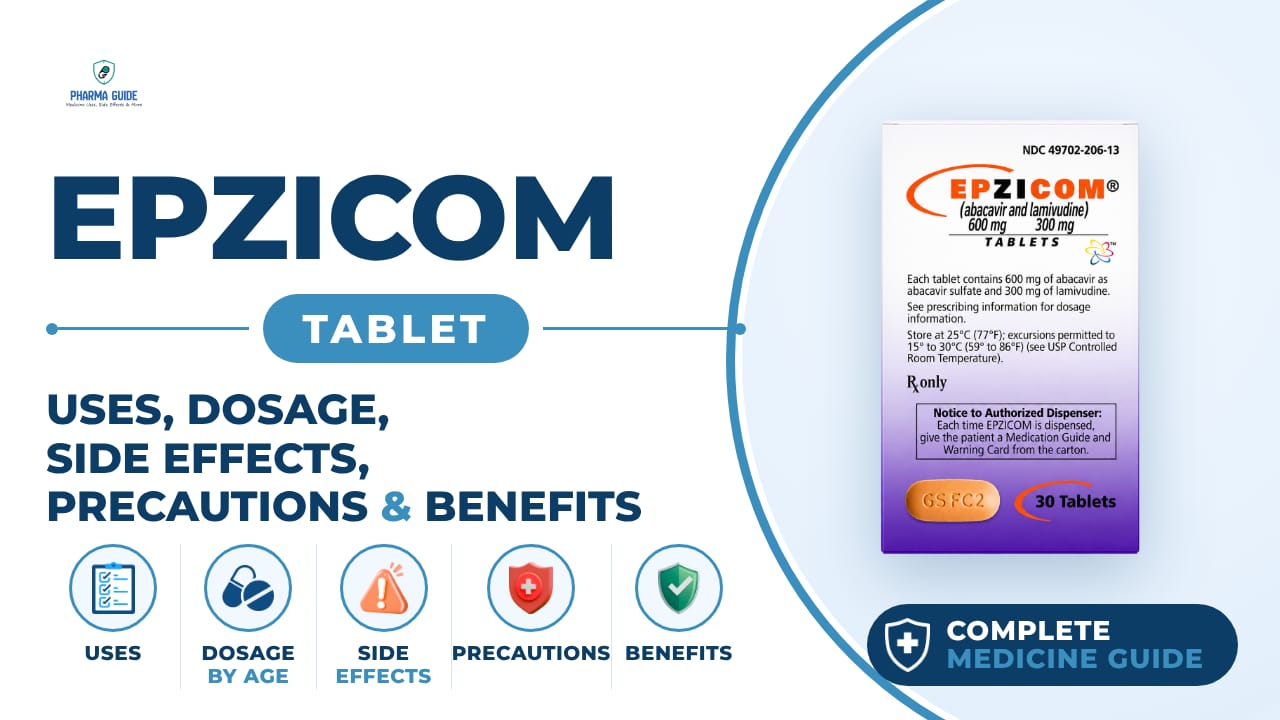
| Generic name | abacavir and lamivudine |
|---|---|
| Drug class | Antiviral combination (nucleoside analogue reverse transcriptase inhibitors) |
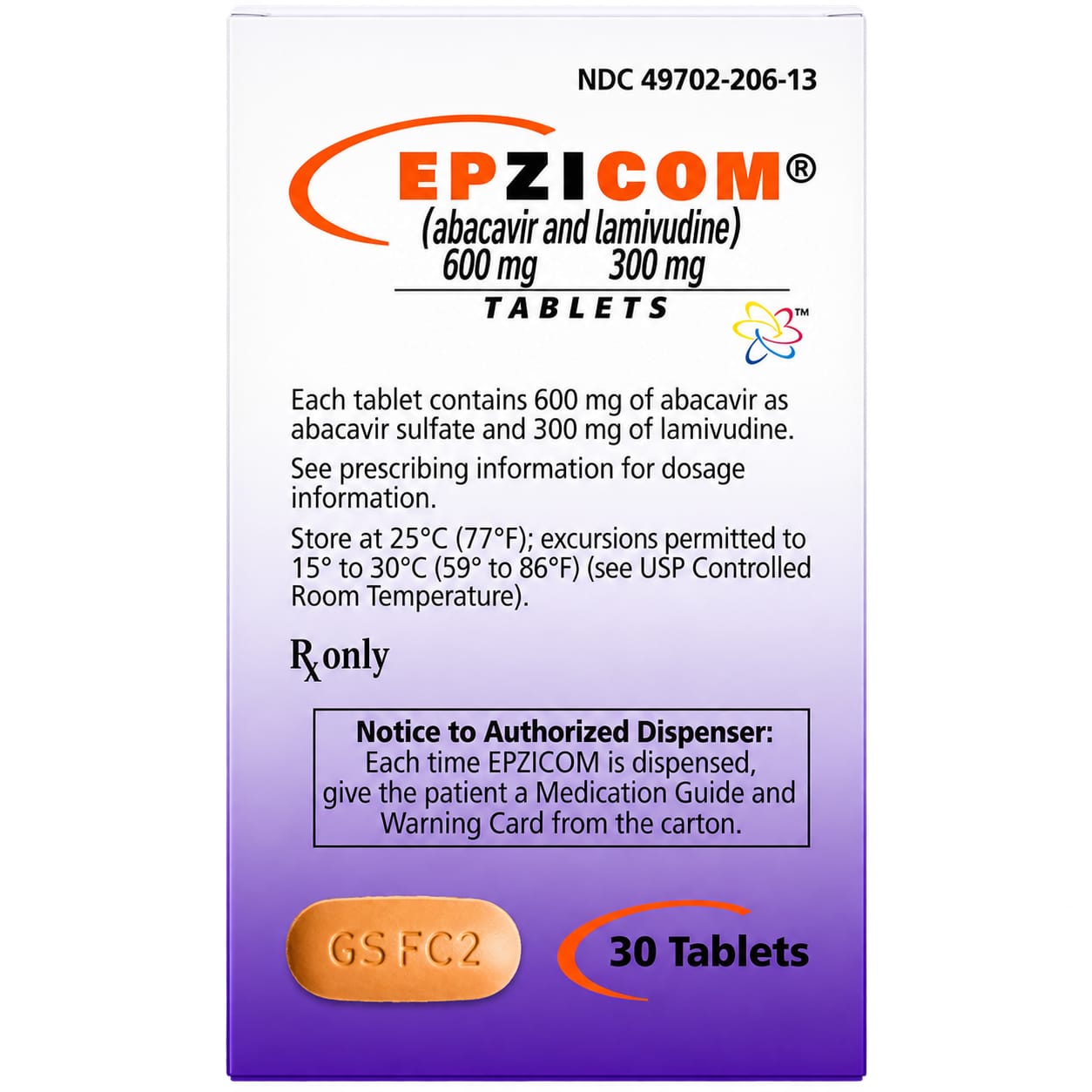
| Forms | Tablet, film coated |
Quick overview
Epzicom Tablet combines abacavir and lamivudine, two nucleoside analogue reverse transcriptase inhibitors (NRTIs), used to treat HIV-1 infection as part of a combination antiretroviral regimen. It is not a cure for HIV or AIDS. Epzicom works by helping reduce the amount of HIV in the blood and supporting healthy CD4 cell counts, combining two antiviral medicines into one tablet.
What is Epzicom Tablet
Epzicom is a prescription medicine that combines two antiviral drugs, abacavir and lamivudine, used to treat HIV infection. It is not a cure for HIV or AIDS.
Epzicom Tablet uses
- Treatment of HIV-1 infection in combination with other antiretroviral medicines
- Treats HIV-1 infection
- Helps reduce HIV viral load
- Helps maintain CD4 cell counts
- Provides two NRTI medicines in one tablet
- Used as part of a complete antiretroviral regimen
Benefits of Epzicom Tablet
- Helps lower the amount of HIV in the blood
- Helps keep the immune system as healthy as possible so it can fight infection
- Provides convenient once-daily dosing
- Supports long-term viral suppression
- Helps protect immune-system function
- Combines two HIV medicines in a single tablet
How Epzicom Tablet works
Abacavir and lamivudine are both nucleoside analogue reverse transcriptase inhibitors (NRTIs). Used together, they help lower the amount of HIV in your blood, which helps keep your immune system healthier so it can fight infection.
Epzicom Tablet dosage
Take Epzicom by mouth exactly as your doctor prescribes it. Do not skip doses. It can be taken with or without food. If a dose is missed, take it right away and then take the next dose at the usual time, unless it is almost time for the next dose, in which case skip the missed one. Do not take two doses at one time. Do not let your supply run out, and talk to your doctor before restarting if you stop for any reason, even a few days. Tell the doctor if a child taking this medicine has trouble swallowing the tablet.
| Age group | Dose |
|---|---|
| Children/adolescents ≥25 kg | 1 tablet once daily |
| 18–64 years | 1 tablet once daily |
Available forms and strengths
- Tablet, film coated
Side effects of Epzicom Tablet
Common
- Trouble sleeping
- Depression
- Headache
- Tiredness
- Dizziness
- Nausea
- Diarrhea
- Rash
- Fever
- Stomach pain
- Abnormal dreams
- Anxiety
- Migraine
- Changes in the shape or location of body fat
Serious
- Serious allergic reaction (hypersensitivity) that can cause death
- Lactic acidosis with liver enlargement that can cause death
- Worsening of hepatitis B infection after stopping the medicine
- Increased risk of heart attack
- Changes in immune system that can unmask hidden infections such as pneumonia, herpes virus, or tuberculosis
- Changes in body fat, including increased fat in the upper back and neck, breast, and stomach area, and loss of fat from legs, arms, and face
- Liver problems such as loss of appetite, stomach pain, tiredness, itching, dark urine, clay-colored stools, or yellowing of skin or eyes
Warnings and precautions
- Epzicom can cause a serious, potentially deadly allergic reaction. People with a gene variation called HLA-B*5701 have a much higher risk. Watch for symptoms from two or more groups: fever; rash; nausea, vomiting, diarrhea, or stomach pain; general ill feeling, extreme tiredness, or achiness; and shortness of breath, cough, or sore throat. Call your doctor right away if this happens.
- If you stop Epzicom because of an allergic reaction, never take it or any other abacavir-containing medicine again, because doing so can cause life-threatening symptoms within hours, including very low blood pressure or death.
- If you stop taking Epzicom for any other reason, even for a few days, talk to your doctor before starting again, as restarting can cause a serious or life-threatening reaction even if you were never allergic before.
- Epzicom can cause a rare but serious condition called lactic acidosis with liver enlargement, which can be deadly. Symptoms include nausea and tiredness that doesn't go away. Women, overweight people, and people who have taken HIV medicines for a long time have a higher chance of this happening.
- If you have hepatitis B and stop taking Epzicom, your hepatitis may suddenly get worse. Your doctor should monitor your liver closely for several months after stopping.
- If you are taking Epzicom along with interferon and ribavirin for hepatitis C, your liver disease could get worse, sometimes leading to death. Tell your doctor about any side effects.
- Do not take Epzicom if you have ever had a serious allergic reaction to it or to any other medicine containing abacavir, if your liver does not function properly, or if you are under 18 years old.
- It is not known if Epzicom will harm an unborn baby. You and your doctor need to decide together if Epzicom is right for you during pregnancy, and there is a registry to track outcomes for babies exposed to the medicine.
- Do not breastfeed while taking Epzicom. The medicine can pass into breast milk and may harm the baby, and HIV itself can also be passed to the baby through breast milk.
- Tell your doctor if you have kidney problems before starting this medicine.
- Do not take Epzicom if your liver does not function properly. Tell your doctor if you have any liver problems, including hepatitis B infection, since these can affect how safely you can take this medicine.
- Tell your doctor if you drink alcohol, as this may affect how safe this medicine is for you.
Storage
- Store at room temperature between 59° to 86°F (15° to 30°C)
- Store at room temperature away from moisture and heat
- Keep out of the reach of children
When to see a doctor
- Call your doctor right away if you get symptoms from two or more of these groups while taking this medicine: fever; rash; nausea, vomiting, diarrhea, or stomach pain; general ill feeling, extreme tiredness, or achiness; shortness of breath, cough, or sore throat.
- If you think you have taken too much of this medicine, contact your doctor or local poison control center right away.
- Call your doctor right away if you have other signs of allergic reaction like hives, swelling of the face or throat, or trouble breathing; signs of lactic acidosis like unusual muscle pain, trouble breathing, stomach pain, vomiting, irregular heartbeat, dizziness, feeling cold, or feeling very weak; or signs of liver problems like loss of appetite, upper right stomach pain, tiredness, itching, dark urine, pale stools, or yellowing of skin or eyes.
- Tell your doctor if you have new symptoms after starting this medicine, such as signs of a new infection (fever, night sweats, swollen glands, cold sores, cough, wheezing, diarrhea, weight loss), trouble speaking or swallowing, problems with balance or eye movement, weakness or prickly feeling, or swelling in the neck or throat.
Alternatives
- Dolutegravir + lamivudine
- Tenofovir + emtricitabine
- Bictegravir-based regimens
Watch the video
FAQs
What is Epzicom Tablet used for?
Epzicom is used to treat HIV-1 infection as part of a combination antiretroviral regimen. It combines abacavir and lamivudine to help reduce HIV viral load and maintain CD4 cell counts. It is not a cure for HIV or AIDS.
How should Epzicom Tablet be taken?
Epzicom is taken by mouth exactly as prescribed, once daily, with or without food. If a dose is missed, take it as soon as possible unless it's almost time for the next dose, in which case skip the missed one. Do not double doses.
What are the serious risks of Epzicom Tablet?
Epzicom can cause a serious, potentially fatal allergic reaction (hypersensitivity), especially in people with the HLA-B*5701 gene variation. Other serious risks include lactic acidosis with liver enlargement, worsening of hepatitis B after stopping the medicine, and liver problems.
What should I do if I have an allergic reaction to Epzicom?
If you stop Epzicom because of an allergic reaction, you should never take it or any other abacavir-containing medicine again, as this can cause life-threatening symptoms within hours, including very low blood pressure or death.
Can I breastfeed while taking Epzicom Tablet?
No, you should not breastfeed while taking Epzicom. The medicine can pass into breast milk and may harm the baby, and HIV itself can also be passed to the baby through breast milk.
General information, not medical advice
Your prescriber and the leaflet in your pack know your situation. This page does not.
- Follow your prescriber and the leaflet
- Don't start, stop, or change a dose on your own
- Doses and warnings differ by country and product
Sources
Video
Related medicines

Injectafer Injection: Uses, Dosage, Side Effects, Precautions and Alternates
Iron products
Injectafer (ferric carboxymaltose) treats iron deficiency anemia and heart failure-related iron deficiency via IV. Learn uses, dosage, side effects, and

Gliclazide Tablet: Uses, Dosage, Side Effects, Precautions and Alternates
Sulfonylurea (hypoglycemic/antidiabetic agent)
Gliclazide Tablet is a sulfonylurea for type 2 diabetes that boosts insulin release. Learn about dosage, side effects, warnings, and precautions.