
Safety
General information, not medical advice
Your prescriber and the leaflet in your pack know your situation. This page does not.
- Follow your prescriber and the leaflet
- Don't start, stop, or change a dose on your own
- Doses and warnings differ by country and product
Erbitux Injection: Uses, Dosage, Side Effects, Precautions and Alternates
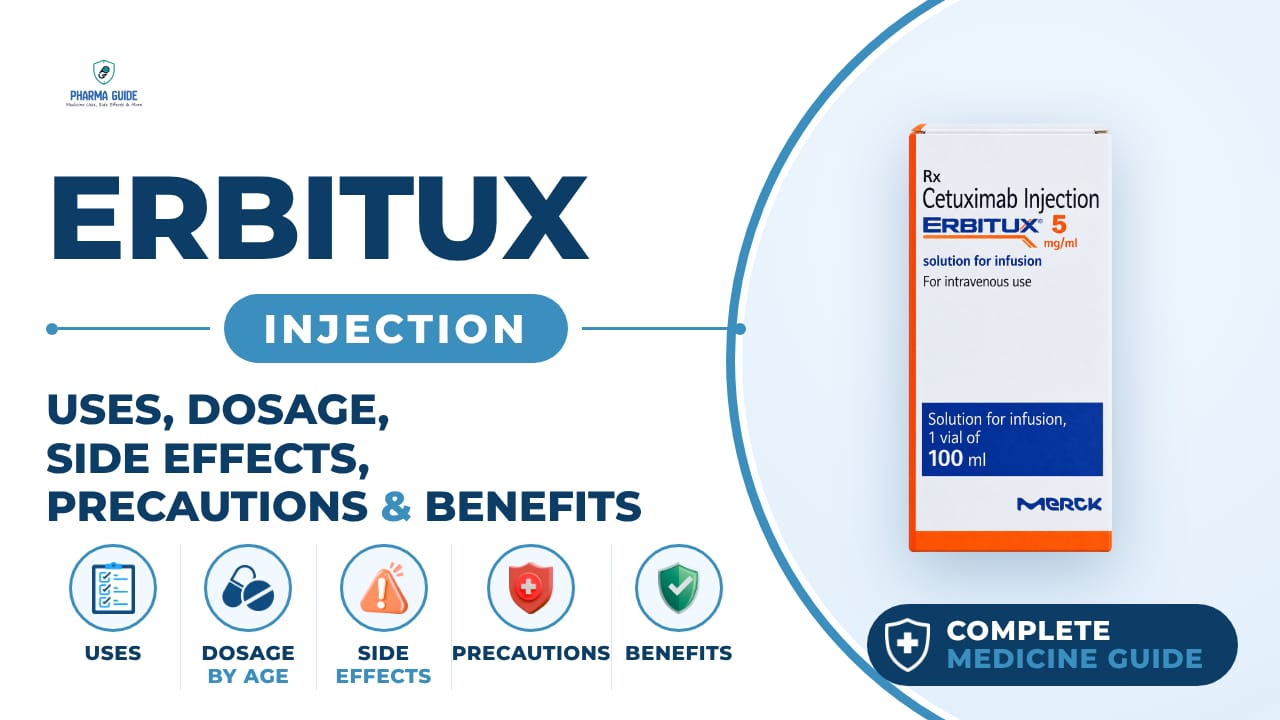
| Generic name | cetuximab |
|---|---|
| Drug class | EGFR inhibitor (epidermal growth factor receptor inhibitor); monoclonal antibody |
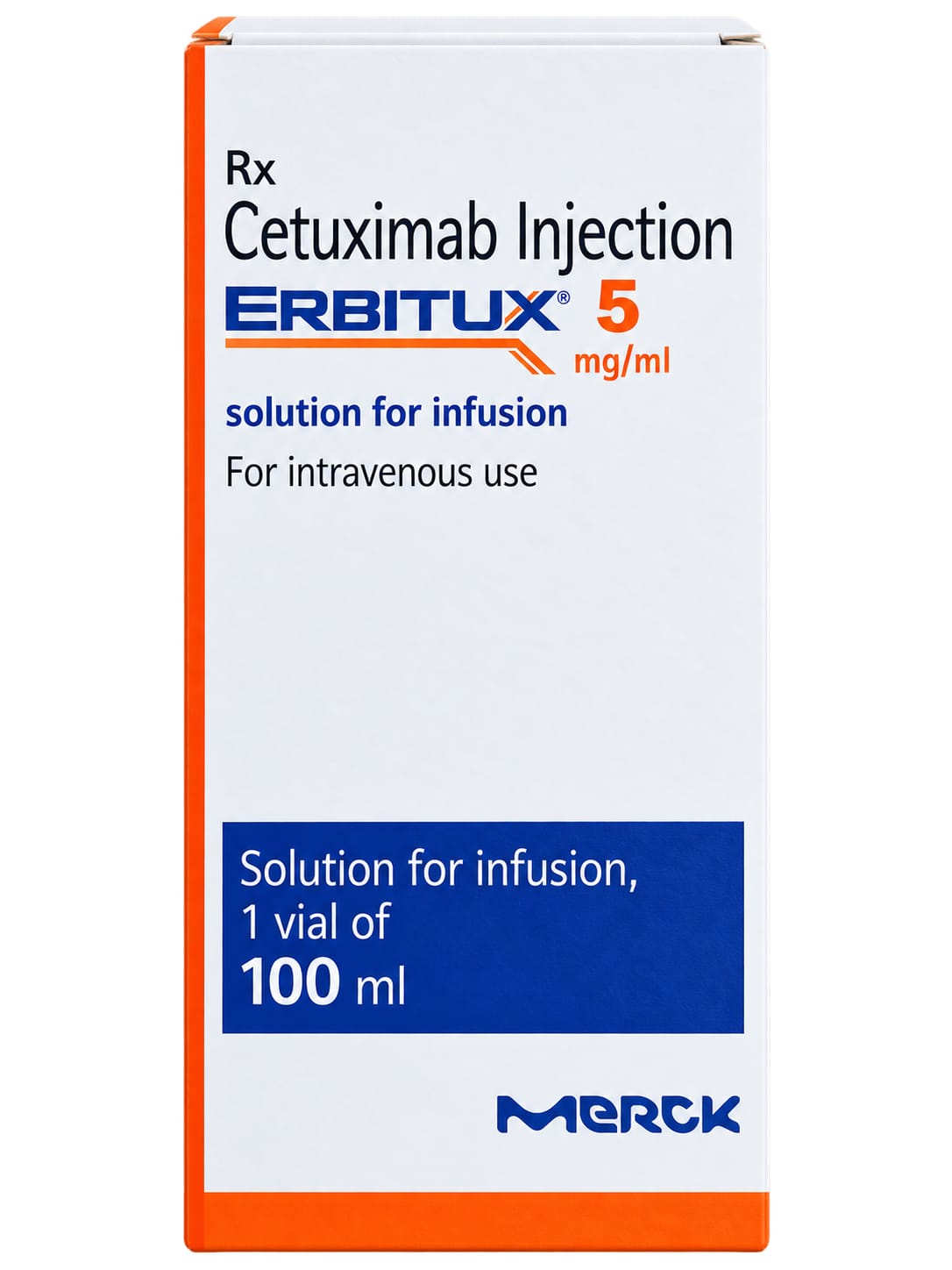
| Forms | Solution for infusion (liquid), given intravenously, supplied in single-dose vials |
Quick overview
Erbitux Injection contains cetuximab, a monoclonal antibody that works as an EGFR inhibitor. It is given by IV infusion to treat certain cases of metastatic colorectal cancer and squamous cell cancer of the head and neck. It works by attaching to the EGFR protein on cancer cells to help slow or stop their growth. It is administered only by a healthcare professional in a hospital or infusion center.
What is Erbitux Injection
Erbitux is a cancer medicine given by IV infusion into a vein. It contains cetuximab, a lab-made antibody that attaches to a protein called EGFR found on the surface of some cancer cells, which helps slow or stop the cancer from growing and spreading.
Erbitux Injection uses
- Metastatic colorectal cancer (cancer of the colon or rectum that has spread), including tumors with RAS wild-type status or BRAF V600E mutation
- Squamous cell cancer of the head and neck, including locally advanced disease and recurrent or metastatic disease
Benefits of Erbitux Injection
- Treats certain colorectal cancers
- Treats certain head and neck cancers
- Targets the EGFR receptor
- Helps inhibit cancer-cell growth and survival
- Can be combined with chemotherapy or radiation in selected treatment regimens
How Erbitux Injection works
Erbitux attaches to a protein called EGFR on the surface of cancer cells. This blocks signals the cell needs to grow and spread, so the cancer cell can no longer receive the messages it needs for growth and progression.
Erbitux Injection dosage
Erbitux is given as an infusion into a vein by a healthcare professional in a hospital or infusion center; it is not a medicine you take at home. Before your first dose, and usually before later doses too, you will be given an antihistamine and a corticosteroid medicine to help prevent reactions.
If you are also receiving chemotherapy, that medicine is given at least 1 hour after your Erbitux infusion finishes. If you are receiving encorafenib, that medicine is given before your Erbitux infusion starts. If used with radiation therapy, treatment with Erbitux is usually started about one week before the radiation therapy begins.
Your healthcare team will watch you closely during the infusion and for at least one hour afterward for signs of a reaction. Avoid sun exposure and tanning beds during treatment and for at least 2 months after your last dose, since this medicine can make skin more sensitive to sunburn; wear protective clothing and sunscreen when outdoors. If you miss an infusion appointment, call your doctor's office right away to reschedule. There is no relevant use of this medicine in children.
| Age group | Dose |
|---|---|
| 18–39 years | 400 mg/m² IV loading dose, then 250 mg/m² IV once weekly |
| 40–64 years | 400 mg/m² IV loading dose, then 250 mg/m² IV once weekly |
Available forms and strengths
- Solution for infusion (liquid), given intravenously, supplied in single-dose vials
Side effects of Erbitux Injection
Common
- Acne-like skin rash, itching, dry or cracked skin, scaling
- Changes in fingernails or toenails, nail bed inflammation
- Headache
- Diarrhea
- Nausea and vomiting
- Abdominal pain
- Fatigue/tiredness
- Reduced appetite, which may lead to weight loss
- Joint pain
- Fever
- Infections
- Excessive hair growth
Serious
- Severe infusion reactions, which can be life-threatening, including trouble breathing, dizziness, loss of consciousness, fever, chills, and chest pain
- Cardiac arrest or sudden death
- Severe allergic reaction with swelling of face/throat, hives, or trouble breathing
- Interstitial lung disease (lung inflammation) with shortness of breath, new or worse cough, chest pain, or fever
- Severe skin reactions including blistering, peeling, skin infections, or Stevens-Johnson syndrome
- Electrolyte imbalances such as low magnesium, potassium, or calcium, which can cause nausea, muscle cramps, weakness, or irregular heartbeat
- Low white blood cell counts leading to infection, especially when combined with platinum chemotherapy
- Eye problems such as keratitis, eye pain, redness, or blurred vision
- Blood clots in the legs or lungs
Warnings and precautions
- This medicine can cause serious, sometimes fatal, infusion reactions, which can include severe breathing difficulty, low or high blood pressure, loss of consciousness, or shock. If a severe reaction happens, treatment must be stopped right away.
- People with an allergy to red meat or tick bites, or with certain antibodies, have a much higher risk of severe allergic reactions to this medicine.
- Skin reactions are very common and can become severe, sometimes leading to serious skin infections such as staphylococcal scalded skin syndrome, necrotising fasciitis, or sepsis, which can be fatal.
- Lung inflammation (interstitial lung disease) has occurred, including fatal cases, especially in people with existing lung disease or those on certain chemotherapy.
- This medicine must not be combined with oxaliplatin-based chemotherapy in patients whose colorectal cancer has a mutant RAS gene or whose RAS status is unknown, because of worse outcomes.
- Serious and sometimes fatal infusion reactions and cardiac arrest or sudden death are the most serious warnings for this medicine.
- People with a history of heart disease, heart failure, or irregular heartbeat may have a higher risk of cardiac arrest or sudden death with this medicine, especially when combined with certain chemotherapy.
- This medicine can cause serious eye problems such as keratitis; people with a history of eye problems or who wear contact lenses should use it with caution.
- This medicine should not be used during pregnancy unless the potential benefit to the mother outweighs the risk to the baby. It may harm an unborn baby, so effective contraception should be used during treatment and for at least 2 months after the last dose.
- Women should not breastfeed during treatment and for 2 months after the last dose, because it isn't known whether the medicine passes into breast milk.
- Mild and moderate kidney impairment have been studied and do not require a dose change, but severe kidney impairment or end-stage kidney disease has not been studied.
- Mild liver impairment has been studied and does not appear to affect the medicine, but the effect of moderate or severe liver impairment has not been assessed.
- Discuss alcohol use with the oncology team, particularly during combination cancer therapy.
- Do not drive or use machines if you experience symptoms from treatment that affect your ability to concentrate and react.
Storage
- This medication is given in a hospital or clinic and will not be stored at home
- Store in a refrigerator (2°C–8°C)
- Keep out of the sight and reach of children
- Do not use after the expiry date on the label
When to see a doctor
- Get emergency help right away for signs of a severe allergic reaction such as hives, difficulty breathing, or swelling of the face or throat, or for a severe skin reaction with fever, sore throat, burning eyes, skin pain, or a red/purple rash with blistering and peeling.
- Tell your caregiver right away if you feel short of breath, itchy, nauseated, weak, or dizzy, or have chest pain, wheezing, noisy breathing, or a hoarse voice during or after the infusion.
- Call your doctor right away if you notice eye pain or redness, puffy eyelids, vision problems, a new or worsening cough, chest pain, shortness of breath, a severe skin rash, mouth blisters, or signs of low white blood cell counts like fever or sore throat.
- If you notice signs of an electrolyte imbalance such as increased thirst, urination, constipation, muscle pain or weakness, leg cramps, numbness, tingling, jitteriness, or irregular heartbeat, contact your doctor.
- If skin reactions already present get worse, or you have fever and tiredness, speak to a doctor immediately, since this may indicate a serious skin infection.
Alternatives
- Panitumumab
- Pembrolizumab
- Nivolumab
Watch the video
FAQs
What is Erbitux Injection used for?
Erbitux is used to treat certain metastatic colorectal cancers, including RAS wild-type or BRAF V600E mutation tumors, and squamous cell cancer of the head and neck, including locally advanced, recurrent, or metastatic disease.
How does Erbitux Injection work?
Erbitux contains cetuximab, an antibody that attaches to the EGFR protein on cancer cells, blocking signals the cells need to grow and spread.
How is Erbitux Injection given?
Erbitux is given as an IV infusion by a healthcare professional in a hospital or infusion center; it is not taken at home. An antihistamine and corticosteroid are usually given before doses to help prevent reactions.
What are the serious side effects of Erbitux Injection?
Serious side effects include severe infusion reactions, cardiac arrest or sudden death, severe allergic reactions, interstitial lung disease, severe skin reactions, electrolyte imbalances, low white blood cell counts, eye problems, and blood clots.
Can Erbitux Injection be used during pregnancy?
Erbitux should not be used during pregnancy unless the benefit outweighs the risk, as it may harm an unborn baby; effective contraception should be used during treatment and for at least 2 months after the last dose.
General information, not medical advice
Your prescriber and the leaflet in your pack know your situation. This page does not.
- Follow your prescriber and the leaflet
- Don't start, stop, or change a dose on your own
- Doses and warnings differ by country and product
Sources
Video
Related medicines

Injectafer Injection: Uses, Dosage, Side Effects, Precautions and Alternates
Iron products
Injectafer (ferric carboxymaltose) treats iron deficiency anemia and heart failure-related iron deficiency via IV. Learn uses, dosage, side effects, and

Gliclazide Tablet: Uses, Dosage, Side Effects, Precautions and Alternates
Sulfonylurea (hypoglycemic/antidiabetic agent)
Gliclazide Tablet is a sulfonylurea for type 2 diabetes that boosts insulin release. Learn about dosage, side effects, warnings, and precautions.