
Safety
General information, not medical advice
Your prescriber and the leaflet in your pack know your situation. This page does not.
- Follow your prescriber and the leaflet
- Don't start, stop, or change a dose on your own
- Doses and warnings differ by country and product
Ertugliflozin Tablet: Uses, Dosage, Side Effects, Precautions and Alternates
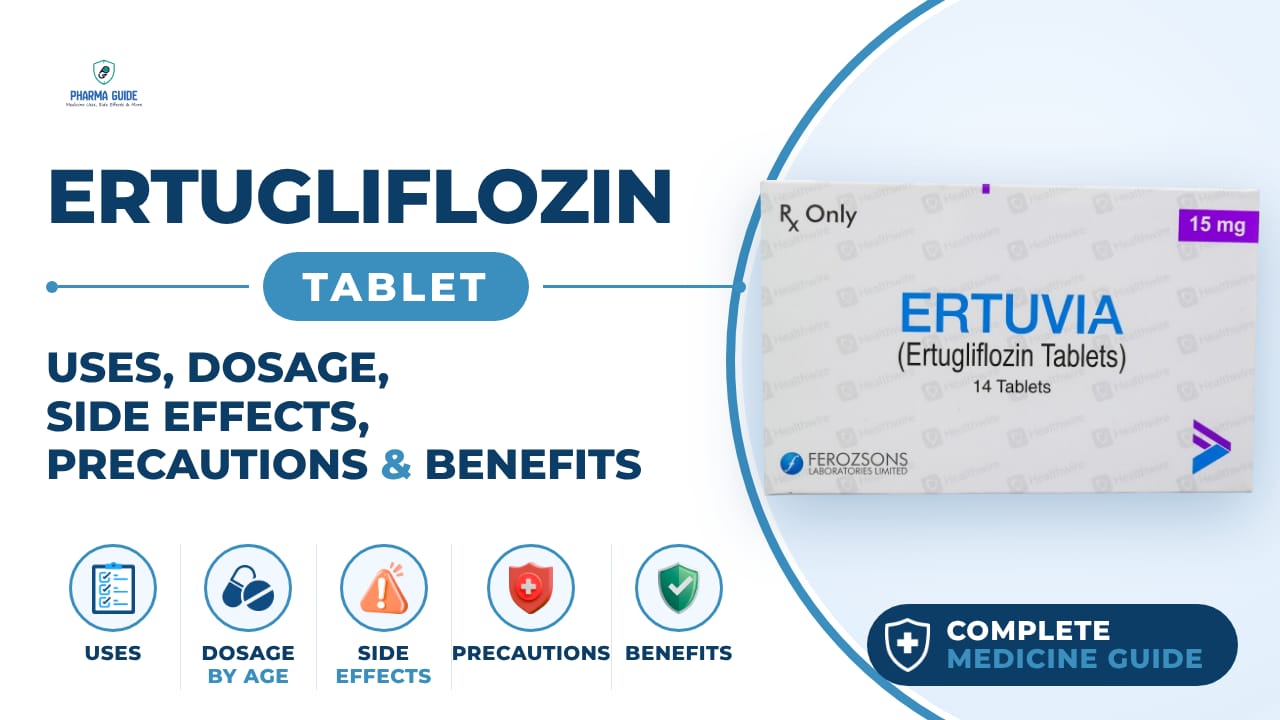
| Generic name | Ertugliflozin |
|---|---|
| Drug class | SGLT-2 inhibitors (sodium-glucose co-transporter 2 inhibitors) |
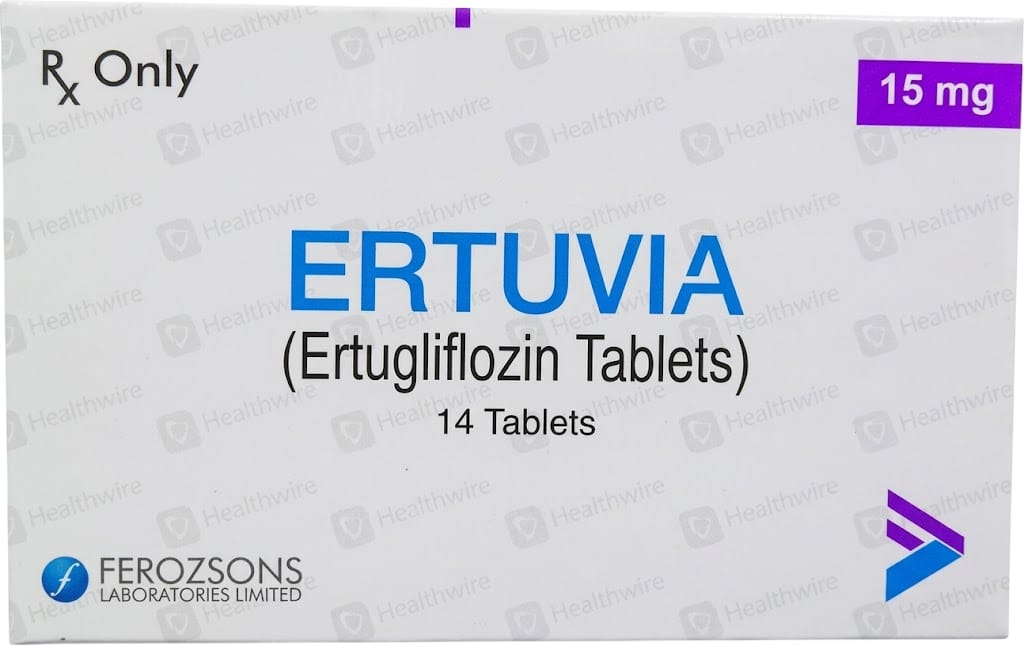
| Forms | Oral tablet (5 mg and 15 mg) |
Quick overview
Ertugliflozin Tablet is a prescription medicine from the SGLT2 inhibitor class, used in adults with type 2 diabetes to help lower blood sugar. It works through the kidneys to remove extra sugar and fluid in the urine. It is taken once a day and comes with specific warnings about infections, dehydration, and other risks that should be discussed with a doctor.
What is Ertugliflozin Tablet
Ertugliflozin is a prescription tablet used to help lower blood sugar in adults with type 2 diabetes. It belongs to a group of medicines called SGLT2 inhibitors.
Ertugliflozin Tablet uses
- Type 2 diabetes.
- Improving blood sugar control with diet and exercise.
- Managing high blood sugar in adults.
- Supporting long-term glucose control.
- Additional diabetes treatment when prescribed.
Benefits of Ertugliflozin Tablet
- Helps lower blood sugar.
- Improves glucose control.
- May support weight reduction.
- May help lower blood pressure.
- Supports diabetes management.
How Ertugliflozin Tablet works
Ertugliflozin works by blocking a protein in the kidneys called SGLT2, which normally reabsorbs sugar back into the blood. By blocking it, the kidneys remove more sugar and extra fluid through the urine, which lowers blood sugar levels.
Ertugliflozin Tablet dosage
Take by mouth once a day in the morning, with or without food. Take it at around the same time every day. Take it exactly as your doctor directs; do not take more, less, or more often than prescribed. Continue taking it even if you feel well; it controls diabetes but does not cure it. Do not stop taking it without talking to your doctor. If you miss a dose, take it as soon as you remember, unless it is almost time for your next dose—then skip the missed dose and do not double up.
| Age group | Dose |
|---|---|
| Under 18 years | Not recommended |
| 18–64 years | 5 mg, once/day |
| 65+ years | 5 mg, once/day |
Available forms and strengths
- Oral tablet (5 mg and 15 mg)
Side effects of Ertugliflozin Tablet
Common
- Urinating a lot, including at night
- Increased thirst
- Dry mouth
- Headache
- Vaginal odor, discharge, or itching
- Redness, itching, swelling, rash, discharge, or pain in the skin around the penis
- Urinary tract infections
- Dizziness or lightheadedness
Serious
- Signs of a genital infection: burning, itching, odor, discharge, pain, tenderness, redness or swelling of the genital or rectal area, fever, feeling unwell
- Signs of a urinary tract or kidney infection: frequent, urgent, burning, or painful urination; decrease in urine; cloudy, red, pink, or brown urine; strong smelling urine; pelvic or back pain; fever; nausea or vomiting
- Signs of dehydration: dry mouth, dark urine, decreased sweating, dry skin
- New pain, tenderness, sores, ulcers, or infections in the legs or feet (possible sign of serious infection related to amputation risk)
- Signs of ketoacidosis: nausea, vomiting, stomach pain, tiredness, confusion, unusual drowsiness, or trouble breathing
- Little or no urination
- Signs of a serious allergic reaction: hives, difficulty breathing, swelling of the face, lips, tongue, or throat
- Signs of low blood sugar: headache, hunger, weakness, sweating, confusion, irritability, dizziness, fast heart rate, feeling jittery
Warnings and precautions
- This medicine can increase the risk of leg or foot amputation, especially in people who have had a previous amputation, foot ulcers, or poor circulation.
- This medicine can cause serious infections of the genitals or area around the genitals, including a rare but life-threatening infection called Fournier's gangrene.
- This medicine can cause dehydration, so it is important to drink enough water while taking it.
- This medicine may cause a serious condition called ketoacidosis, where the blood becomes too acidic, even if blood sugar looks normal.
- This medicine can cause low blood pressure and dizziness when standing up quickly, especially when starting treatment.
- This medicine is not approved for people with type 1 diabetes and may increase the risk of ketoacidosis in those patients.
- Follow your doctor's instructions about using this medicine if you are pregnant. It should not be used during the second or third trimester of pregnancy.
- Do not breastfeed while taking this medicine.
- This medicine should not be used by people with severe kidney disease or those on dialysis, and caution is needed in people with kidney problems.
- Tell your doctor if you have liver disease before starting this medicine.
- Talk to your doctor about drinking alcohol while on this medicine, since alcohol can change blood sugar levels and worsen side effects.
- This medicine does not usually affect your ability to drive, but it can cause dizziness or sleepiness in some people, so be cautious.
Storage
- Keep this medication in the container it came in, tightly closed, and out of reach of children
- Store it at room temperature and away from excess heat and moisture (not in the bathroom)
- Keep unused tablets in the foil blister pack in its original container
- Dispose of unneeded medications in a way so that pets, children, and other people cannot take them; do not flush this medication down the toilet; use a medicine take-back program
When to see a doctor
- Get emergency help right away if you have signs of a severe allergic reaction, such as hives, trouble breathing, or swelling of the face, lips, tongue, or throat.
- Seek medical attention right away if you notice burning, itching, odor, discharge, pain, tenderness, redness, or swelling in the genital or rectal area, along with fever or feeling unwell.
- Call your doctor right away if you notice new pain, tenderness, sores, ulcers, or infections in your legs or feet.
- Call your doctor immediately if you have little or no urination.
- Stop taking this medicine and get emergency medical treatment if you have signs of ketoacidosis, such as nausea, vomiting, stomach pain, tiredness, or difficulty breathing.
- Call your doctor if you are sick with vomiting or diarrhea, eating or drinking less than usual, or sweating more than usual, since this can affect your blood sugar.
Alternatives
- Ipragliflozin
- Dapagliflozin
- Empagliflozin
Watch the video
FAQs
What is Ertugliflozin Tablet used for?
It is a prescription medicine used in adults with type 2 diabetes to help lower blood sugar, along with diet and exercise, for long-term glucose control.
How does Ertugliflozin Tablet work?
It blocks a protein in the kidneys called SGLT2, which normally reabsorbs sugar back into the blood. Blocking it causes the kidneys to remove more sugar and extra fluid through urine, lowering blood sugar levels.
What is the dosage of Ertugliflozin Tablet?
It is taken by mouth once a day in the morning, with or without food, at around the same time each day. The usual dose for adults 18 years and older is 5 mg once daily, as directed by a doctor.
What are the serious side effects of Ertugliflozin Tablet?
Serious side effects include genital infections, urinary tract or kidney infections, dehydration, new pain or sores on the legs or feet, ketoacidosis, little or no urination, and signs of a serious allergic reaction.
Who should not take Ertugliflozin Tablet?
It is not recommended for people under 18, those with severe kidney disease or on dialysis, people with type 1 diabetes, and it should not be used during the second or third trimester of pregnancy or while breastfeeding.
General information, not medical advice
Your prescriber and the leaflet in your pack know your situation. This page does not.
- Follow your prescriber and the leaflet
- Don't start, stop, or change a dose on your own
- Doses and warnings differ by country and product
Sources
Video
Related medicines

Injectafer Injection: Uses, Dosage, Side Effects, Precautions and Alternates
Iron products
Injectafer (ferric carboxymaltose) treats iron deficiency anemia and heart failure-related iron deficiency via IV. Learn uses, dosage, side effects, and

Gliclazide Tablet: Uses, Dosage, Side Effects, Precautions and Alternates
Sulfonylurea (hypoglycemic/antidiabetic agent)
Gliclazide Tablet is a sulfonylurea for type 2 diabetes that boosts insulin release. Learn about dosage, side effects, warnings, and precautions.