
Safety
General information, not medical advice
Your prescriber and the leaflet in your pack know your situation. This page does not.
- Follow your prescriber and the leaflet
- Don't start, stop, or change a dose on your own
- Doses and warnings differ by country and product
Erythromycin Tablet: Uses, Dosage, Side Effects, Precautions and Alternates
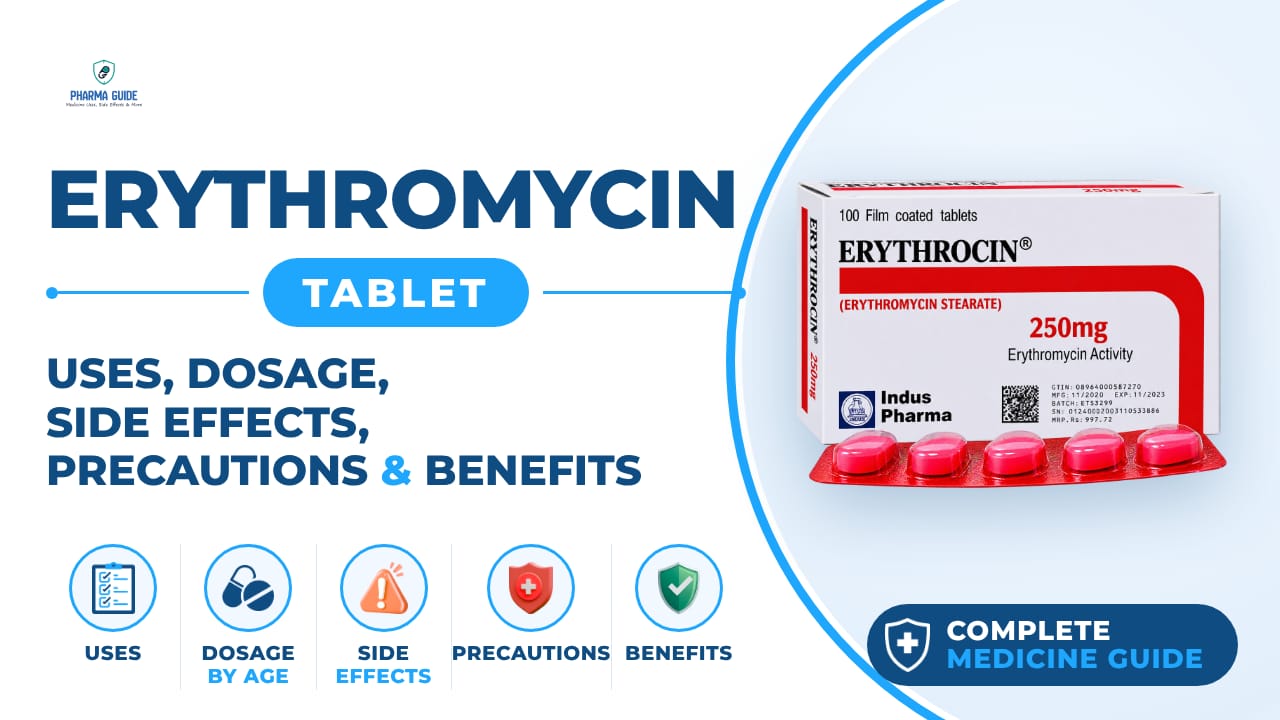
| Generic name | Erythromycin |
|---|---|
| Drug class | Macrolide antibiotic |
| Forms | Film-coated tablet, Delayed-release (enteric-coated) capsule, Granules, Oral suspension/syrup, Injection (infusion into a vein) |
Quick overview
Erythromycin Tablet contains erythromycin, a macrolide antibiotic. It is used in adults and children to prevent and treat infections caused by bacteria, but it will not treat a viral infection such as the common cold or flu. It works by stopping bacteria from making the proteins they need to survive, slowing their growth or killing them. It should always be taken exactly as prescribed by your doctor or pharmacist.
What is Erythromycin Tablet
Erythromycin is an antibiotic. It is used in adults and children to prevent and treat infections caused by bacteria. It will not treat a viral infection such as the common cold or flu.
Erythromycin Tablet uses
- Prevents and treats infections caused by bacteria
- Upper respiratory tract infections
- Lower respiratory tract infections
- Whooping cough (pertussis)
- Diphtheria
- Legionnaires' disease
- Skin and soft tissue infections
- Erythrasma
- Acne vulgaris
- Sexually transmitted diseases such as syphilis and chlamydia
Benefits of Erythromycin Tablet
- Helps clear bacterial infections by slowing the growth of, or killing, the bacteria causing your infection
How Erythromycin Tablet works
Erythromycin works by stopping bacteria from making the proteins they need to survive. This slows the growth of, or kills, the bacteria causing your infection.
Erythromycin Tablet dosage
Always take this medicine exactly as your doctor or pharmacist has told you. The tablets can be taken without regard to meals. Erythromycin should be swallowed, at least 30 minutes and preferably 2 hours before or after a meal for best absorption. Do not crush, chew, or break a delayed-release capsule or tablet; swallow it whole. You must chew the chewable tablet before you swallow it.
Take this medicine for the full prescribed length of time, even if you feel better, so the infection is fully cleared. Do not stop taking your medicine until your doctor tells you to, even if you are feeling better. If you forget a dose, take it as soon as you remember. Do not take a double dose to make up for a forgotten dose.
Erythromycin is not recommended for use in children less than 8 years of age; other forms may be more suitable for children.
| Age group | Dose |
|---|---|
| Under 1 month | Doctor-prescribed only |
| 1–11 years | Doctor-prescribed pediatric dose |
| 12–17 years | 250–500 mg every 6 hours |
| 18 years and older | 250 mg 4 times daily or 500 mg every 12 hours |
Available forms and strengths
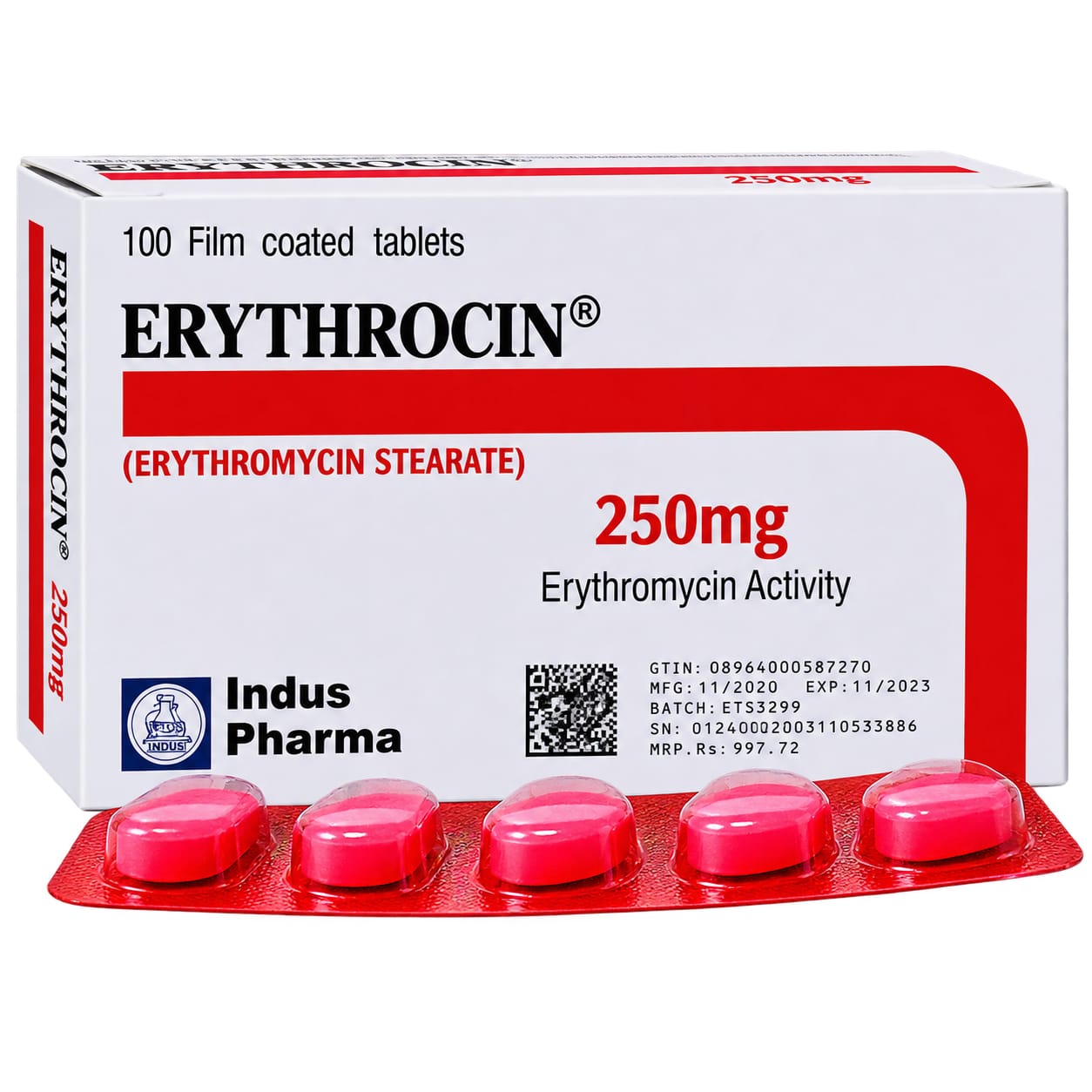
- Film-coated tablet
- Delayed-release (enteric-coated) capsule
- Granules
- Oral suspension/syrup
- Injection (infusion into a vein)
Side effects of Erythromycin Tablet
Common
- Nausea (feeling sick)
- Vomiting
- Diarrhoea
- Stomach pain, cramping and discomfort
- Loss of appetite
- Liver problems or abnormal liver function tests
- Itching or hives
- Mild skin rashes
Serious
- Signs of an allergic reaction such as difficulty breathing, fainting, swelling of the face, lips or throat, or skin rashes
- Severe skin reactions with large fluid-filled blisters, sores and ulcers
- Abnormal heart rhythms, palpitations, a faster heartbeat, or heart stopping
- Liver failure or liver problems causing yellowing of the skin or eyes (jaundice), pale stools and dark urine
- Severe or prolonged diarrhoea that may contain blood or mucus (may be a sign of bowel inflammation or colitis)
- Inflammation of the pancreas (pancreatitis)
- Abnormal muscle breakdown leading to kidney problems (rhabdomyolysis)
- Inflammation of the kidneys
- Reversible hearing loss (usually with high doses or in people with kidney problems)
- Ringing in the ears (tinnitus)
- Fits (seizures)
- Confusion or hallucinations
- Vomiting and irritability in young infants
- Worsening of myasthenia gravis symptoms (muscle weakness)
Warnings and precautions
- Erythromycin should be used during pregnancy only if clearly needed. It may cross the placenta. If you are pregnant, think you may be pregnant or are planning a baby, ask your doctor before taking this medicine. If you are treated for syphilis during pregnancy, your baby may need penicillin after birth.
- Erythromycin is excreted in breast milk. It should be used while breastfeeding only if clearly needed. Ask your doctor about any risk before breastfeeding.
- Reversible hearing loss can happen, usually in people with kidney problems or on high doses. Tell your doctor if you have ever had kidney disease.
- Talk to your doctor before taking this medicine if you have any liver problems. Since erythromycin is mainly removed by the liver, caution is needed in people with impaired liver function.
- Dizziness and blurred vision have been reported with erythromycin. Do not drive or use machines unless you are sure you are not affected.
- Do not take erythromycin with certain medicines such as terfenadine, astemizole, cisapride, pimozide, ergotamine or dihydroergotamine, as combining these can cause serious heart rhythm problems that may be fatal.
- Serious heart rhythm problems such as QT prolongation, ventricular tachycardia and torsades de pointes have been reported with erythromycin and other macrolides.
- Antibiotics including erythromycin can cause diarrhoea, which may be a sign of a new infection. If you have watery or bloody diarrhoea, stop taking the medicine and call your doctor. Do not use anti-diarrhoea medicine unless your doctor tells you to.
- Liver problems, with or without jaundice, have been reported. If signs of liver problems appear, treatment should be stopped.
- Do not take erythromycin with cholesterol medicines like lovastatin or simvastatin, as this can cause abnormal muscle breakdown leading to kidney problems.
- Erythromycin can worsen muscle weakness in people with myasthenia gravis. Tell your doctor if you have this condition before taking it.
- Serious side effects, including hearing loss or a life-threatening fast heart rate, may be more likely in older adults.
Storage
- Keep this medicine out of the sight and reach of children.
- Do not store above 25°C (some products advise room temperature 15 to 30°C in a tightly closed container).
- Store in the original container, away from moisture, heat, and light.
- Do not use this medicine after the expiry date. If the tablets are out of date, return them to your pharmacist.
- Do not throw away any medicines via wastewater or household waste. Ask your pharmacist how to throw away medicines you no longer use.
- If your doctor decides to stop your treatment, return any remaining tablets to a pharmacist.
When to see a doctor
- Contact your doctor immediately if you have signs of an allergic reaction such as difficulty breathing, fainting, swelling of the face, lips or throat, or severe skin reactions with blisters, sores and ulcers.
- Call your doctor at once if you have a headache with chest pain and severe dizziness, fainting, or fast or pounding heartbeats.
- Call your doctor at once if you have severe upper stomach pain spreading to your back with nausea and vomiting (possible pancreatitis), or signs of liver problems such as loss of appetite, tiredness, easy bruising or bleeding, dark urine, clay-coloured stools or jaundice.
- If you take more tablets than you should, or a child has taken some, stop taking them and seek medical advice urgently. Overdose can cause temporary hearing loss, nausea, vomiting and diarrhoea.
- If you are treating a young child and they are irritable or vomit when fed, contact your doctor immediately.
- For a suspected overdose, seek emergency medical attention or call your local poison control center.
Alternatives
- Erythroped
- E.E.S. Granules
- EryPed
- Ery-Tab
- Erythrocin
- PCE Dispertab
Watch the video
FAQs
What is Erythromycin Tablet used for?
It is used to prevent and treat bacterial infections such as respiratory tract infections, whooping cough, diphtheria, Legionnaires' disease, skin infections, acne, and sexually transmitted diseases like syphilis and chlamydia. It will not treat viral infections like the common cold or flu.
How should I take Erythromycin Tablet?
Take it exactly as prescribed, swallowed at least 30 minutes before or 2 hours after a meal for best absorption. Do not crush or chew delayed-release tablets, but chewable tablets must be chewed. Complete the full course even if you feel better, and do not double a missed dose.
What is the dosage of Erythromycin Tablet for adults?
For adults 18 years and older, the typical dose is 250 mg four times daily or 500 mg every 12 hours. Dosing for children and younger age groups should be determined by a doctor.
What are the side effects of Erythromycin Tablet?
Common side effects include nausea, vomiting, diarrhoea, stomach pain, loss of appetite, liver function changes, itching, and mild skin rashes. Serious effects can include allergic reactions, severe skin reactions, abnormal heart rhythms, liver failure, pancreatitis, hearing loss, and seizures.
Can Erythromycin Tablet be taken with other medicines?
No, it should not be taken with certain medicines such as terfenadine, astemizole, cisapride, pimozide, ergotamine, dihydroergotamine, or cholesterol medicines like lovastatin or simvastatin, as these combinations can cause serious heart rhythm problems or muscle breakdown.
General information, not medical advice
Your prescriber and the leaflet in your pack know your situation. This page does not.
- Follow your prescriber and the leaflet
- Don't start, stop, or change a dose on your own
- Doses and warnings differ by country and product
Sources
Video
Related medicines

AzaSite Eye Drops: Uses, Dosage, Side Effects, Precautions and Alternates
macrolide antibiotic
AzaSite Eye Drops treat bacterial conjunctivitis with a 7-day course of azithromycin, requiring only once-daily dosing after the first 2 days.
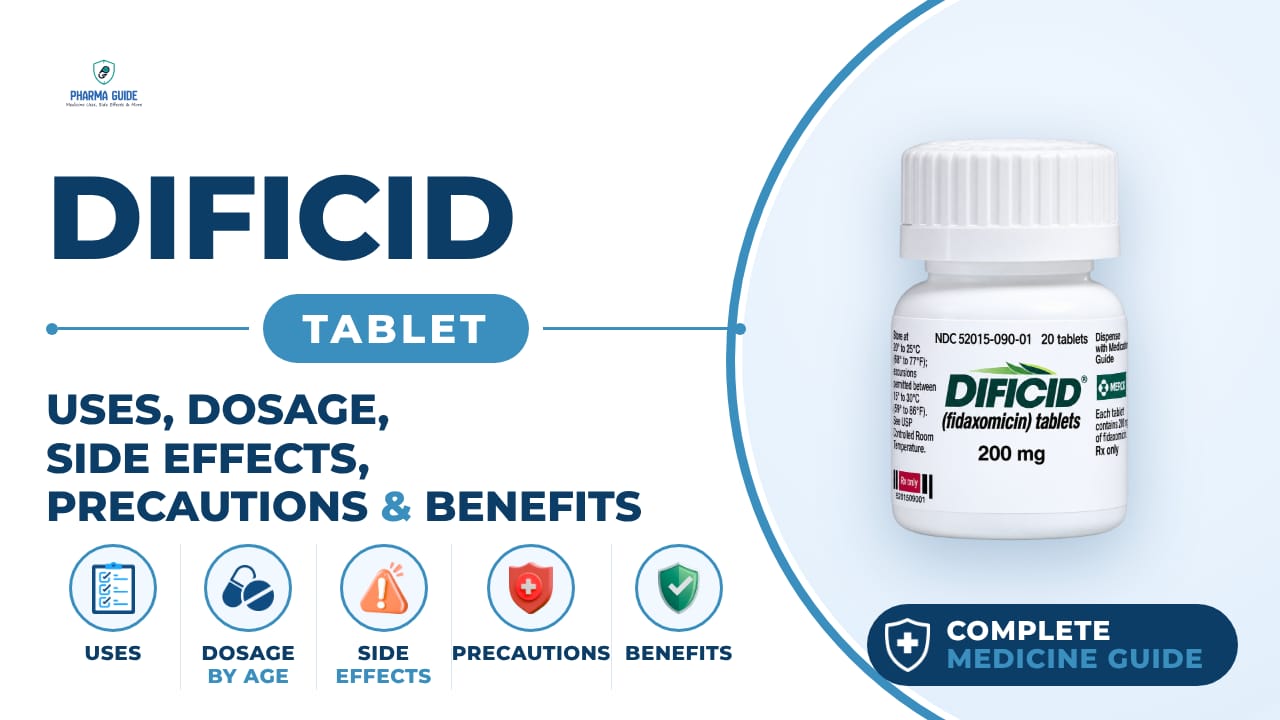
Dificid Tablet: Uses, Dosage, Side Effects, Precautions and Alternates
macrolide antibiotic
Dificid Tablet (fidaxomicin) treats C. difficile diarrhea in adults and children. Learn about dosage, side effects, warnings, and storage tips.