
Safety
General information, not medical advice
Your prescriber and the leaflet in your pack know your situation. This page does not.
- Follow your prescriber and the leaflet
- Don't start, stop, or change a dose on your own
- Doses and warnings differ by country and product
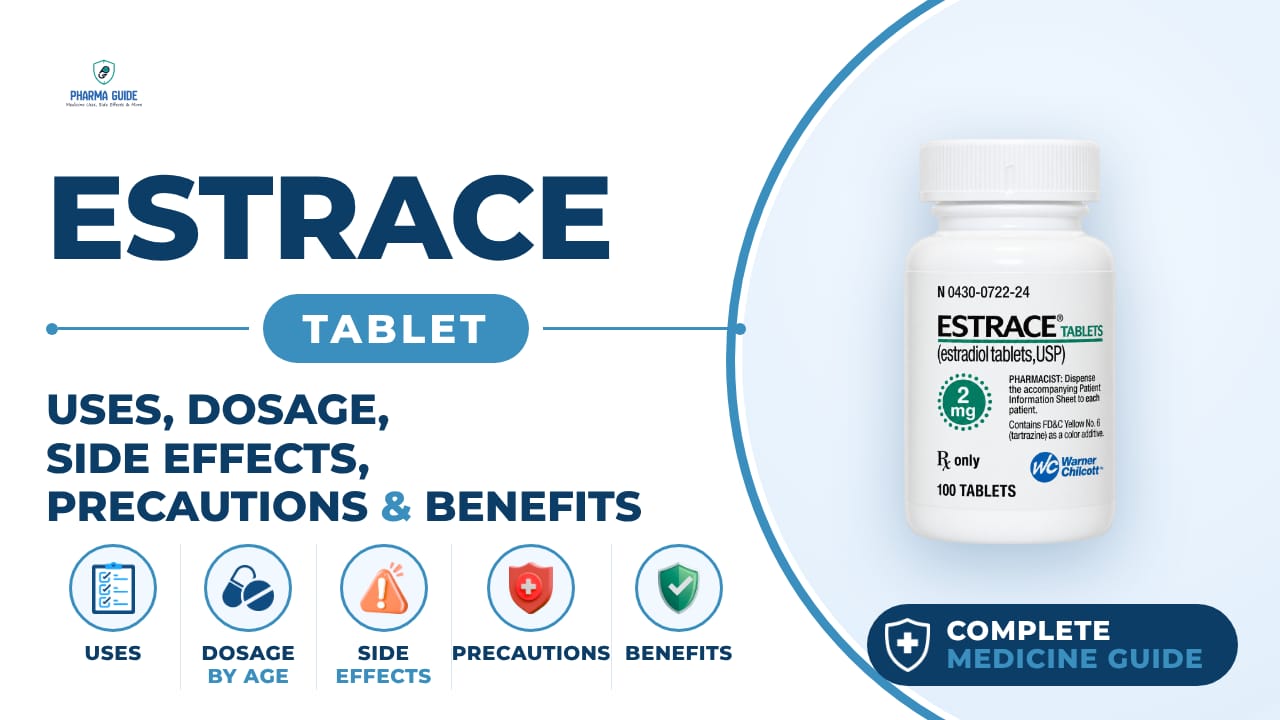
Estrace Tablet: Uses, Dosage, Side Effects, Precautions and Alternates
| Generic name | estradiol |
|---|---|
| Drug class | Estrogen |
| Forms | Tablet |
Quick overview
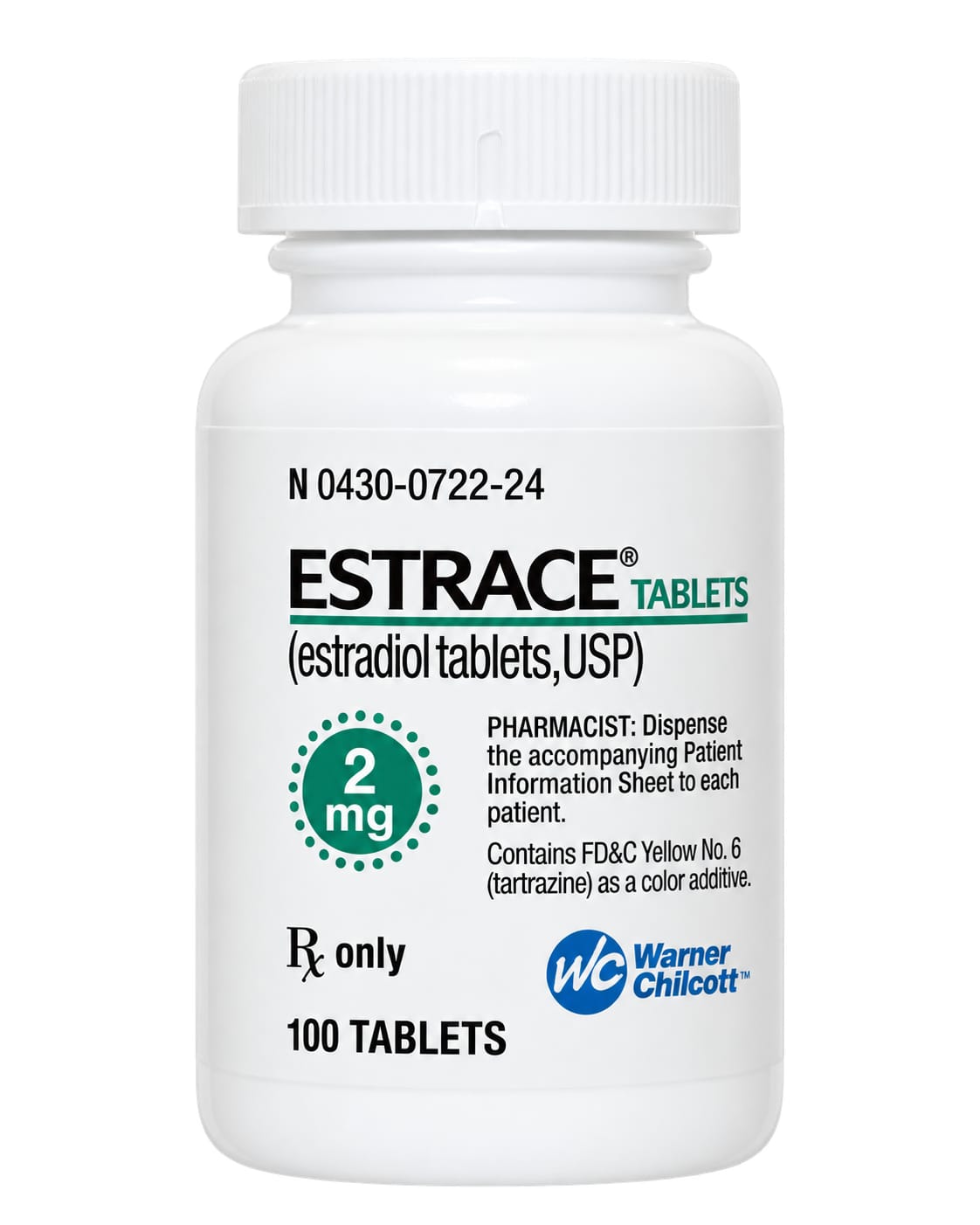
Estrace Tablet contains estradiol, a form of estrogen used to treat menopause symptoms, prevent osteoporosis, and replace low natural estrogen levels. It is also used in certain hormone-related cancer treatments. Brand-name Estrace tablets have been discontinued in the United States, but generic estradiol tablets remain available in the same strengths.
What is Estrace Tablet
Estrace tablets contain estradiol, a form of estrogen. Estradiol is a female sex hormone that controls many processes in the body. Brand-name Estrace tablets have been discontinued in the United States, but generic estradiol tablets are still available in the same strengths.
Estrace Tablet uses
- Treating menopause symptoms such as hot flashes and vaginal changes
- Preventing osteoporosis (bone loss) in menopausal women
- Replacing estrogen in women with ovarian failure or other conditions causing low natural estrogen
- Treating certain hormone-related cancers in women and men, as part of cancer treatment
- Treating moderate to severe hot flashes, night sweats, and flushes from menopause
- Treating vaginal dryness caused by menopause
- Treating advanced stages of breast cancer in appropriately selected patients
- Treating advanced androgen-dependent prostate cancer
Benefits of Estrace Tablet
- Relieves hot flashes and other menopause symptoms
- Helps prevent bone loss (osteoporosis) after menopause
- Replaces estrogen when the body does not make enough naturally
- Can help manage certain hormone-related cancers as part of a treatment plan
How Estrace Tablet works
Estradiol replaces the estrogen the body stops making during menopause, which helps relieve hot flashes, vaginal dryness, and bone loss. In some cases, it is also used to treat prostate cancer by blocking certain hormones that cancer cells need to grow, and at higher doses it can treat certain breast cancers that have spread.
Estrace Tablet dosage
Take this medicine exactly as prescribed and follow all directions on your prescription label. Do not take it in larger amounts or for longer than recommended. You can take it with or without food.
Pay attention to whether you should take it every day or in cycles, and talk with your prescriber about the schedule that works best for you. Your doctor should check your progress regularly, about every 3 to 6 months, to see if you still need treatment.
Self-check your breasts for lumps monthly and have a mammogram every year while using this medicine. If you need major surgery or will be on long-term bed rest, you may need to stop using this medicine for a short time.
If you miss a dose, take it as soon as you remember, but skip it if it is almost time for your next dose; do not take extra medicine to make up for a missed dose.
Avoid smoking, since it can greatly increase your risk of blood clots, stroke, or heart attack while using this medicine. Avoid grapefruit and grapefruit juice, since they may interact with this medicine and cause unwanted side effects.
Use exactly as prescribed by your doctor or pharmacist.
Available forms and strengths
- Tablet
Side effects of Estrace Tablet
Common
- Nausea, vomiting, diarrhea, stomach cramps
- Mood changes, sleep problems (insomnia)
- Cold symptoms such as stuffy nose, sinus pain, sore throat
- Weight gain or weight changes
- Headache, back pain
- Breast pain or tenderness
- Thinning scalp hair or hair loss
- Vaginal itching or discharge, changes in menstrual periods, breakthrough bleeding
- Bloating
- Freckles or darkening of facial skin
Serious
- Signs of heart attack: chest pain or pressure, pain spreading to jaw or shoulder, nausea, sweating
- Signs of stroke: sudden numbness or weakness especially on one side of the body, sudden severe headache, slurred speech, problems with vision or balance
- Signs of a blood clot: sudden vision loss, stabbing chest pain, shortness of breath, coughing up blood, pain or warmth in one or both legs
- Swelling or tenderness in the stomach
- Jaundice (yellowing of skin or eyes)
- Memory problems, confusion, unusual behavior
- Unusual vaginal bleeding, pelvic pain
- A lump in the breast
- Signs of high calcium levels: nausea, vomiting, constipation, increased thirst or urination, muscle weakness, bone pain, lack of energy
- Signs of an allergic reaction: hives, difficulty breathing, swelling of the face, lips, tongue, or throat
Warnings and precautions
- This medicine can increase the risk of a condition that may lead to uterine (endometrial) cancer. Report any unusual vaginal bleeding to your doctor right away.
- Using this medicine can increase the risk of blood clots, stroke, heart attack, or cancer of the breast, uterus, or ovaries. It should not be used to try to prevent heart disease, stroke, or dementia.
- Do not use this medicine if you have unusual vaginal bleeding that hasn't been checked by a doctor, liver disease, a history of heart attack, stroke, or blood clot, an increased risk of blood clots, or a history of hormone-related cancer.
- You are at even greater risk of blood clots, stroke, or heart attack if you have high blood pressure, diabetes, high cholesterol, are overweight, or smoke.
- People over 65 using estrogen products have a higher risk of developing dementia.
- This medicine can sometimes cause gallbladder problems, and some people have needed surgery to remove their gallbladder after starting it.
- A blood clot in the eye can occur with estrogen products, which can cause sudden vision loss.
- Do not use this medicine if you are pregnant. Tell your doctor right away if you become pregnant during treatment.
- This medicine can lower the hormone needed to make breast milk and can reduce milk production. Tell your doctor if you are breastfeeding.
- Tell your doctor if you have kidney disease before starting this medicine.
- Do not use this medicine if you have liver disease or a history of jaundice caused by pregnancy or hormone use, since the liver breaks down estrogen and liver problems can increase side effects.
- Use the lowest effective dose for the shortest appropriate duration.
- Tell the clinician about any history of breast cancer, unexplained vaginal bleeding, liver disease, or blood clots.
Storage
- Store at room temperature away from moisture, heat, and light.
- Keep the bottle tightly closed when not in use.
- Dispense in a tight, light-resistant container with a child-resistant closure.
- Keep this and all medications out of the reach of children.
When to see a doctor
- Get emergency help right away if you have signs of an allergic reaction such as hives, difficulty breathing, or swelling of your face, lips, tongue, or throat.
- Call your doctor right away if you have heart attack symptoms such as chest pain or pressure, pain spreading to your jaw or shoulder, nausea, or sweating.
- Call your doctor right away if you notice signs of a stroke, such as sudden numbness or weakness especially on one side of the body, sudden severe headache, slurred speech, or problems with vision or balance.
- Call your doctor right away if you notice signs of a blood clot, such as sudden vision loss, stabbing chest pain, shortness of breath, coughing up blood, or pain or warmth in one or both legs.
- Call your doctor right away if you have unusual vaginal bleeding, pelvic pain, jaundice (yellowing of skin or eyes), a breast lump, or memory problems, confusion, or unusual behavior.
- Seek emergency medical attention if you think you have taken too much of this medicine.
Alternatives
- Vaginal estrogen products
- Conjugated estrogens
- Estradiol gel
- Estradiol transdermal patch
Watch the video
FAQs
What is Estrace Tablet used for?
It treats menopause symptoms like hot flashes and vaginal dryness, helps prevent osteoporosis, replaces low natural estrogen, and is used in certain hormone-related cancer treatments including advanced breast cancer and androgen-dependent prostate cancer.
Is brand-name Estrace Tablet still available?
No, brand-name Estrace tablets have been discontinued in the United States, but generic estradiol tablets remain available in the same strengths.
How should I take Estrace Tablet?
Take it exactly as prescribed, with or without food, following the schedule your prescriber recommends. Do not take more than prescribed, and if you miss a dose, take it as soon as you remember unless it's almost time for your next dose.
What are the serious risks of taking Estrace Tablet?
It can increase the risk of blood clots, stroke, heart attack, gallbladder problems, and cancer of the breast, uterus, or ovaries. People over 65 also have a higher risk of developing dementia while using estrogen products.
Can I smoke while taking Estrace Tablet?
No, smoking should be avoided because it can greatly increase the risk of blood clots, stroke, or heart attack while using this medicine.
General information, not medical advice
Your prescriber and the leaflet in your pack know your situation. This page does not.
- Follow your prescriber and the leaflet
- Don't start, stop, or change a dose on your own
- Doses and warnings differ by country and product
Sources
Video
Related medicines

Injectafer Injection: Uses, Dosage, Side Effects, Precautions and Alternates
Iron products
Injectafer (ferric carboxymaltose) treats iron deficiency anemia and heart failure-related iron deficiency via IV. Learn uses, dosage, side effects, and

Gliclazide Tablet: Uses, Dosage, Side Effects, Precautions and Alternates
Sulfonylurea (hypoglycemic/antidiabetic agent)
Gliclazide Tablet is a sulfonylurea for type 2 diabetes that boosts insulin release. Learn about dosage, side effects, warnings, and precautions.