
Safety
General information, not medical advice
Your prescriber and the leaflet in your pack know your situation. This page does not.
- Follow your prescriber and the leaflet
- Don't start, stop, or change a dose on your own
- Doses and warnings differ by country and product
Ethambutol Tablet: Uses, Dosage, Side Effects, Precautions and Alternates
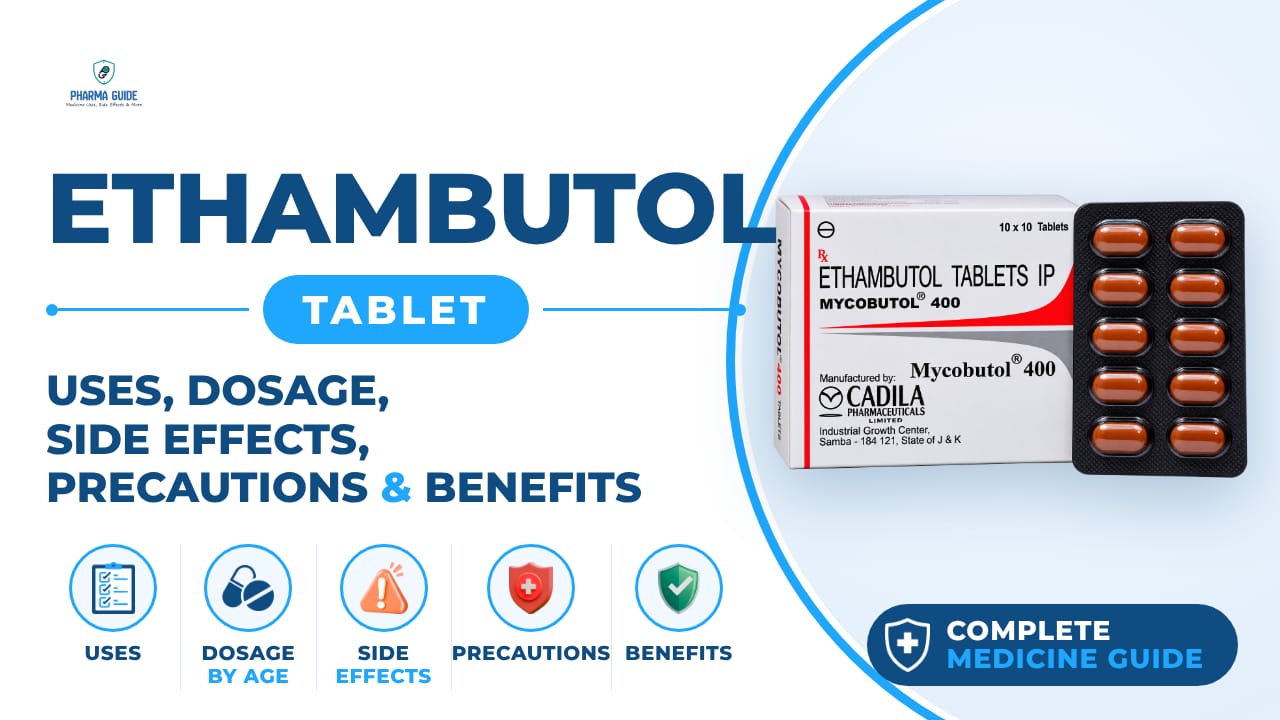
| Generic name | ethambutol, ethambutol HCl, ethambutol hydrochloride |
|---|---|
| Drug class | antitubercular agent |
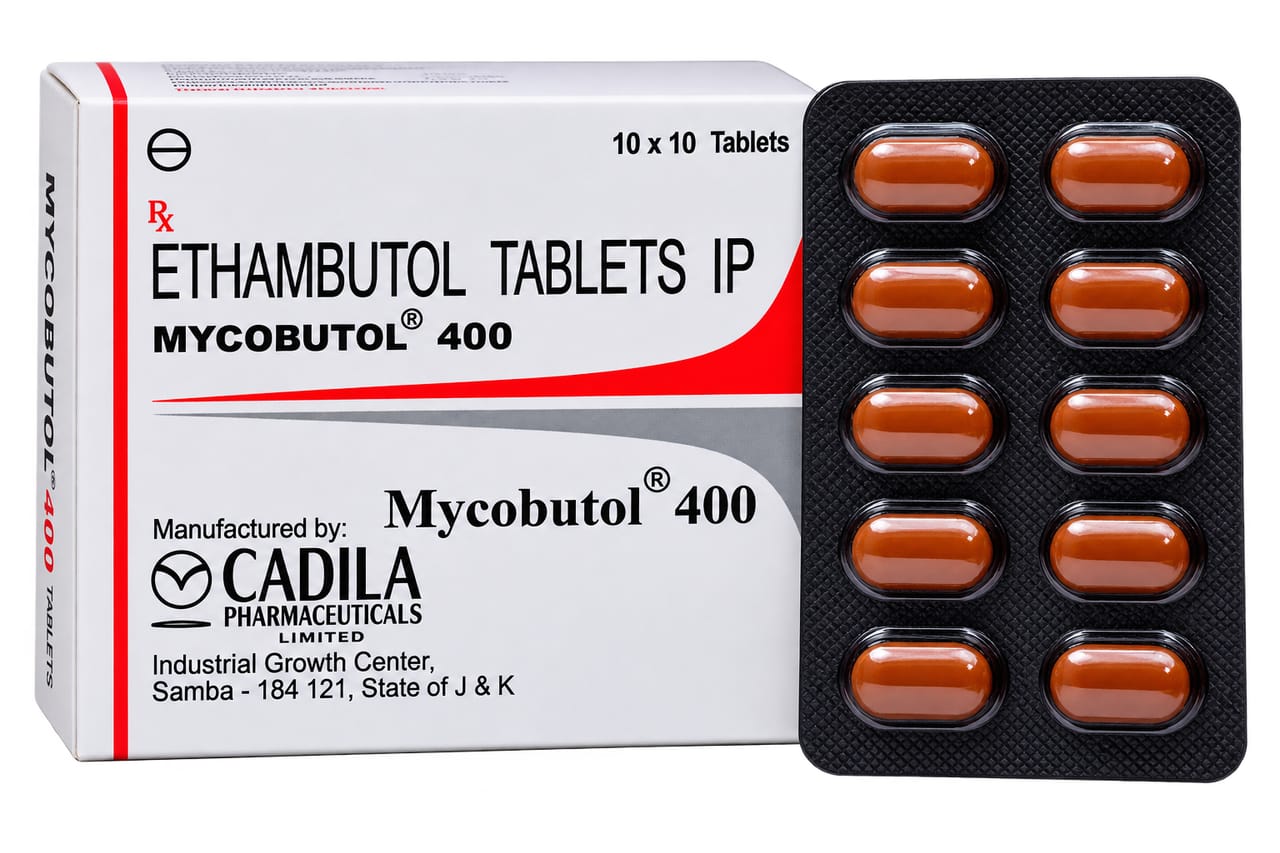
| Forms | 100 mg oral tablets, 400 mg oral tablets |
Quick overview
Ethambutol is a prescription antitubercular medicine used to treat tuberculosis (TB), an infection caused by bacteria. It is taken along with other TB medicines and will not treat colds, the flu, or infections caused by viruses. It works by stopping the TB bacteria from multiplying so the body can fight off the infection. Dosing is based on age and body weight, and it is important to complete the full prescribed course.
What is Ethambutol Tablet
Ethambutol, also known as ethambutol HCl or ethambutol hydrochloride, is a prescription medicine belonging to the antitubercular agent drug class. It is used to treat tuberculosis (TB), an infection caused by bacteria. It will not treat colds, the flu, or infections caused by viruses. It is taken along with other TB medicines.
Ethambutol Tablet uses
- Treats tuberculosis (TB), usually combined with other TB medicines
Benefits of Ethambutol Tablet
- Helps stop the tuberculosis bacteria from multiplying, making it easier for the body to fight off and clear the infection
How Ethambutol Tablet works
Ethambutol helps stop the tuberculosis bacteria from multiplying in your body, making it easier for your body to fight off the infection and get rid of the bacteria.
Ethambutol Tablet dosage
Take this medication by mouth with water. You can take it with or without food. If it upsets your stomach, take it with food.
Take each dose exactly as prescribed and do not skip doses, since skipping doses can make the infection resistant to this and other medicines, and you may also spread the infection to others.
Keep taking this medication unless your care team tells you to stop. Take this drug at the same time of day. It is important to complete your prescribed course of ethambutol, even if your symptoms get better or go away, to reduce the risk that future infections become resistant.
Do not take any medications or supplements that contain aluminum, such as some antacids, for 4 hours before or after taking this medication.
Do not share this medicine with other people, even if they have the same condition, as it may harm them.
If you miss a dose, take it as soon as you remember. If it is almost time for your next dose, skip the missed dose and take only the next dose. Do not take double or extra doses.
Talk to your care team about use in children; it may be prescribed for children as young as 13 years for selected conditions, with precautions.
| Age group | Dose |
|---|---|
| Under 5 years | Generally avoided unless specialist TB guidance is available |
| 5–17 years | 15–25 mg/kg once daily, depending on TB regimen |
| 18–64 years | 15–20 mg/kg once daily; higher intermittent doses may be used in specific TB regimens |
| 65+ years | Weight-based dosing; kidney function and vision should be monitored |
Available forms and strengths
- 100 mg oral tablets
- 400 mg oral tablets
Side effects of Ethambutol Tablet
Common
- Vision problems
- Joint pain
- Nausea or vomiting
- Stomach discomfort or pain
- Fever
- Feeling unwell, tired, or low energy
- Headache
- Dizziness
- Confusion
- Hallucinations (seeing or hearing things that others do not)
- Decreased appetite
- Pain, tingling, or numbness in the hands or feet
- Feeling weak
Serious
- Vision problems, including trouble seeing clearly, color blindness, or in rare cases permanent vision loss
- Liver damage (hepatotoxicity), which can sometimes lead to death
- Severe allergic reactions, including breathing problems, wheezing, racing heart, swelling of the face, lips, mouth, tongue, or throat, trouble swallowing, throat tightness, hives, or skin rash
- Confusion
- Hallucinations
- Joint pain or swelling
- Unusual burning, numbness, or tingling
- Unexplained bruising or bleeding
- Fever, chills, or sore throat
- Swollen gland
- Not able to pass urine or change in how much urine is passed
- Chest pain
- Shortness of breath, sudden weight gain, or swelling in the arms or legs
- Fast or abnormal heartbeat
Warnings and precautions
- Do not use ethambutol if you have optic neuritis, an eye condition that causes vision changes or loss. Ethambutol should not be used by people who are unable to notice or report changes in their vision. Do not give this medicine to a child younger than 13 years of age.
- Taking antacids that contain aluminum with ethambutol can make it not work as well; avoid aluminum-containing products for 4 hours before or after your dose.
- It is important to complete the full prescribed course of ethambutol, even if you feel better, to reduce the risk of the infection becoming resistant to this or other similar medicines.
- It is not known if or how ethambutol could affect pregnancy or harm an unborn baby. Tell your health care provider if you are pregnant or plan to become pregnant so they can decide if it is right for you.
- Ethambutol passes into breast milk. Tell your health care provider if you are breastfeeding or plan to breastfeed so they can advise you.
- Tell your care team if you have kidney disease before taking this medicine.
- Tell your care team if you have liver disease. Ethambutol can cause liver damage, which can sometimes be deadly, so regular checkups and lab work are important.
- It is not known for certain if alcohol affects ethambutol, but drinking alcohol while taking it may increase the risk of dizziness.
Storage
- Store at room temperature between 20 and 25 degrees C (68 and 77 degrees F).
- It can be exposed to temperatures between 59 F and 86 F (15 C and 30 C) for shorter periods, such as when transporting it.
- Store it in a cool, dry place, and protect it from light and moisture. Keep the container tightly closed.
- Do not store in a bathroom.
- Keep out of the reach of children and pets.
- Get rid of any unused medication after the expiration date.
- Take the medication to a medication take-back program if possible.
- If you cannot return the medication, check the label or package insert to see if it should be thrown out in the garbage or flushed down the toilet; if unsure, ask your care team. If safe to trash, mix the medication with cat litter, dirt, coffee grounds, or another unwanted substance, seal it in a bag or container, and put it in the trash.
- Do not flush down a toilet or pour down a drain unless told to do so.
When to see a doctor
- Get medical help right away if you notice any change in your eyesight, such as trouble seeing clearly, color changes, or vision loss.
- Call your doctor right away if you notice signs of liver problems, such as dark urine, tiredness, decreased appetite, upset stomach or stomach pain, light-colored stools, vomiting, or yellowing of the skin or eyes.
- Stop taking ethambutol and get help right away if you have signs of a serious allergic reaction, such as breathing problems, wheezing, racing heart, swelling of the face, lips, mouth, tongue, or throat, trouble swallowing, throat tightness, hives, or skin rash.
- Get medical help right away if you think you or someone else has taken too much ethambutol.
- Call your doctor right away if you feel confused or have hallucinations (seeing or hearing things that are not there).
Alternatives
- Rifabutin
- Streptomycin
- Amikacin
- Levofloxacin
- Moxifloxacin
- Linezolid
- Bedaquiline
Watch the video
FAQs
What is Ethambutol Tablet used for?
Ethambutol is a prescription antitubercular medicine used to treat tuberculosis (TB), usually combined with other TB medicines. It will not treat colds, the flu, or viral infections.
How does Ethambutol Tablet work?
Ethambutol helps stop tuberculosis bacteria from multiplying in the body, making it easier for the body to fight off and clear the infection.
How should I take Ethambutol Tablet?
Take it by mouth with water, with or without food (take with food if it upsets your stomach). Take each dose exactly as prescribed, at the same time of day, and do not skip doses or share the medicine with others. Avoid aluminum-containing antacids for 4 hours before or after your dose.
What are the serious side effects of Ethambutol Tablet?
Serious side effects include vision problems such as trouble seeing clearly, color blindness, or rare permanent vision loss, liver damage, severe allergic reactions, confusion, hallucinations, joint pain or swelling, unusual numbness or tingling, unexplained bruising or bleeding, and changes in urination.
Who should not take Ethambutol Tablet?
Ethambutol should not be used by people with optic neuritis or those unable to notice or report vision changes, and it should not be given to children younger than 13 years of age.
General information, not medical advice
Your prescriber and the leaflet in your pack know your situation. This page does not.
- Follow your prescriber and the leaflet
- Don't start, stop, or change a dose on your own
- Doses and warnings differ by country and product
Sources
Video
Related medicines

Injectafer Injection: Uses, Dosage, Side Effects, Precautions and Alternates
Iron products
Injectafer (ferric carboxymaltose) treats iron deficiency anemia and heart failure-related iron deficiency via IV. Learn uses, dosage, side effects, and

Gliclazide Tablet: Uses, Dosage, Side Effects, Precautions and Alternates
Sulfonylurea (hypoglycemic/antidiabetic agent)
Gliclazide Tablet is a sulfonylurea for type 2 diabetes that boosts insulin release. Learn about dosage, side effects, warnings, and precautions.