
Safety
General information, not medical advice
Your prescriber and the leaflet in your pack know your situation. This page does not.
- Follow your prescriber and the leaflet
- Don't start, stop, or change a dose on your own
- Doses and warnings differ by country and product
Ethide Tablet: Uses, Dosage, Side Effects, Precautions and Alternates
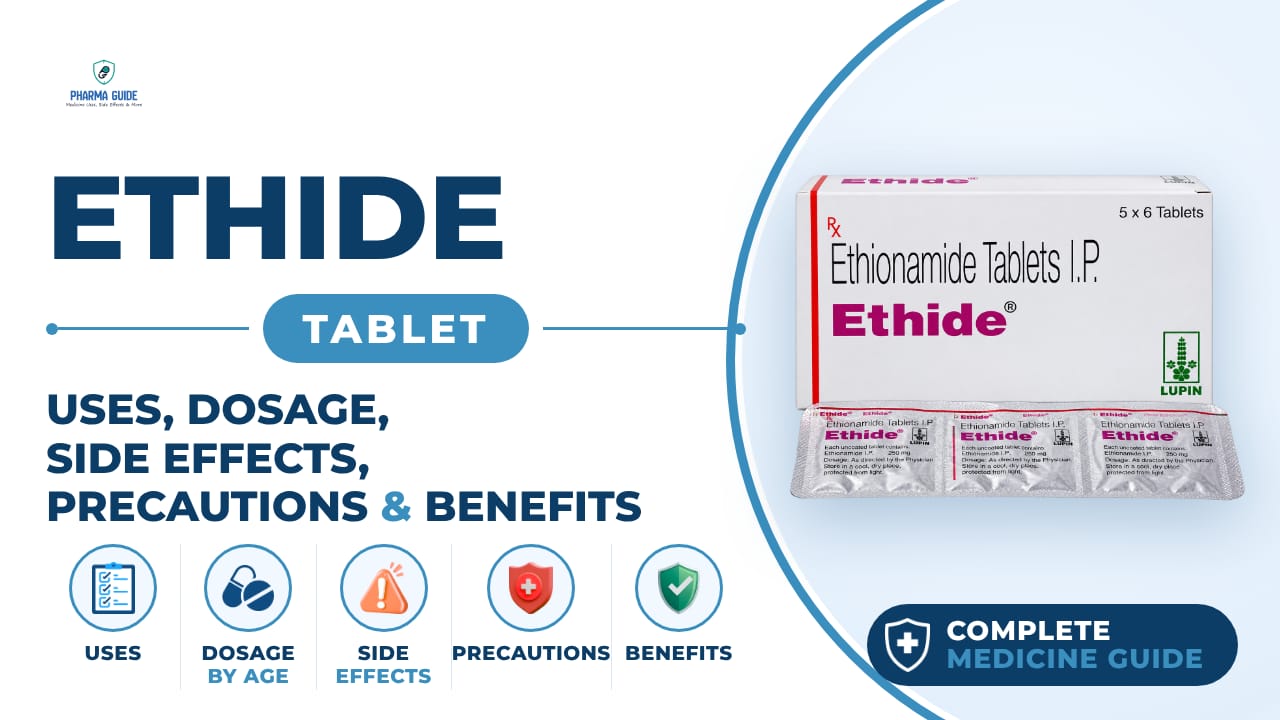
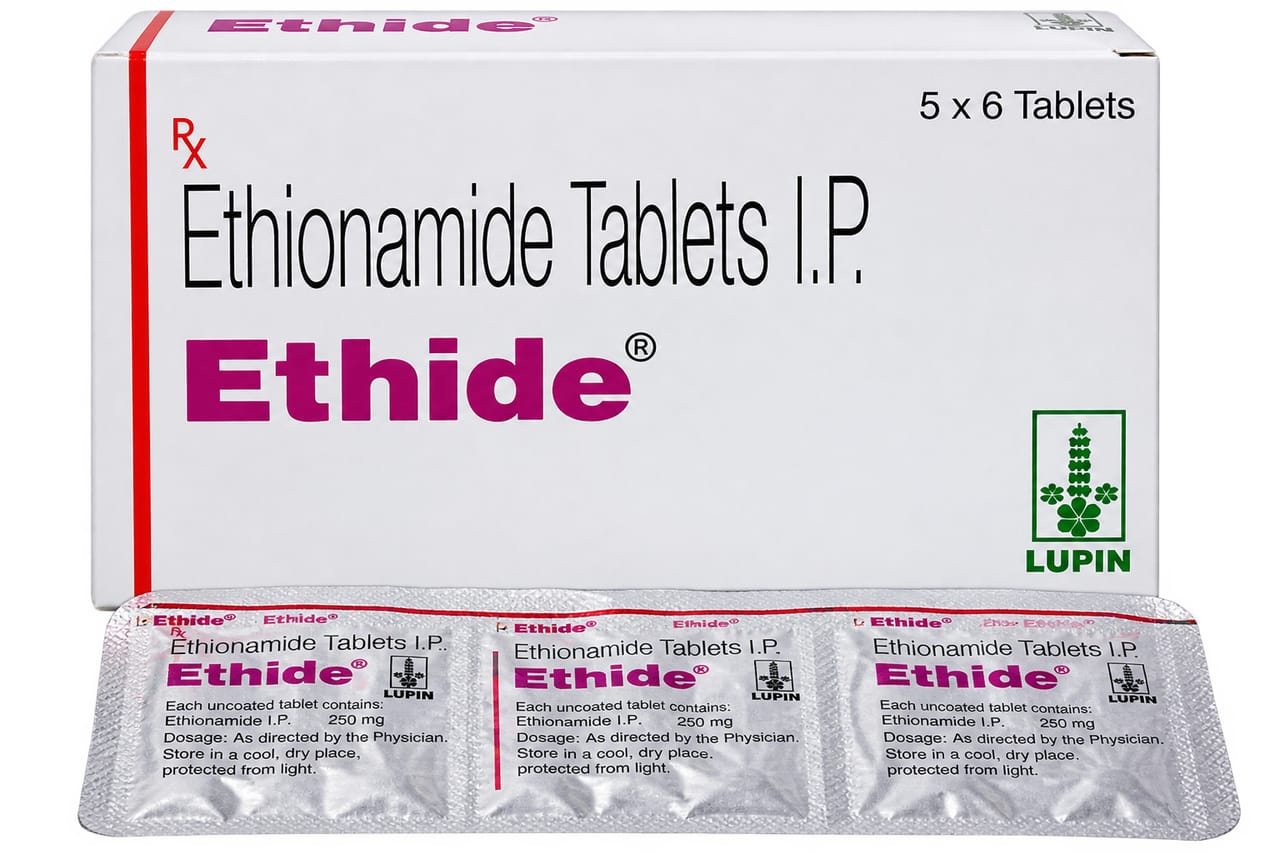
| Generic name | Ethionamide |
|---|---|
| Drug class | Antibiotic (anti-tuberculosis drug) |
| Forms | Tablet |
Quick overview
Ethide Tablet contains Ethionamide, an antibiotic from the anti-tuberculosis drug class. It is used to treat tuberculosis (TB), particularly in patients who have become resistant to other anti-TB medicines, and is generally given along with other medicines. It is usually taken for a long time to fully treat the infection and is generally not recommended for children under 12 years of age.
What is Ethide Tablet
Ethide Tablet is an antibiotic used to treat tuberculosis (TB), an infectious disease that mainly affects the lungs and sometimes other parts of the body. It is generally used in patients who have become resistant to other anti-TB medicines and is usually given along with other medicines.
Ethide Tablet uses
- Treatment of tuberculosis (TB).
- Used for drug-resistant TB.
- Used in multidrug-resistant TB (MDR-TB) regimens.
- Used when some other anti-TB medicines are unsuitable.
Benefits of Ethide Tablet
- Helps inhibit TB bacteria.
- Helps reduce the TB bacterial burden.
- Supports treatment of drug-resistant TB.
- Helps prevent further progression of TB when used appropriately.
- Supports successful TB treatment when combined with other effective anti-TB medicines.
How Ethide Tablet works
Ethide works by blocking the bacteria from making mycolic acids, which are building blocks of their protective cell wall. This weakens the bacteria and stops them from growing and multiplying, helping the body fight the TB infection.
Ethide Tablet dosage
Take this medicine exactly as your doctor prescribes, for as long as they tell you to. Swallow the tablet whole; do not chew, crush, or break it. It can be taken with or without food, but try to take it at the same time each day. If you miss a dose, take it as soon as you remember, unless it is almost time for your next dose — in that case, skip the missed dose and do not double up. This medicine is usually taken for a long time to fully treat tuberculosis; complete the full course as your doctor directs. This medicine is generally not recommended for children under 12 years of age.
| Age group | Dose |
|---|---|
| Under 12 years | Not recommended |
| 12–18 years | 250 mg, 1–2 times/day |
| 18–60 years | 250 mg, 2–4 times/day |
| 60+ years | 250 mg, 2–4 times/day |
Available forms and strengths
- Tablet
Side effects of Ethide Tablet
Common
- Nausea or vomiting
- Weight loss
- Stomach pain
- Diarrhoea
- Metallic taste in mouth
- Loss of appetite
- Dizziness
- Drowsiness/sleepiness
- Weakness
- Gastric irritation
- Headache
- Itching or rash
- Dry skin
Serious
- Peripheral neuropathy (tingling or nerve problems in hands and feet)
- Blurred vision or other changes in vision
- Stomatitis (inflammation of the mouth)
- Liver problems, including yellowing of skin or eyes
- Depressed mood
- Confusion
- Fever
- Joint pain
Warnings and precautions
- Ethide should be used with extreme caution in people with mild to moderate liver disease, and is not recommended for those with severe liver disease, due to a higher risk of serious side effects.
- This medicine should not be used without clear evidence of a tuberculosis infection, since incorrect use may not work and could increase the risk of drug-resistant bacteria developing.
- This medicine is not recommended for children under 12 years old, since its safety and effectiveness have not been clearly established in this age group.
- People with a history of nerve problems (peripheral neuropathy) should use this medicine with caution, as it can make these problems worse.
- People with diabetes should use this medicine carefully, as it may change blood sugar levels.
- Do not use this medicine if you are allergic to ethionamide or any of its other ingredients.
- Ethide is not recommended during pregnancy unless absolutely necessary, as it may harm the unborn baby. Talk to your doctor about the safest way to manage your condition if you are pregnant or planning to become pregnant.
- Ethide is not recommended while breastfeeding, since it isn't known whether it passes into breast milk. Talk to your doctor about safer options if you want to breastfeed.
- Ethide rarely harms the kidneys, but it should not be used in people with severe kidney problems.
- Ethide can affect the liver. If you notice any unwanted effects, stop taking it and talk to your doctor before restarting. It should be used with extra caution in people with liver disease and is not recommended for people with severe liver disease.
- It's best to avoid alcohol while taking Ethide, as it can increase the risk of liver problems and may worsen side effects like nausea and dizziness.
- Ethide may cause dizziness or vision changes that could affect your ability to drive safely. Avoid driving if you notice these symptoms, and pay attention to how your body responds when you first start taking it.
Storage
- Store Ethide at room temperature, away from moisture and light.
- Keep it in a tightly closed container to protect it from damage.
- Don't store it in humid places like bathrooms.
- Always keep Ethide out of children's reach to prevent accidental swallowing.
- Check the expiration date regularly and properly dispose of any unused or expired medication.
When to see a doctor
- Get emergency medical help right away if you think you have taken too much of this medicine.
- Tell your doctor right away if you notice yellowing of the skin or eyes, confusion, depressed mood, fever, joint pain, or any unusual or severe symptoms.
- Stop taking the medicine and consult your doctor if you experience harmful effects during pregnancy, and do not restart without medical advice.
Alternatives
- Thiomid-E
- Ethomid
- Prothionamide
Watch the video
FAQs
What is Ethide Tablet used for?
Ethide Tablet is used to treat tuberculosis (TB), particularly in patients who have become resistant to other anti-TB medicines, and is generally given along with other medicines, including in multidrug-resistant TB (MDR-TB) regimens.
How does Ethide Tablet work?
Ethide works by blocking the bacteria from making mycolic acids, which are building blocks of their protective cell wall. This weakens the bacteria and stops them from growing and multiplying, helping the body fight the TB infection.
Can children take Ethide Tablet?
Ethide Tablet is generally not recommended for children under 12 years of age since its safety and effectiveness have not been clearly established in this age group.
What are the common side effects of Ethide Tablet?
Common side effects include nausea or vomiting, weight loss, stomach pain, diarrhoea, metallic taste in mouth, loss of appetite, dizziness, drowsiness, weakness, gastric irritation, headache, and itching or rash.
Is it safe to drink alcohol while taking Ethide Tablet?
It's best to avoid alcohol while taking Ethide, as it can increase the risk of liver problems and may worsen side effects like nausea and dizziness.
General information, not medical advice
Your prescriber and the leaflet in your pack know your situation. This page does not.
- Follow your prescriber and the leaflet
- Don't start, stop, or change a dose on your own
- Doses and warnings differ by country and product
Sources
- US Food and Drug Administration (FDA); Package leaflet information for the user; Trecator (ethionamide tablets)
- KD Tripathi. Seventh Edition. New Delhi, India: Jaypee Brothers Medical Publishers; 2013: Page No 771
Video
Related medicines

Injectafer Injection: Uses, Dosage, Side Effects, Precautions and Alternates
Iron products
Injectafer (ferric carboxymaltose) treats iron deficiency anemia and heart failure-related iron deficiency via IV. Learn uses, dosage, side effects, and

Gliclazide Tablet: Uses, Dosage, Side Effects, Precautions and Alternates
Sulfonylurea (hypoglycemic/antidiabetic agent)
Gliclazide Tablet is a sulfonylurea for type 2 diabetes that boosts insulin release. Learn about dosage, side effects, warnings, and precautions.