
Safety
General information, not medical advice
Your prescriber and the leaflet in your pack know your situation. This page does not.
- Follow your prescriber and the leaflet
- Don't start, stop, or change a dose on your own
- Doses and warnings differ by country and product
Ethionamide Tablet: Uses, Dosage, Side Effects, Precautions and Alternates
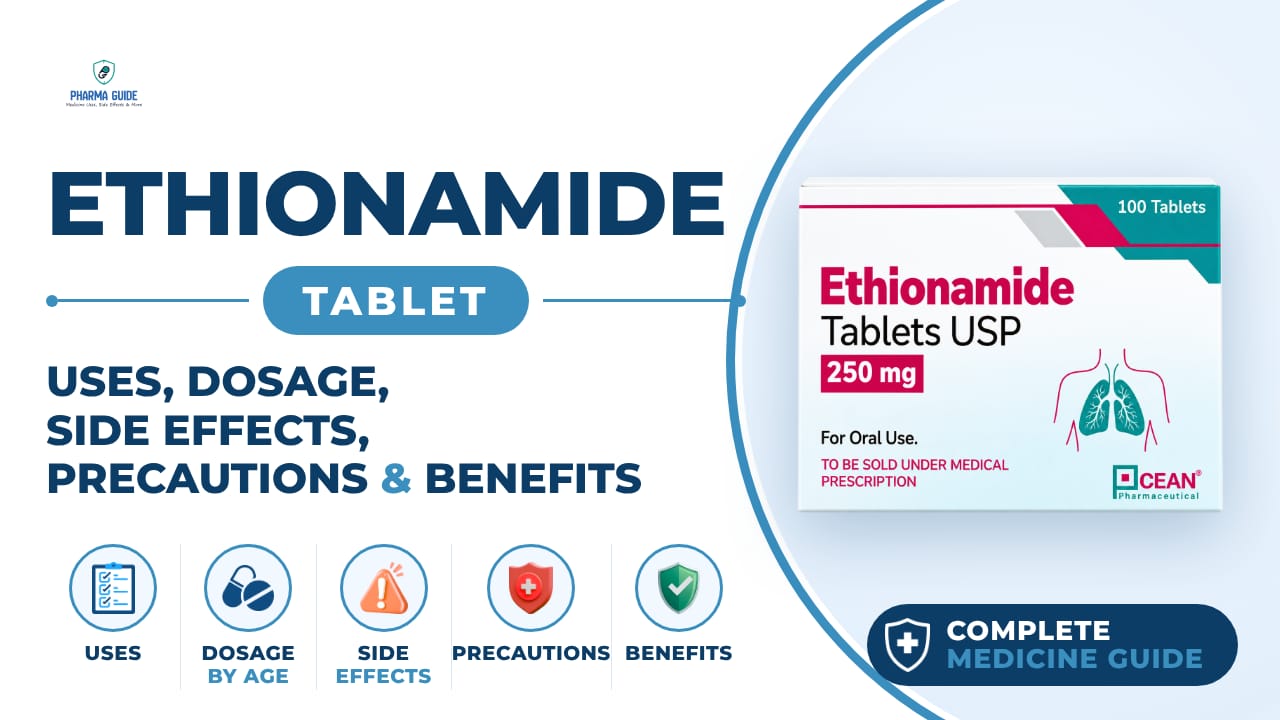
| Generic name | ethionamide |
|---|---|
| Drug class | Nicotinic acid derivatives |
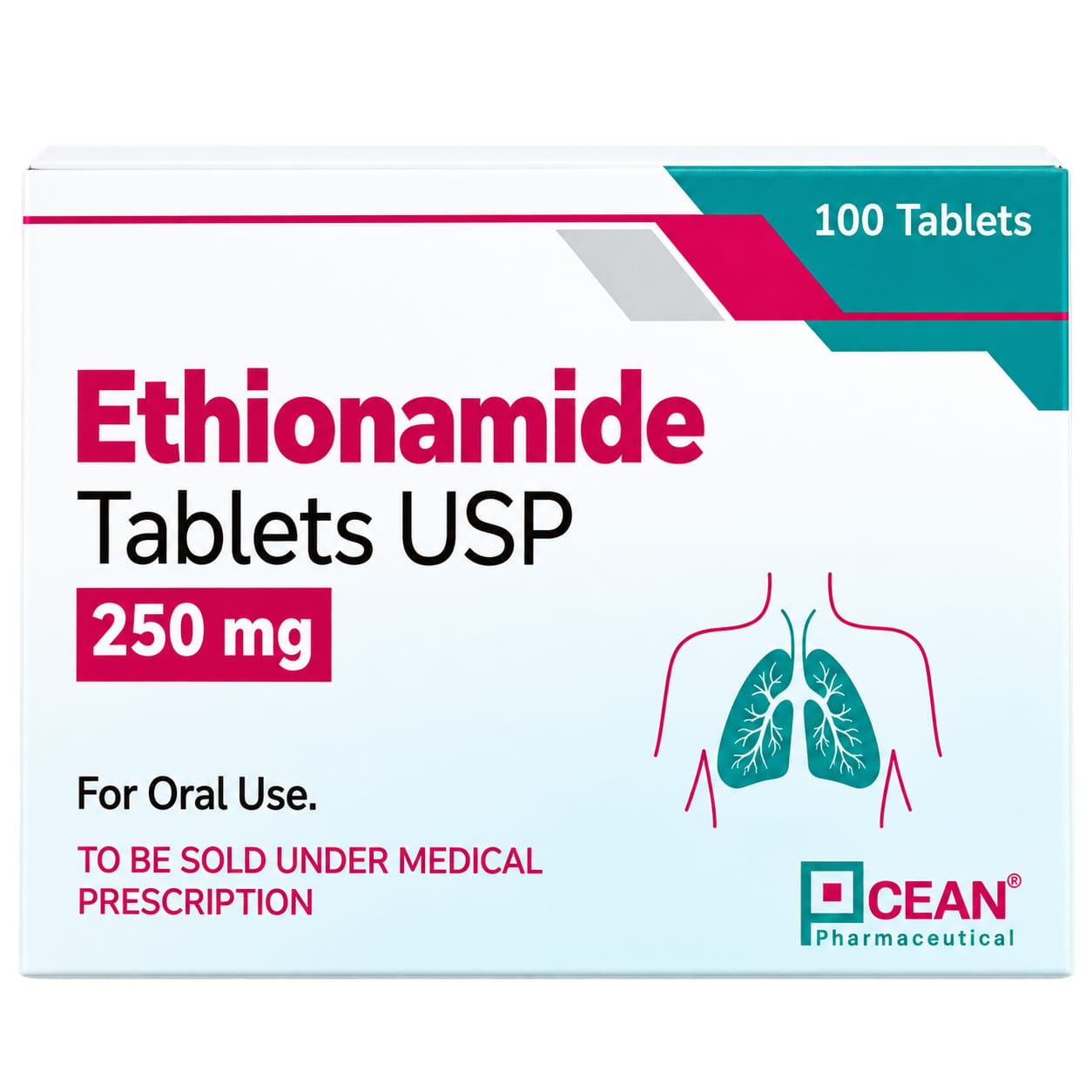
| Forms | Oral tablet (250 mg) |
Quick overview
Ethionamide Tablet (ethionamide) is an antibiotic from the nicotinic acid derivative class, used together with other medicines to treat tuberculosis (TB), including forms resistant to standard first-line drugs. It works by stopping the growth of TB bacteria and, depending on the dose, can slow bacterial growth or kill the bacteria. It is available as a 250 mg oral tablet and must be taken for the full length of treatment prescribed by your doctor.
What is Ethionamide Tablet
Ethionamide is an antibiotic that fights bacteria. It is used with other medicines to treat tuberculosis (TB), including forms that are resistant to standard first-line drugs.
Ethionamide Tablet uses
- Treatment of active tuberculosis (TB), including pulmonary and extra-pulmonary forms, when used together with other TB medicines
- Treatment of tuberculosis caused by Mycobacterium tuberculosis that is resistant to isoniazid or rifampin
- Treatment of tuberculosis when a patient cannot tolerate other first-line drugs
Benefits of Ethionamide Tablet
- Helps clear tuberculosis infection when combined with other antibiotics as part of a complete treatment plan
- Works against TB bacteria that no longer respond to standard medicines
How Ethionamide Tablet works
Ethionamide works by stopping the growth of TB bacteria. Depending on the dose and how sensitive the bacteria are, it can either slow bacterial growth or kill the bacteria outright.
Ethionamide Tablet dosage
Take exactly as directed by your doctor; do not take more, more often, or for longer than prescribed. It can be taken with or without food; taking it with meals may help if it upsets your stomach. Your doctor may have you split the daily dose into two or three smaller doses over the day to improve tolerability. Take doses at evenly spaced times each day, and try to take it at the same time(s) daily to help you remember.
Keep taking this medicine for the full length of treatment your doctor prescribes, even if you start feeling better after a few weeks — this may be needed for one to two years or longer. Do not skip doses, as this can let the infection come back or become harder to treat. Your doctor may also prescribe vitamin B6 (pyridoxine) to take alongside this medicine to help prevent nerve-related side effects — take it exactly as instructed and do not skip doses.
If you miss a dose, take it as soon as you remember; if it is almost time for your next dose, skip the missed one and go back to your normal schedule — do not double up.
| Age group | Dose |
|---|---|
| Under 2 years | Pediatric reference: 15–20 mg/kg/day; maximum 1,000 mg daily, under specialist supervision |
| 2–17 years | 15–20 mg/kg/day; maximum 1,000 mg daily |
| 18–64 years | 15–20 mg/kg/day; usual adult dose 500–750 mg daily; maximum 1,000 mg daily |
| 65–74 years | 15–20 mg/kg/day, up to 1,000 mg daily, with closer monitoring of tolerability |
Available forms and strengths
- Oral tablet (250 mg)
Side effects of Ethionamide Tablet
Common
- Nausea, vomiting, and diarrhea
- Stomach pain and loss of appetite
- Increased saliva and a metallic taste in the mouth
- Headache, dizziness, and drowsiness
- Tingling, burning, or numbness in the hands or feet (pins and needles feeling)
- Weight loss
- Mouth or gum irritation, mouth sores, or trouble swallowing
- Depressed mood or restless feeling
Serious
- Signs of liver damage, such as yellowing of the skin or eyes (jaundice), dark urine, clay-colored stools, or upper stomach pain
- Vision changes, blurred or double vision, or eye pain
- Confusion, unusual thoughts or behavior, or depression
- Seizures (convulsions)
- A light-headed feeling like you might pass out
- Signs of an allergic reaction, such as hives, difficulty breathing, or swelling of the face, lips, tongue, or throat
- Serious skin reactions, including blistering, peeling, or loosening skin, red skin sores with a purple center, or sores in the mouth
- Thyroid problems, such as swelling in the front of the neck
- Unusual bleeding or bruising, fever, chills, sore throat, or swollen glands
Warnings and precautions
- You should avoid becoming pregnant while taking this medicine. If you become pregnant or are planning to become pregnant, talk to your doctor about the risks and benefits of your TB treatment.
- It is not known if this medicine passes into breast milk. If you continue breastfeeding while taking it, your baby should be watched closely for side effects.
- No dose change is needed if you have kidney disease.
- Do not take this medicine if you have severe liver disease. Tell your doctor if you have any liver problems, and let them know right away if you notice signs of liver injury such as loss of appetite, nausea, yellowing of the skin or eyes, dark urine, pale stools, or pain in the upper right abdomen.
- Avoid drinking alcohol while taking this medicine, as it can raise the risk of liver and mental health problems.
- This medicine can cause drowsiness or headache, which may affect your ability to drive or use machines safely. It can also cause vision changes, so know how the medicine affects you before doing anything that requires clear sight or alertness.
- Do not take this medicine if you have severe liver disease.
- Serious skin reactions can occur with this medicine, including severe blistering or peeling skin conditions. Contact your doctor right away if you notice skin blistering, peeling, mouth sores, fever, sore throat, swollen glands, or unusual bleeding or bruising.
- This medicine may cause blurred vision or vision loss, with or without eye pain, so be careful about driving or using machinery until you know how it affects you.
- Make sure to keep taking the full course of treatment, even if you feel better, since stopping early or skipping doses can let the infection return and become harder to treat.
- This medicine is not recommended for use in children under 12 years old.
- Tell any doctor or dentist treating you that you are using this medicine, as you may need to stop it several days before surgery or certain medical tests.
Storage
- Store the medicine in a closed container at room temperature, away from heat, moisture, and direct light
- Keep from freezing
- Do not store in the bathroom
- Keep out of the reach of children and pets
- Do not keep outdated medicine or medicine no longer needed
- Do not flush medications down the toilet or pour them into a drain unless instructed to do so
- Ask your pharmacist or healthcare professional how to dispose of any medicine you do not use
- Do not use the tablets if you notice discoloration or swelling of the tablets
When to see a doctor
- Get emergency help right away if you have signs of an allergic reaction, such as hives, trouble breathing, or swelling of the face, lips, tongue, or throat.
- Call your doctor right away if you notice numbness, tingling, or burning pain in your hands or feet; confusion or unusual behavior; eye pain or vision changes; feeling faint; seizures; or signs of liver problems like upper stomach pain, dark urine, pale stools, or yellowing of the skin or eyes.
- Check with your doctor right away if you notice black, tarry stools, skin blistering or peeling, chest pain, chills, fever, joint or muscle pain, painful urination, red irritated eyes, red skin sores with a purple center, sore throat, mouth sores, swollen glands, or unusual bleeding, bruising, or tiredness.
- If you take more than your prescribed amount, contact your doctor, health care provider, or the nearest hospital emergency department for advice.
Alternatives
- Bedaquiline
- Linezolid
- Prothionamide
Watch the video
FAQs
What is Ethionamide Tablet used for?
It is used together with other medicines to treat active tuberculosis, including pulmonary and extra-pulmonary forms, and TB caused by Mycobacterium tuberculosis resistant to isoniazid or rifampin.
How does Ethionamide Tablet work?
It works by stopping the growth of TB bacteria. Depending on the dose and how sensitive the bacteria are, it can either slow bacterial growth or kill the bacteria outright.
How long do I need to take Ethionamide Tablet?
You should keep taking it for the full length of treatment prescribed by your doctor, even if you feel better after a few weeks, which may be needed for one to two years or longer.
Why might my doctor prescribe vitamin B6 with Ethionamide Tablet?
Your doctor may prescribe vitamin B6 (pyridoxine) alongside this medicine to help prevent nerve-related side effects, so take it exactly as instructed and do not skip doses.
What should I do if I miss a dose of Ethionamide Tablet?
Take it as soon as you remember; if it is almost time for your next dose, skip the missed one and go back to your normal schedule without doubling up.
General information, not medical advice
Your prescriber and the leaflet in your pack know your situation. This page does not.
- Follow your prescriber and the leaflet
- Don't start, stop, or change a dose on your own
- Doses and warnings differ by country and product
Sources
Video
Related medicines

Injectafer Injection: Uses, Dosage, Side Effects, Precautions and Alternates
Iron products
Injectafer (ferric carboxymaltose) treats iron deficiency anemia and heart failure-related iron deficiency via IV. Learn uses, dosage, side effects, and

Gliclazide Tablet: Uses, Dosage, Side Effects, Precautions and Alternates
Sulfonylurea (hypoglycemic/antidiabetic agent)
Gliclazide Tablet is a sulfonylurea for type 2 diabetes that boosts insulin release. Learn about dosage, side effects, warnings, and precautions.