
Safety
General information, not medical advice
Your prescriber and the leaflet in your pack know your situation. This page does not.
- Follow your prescriber and the leaflet
- Don't start, stop, or change a dose on your own
- Doses and warnings differ by country and product
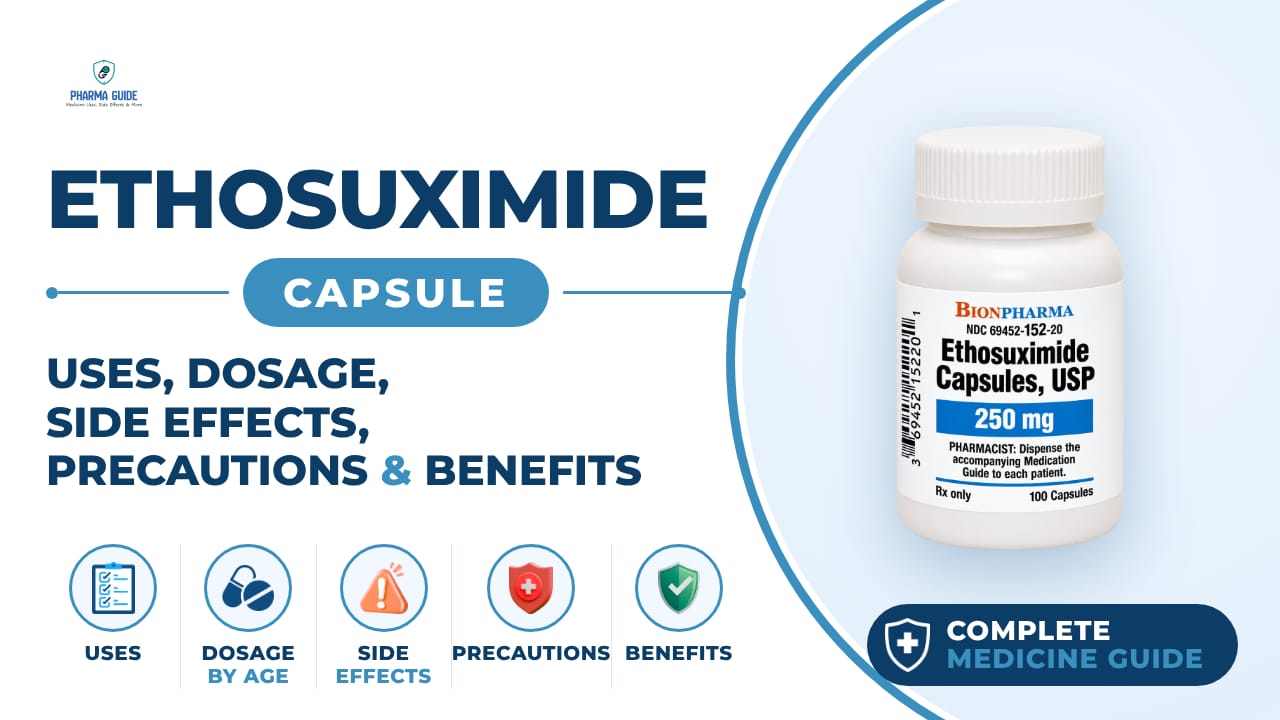
Ethosuximide Capsule: Uses, Dosage, Side Effects, Precautions and Alternates
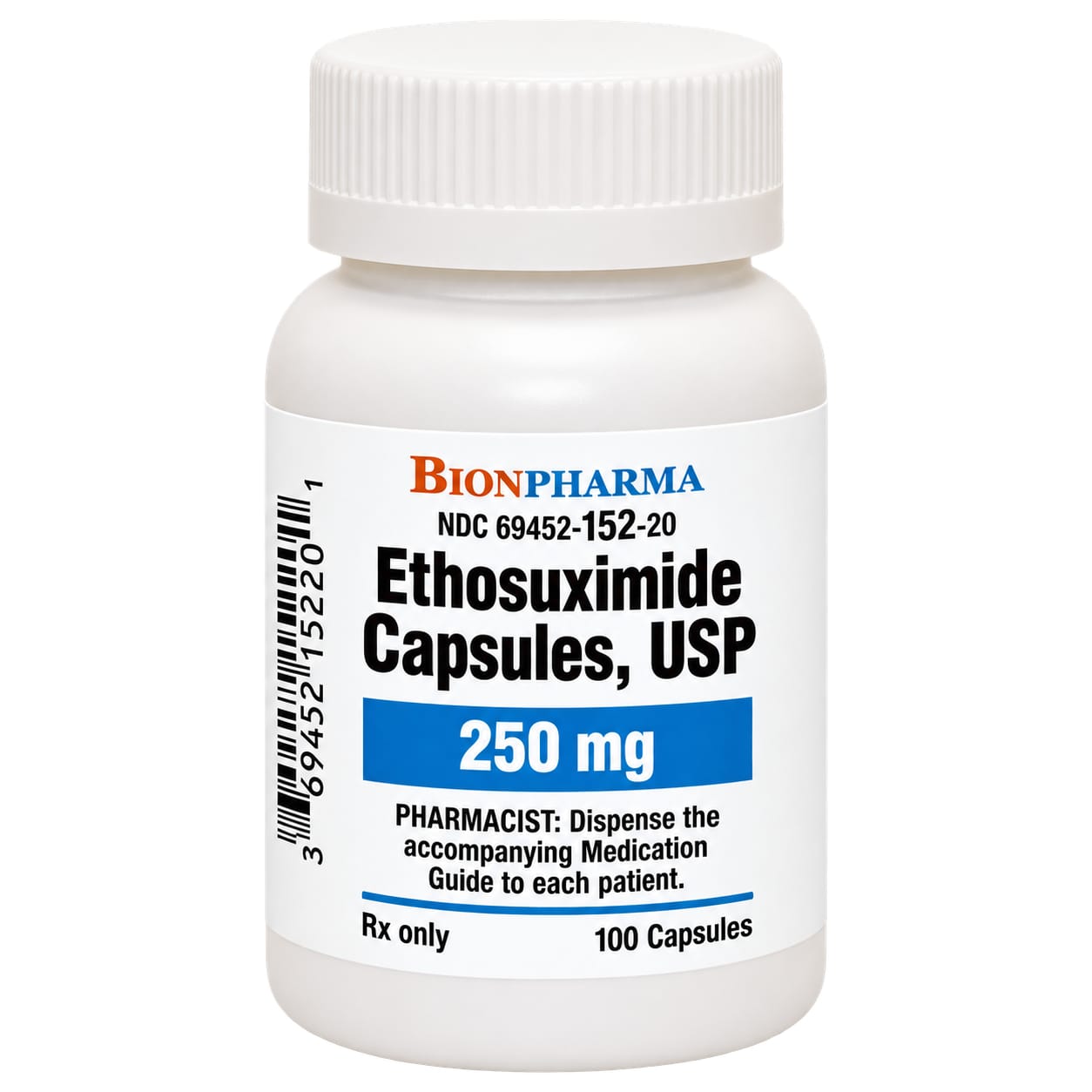
| Generic name | ethosuximide |
|---|---|
| Drug class | Succinimide anticonvulsants |
| Forms | Capsule, Syrup, Oral liquid/solution |
Quick overview
Ethosuximide Capsule (generic name: ethosuximide) is a prescription anticonvulsant from the succinimide class, used to control absence (petit mal) seizures in adults and children over 3 years old. It works by calming abnormal electrical activity in the brain and can be used alone or alongside other seizure medicines. It is available in capsule, syrup, and oral liquid/solution forms.
What is Ethosuximide Capsule
Ethosuximide is a prescription anticonvulsant medicine used to control absence (petit mal) seizures. It belongs to a group of medicines called succinimide anticonvulsants and has been used for this purpose for many years.
Ethosuximide Capsule uses
- Controls and prevents absence seizures (petit mal epilepsy) in adults and children over 3 years old
- Can be used alone or together with other seizure medicines when other types of seizures occur along with absence seizures
- Provides treatment for absence epilepsy in adults
- Reduces abnormal neuronal activity associated with absence seizures
Benefits of Ethosuximide Capsule
- Serves as a first-line treatment for childhood and juvenile absence epilepsy
- Reduces the frequency of brief lapses in awareness caused by absence seizures
- Helps improve seizure control in childhood absence epilepsy
- Can reduce seizure-related interruptions in daily activities
- Provides an oral treatment option
How Ethosuximide Capsule works
Ethosuximide works in the brain to calm down the abnormal electrical activity that causes absence seizures. It blocks specific calcium channels in brain cells, which stops the abnormal brain wave pattern linked to these seizures. It does not work for other types of seizures.
Ethosuximide Capsule dosage
Take this medicine exactly as your doctor prescribes; do not take more, less, or for longer than directed. It can be taken with or without food. Take it regularly at the same time(s) each day to get the most benefit. Your doctor may start you on a low dose and slowly raise it over time to find the right amount for you.
If using the liquid form, measure the dose with a proper measuring device, not a household spoon. Do not stop taking this medicine suddenly, even if you feel well, without talking to your doctor first. Keep taking all other seizure medicines your doctor has prescribed unless told to stop.
If you miss a dose, take it as soon as you remember, but skip it if it is almost time for your next dose; do not double up.
| Age group | Dose |
|---|---|
| Under 3 years | No established standard labeled starting dose; specialist-directed treatment required |
| 3–5 years | Labeled starting dose: 250 mg once daily; pediatric maintenance often approximately 20 mg/kg/day |
| 6–64 years | Labeled starting dose: 500 mg daily; pediatric maintenance often approximately 20 mg/kg/day |
| 65–74 years | No separate age-specific dose; adult labeled starting dose 500 mg daily, subject to careful clinical assessment |
Available forms and strengths
- Capsule
- Syrup
- Oral liquid/solution
Side effects of Ethosuximide Capsule
Common
- Nausea, vomiting, stomach pain, loss of appetite
- Diarrhea, weight loss
- Hiccups
- Swelling in the tongue or gums
- Headache, dizziness, trouble concentrating
- Feeling tired or drowsy
- Unsteadiness when walking
Serious
- Signs of blood problems: fever, chills, sore throat, feeling very weak, easy bruising, bleeding gums, nosebleeds, frequent infections
- Severe skin reactions such as Stevens-Johnson syndrome: skin rash, blistering, peeling skin, sores in the mouth, red or purple skin spots
- Drug Reaction with Eosinophilia and Systemic Symptoms (DRESS): fever, rash, swollen glands, facial swelling, yellowing of skin or eyes, chest pain, new or worsening cough
- Lupus-like syndrome: joint pain or swelling with fever, swollen glands, muscle aches, chest pain, patchy skin color
- Mood or behavior changes, new or worsening depression, anxiety, agitation, aggression, or thoughts of suicide
- Worsening seizures, including grand mal seizures
- Confusion, hallucinations, or unusual thoughts or behavior
Warnings and precautions
- Do not stop taking this medicine suddenly, even if you feel fine, because this can cause your seizures to come back or get worse, or even lead to a dangerous condition called status epilepticus. Your doctor will help you gradually lower the dose if you need to stop.
- This medicine can cause rare but serious drops in blood cell counts, which may be life-threatening. Your doctor will need to check your blood regularly.
- Serious skin reactions, including Stevens-Johnson syndrome, can occur and can be fatal. Stop the medicine and contact your doctor right away if you notice a rash.
- A severe allergic-type reaction called DRESS, which can affect multiple organs, has occurred with this medicine and can be fatal or life-threatening.
- This and other seizure medicines can increase the risk of suicidal thoughts or actions. Watch for new or worsening depression, mood changes, or thoughts about self-harm.
- This medicine can cause a lupus-like syndrome. Tell your doctor right away if you notice joint pain, fever, rash, or swollen glands.
- In people with mixed types of epilepsy, this medicine may increase the number of grand mal (tonic-clonic) seizures.
- Ethosuximide can cross into the unborn baby and has been linked to birth defects, but having seizures during pregnancy can also harm both mother and baby. Talk with your doctor about the benefits and risks before stopping or starting this medicine during pregnancy.
- Ethosuximide passes into breast milk and could affect a nursing baby, so talk to your doctor about whether breastfeeding is safe for you.
- This medicine should be used with extra caution in people with kidney disease, as it can affect kidney function. Your doctor may want to do urine tests to check your kidneys during treatment.
- This medicine should be used with extra caution in people with liver disease, as it can affect liver function. Your doctor may want to do liver function tests during treatment.
- Avoid drinking alcohol while taking this medicine, since it can make side effects like drowsiness worse.
- This medicine can make you dizzy, drowsy, or less alert, so avoid driving or using machinery until you know how it affects you.
Storage
- Store the medicine in a closed container at room temperature, away from heat, moisture, and direct light
- Keep from freezing
- Keep out of the reach of children
- Do not keep outdated medicine or medicine no longer needed
- Ask your healthcare professional how you should dispose of any medicine you do not use
When to see a doctor
- Get emergency help right away if you have signs of an overdose, such as changes in consciousness, slow or irregular breathing, loss of consciousness, or bluish or pale lips, nails, or skin.
- Call your doctor right away if you have fever, chills, flu-like symptoms, sore throat, or feel very weak, as these can be signs of a serious blood problem.
- Call your doctor right away if you have a skin rash, blistering or peeling skin, sores in your mouth, or hives, as these can be signs of a severe skin reaction.
- Call your doctor right away if you have thoughts about suicide or dying, new or worsening depression or anxiety, agitation, aggression, or other unusual changes in mood or behavior.
- Call your doctor right away if your seizures get worse or happen more often while taking this medicine.
- Call your doctor right away if you have joint pain and swelling, muscle pain, fatigue, low-grade fever, chest pain that is worse with breathing, skin rash, swollen glands, swelling of your face, or yellowing of your skin or eyes, as these may be signs of a serious drug reaction affecting other organs.
Alternatives
- Zarontin
- Lamotrigine
- Valproic Acid
Watch the video
FAQs
What is Ethosuximide Capsule used for?
It is a prescription anticonvulsant used to control and prevent absence (petit mal) seizures in adults and children over 3 years old, either alone or with other seizure medicines.
How does Ethosuximide work?
It calms abnormal electrical activity in the brain by blocking specific calcium channels in brain cells, stopping the abnormal brain wave pattern that causes absence seizures. It does not work for other types of seizures.
What is the typical starting dose of Ethosuximide?
For ages 3–5, the labeled starting dose is 250 mg once daily. For ages 6–64, the labeled starting dose is 500 mg daily, with pediatric maintenance often around 20 mg/kg/day.
What are the serious side effects of Ethosuximide Capsule?
Serious side effects include signs of blood problems, severe skin reactions like Stevens-Johnson syndrome, DRESS syndrome, lupus-like syndrome, mood or behavior changes including suicidal thoughts, worsening seizures, and confusion or hallucinations.
Can I stop taking Ethosuximide suddenly?
No, you should not stop taking this medicine suddenly, even if you feel fine, as this can cause seizures to return or worsen, or lead to a dangerous condition called status epilepticus. Your doctor will help you gradually lower the dose if needed.
General information, not medical advice
Your prescriber and the leaflet in your pack know your situation. This page does not.
- Follow your prescriber and the leaflet
- Don't start, stop, or change a dose on your own
- Doses and warnings differ by country and product
Sources
Video
Related medicines

Injectafer Injection: Uses, Dosage, Side Effects, Precautions and Alternates
Iron products
Injectafer (ferric carboxymaltose) treats iron deficiency anemia and heart failure-related iron deficiency via IV. Learn uses, dosage, side effects, and

Gliclazide Tablet: Uses, Dosage, Side Effects, Precautions and Alternates
Sulfonylurea (hypoglycemic/antidiabetic agent)
Gliclazide Tablet is a sulfonylurea for type 2 diabetes that boosts insulin release. Learn about dosage, side effects, warnings, and precautions.