
Safety
General information, not medical advice
Your prescriber and the leaflet in your pack know your situation. This page does not.
- Follow your prescriber and the leaflet
- Don't start, stop, or change a dose on your own
- Doses and warnings differ by country and product
Etibi Tablet: Uses, Dosage, Side Effects, Precautions and Alternates
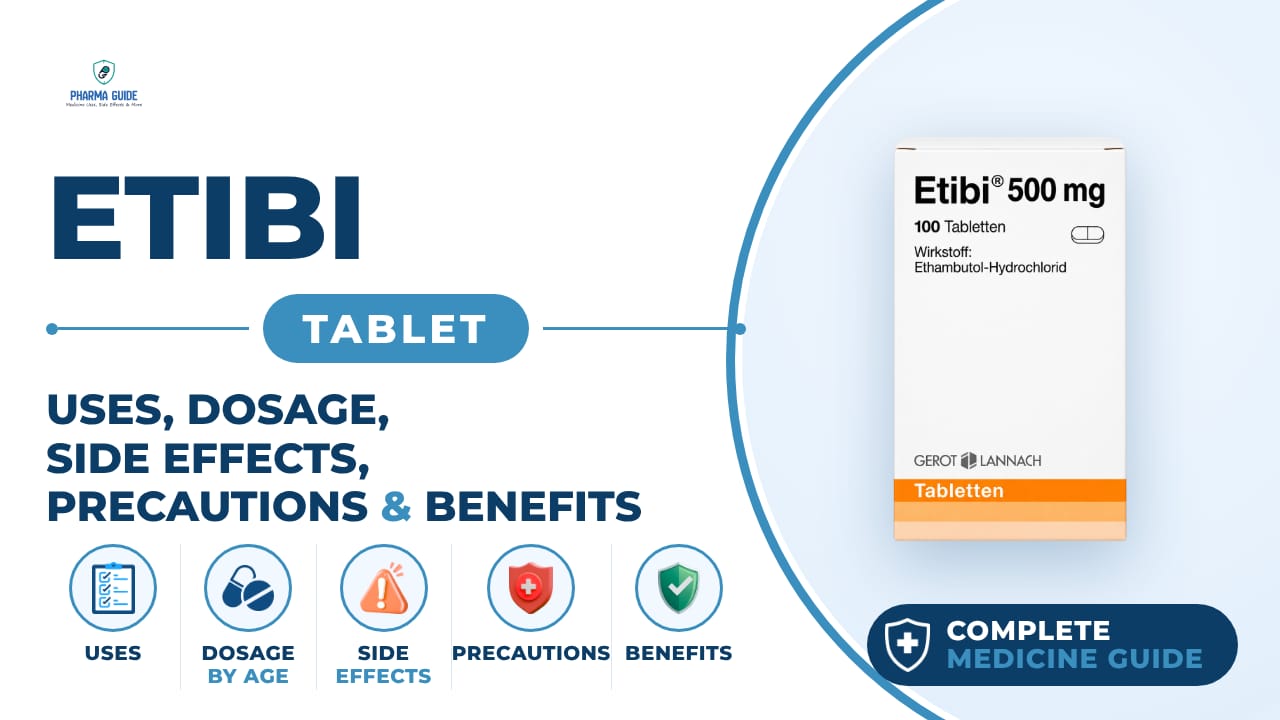
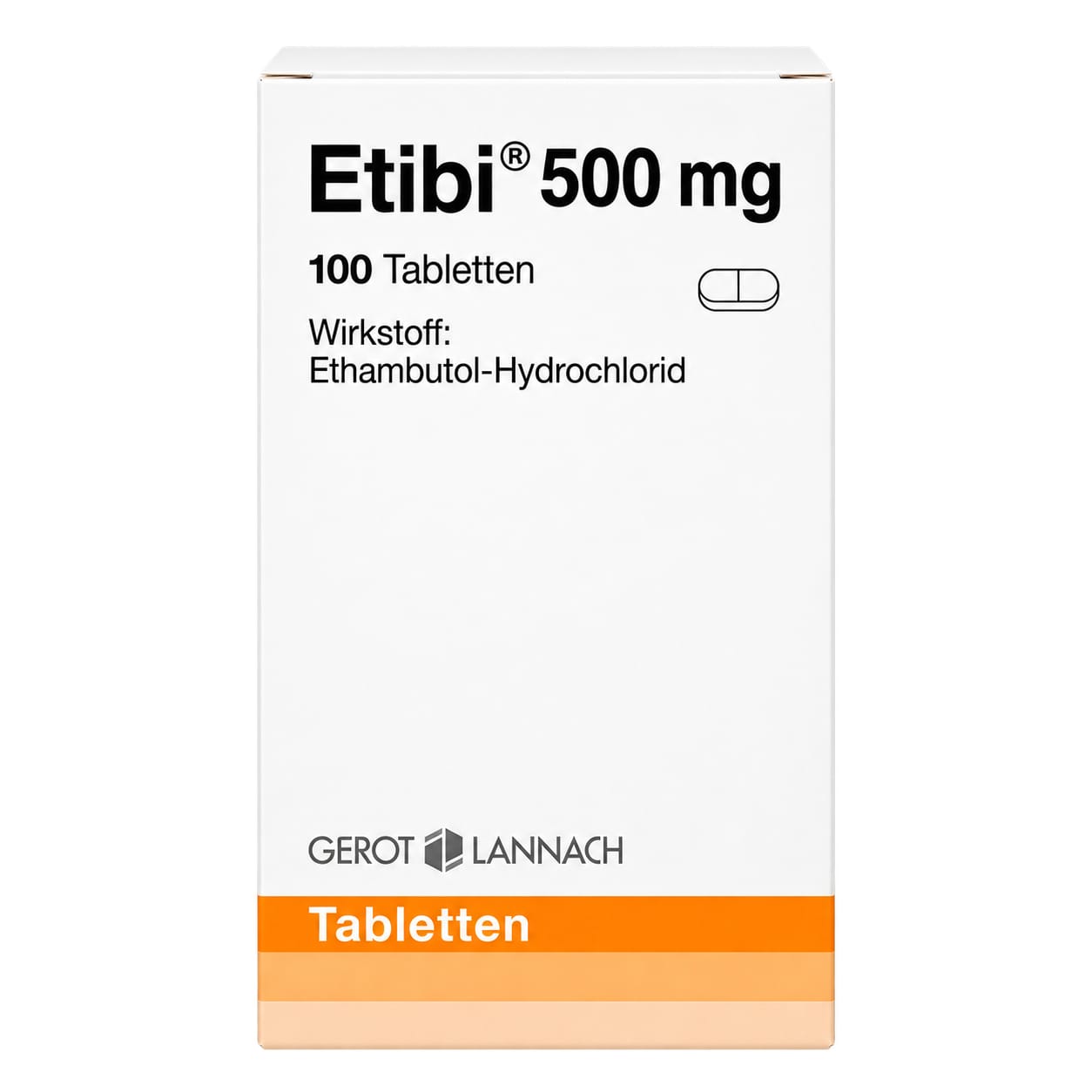
| Generic name | Ethambutol hydrochloride |
|---|---|
| Drug class | Antituberculosis antibiotic |
| Forms | Tablet (100 mg and 400 mg) |
Quick overview
Etibi Tablet contains ethambutol hydrochloride, an antituberculosis antibiotic. It is used strictly in combination with other drugs to treat all forms of tuberculosis (TB), including tuberculous meningitis. Etibi works by stopping the TB bacteria from reproducing, helping the body fight the infection over the course of treatment.
What is Etibi Tablet
Etibi tablet contains ethambutol hydrochloride, an antibiotic used strictly in combination with other drugs to treat all forms of tuberculosis (TB).
Etibi Tablet uses
- Treats all forms of tuberculosis (TB), including tuberculous meningitis, caused by Mycobacterium tuberculosis
- Used along with other antituberculosis drugs to prevent the bacteria from becoming drug-resistant
- Used in retreatment cases together with at least one other second-line drug the bacteria are known to respond to
Benefits of Etibi Tablet
- Stops the growth of the bacteria that cause tuberculosis
- Helps the body fight the infection when combined with other TB medicines
- Offers convenient oral administration
- Provides tablet strengths suitable for individualized dosing
- Can be included in adult and pediatric tuberculosis regimens where appropriate
How Etibi Tablet works
Etibi helps your body fight the tuberculosis bacteria by stopping them from reproducing. It takes a few weeks to start working.
Etibi Tablet dosage
Swallow the tablets with water. You may take it with food if it upsets your stomach. It is taken together with other antituberculosis drugs, not alone. Take it exactly as directed, even if you start feeling better early in treatment. Do not skip doses or stop early, since this can let resistant bacteria grow. Do not share your medicine with anyone else.
If you miss a dose, take it as soon as you remember unless it is almost time for your next dose — in that case skip the missed dose and continue your regular schedule without doubling up. It is usually taken once a day. Etibi is generally not recommended for children younger than 6 years old whose eyesight cannot be properly checked.
| Age group | Dose |
|---|---|
| Under 2 years | WHO pediatric reference: 15–25 mg/kg once daily, under specialist supervision |
| 2–12 years | WHO pediatric reference: 15–25 mg/kg once daily; usual target 20 mg/kg daily |
| 13–74 years | Initial treatment: 15 mg/kg once daily; adjusted according to body weight and TB regimen |
Available forms and strengths
- Tablet (100 mg and 400 mg)
Side effects of Etibi Tablet
Common
- Loss of appetite
- Headaches
- Nausea or vomiting
- Dizziness
- Upset stomach or abdominal pain
- Confusion
- Disorientation
- Fever
- Itchy red skin
- Joint pain
Serious
- Vision changes such as decreased or blurry vision, or trouble telling red and green apart (optic neuritis), usually reversible if caught early and the drug is stopped
- Liver problems: yellowing of the skin or eyes (jaundice), dark urine, persistent fatigue, severe nausea, or upper stomach pain
- Gout or high uric acid causing joint pain or swelling
- Peripheral neuritis: numbness, burning, or tingling in the hands or feet
- Allergic reactions: skin rash, itching, fever, hives, swelling of the tongue or throat, or difficulty breathing
- Hallucinations
Warnings and precautions
- Do not use Etibi if you have an eye condition called optic neuritis, unless your doctor says it is okay, or if you are allergic to any of its ingredients.
- Before taking Etibi, tell your doctor about any eye problems such as sudden vision loss, sudden blurry vision, eye inflammation, pain when moving your eye, cataracts, or diabetic retinopathy, as well as gout.
- This medicine can affect your eyesight. Your doctor will test your vision before and during treatment.
- Etibi may interact with neurotoxic medicines (drugs that can harm your nerves), such as docetaxel. Tell your doctor about all medicines, vitamins, minerals, and supplements you take.
- Using this medicine incorrectly, such as missing doses or stopping early, can cause bacteria to become resistant, meaning the medicine may stop working for you in the future.
- This medicine may cause abnormal blood test results, so your doctor may do blood tests before and during treatment.
- Tell your doctor if you are pregnant or planning to become pregnant before taking this medicine.
- Tell your doctor if you are breastfeeding before taking this medicine.
- Tell your doctor if you have reduced kidney function or other kidney problems, since your dose may need to be adjusted.
- Liver abnormalities, including serious liver injury, have been reported. Baseline and periodic liver-function tests may be appropriate.
- Alcohol may increase the risk of liver complications, particularly when Etibi is combined with other antituberculosis medications.
- Etibi may cause dizziness or visual disturbances. Avoid driving or operating machinery if vision or alertness is affected.
Storage
- Keep away from light, moisture, and excessive heat.
- Store in a well-closed container at controlled room temperature (15-30°C).
- Keep out of reach and sight of children.
When to see a doctor
- Stop taking the drug and get immediate medical help if you have signs of an allergic reaction such as difficulty breathing, fever, hives, itching, rash, or swelling of the tongue or throat.
- Stop taking the drug and get immediate medical help if you experience hallucinations.
- Stop taking the drug and get immediate medical help if you notice signs of liver problems, such as fatigue, weakness, loss of appetite, stomach pain, nausea, vomiting, or yellowing of the skin or eyes.
- Stop taking the drug and get immediate medical help if you have eye problems such as loss of vision in one or both eyes, eye pain that worsens with movement, or trouble seeing colors correctly.
- Stop taking the drug and get immediate medical help if you have numbness or tingling in your hands or feet.
- Stop taking the drug and get immediate medical help if you have signs of gout, such as pain, swelling, redness, or warmth in the joints.
- If you think you have taken too much of this medicine, contact your healthcare professional or local poison control center right away, even if you have no symptoms.
Alternatives
- Rifabutin
- Pyrazinamide
- Rifampicin
- Isoniazid
Watch the video
FAQs
What is Etibi Tablet used for?
Etibi Tablet contains ethambutol hydrochloride and is used strictly in combination with other drugs to treat all forms of tuberculosis (TB), including tuberculous meningitis, caused by Mycobacterium tuberculosis.
How does Etibi Tablet work?
Etibi helps your body fight the tuberculosis bacteria by stopping them from reproducing. It takes a few weeks to start working.
What are the serious side effects of Etibi Tablet?
Serious side effects include vision changes such as decreased or blurry vision or trouble telling red and green apart, liver problems like jaundice and dark urine, gout, peripheral neuritis with numbness or tingling, allergic reactions, and hallucinations.
Can children take Etibi Tablet?
Etibi is generally not recommended for children younger than 6 years old whose eyesight cannot be properly checked, though WHO pediatric reference dosing is provided for younger age groups under specialist supervision.
What should I avoid while taking Etibi Tablet?
Alcohol may increase the risk of liver complications, particularly when Etibi is combined with other antituberculosis medications. Etibi may also cause dizziness or visual disturbances, so you should avoid driving or operating machinery if your vision or alertness is affected.
General information, not medical advice
Your prescriber and the leaflet in your pack know your situation. This page does not.
- Follow your prescriber and the leaflet
- Don't start, stop, or change a dose on your own
- Doses and warnings differ by country and product
Sources
Video
Related medicines

Injectafer Injection: Uses, Dosage, Side Effects, Precautions and Alternates
Iron products
Injectafer (ferric carboxymaltose) treats iron deficiency anemia and heart failure-related iron deficiency via IV. Learn uses, dosage, side effects, and

Gliclazide Tablet: Uses, Dosage, Side Effects, Precautions and Alternates
Sulfonylurea (hypoglycemic/antidiabetic agent)
Gliclazide Tablet is a sulfonylurea for type 2 diabetes that boosts insulin release. Learn about dosage, side effects, warnings, and precautions.