
Safety
General information, not medical advice
Your prescriber and the leaflet in your pack know your situation. This page does not.
- Follow your prescriber and the leaflet
- Don't start, stop, or change a dose on your own
- Doses and warnings differ by country and product
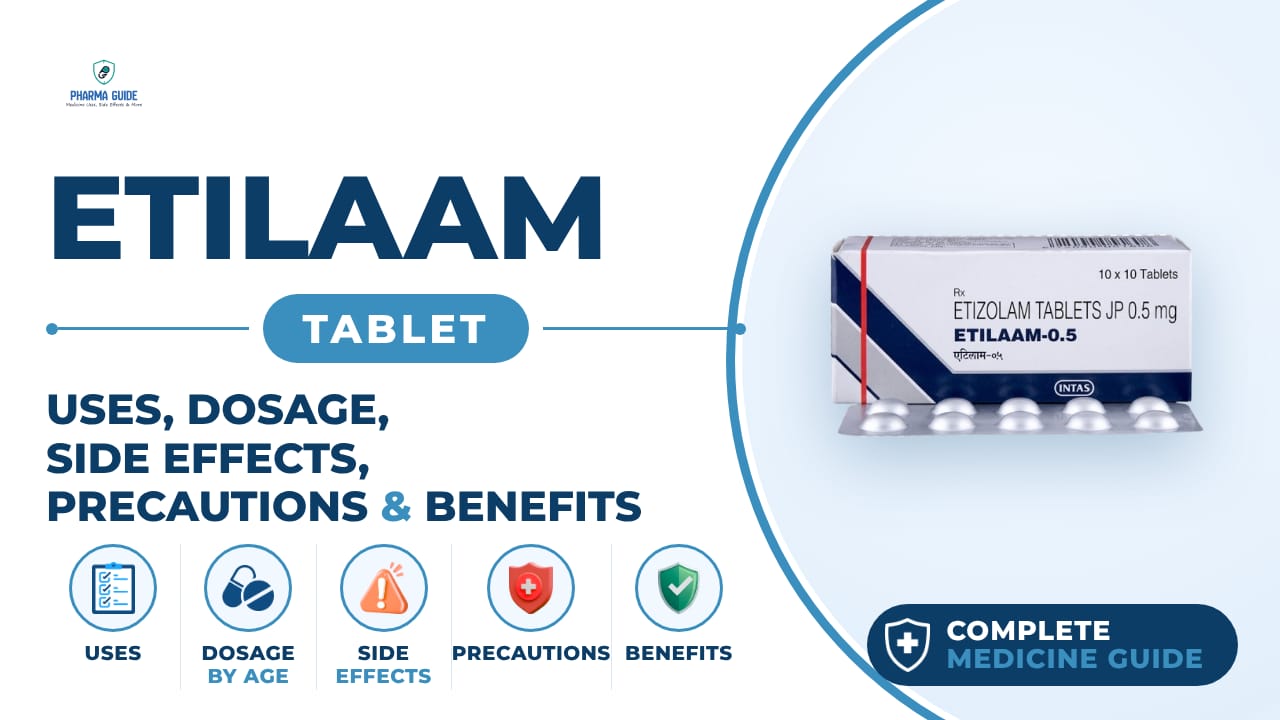
Etilaam Tablet: Uses, Dosage, Side Effects, Precautions and Alternates
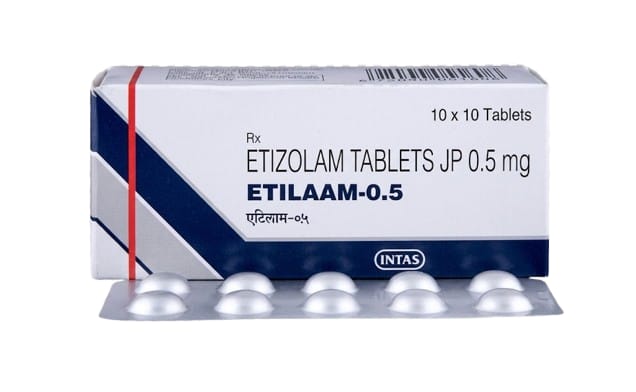
| Generic name | Etizolam |
|---|---|
| Drug class | Thienotriazolodiazepine (closely related to benzodiazepines) |
| Forms | Tablet |
Quick overview
Etilaam Tablet contains Etizolam, a thienotriazolodiazepine closely related to benzodiazepines. It is a prescription medicine used for the short-term treatment of anxiety, panic attacks, and sleep problems. It works by boosting the activity of GABA, a calming brain chemical, to help reduce anxiety and promote relaxation and sleep. It is intended for temporary use only, usually for a few weeks, under a doctor's guidance.
What is Etilaam Tablet
Etilaam is a prescription medicine containing Etizolam. It is used for the short-term treatment of anxiety, panic attacks, and sleep problems.
Etilaam Tablet uses
- Anxiety
- Panic Attack and Disorder
- Insomnia
- Generalised Anxiety Disorder (GAD) and Panic Disorder with or without agoraphobia
- Psychosomatic Disorders where physical symptoms are driven by anxiety
- Muscle relaxation related to anxiety tension
- Calming patients before minor medical or dental procedures
Benefits of Etilaam Tablet
- Helps calm intense worry or nervous tension
- Reduces the severity and frequency of panic attacks
- Helps with temporary insomnia caused by stress
- Works quickly, often bringing relief within 30 to 60 minutes
- Does not cause as much 'brain fog' as some older sedatives, so patients can still feel capable while calm
How Etilaam Tablet works
Etilaam works by boosting the activity of GABA, a natural calming chemical in the brain. It attaches to GABA-A receptors and causes a channel to open more often, which makes brain cells less likely to fire. This quiets excessive electrical activity in the brain, leading to muscle relaxation, less anxiety, and improved sleep.
Etilaam Tablet dosage
This medicine is meant for temporary relief only, usually for a few weeks. For sleep, take it shortly before bedtime; for anxiety, follow your doctor's exact schedule. Swallow the tablet whole with water; do not chew, crush, or break it. Large, fatty meals can slow down how quickly the medicine starts working. It can be taken with or without food, but try to take it at the same time each day. Never stop this medicine suddenly; your doctor will help you lower the dose gradually to avoid withdrawal. If you miss a dose, take it as soon as you remember, but if it is almost time for your next dose, skip the missed one and do not double up.
| Age group | Dose |
|---|---|
| Under 18 years | Not recommended |
| 18–60 years | 0.25–0.5 mg, 1–2 times/day |
| 60+ years | 0.25 mg, 1 time/day |
Available forms and strengths
- Tablet
Side effects of Etilaam Tablet
Common
- Drowsiness or sleepiness
- Muscle weakness and a feeling of heaviness or lack of coordination
- Dizziness, especially when moving
- Dry mouth
- Headache
- Slurred speech
- Fatigue
- Irritability
- Constipation
- Difficulty urinating (urine retention)
- Nausea, vomiting, yawning
- Involuntary eye movements or eyelid closure
Serious
- Memory problems
- Uncoordinated body movements
- Visual disturbances or blurred vision
- Slow, shallow, or difficult breathing (respiratory depression)
- Increased talkativeness, aggression, or agitation (paradoxical excitement)
- Severe allergic reaction: swelling of the face, lips, or tongue; hives
- Signs of dependency, such as an uncontrollable urge to take the drug or needing higher doses
Warnings and precautions
- Do not take Etilaam if you have glaucoma, myasthenia gravis, respiratory distress syndrome, or liver disease unless your doctor tells you to.
- This medicine can be habit-forming if used for more than a few weeks because the brain quickly adjusts to it.
- Never stop taking this medicine suddenly without talking to your doctor, as this can cause withdrawal symptoms like nausea, anxiety, agitation, flu-like symptoms, sweating, tremor, confusion, and in severe cases seizures or psychosis.
- Taking this medicine with opioids such as codeine or morphine carries a high risk of fatal breathing problems.
- Avoid grapefruit while on this medicine, as it can raise drug levels in the blood and make side effects more dangerous.
- This medicine should not be taken with certain drugs, including cisapride, clozapine, and morphine, due to severe side effects.
- Etilaam has many dangerous side effects in pregnant women and should not be used without medical advice. It can cause floppy infant syndrome and withdrawal symptoms in the newborn.
- Etilaam passes into breast milk and can cause extreme sleepiness in the baby, so it is not recommended during breastfeeding.
- Etilaam may have mild effects on the kidneys; caution is advised, especially in people with kidney disease.
- Etilaam can have moderate effects on the liver. Use with caution since the liver processes this drug, and doses may need to be lower. Stop the medicine and consult your doctor if you notice any harmful effects.
- Avoid alcohol while taking Etilaam, as mixing it with alcohol can lead to dangerous sedation or even fatal breathing problems.
- Do not drive or operate machinery while taking this medicine, since it causes significant drowsiness and slows reaction time.
Storage
- Store Etilaam 0.5 Tablet at room temperature (15°C to 30°C) in a dry place.
- Keep it in its original blister pack to protect it from light.
- Store in a secure, locked location to prevent misuse by others.
- Store in a cool and dry place, away from direct sunlight, preferably below 30°C.
- Keep out of sight and reach of children.
When to see a doctor
- Get medical help right away if you notice slow, shallow, or difficult breathing.
- Seek immediate medical attention for a severe allergic reaction, such as swelling of the face, lips, or tongue, or hives.
- Contact your doctor immediately if you notice signs of dependency, such as an uncontrollable urge to take the drug or needing higher doses.
- Seek help if you experience memory loss or difficulty remembering events while taking the drug.
- If withdrawal symptoms such as seizures, confusion, or hallucinations occur after stopping the medicine, seek medical attention immediately.
Alternatives
- Etizep
- Macfresh
- Suprabenz
Watch the video
FAQs
What is Etilaam Tablet used for?
Etilaam Tablet is used for the short-term treatment of anxiety, panic attacks, and sleep problems, including generalised anxiety disorder, panic disorder, psychosomatic disorders, and muscle relaxation related to anxiety tension.
How does Etilaam Tablet work?
Etilaam works by boosting the activity of GABA, a natural calming chemical in the brain. It attaches to GABA-A receptors, making brain cells less likely to fire, which quiets excessive brain activity and leads to muscle relaxation, reduced anxiety, and improved sleep.
What is the dosage of Etilaam Tablet?
For adults aged 18-60 years, the typical dose is 0.25-0.5 mg taken 1-2 times a day, while those over 60 years usually take 0.25 mg once a day. It is not recommended for those under 18 years and should only be used for a few weeks under a doctor's guidance.
Can I stop taking Etilaam Tablet suddenly?
No, you should never stop taking Etilaam suddenly, as it can cause withdrawal symptoms like nausea, anxiety, agitation, flu-like symptoms, sweating, tremor, confusion, and in severe cases seizures or psychosis. Your doctor will help you lower the dose gradually.
What are the common side effects of Etilaam Tablet?
Common side effects include drowsiness, muscle weakness, dizziness, dry mouth, headache, slurred speech, fatigue, irritability, constipation, difficulty urinating, nausea, vomiting, yawning, and involuntary eye movements.
General information, not medical advice
Your prescriber and the leaflet in your pack know your situation. This page does not.
- Follow your prescriber and the leaflet
- Don't start, stop, or change a dose on your own
- Doses and warnings differ by country and product
Sources
Video
Related medicines

Injectafer Injection: Uses, Dosage, Side Effects, Precautions and Alternates
Iron products
Injectafer (ferric carboxymaltose) treats iron deficiency anemia and heart failure-related iron deficiency via IV. Learn uses, dosage, side effects, and

Gliclazide Tablet: Uses, Dosage, Side Effects, Precautions and Alternates
Sulfonylurea (hypoglycemic/antidiabetic agent)
Gliclazide Tablet is a sulfonylurea for type 2 diabetes that boosts insulin release. Learn about dosage, side effects, warnings, and precautions.