
Safety
General information, not medical advice
Your prescriber and the leaflet in your pack know your situation. This page does not.
- Follow your prescriber and the leaflet
- Don't start, stop, or change a dose on your own
- Doses and warnings differ by country and product
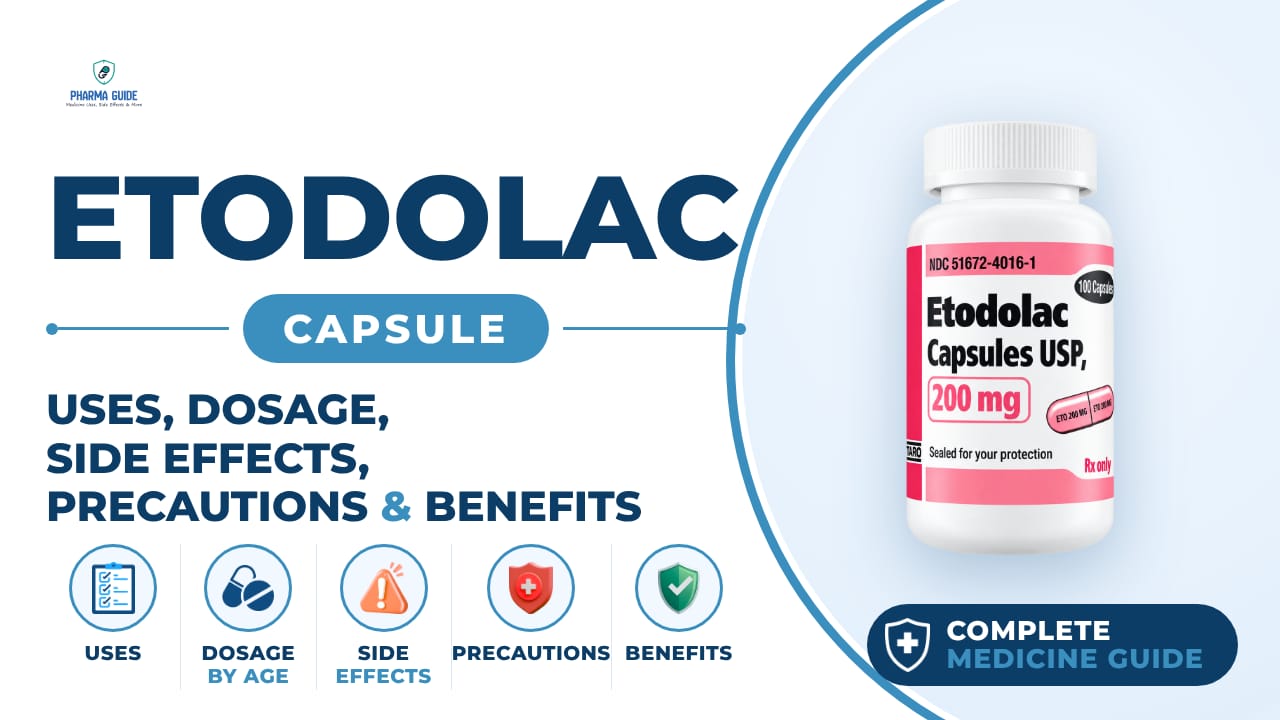
Etodolac Capsule: Uses, Dosage, Side Effects, Precautions and Alternates
| Generic name | etodolac |
|---|---|
| Drug class | Nonsteroidal anti-inflammatory drug (NSAID) |
| Forms | Capsule, Tablet, Extended-release tablet |
Quick overview
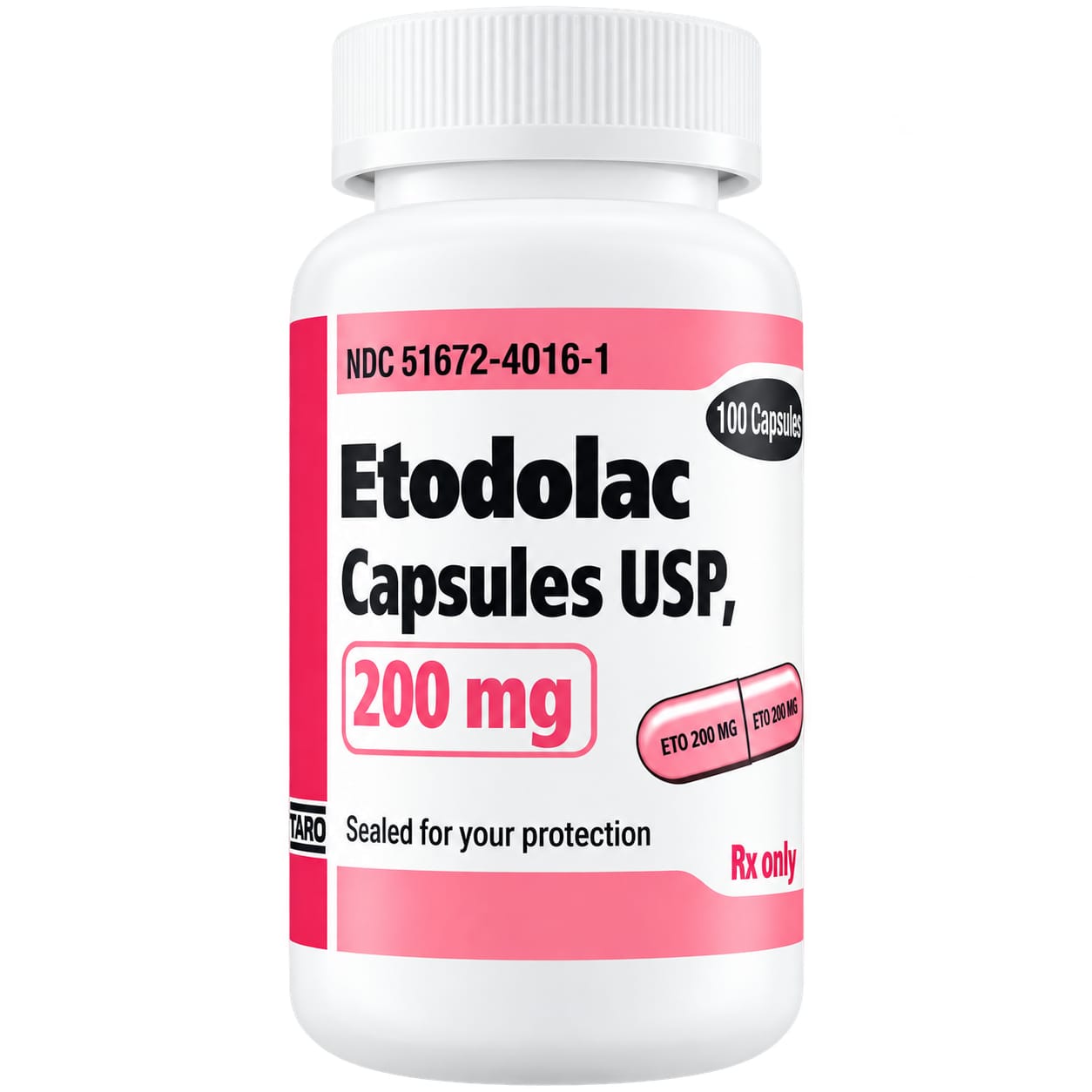
Etodolac Capsule (etodolac) is a nonsteroidal anti-inflammatory drug (NSAID) used to treat mild-to-moderate pain and to reduce inflammation, stiffness, and swelling from conditions like osteoarthritis and rheumatoid arthritis. It does not cure arthritis and only helps as long as you keep taking it. It works by reducing substances in the body called prostaglandins that cause pain and inflammation.
What is Etodolac Capsule
Etodolac is a nonsteroidal anti-inflammatory drug (NSAID) used to treat mild-to-moderate pain and to reduce inflammation, stiffness, and swelling from conditions like osteoarthritis and rheumatoid arthritis. It does not cure arthritis and only helps as long as you keep taking it.
Etodolac Capsule uses
- Treats acute mild to moderate pain in adults.
- Relieves pain associated with osteoarthritis.
- Helps manage inflammation associated with rheumatoid arthritis.
- Reduces joint stiffness and tenderness.
- Helps relieve swelling caused by inflammatory joint conditions.
Benefits of Etodolac Capsule
- Provides analgesic effects for acute pain.
- Helps reduce arthritis-related inflammation.
- May improve joint flexibility and movement.
- Relieves stiffness associated with inflammatory joint conditions.
- Can reduce swelling and tenderness.
How Etodolac Capsule works
Etodolac works by reducing substances in the body called prostaglandins that cause pain and inflammation.
Etodolac Capsule dosage
Take exactly as prescribed by your doctor and follow all directions on your prescription label. Use the lowest dose that works for your condition. Swallow extended-release tablets whole; do not crush, break, or chew them. It may take up to two weeks before you notice improvement in your symptoms. Tell your doctor if your symptoms do not improve. If you use this medicine long-term, you may need regular medical tests.
If you miss a dose, take it as soon as you remember, but skip it if it is almost time for your next dose; do not double up doses.
| Age group | Dose |
|---|---|
| Under 18 years | Safety and effectiveness of immediate-release capsules not established; no approved pediatric capsule dosage |
| 18–39 years | Acute pain: 200–400 mg every 6–8 hours; arthritis: 300 mg twice or three times daily; maximum 1,000 mg daily |
| 40–74 years | Acute pain: 200–400 mg every 6–8 hours; arthritis: 300 mg twice or three times daily; maximum 1,000 mg daily |
| 75 years and older | No separate age-specific dose; adult reference range applies only when appropriate, with preference for the lowest effective dose and shortest duration |
Available forms and strengths
- Capsule
- Tablet
- Extended-release tablet
Side effects of Etodolac Capsule
Common
- Upset stomach, heartburn, or indigestion
- Nausea or vomiting
- Dizziness or headache
- Constipation or diarrhea
- Gas, bloating, or feeling full
- Tired feeling
- Rash
- Ringing in the ears
Serious
- Severe stomach ulcers, perforation, or internal bleeding that can happen without warning
- Serious, potentially fatal heart attacks and strokes
- Kidney damage or kidney failure
- Liver damage or liver failure, including jaundice
- High blood pressure or worsening of existing high blood pressure
- Heart failure or fluid retention
- Low red blood cells (anemia)
- Serious allergic reactions, including anaphylaxis
- Serious skin reactions, including Stevens-Johnson syndrome, toxic epidermal necrolysis, and exfoliative dermatitis
- Drug Reaction with Eosinophilia and Systemic Symptoms (DRESS)
Warnings and precautions
- This medicine can increase the risk of a serious, potentially fatal heart attack or stroke, and this risk may increase with longer use or higher doses.
- Do not take this medicine right before or after heart bypass surgery (CABG), as it is strictly not allowed in that situation.
- This medicine can cause stomach or intestinal bleeding, ulcers, or tears, which can happen without warning and can be fatal, especially in older adults.
- Do not use other over-the-counter pain, cold, or allergy medicines without asking your doctor first, since many contain similar ingredients and combining them could cause an overdose of this type of drug.
- This medicine can make your skin more sensitive to sunlight, increasing the chance of sunburn.
- Do not use this medicine if you have had an asthma attack, hives, or other allergic reaction after taking aspirin or another NSAID.
- This medicine can cause serious skin reactions, including Stevens-Johnson syndrome and toxic epidermal necrolysis, which can be life-threatening.
- This medicine is not approved for use in anyone younger than 18 years old.
- Do not use this medicine during the last part of pregnancy (20 weeks or later) because it can harm the unborn baby. Tell your doctor right away if you think you might be pregnant while using this medicine.
- It is not known for sure whether this medicine passes into breast milk. Talk with your doctor about the benefits and risks before using it while breastfeeding.
- This medicine can cause kidney damage. People with existing kidney disease or severe kidney problems should use it with caution or avoid it, and may need dose adjustments or monitoring.
- This medicine can cause liver problems, including serious liver damage in rare cases. Tell your doctor if you have liver disease before starting treatment.
- Avoid drinking alcohol while taking this medicine, since it can raise the risk of stomach bleeding.
- Etodolac may cause dizziness, drowsiness, or blurred vision. Avoid driving if alertness is affected.
Storage
- Store the medicine in a closed container at room temperature, away from heat, moisture, and direct light
- Keep from freezing
- Keep the bottle tightly closed when not in use
- Ask your healthcare professional how you should dispose of any medicine you do not use
- Keep out of the reach of children
- Do not keep outdated medicine or medicine no longer needed
When to see a doctor
- Get emergency help right away if you have signs of a heart attack or stroke, such as chest pain spreading to the jaw or shoulder, sudden weakness or numbness on one side of the body, slurred speech, or shortness of breath.
- Get emergency help right away if you have signs of a serious allergic reaction, such as hives, wheezing, trouble breathing, or swelling of the face or throat.
- Stop taking the medicine and call your doctor right away if you notice signs of stomach bleeding, such as black or bloody stools, or vomit that looks like blood or coffee grounds.
- Call your doctor right away if you notice signs of a liver problem, such as nausea, stomach pain, itching, tiredness, loss of appetite, dark urine, or yellowing of the skin or eyes.
- Call your doctor right away if you notice signs of a kidney problem, such as little or no urination, swelling in the feet or ankles, or feeling very tired.
- Stop using this medicine and call your doctor at once if you notice any skin rash, no matter how mild, changes in your vision, swelling or rapid weight gain, or shortness of breath even with mild activity.
- If you think you have taken too much of this medicine, seek emergency medical help right away.
Alternatives
- Meloxicam
- Naproxen
- Ibuprofen
Watch the video
FAQs
What is Etodolac Capsule used for?
It is used to treat mild-to-moderate pain and to reduce inflammation, stiffness, and swelling from conditions like osteoarthritis and rheumatoid arthritis. It does not cure arthritis and only helps as long as you keep taking it.
How does Etodolac Capsule work?
It works by reducing substances in the body called prostaglandins that cause pain and inflammation.
How long does it take for Etodolac Capsule to work?
It may take up to two weeks before you notice improvement in your symptoms. Tell your doctor if your symptoms do not improve.
What is the maximum daily dose of Etodolac Capsule?
For adults, acute pain is typically dosed at 200–400 mg every 6–8 hours, and arthritis at 300 mg two or three times daily, with a maximum of 1,000 mg daily.
What are the serious side effects of Etodolac Capsule?
Serious side effects include severe stomach ulcers or internal bleeding, potentially fatal heart attacks and strokes, kidney or liver damage, high blood pressure, heart failure, anemia, serious allergic reactions, and serious skin reactions like Stevens-Johnson syndrome.
General information, not medical advice
Your prescriber and the leaflet in your pack know your situation. This page does not.
- Follow your prescriber and the leaflet
- Don't start, stop, or change a dose on your own
- Doses and warnings differ by country and product
Sources
Video
Related medicines
Relaxyl Capsule: Uses, Dosage, Side Effects, Precautions and Alternates
Nonsteroidal Anti-Inflammatory Drug (NSAID)
Relaxyl Capsule contains diclofenac, an NSAID used to relieve joint and muscle pain, swelling, and inflammation. Learn uses, dosage, and side effects.
Nabumetone Tablet: Uses, Dosage, Side Effects, Precautions and Alternates
Nonsteroidal anti-inflammatory drug (NSAID)
Nabumetone Tablet is an NSAID for osteoarthritis and rheumatoid arthritis pain relief. Learn its dosage, uses, side effects, and safety warnings.