
Safety
General information, not medical advice
Your prescriber and the leaflet in your pack know your situation. This page does not.
- Follow your prescriber and the leaflet
- Don't start, stop, or change a dose on your own
- Doses and warnings differ by country and product
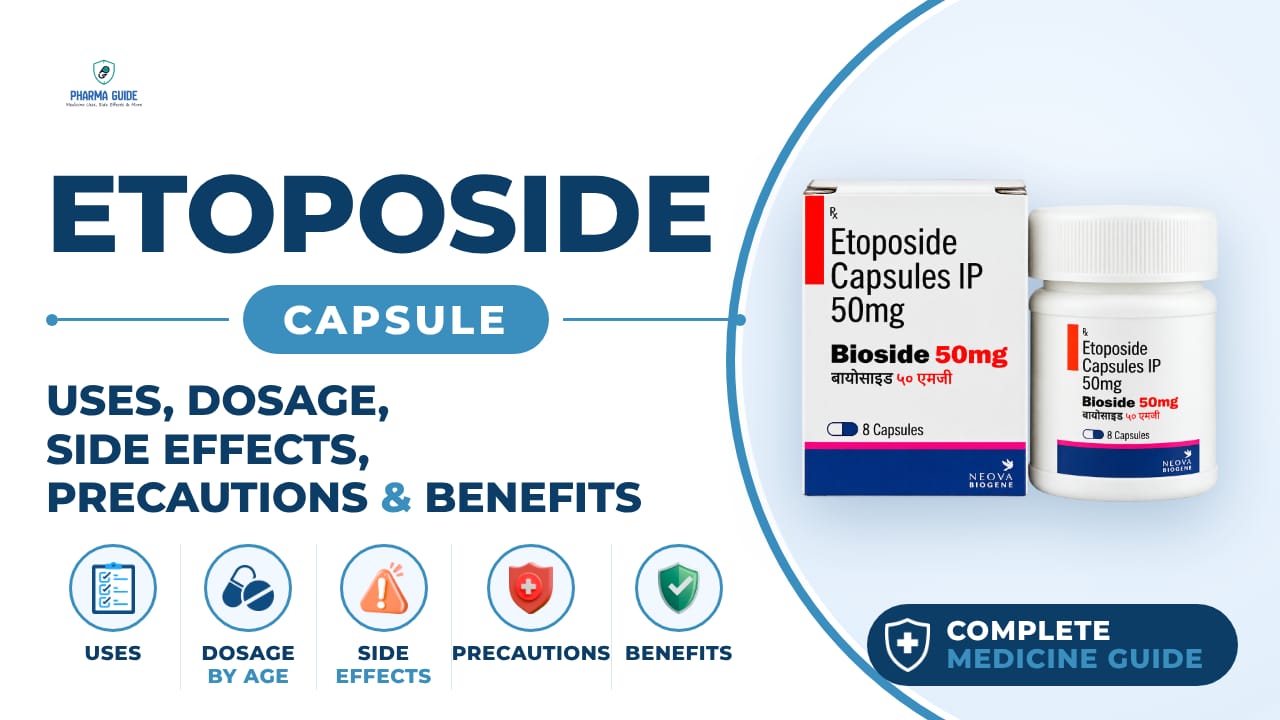
Etoposide Capsule: Uses, Dosage, Side Effects, Precautions and Alternates
| Generic name | Etoposide |
|---|---|
| Drug class | Antineoplastic agent (topoisomerase II inhibitor); podophyllotoxin derivative |
| Forms | Capsule, liquid filled, Injection |
Quick overview
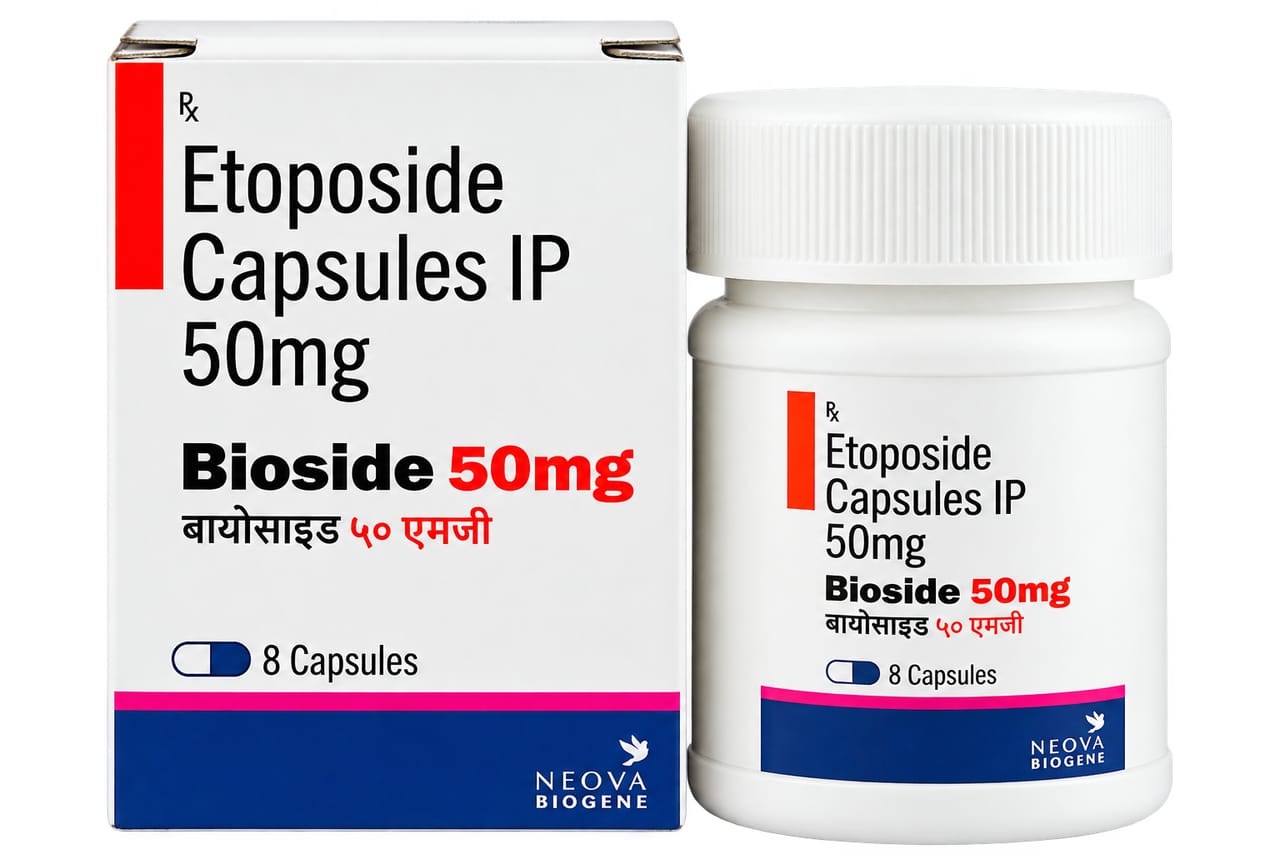
Etoposide Capsule (generic name: Etoposide) is a prescription chemotherapy medicine from the antineoplastic, topoisomerase II inhibitor class, derived from podophyllotoxin. It is used together with other cancer medicines to treat certain cancers, including small cell lung cancer. It comes as a capsule that is swallowed whole with water as part of a chemotherapy treatment plan.
What is Etoposide Capsule
Etoposide is a prescription chemotherapy medicine used together with other cancer medicines to treat certain cancers, including small cell lung cancer. It comes as a capsule that is swallowed with water.
Etoposide Capsule uses
- Treats small cell lung cancer in combination with other chemotherapy medicines.
- Helps inhibit cancer-cell division.
- Interferes with DNA replication in rapidly dividing cells.
- May help reduce tumor burden in responsive cancers.
- Provides an oral treatment option within selected chemotherapy protocols.
Benefits of Etoposide Capsule
- Has established anticancer activity against small cell lung cancer.
- Helps suppress the growth of susceptible cancer cells.
- May contribute to tumor shrinkage when combined with effective chemotherapy.
- Provides an oral alternative within certain treatment regimens.
- Can be incorporated into combination chemotherapy.
How Etoposide Capsule works
Etoposide blocks an enzyme called topoisomerase II that cancer cells need to copy their DNA. This stops the cancer cells from growing and dividing, and they are eventually destroyed. The exact way it works against cancer is not fully known, but it interferes with cancer cell growth. Normal cells can also be affected, which is why side effects happen.
Etoposide Capsule dosage
Take this medicine by mouth with a glass of water, exactly as directed by your doctor. Swallow the capsules whole; do not cut, crush, or chew them. Take it at around the same time each day. If you are taking other cancer medicines at the same time, take each one at its proper time and do not mix them.
Continue taking the medicine even if you feel sick with nausea or vomiting, unless your care team tells you to stop; ask your doctor for ways to reduce these effects. If you vomit shortly after a dose, check with your doctor about whether to repeat the dose or wait for the next one.
Wear gloves when handling the capsules or blister packs to avoid skin contact with the medicine. Unless your doctor tells you otherwise, continue your normal diet while taking this medicine.
Use in children should only be done under close doctor supervision, as safety and effectiveness have not been clearly established. Elderly patients may need extra caution and possible dose changes because they are more likely to have side effects and age-related kidney problems.
| Age group | Dose |
|---|---|
| Under 18 years | No established FDA-approved pediatric capsule dosage; pediatric oncology protocols are individualized |
| 18–64 years | Body-surface-area-based chemotherapy dosing (mg/m²), determined by the oncology regimen |
| 65–74 years | No separate age-specific dose; individualized mg/m² dosing, with closer monitoring of kidney function and blood counts |
| 75 years and older | No established geriatric dose; individualized specialist dosing according to organ function, general health, and treatment tolerance |
Available forms and strengths
- Capsule, liquid filled
- Injection
Side effects of Etoposide Capsule
Common
- Nausea and vomiting
- Loss of appetite
- Diarrhea
- Constipation
- Sore throat and mouth or throat sores/ulcers
- Stomach pain
- Hair loss (thinning or complete loss of body and head hair)
- Unusual tiredness or weakness
- Weight loss
- Altered or unpleasant taste
- Dizziness
- Pain, burning, or tingling in the hands or feet
Serious
- Signs of low blood cell counts: fever, chills, sore throat, cough, unusual bleeding or bruising, black tarry stools, blood in urine or stools, pinpoint red spots on skin
- Signs of infection: fever, chills, cough or hoarseness, lower back or side pain, painful or difficult urination, wounds that don't heal
- Signs of anemia: pale skin, unusual weakness or fatigue, dizziness, fainting, shortness of breath, fast heartbeat
- Allergic/anaphylactic reaction: rash, hives, itching, swelling of face/lips/tongue/throat, difficulty breathing or swallowing, fast or irregular heartbeat, low blood pressure, lightheadedness or fainting
- Yellowing of the skin or eyes (possible liver problems)
- Seizures
- Bone pain
- Risk of developing secondary cancers, including leukemia
Warnings and precautions
- Etoposide can cause a severe drop in blood cell counts, raising the risk of serious infection or bleeding. Regular blood tests are needed before and during treatment.
- This medicine can cause a serious allergic reaction called anaphylaxis, which can be life-threatening and needs immediate medical attention.
- Taking etoposide may increase the chance of developing other cancers later, including leukemia, in rare cases.
- The capsules must be swallowed whole and not cut, crushed, or chewed. Anyone handling the capsules or blister packs should wear gloves to avoid skin contact with the medicine.
- Talk with your doctor before getting any vaccines, including flu shots, while taking this medicine, since some vaccines (especially live vaccines) should be avoided.
- Etoposide should not be used during pregnancy because it can cause serious birth defects or harm the unborn baby. Effective birth control should be used during treatment and, depending on the source, for a period after the last dose. Tell your doctor right away if you think you might be pregnant.
- Breastfeeding is not recommended while taking etoposide, as the medicine can pass into breast milk and may harm the baby.
- Etoposide should be used with caution in people with kidney disease, since the body may remove the medicine more slowly, which can increase side effect risk. Dose adjustments may be needed.
- Tell your care team if you have liver disease before starting this medicine, as it may affect how the medicine is used.
- The effect of alcohol with etoposide is not well known, so it's best to check with your doctor before drinking alcohol during treatment.
- This medicine may cause drowsiness, so avoid driving or operating heavy machinery if you feel drowsy during treatment.
Storage
- Store in the refrigerator between 2 and 8 degrees C (36 and 46 degrees F)
- Do not freeze
- Keep out of the reach of children and pets
- Do not keep outdated medicine or medicine no longer needed
- Ask your pharmacist or healthcare professional how to safely dispose of unused medicine, such as through a medication take-back program
- Do not flush this medication down the toilet
When to see a doctor
- Get medical help right away if you have signs of infection such as fever, chills, sore throat, ongoing cough and congestion.
- Seek immediate care for unusual bleeding or bruising, or black, tarry stools, which can signal a serious drop in blood cells.
- Get emergency help if you notice signs of a severe allergic reaction, such as swelling of the face, tongue or throat, trouble breathing, or a fast pounding heartbeat.
- Contact a poison control center or go to the emergency room right away if you think you have taken too much of this medicine.
- Call your doctor immediately if you notice yellowing of the skin or eyes, seizures, or difficulty breathing or swallowing.
Alternatives
- Irinotecan-containing regimens
- Cisplatin-based chemotherapy combinations
- Carboplatin-based chemotherapy combinations
Watch the video
FAQs
What is Etoposide Capsule used for?
It is a prescription chemotherapy medicine used together with other cancer medicines to treat certain cancers, including small cell lung cancer.
How should Etoposide Capsule be taken?
Take it by mouth with a glass of water, exactly as directed by your doctor. Swallow the capsules whole; do not cut, crush, or chew them, and take it at around the same time each day.
How does Etoposide Capsule work?
It blocks an enzyme called topoisomerase II that cancer cells need to copy their DNA, stopping the cancer cells from growing and dividing so they are eventually destroyed.
What are the serious side effects of Etoposide Capsule?
Serious side effects include signs of low blood cell counts, signs of infection, signs of anemia, allergic/anaphylactic reaction, yellowing of the skin or eyes, seizures, bone pain, and risk of secondary cancers including leukemia.
Can Etoposide Capsule be used during pregnancy?
No, it should not be used during pregnancy because it can cause serious birth defects or harm the unborn baby. Effective birth control should be used during treatment.
General information, not medical advice
Your prescriber and the leaflet in your pack know your situation. This page does not.
- Follow your prescriber and the leaflet
- Don't start, stop, or change a dose on your own
- Doses and warnings differ by country and product
Sources
Video
Related medicines

Injectafer Injection: Uses, Dosage, Side Effects, Precautions and Alternates
Iron products
Injectafer (ferric carboxymaltose) treats iron deficiency anemia and heart failure-related iron deficiency via IV. Learn uses, dosage, side effects, and

Gliclazide Tablet: Uses, Dosage, Side Effects, Precautions and Alternates
Sulfonylurea (hypoglycemic/antidiabetic agent)
Gliclazide Tablet is a sulfonylurea for type 2 diabetes that boosts insulin release. Learn about dosage, side effects, warnings, and precautions.