
Safety
General information, not medical advice
Your prescriber and the leaflet in your pack know your situation. This page does not.
- Follow your prescriber and the leaflet
- Don't start, stop, or change a dose on your own
- Doses and warnings differ by country and product
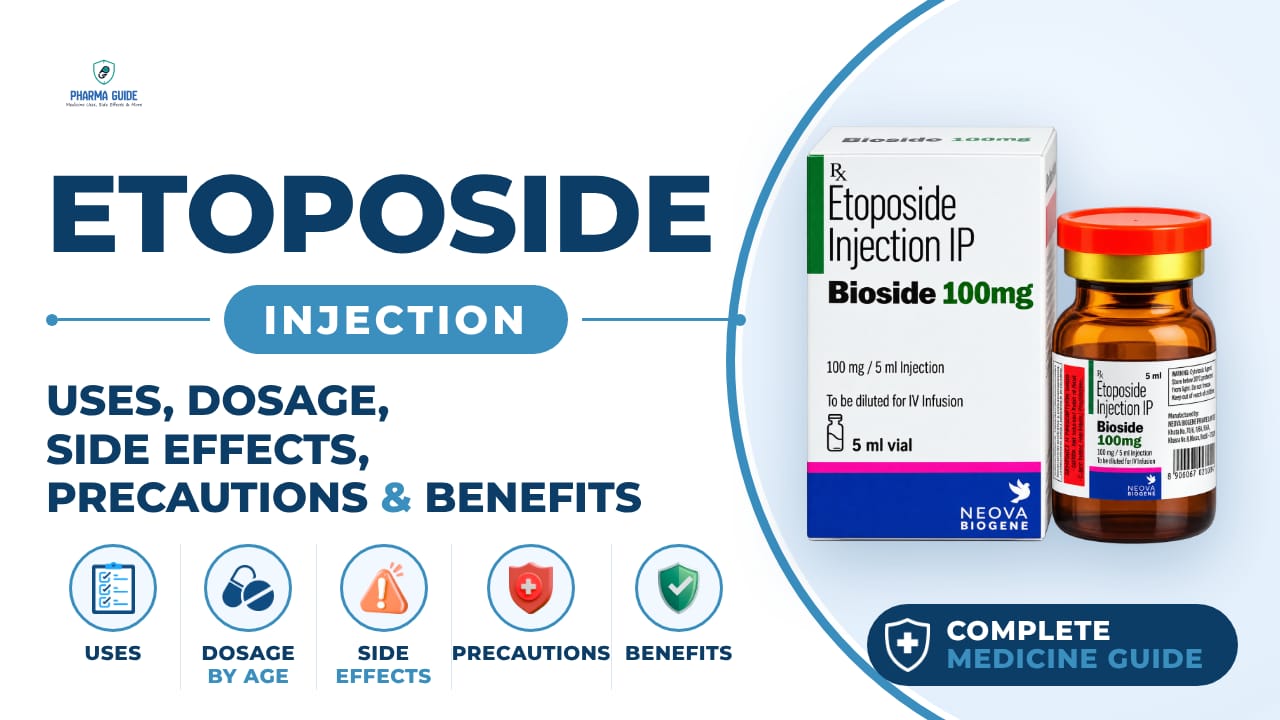
Etoposide Injection: Uses, Dosage, Side Effects, Precautions and Alternates
| Generic name | Etoposide |
|---|---|
| Drug class | Podophyllotoxin derivative (antineoplastic agent) |
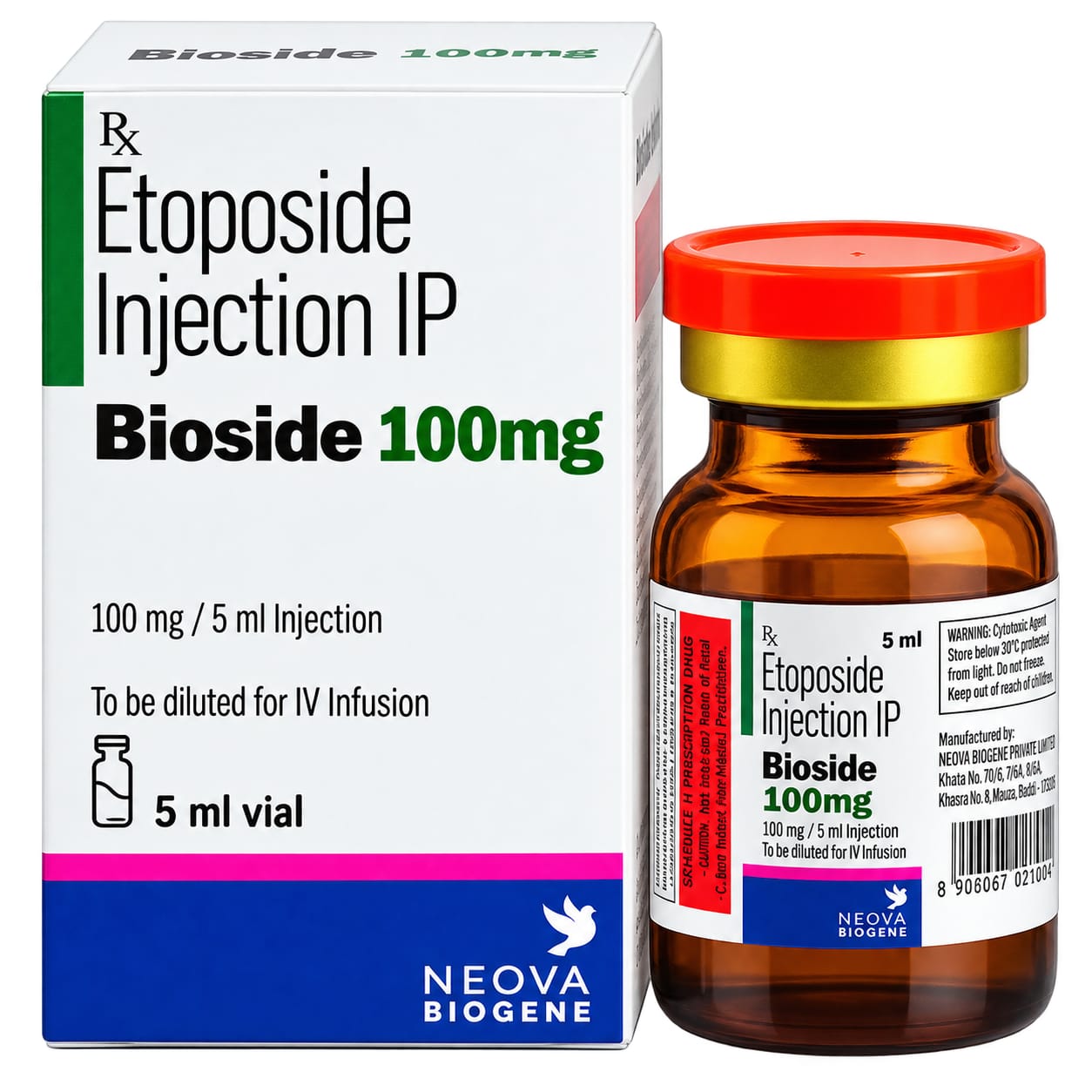
| Forms | Solution for intravenous injection/infusion, 20 mg/mL |
Quick overview
Etoposide Injection is a cancer medicine, given into a vein, used to treat certain testicular cancers, small cell and non-small cell lung cancer, and a type of lymphoma called malignant lymphoma, histiocytic type. It is often combined with other anticancer medicines. It works by blocking an enzyme cancer cells need to copy their DNA, which stops them from dividing. This medicine is given by a healthcare professional in a medical setting and requires regular monitoring for side effects.
What is Etoposide Injection
Etoposide Injection is a cancer medicine given into a vein. It is a lab-made version of a plant compound used to treat certain cancers. Its generic name is Etoposide, and it belongs to the podophyllotoxin derivative class of antineoplastic agents.
Etoposide Injection uses
- Testicular cancer that has not improved or has worsened after other treatments, used with other anticancer medicines
- Small cell lung cancer, used alone or with other anticancer medicines
- Non-small cell lung cancer, alone or with other medicines
- A type of lymphoma called malignant lymphoma (histiocytic type), combined with other anticancer medicines
Benefits of Etoposide Injection
- Helps slow or stop the growth of cancer cells
- Used in combination regimens to improve treatment of certain lung and testicular cancers
- Treats certain testicular cancers
- Used in small-cell lung cancer
- Used in some lymphoma and leukemia regimens
- Commonly combined with other chemotherapy medicines
How Etoposide Injection works
Etoposide stops cancer cells from copying their DNA properly by blocking an enzyme called topoisomerase. This damages the cancer cell's genetic material so it cannot divide, which causes the cell to die.
Etoposide Injection dosage
Etoposide Injection is given by a healthcare professional in a medical setting as a slow injection into a vein, usually over 30 to 60 minutes. It must not be given as a rapid injection into the vein because this can cause low blood pressure. The medicine must be diluted before use and given right after dilution. Treatment courses are repeated after your blood counts have recovered enough. If you miss a scheduled appointment for your injection, contact your healthcare professional right away to reschedule.
| Age group | Dose |
|---|---|
| 18–64 years | Common regimens use 50–100 mg/m² IV daily for several days, depending on cancer type and combination therapy |
Available forms and strengths
- Solution for intravenous injection/infusion, 20 mg/mL
Side effects of Etoposide Injection
Common
- Nausea and vomiting
- Loss of appetite
- Diarrhea
- Mouth sores (stomatitis)
- Hair loss, sometimes total baldness
- Tiredness, weakness, or feeling faint
- Bad or changed taste in the mouth
- Difficulty swallowing
- Constipation
- Skin or nail color changes, itching, rash
- Pain, swelling, or redness at the injection site
- Dizziness or sleepiness
Serious
- Severe decrease in blood cell counts (low white cells, platelets, or red cells) leading to infection, bleeding, or anemia
- Signs of infection such as fever, chills, sore throat, or sepsis
- Severe allergic (anaphylactic-like) reactions with chills, fever, fast heartbeat, difficulty breathing, wheezing, or a drop in blood pressure
- Tumor lysis syndrome, which can be fatal, when combined with other chemotherapy drugs
- Secondary acute leukemia occurring after treatment
- Liver damage (hepatotoxicity) with yellowing of skin or eyes, dark urine, or pale stools
- Severe skin reactions such as Stevens-Johnson syndrome or toxic epidermal necrolysis
- Seizures
- Lung problems such as interstitial pneumonitis or pulmonary fibrosis
- Heart problems such as heart attack or abnormal heart rhythm
- Transient vision loss (cortical blindness) or optic nerve problems
- Nerve damage causing numbness, tingling, or weakness in hands and feet
- Posterior Reversible Encephalopathy Syndrome (PRES), a nervous system disorder
- Low blood pressure, especially if the medicine is given too quickly
Warnings and precautions
- This medicine can cause a severe drop in blood cell counts, which can lead to serious infection, bleeding, or even death. Regular blood tests are needed.
- Serious allergic reactions can occur, with symptoms like chills, fever, fast heartbeat, difficulty breathing, and low blood pressure.
- Giving this medicine too quickly into a vein can cause a drop in blood pressure, so it must be given slowly over 30 to 60 minutes.
- A life-threatening condition affecting the liver, kidneys, lungs, and blood platelets has occurred in premature infants exposed to a similar ingredient (polysorbate 80).
- Tumor lysis syndrome, a sometimes fatal condition caused by rapid breakdown of cancer cells, can occur when this medicine is combined with other chemotherapy drugs.
- A new blood cancer (secondary leukemia) has rarely developed in patients who received this medicine along with other anticancer drugs.
- Receiving live vaccines during treatment can cause severe or fatal infections because this medicine weakens the immune system.
- This medicine should be considered a possible cause of cancer in humans, based on how it works.
- This medicine can harm an unborn baby and should not be used during pregnancy. Women who could become pregnant should avoid pregnancy during treatment.
- Breastfeeding should be stopped during treatment because the medicine may pass into breast milk and harm the infant.
- People with kidney problems may need a lower dose because the body may not clear the drug as well, increasing the risk of side effects.
- Liver function should be checked regularly during treatment, and the drug is not recommended for people with severe liver problems.
- This injection contains alcohol, which may be a concern for people with liver disease, alcohol problems, epilepsy, and for pregnant women and children.
- This medicine can cause tiredness, dizziness, nausea, vomiting, vision loss, or allergic reactions with low blood pressure, so avoid driving or using machinery until you know how it affects you.
Storage
- Store at room temperature (15°C to 25°C), protected from light
- Keep out of reach and sight of children
- Unopened vials are stable for 24 months when stored below 25°C and protected from light
- Once diluted, use within the time and temperature conditions recommended by your pharmacist; any leftover solution in a vial should be discarded
- Dispose of needles, syringes, vials, and other materials that touched this medicine according to special hazardous drug disposal procedures
When to see a doctor
- Call your doctor right away if you notice signs of infection like fever, sore throat, or ongoing cough.
- Get medical help immediately for unusual bleeding or bruising, or blood in stool or vomit.
- Seek emergency care for signs of a severe allergic reaction such as rash, hives, itching, trouble breathing or swallowing, fast or irregular heartbeat, seizures, or yellowing of the skin or eyes.
- If you think too much medicine was given, contact a healthcare professional, hospital emergency department, or your regional poison control center immediately, even without symptoms.
- Tell your healthcare professional right away if you become pregnant during treatment.
Alternatives
- Carboplatin
- Irinotecan
- Docetaxel
Watch the video
FAQs
What is Etoposide Injection used for?
It is used to treat certain testicular cancers, small cell and non-small cell lung cancer, and a type of lymphoma called malignant lymphoma, histiocytic type, often combined with other anticancer medicines.
How is Etoposide Injection given?
It is given by a healthcare professional as a slow injection into a vein, usually over 30 to 60 minutes. It must not be given rapidly because this can cause low blood pressure.
What are the common side effects of Etoposide Injection?
Common side effects include nausea and vomiting, loss of appetite, diarrhea, mouth sores, hair loss, tiredness, changed taste, difficulty swallowing, constipation, skin or nail changes, injection site reactions, and dizziness or sleepiness.
What serious risks are linked to Etoposide Injection?
Serious risks include severe drops in blood cell counts, infection, severe allergic reactions, tumor lysis syndrome, secondary acute leukemia, liver damage, severe skin reactions, seizures, lung and heart problems, vision loss, nerve damage, and low blood pressure if given too quickly.
Can Etoposide Injection be used during pregnancy or breastfeeding?
No, it can harm an unborn baby and should not be used during pregnancy, and breastfeeding should be stopped during treatment because the medicine may pass into breast milk and harm the infant.
General information, not medical advice
Your prescriber and the leaflet in your pack know your situation. This page does not.
- Follow your prescriber and the leaflet
- Don't start, stop, or change a dose on your own
- Doses and warnings differ by country and product
Sources
Video
Related medicines

Injectafer Injection: Uses, Dosage, Side Effects, Precautions and Alternates
Iron products
Injectafer (ferric carboxymaltose) treats iron deficiency anemia and heart failure-related iron deficiency via IV. Learn uses, dosage, side effects, and

Gliclazide Tablet: Uses, Dosage, Side Effects, Precautions and Alternates
Sulfonylurea (hypoglycemic/antidiabetic agent)
Gliclazide Tablet is a sulfonylurea for type 2 diabetes that boosts insulin release. Learn about dosage, side effects, warnings, and precautions.